Kirjailija
David Miller
Kirjat ja teokset yhdessä paikassa: 168 kirjaa, julkaisuja vuosilta 1979–2026, suosituimpiin kuuluu Insights Into Pricing from Operations Research and Behavioral Science. Vertaile teosten hintoja ja tarkista saatavuus suomalaisista kirjakaupoista.
168 kirjaa
Kirjojen julkaisuvuodet: 1979–2026.
David Miller's work is unclassifiable: he is a poet and a prose-writer, but his prose here is poetic. Some of the work is prose-poetry; some is narrative in nature and might instead be classified as experimental fiction.
The Duchess of Richmond's Ball, held in Brussels on 15 June 1815, is one of history's most famous social events, but its full story has never before been told - where it was held, who was invited, who and what took place there - all is revealed in this book.
Bryan Gibson was looking for adventure when he moved from California to the wild plains of East Africa. What he didn't expect was to find himself immediately plunged into a life or death struggle that risked not only his life but the survival of an entire species. But who is the bigger threat, the British mercenary or the Chinese businessman who is controlling him? To save his life, and the life of the woman he's grown to love, Bryan must travel the world to solve this mystery! before his time runs out. This fast-paced novel reaches from California to the plains of Africa and the teeming cities of modern China, combining news headlines, wildlife excitement, and modern global politics in an epic adventure that the reader will never forget.
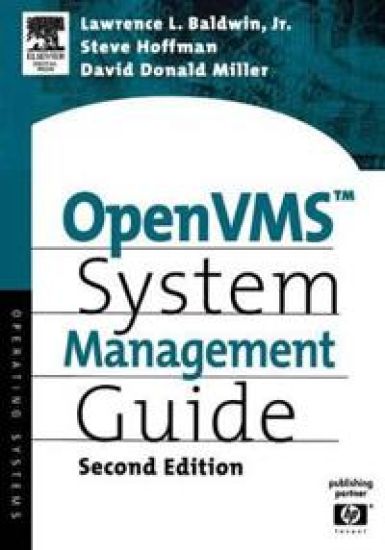
OpenVMS System Management Guide
Lawrence Baldwin; Steve Hoffman; David Miller
Digital Press
2003
nidottu
OpenVMS System Management Guide, Second Edition, the most complete book on the topic, details for system administrators the tools, technologies, and techniques by which they can configure, maintain, and tune computers running Hewlett-Packard's high-performance OpenVMS operating system. Revised by a topical authority and a principal OpenVMS engineer, the book enables system administrators to perform more efficiently and effectively those everyday tasks critical to an OpenVMS system. Examples have been updated to include OpenVMS/VAX 7.3 and OpenVMS/Alpha 7.3-1.
This book introduces readers to the concepts of political philosophy. It starts by explaining why the subject is important and how it tackles basic ethical questions such as 'how should we live together in society?' It looks at political authority, the reasons why we need politics at all, the limitations of politics, and whether there are areas of life that shouldn't be governed by politics. It explores the connections between political authority and justice, a constant theme in political philosophy, and the ways in which social justice can be used to regulate rather than destroy a market economy. David Miller discusses why nations are the natural units of government and whether the rise of multiculturalism and transnational co-operation will change this: will we ever see the formation of a world government? ABOUT THE SERIES: The Very Short Introductions series from Oxford University Press contains hundreds of titles in almost every subject area. These pocket-sized books are the perfect way to get ahead in a new subject quickly. Our expert authors combine facts, analysis, perspective, new ideas, and enthusiasm to make interesting and challenging topics highly readable.
Getting Started with OpenVMS System Management gives new VMS system managers a jumpstart in managing this powerful and reliable operating system. Dave Miller describes the essentials of what an OpenVMS System Manager will have to manage. He defines areas of OpenVMS System Management and describes why each is important and how it fits into the larger management task. Even though some OpenVMS management concepts are unique (for instance quotas), many concepts (such as account creation) have counterparts in UNIX and Windows NT. So, wherever possible, Miller points out to his readers the parallel to other systems. The book is intended as a precursor to Baldwin's OpenVMS System Management Guide and various OpenVMS documents. Thus it refers the reader to other books for the detailed management steps. Getting Started with OpenVMS System Management is a great introduction to the material Steve Hoffman and Dave Miller are revising for the OpenVMS System Management Guide, 2E.
The book explores the regional governing of metropolitan America in a comprehensive and systematic fashion. It reviews the financial system of state and local government at the broadest possible level?the national level?and explores the relationships between the federal government, the 50 state governments, and the 86,000 local governments that constitute the United States system. It assesses and identifies the fundamentally different purposes, organizational designs, and powers of the several forms and types of local government?counties, municipalities (both cities and towns), and special districts. Although defined for statistical purposes by the federal government, metropolitan areas can be used to begin to understand how metropolitan regions in the United States are responding to the governance needs of their areas. The book compares and contrasts variations in the governing structures of metropolitan systems in the United States. It introduces the Metropolitan Power Diffusion Index (MPDI), a scale that measures the distribution of local government power for each metropolitan area in the United States. The scale also is used to assess changes in the diffusion of power over the later quarter of the 20th century. The book overviews the classic debate that has raged for the last 50 years over how metropolitan areas in the United States ought to be organized. One view, which I call the "region as organic whole", sees the metropolitan region as formally organized to explicitly serve the purposes of the region as it competes with other metropolitan regions throughout the world in pursuit of economic development. The second view, which I call the "polycentric region?, views the metropolitan region as a diverse set of personal choices in which citizens choose to reside in places that match their personal preferences. Global competitiveness results from creating an environment that encourages private enterprise and entrepreneurship. The book explores, in detail, cooperative strategies that have been developed to govern the metropolitan areas of the United States. It identifies and presents four types of approaches. Those types are: coordinating regionalism; administrative regionalism; fiscal regionalism; and structural regionalism. Each of these strategies can be found to one degree or another in each of the metropolitan regions in the United States. Finally, the book explores problems or issues that arise as a result of the structuring of government systems in metropolitan areas. It pays particular attention to the issues of regional economic performance, racial segregation and fiscal equity between local government jurisdictions.

Social justice has been the animating ideal of democratic governments throughout the twentieth century. Even those who oppose it recognize its potency. Yet the meaning of social justice remains obscure, and existing theories put forward by political philosophers to explain it have failed to capture the way people in general think about issues of social justice. This book develops a new theory. David Miller argues that principles of justice must be understood contextually, with each principle finding its natural home in a different form of human association. Because modern societies are complex, the theory of justice must be complex, too. The three primary components in Miller’s scheme are the principles of desert, need, and equality. The book uses empirical research to demonstrate the central role played by these principles in popular conceptions of justice. It then offers a close analysis of each concept, defending principles of desert and need against a range of critical attacks, and exploring instances when justice requires equal distribution and when it does not. Finally, it argues that social justice understood in this way remains a viable political ideal even in a world characterized by economic globalization and political multiculturalism. Accessibly written, and drawing upon the resources of both political philosophy and the social sciences, this book will appeal to readers with interest in public policy as well as to students of politics, philosophy, and sociology.
From 1949 to 1991 the world was overshadowed by the Cold War. indeed, much has remained hidden until now. In The Cold War, David Miller discloses not only the vast scope of the military resources involved, but also how nearly threat came to terrible reality.
Open Scotland?
Philip Schlesinger; David Miller; William Dinan
Polygon at Edinburgh University Press
2001
nidottu
Scottish devolution brought high hopes for an open political culture. But how far have these been fulfilled? Open Scotland? argues that in the field of political communication the old, established ways of the British state still remain firmly in place. Westminster and Whitehall still cast long shadows over Edinburgh. This book offers the first full-scale coverage of how media, politicians and lobbyists interact in the new Scotland. Based on their exceptional first-hand access to the key players, Philip Schlesinger, David Miller and William Dinan have written an inside account of the struggles to establish the rules of the game for covering politics. They have talked to the journalists of Scotland's political media pack who are at the heart of the new political system and who have a decisive impact on the image of the Scottish Parliament and government. They have observed and interviewed the professional lobbyists and reveal their strategies for achieving a respectable image in Scottish public life. And they have analysed some of the key rows and the failures of news management inside Scotland's government. Open Scotland? offers an insight to the world of lobbyists, journalists and spin doctors, revealing the motivations behind the news stories in Scottish politics today.
The intriguing and authenticated story of the British Army's first professional staff officer, Colonel Sir W H Lancey, and his beautiful Scottish bride, Lady de Lancey. This book includes Lady de Lancey's narrative "A week at Waterloo in 1815".
Based on major multi-centre research in the UK, Dying to Care identifies why work stress is a problem in health care generally, and in HIV health care in particular. The similarities and differences between work stress experienced in general health care settings and in HIV/AIDS are explored in a state-of-the-art review of research and experience in the field to date. The book has a practical focus, and goes on to explore ways in which the unique stresses of patient advocacy in HIV/AIDS can be addressed, identifying the best approaches for management. Highlighting the practical importance of a clear distinction between the burnout and work stress for design of strategies for burnout prevention, the emergence of the concept of burnout is described and the general historical confusion between work stress and burnout examined. This will be a key handbook for managers, physicians, nurses, social workers, health advisors and counsellors working in or alongside healthcare.
Drawing upon the work of Karl Popper and W. W. Bartley III, this text argues for an approach to rationality freed from authoritarian dependence on reasons and justification. It proposes an objectivist interpretation to make sense of single-case probabilities, even in a deterministic universe.
Rethinking Northern Ireland provides a coherent and critical account of the Northern Ireland conflict. Most writing on Northern Ireland is informed by British propaganda, unionist ideology or currently popular 'ethnic conflict' paradigm which allows analysts to wallow in a fascination with tribal loyalty. Rethinking Northern Ireland sets the record straight by reembedding the conflict in Ireland in the history of an literature on imperialism and colonialism. Written by Irish, Scottish and English women and men it includes material on neglected topics such as the role of Britain, gender, culture and sectarianism. It presents a formidable challenge to the shibboleths of contemporary debate on Northern Ireland. A just and lasting peace necessitates thorough re-evaluation and Rethinking Northern Ireland provides a stimulus to that urgent task.
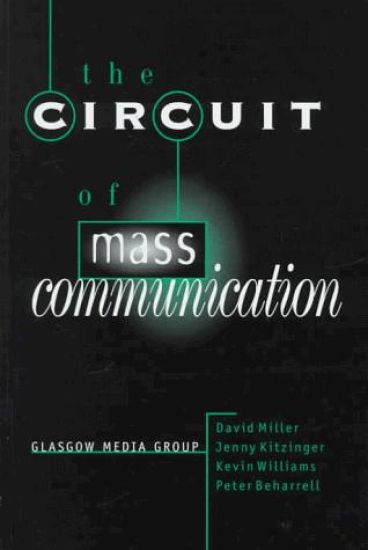
The Circuit of Mass Communication
David Miller; Jenny Kitzinger; Peter Beharrell
SAGE Publications Ltd
1998
sidottu
This book moves beyond the narrow focus of much of the work on media and cultural studies to examine the whole process of interaction between the media and the social world. Rejecting approaches which focus only on ownership or discourse or audience reception, this new book from the Glasgow Media Group, examines: promotional strategies; media production; representation and audience responses; as well as broader impacts on policy, culture and society. Using a detailed analysis of the struggle over representation during the AIDS crisis as point of departure, The Circuit of Mass Communication reveals the power of the media to influence public opinion, and the complex interaction between media coverage, audience response and contemporary power relations. Based on extensive empirical research, this book offers a range of challenging insights on media power, active audiences and moral panics.
The Circuit of Mass Communication
David Miller; Jenny Kitzinger; Peter Beharrell
SAGE Publications Ltd
1998
nidottu
This book moves beyond the narrow focus of much of the work on media and cultural studies to examine the whole process of interaction between the media and the social world. Rejecting approaches which focus only on ownership or discourse or audience reception, this new book from the Glasgow Media Group, examines: promotional strategies; media production; representation and audience responses; as well as broader impacts on policy, culture and society. Using a detailed analysis of the struggle over representation during the AIDS crisis as point of departure, The Circuit of Mass Communication reveals the power of the media to influence public opinion, and the complex interaction between media coverage, audience response and contemporary power relations. Based on extensive empirical research, this book offers a range of challenging insights on media power, active audiences and moral panics.
Nationalism is a dominating force in contemporary politics, but political philosophers have been markedly reluctant to discuss, let alone endorse, nationalist ideas. David Miller here defends the principle of nationality. He argues that national identities are valid sources of personal identity; that we are justified in recognizing special obligations to our co-nationals; that nations have good grounds for wanting to be politically self-determining; but that recognizing the claims of nationality does not entail suppressing other sources of personal identity, such as ethnicity. Finally, he considers the claim that national identities are dissolving in the late twentieth century. This timely and provocative study offers the most compelling defence to date of nationality from a radical perspective.
Nationalism is a dominating force in contemporary politics, but political philosophers have been markedly reluctant to discuss, let alone endorse, nationalist ideas. In this book David Miller defends the principle of nationality. He argues that national identities are valid sources of personal identity; that we are justified in recognizing special obligations to our co-nationals; that nations have good grounds for wanting to be politically self-determining; but that recognizing the claims of nationality does not entail suppressing other sources of personal identity, such as ethnicity. Finally, he considers the claim that national identities are dissolving in the late twentieth century. This timely and provocative book offers the most compelling defence to date of nationality from a radical perspective. Series description Oxford Political Theory presents the best new work in contemporary political theory. It is intended to be broad in scope, including original contributions to political philosophy, and also work in applied political theory. The series will contain works of outstanding quality with no restriction as to approach or subject matter.