Kirjojen hintavertailu – 12 859 829 kirjaa ja 27 kauppaa

Kirjailija

David Mills

Kirjat ja teokset yhdessä paikassa: 100 kirjaa, julkaisuja vuosilta 1982–2026, suosituimpiin kuuluu Limas röda heta chili (albanska och svenska). Vertaile teosten hintoja ja tarkista saatavuus suomalaisista kirjakaupoista.

100 kirjaa

Kirjojen julkaisuvuodet: 1982–2026.

Cairns City Travel Guide, North Queensland Australia
Cairns City Travel Guide, North Queensland Australia. Cairns Touristic Information. Cairns is ideally suited for the adventure traveller and for those needing a break from the ratrace. The warmth of both the climate and the local people is famous, and the city and surrounding areas lend themselves to all kinds of activity. Sensational conditions for water sports predominate around Cairns, while 4WD safaris and air adventures such as helicopter and hot air balloon rides give an extra dimension to your holiday. Whether you're searching for idyllic white-sand beaches, an adrenalin hit or extraordinary flora and fauna, you'll find it in and around Cairns. Cairns is home to world-class marinas, from where you can sail, snorkel, dive, waterski, parasail, and fish. Hire a boat, or go on one of the hundreds of organised excursions, including even an overnight stay on a diveboat. See and catch the great sportsfish: black marlin and sailfish. Or, if you don't like getting wet, see it all through a glass-bottomed boat. These are year-round activities, so whatever time you plan your holiday, you'll be sure of plenty to see and do. Just remember that marine stingers (box jellyfish) are active near the beach (although the Reef is free of them) during the Wet, and you'll need to wear protective gear and swim in patrolled areas when engaged in some activities. As well as adventure and environmental activities, Cairns is a showcase for local Aboriginal culture. Theatre, dance, boomerang and spear throwing, bush tucker presentations and more are available at the world famous Tjapukai Cultural Theme Park at Caravonica.
Indonesia Information

Indonesia Information

David Mills

Sonittec
2019
pokkari
Indonesia Information. Tourist Guide, History, Bali Travel Environment. After the arrival of Austranesian people into the archipelago between 2,500 BCE and 1,500 BCE, Indonesia quickly developed dozens of kingdoms, some short-lived and some lasting for a lengthy period of time, like the all-conquering Srivijaya kingdom of Sumatra, and the Javanese-Malaysian kingdom of Majapahit. Unfortunately, the arrival of colonial powers brought these kingdoms to a standstill. Marco Polo regularly passed through the Indonesian islands during the 1200's. However, it wasn't until the 1500's that European presence began influencing the area. The Dutch and the British began colonizing parts of Sumatra, Java and the modern day Malaysian peninsula and eventually, Dutch forces took control of Indonesia in 1619, although there were small British sections in Sumatra. Of the 18,000 islands under the Indonesian flag, only 6,000 are actually inhabited. This provides tourists with an exhaustive list of places to explore that are truly 'off the beaten path'. However, this doesn't mean travelers must be adventurous to enjoy a vacation to Indonesia, but it wouldn't be off the mark to suggest that Indonesia is Southeast Asia's most dynamic holiday destination. Bali: So were you wondering if there's anything to do on an island covered in rice paddies and tropical jungle? Or did you just want to sit in the sun and drink beer? Well, some people do. Then the rest of us get out and experience the real Bali. If you like the outdoors, there is certainly no shortage of activities on Bali. For divers we have over 952 species of sea life and 393 coral species. You can scuba-dive or snorkel all around Bali or its baby islands Nusa Lembongan and Nusa Penida. Surfers do not need to be told that Bali has some of the most awesome waves in the world. Just ask the ASP why they are having Phase 5 of their World Championships here. In the centre of the island one can go white-water rafting, canyoning, motoror pedal bike riding, or offroading in various types of vehicles. Families will love Bali Zoo or Safari Park, Taro Elephant Park, Bali Bird Park and more. Botanists, come and see the spectacular collections of orchids and 111 other indigenous plants. Twitchers, come catch some birds in your binocs. Want to go riding? Horse or elephant? Sailors will have a grand time, either at the Royal Bali Yacht Club, or on a schooner bound for the islands east of here. Of course you can also fly there by charter seaplane or helicopter. Sky's the limit
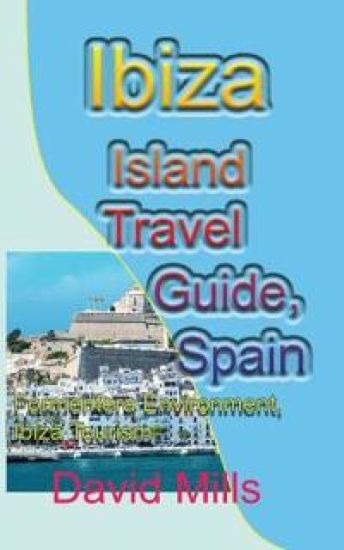
Ibiza Island Travel Guide, Spain
Ibiza Island Travel Guide, Spain. Formentera Environment, Ibiza Tourism. All-night raver, boho-cool hippy, blissed-out beach lover Ibiza is all this and more to the many, many fans who have a soft spot for the Balearics' party-hard sister. In summer the cream of the world's DJs (David Guetta, Sven V th, Armin van Buuren et al) descend on the island, making it the ultimate destination for clubbers. Ibiza's modest population is swallowed whole by the seven-million-odd tourists that arrive en masse each year, and nowhere does sunset chilling or boho-glam style quite like the White Isle. Though Ibiza has long been synonymous with fun in the sun hedonism, a trip to the island is not all about sultry clubs and all-night raves away from the bright lights there's a quieter side to this destination. But first to the merrymaking, because make no mistake this Spanish island is one of the premier party destinations in Europe. During the summer superstar DJs arrive en masse to spin the vinyl and keep revellers dancing until the morning light. Ibiza Town is a hotbed of late-night revelry. The municipality is home to the world-famous clubs Pacha and Amnesia, which share quaint cobblestone streets with more traditional attractions such as Santa Maria d'Eivissa Cathedral. Sant Antoni (San Antonio) is the real clubbing capital, though. The so-called 'Sunset Strip' is renowned for its rowdy clubs, but there are sophisticated alternatives nearby with chic bars offering expensive cocktails and exquisite sunset views. Its reputation as a party island is notorious, but Ibiza has reconnected with its 1960's hippy roots in recent years, with more laid-back parties and a burgeoning arts scene. Those seeking quiet time or craving a bit of culture are also well catered for: Ibiza is blessed with sandy beaches, limpid waters and alluring coves, not to mention an abundance of picturesque towns and villages. Families are also well catered for in relaxing resorts such as Santa Eularia des Riu (Santa Eulalia) and Es Canar (Es Cana) on the northeast coast. Whether you're there to dance till dawn, relax on a beach, imbibe the culture or hike amidst the greenery, Ibiza is a rite of passage for every discerning traveller.
History of United Arab Emirate
History of United Arab Emirate. Abu Dhabi, Dubai, Sharjah, Ras Al Khaimah, Ajman, Umm Al Quwain, Fujairah, Travel and Tourism Information Guide United. Arab Emirates is a federation of seven emirates along the eastern coast of the Arabian Peninsula. The largest of these emirates, Abu Dhabi (Abū Ẓaby), which comprises more than three-fourths of the federation's total land area, is the centre of its oil industry and borders Saudi Arabia on the federation's southern and eastern borders. The port city of Dubai, located at the base of the mountainous Musandam Peninsula, is the capital of the emirate of Dubai (Dubayy) and is one of the region's most vital commercial and financial centres, housing hundreds of multinational corporations in a forest of skyscrapers. The smaller emirates of Sharjah (Al-Shāriqah), ʿAjmān, Umm al-Qaywayn, and Raʾs al-Khaymah also occupy the peninsula, whose protrusion north toward Iran forms the Strait of Hormuz linking the Persian Gulf to the Gulf of Oman. The federation's seventh member, Al-Fujayrah, faces the Gulf of Oman and is the only member of the union with no frontage along the Persian Gulf. Historically the domain of individual Arab clans and families, the region now comprisingthe emirates also has been influenced by Persian culture owing to its close proximity to Iran, and its porous maritime borders have for centuries invited migrants and traders from elsewhere. In the 18th century, Portugal and the Netherlands extended their holdings in the region but retreated with the growth of British naval power there; following a series of truces with Britain in the 19th century, the emirates united to form the Trucial States (also called Trucial Oman or the Trucial Sheikhdoms). The states gained autonomy following World War II (1939-45), when the trucial states of Bahrain and Qatardeclared independent statehood. The rest were formally united in 1971, with the city of Abu Dhabi serving as the capital. The stability of the federation has since been tested by rivalries between the families governing the larger states of Abu Dhabi and Dubai, though external events such as the Persian Gulf War (1990-91) and an ongoing territorial dispute with Iran have served to strengthen the emirates' political cohesion.
History of Europe, Prehistory

History of Europe, Prehistory

David Mills

Sonittec
2019
pokkari
History of Europe, Prehistory. Europe from the Europe from the Beginning. The period of European history extending from about 500 to 1400-1500 CE is traditionally known as the Middle Ages. The term was first used by 15th-century scholars to designate the period between their own time and the fall of the Western Roman Empire. The period is often considered to have its own internal divisions: either early and late or early, central or high, and late. Although once regarded as a time of uninterrupted ignorance, superstition, and social oppression, the Middle Ages are now understood as a dynamic period during which the idea of Europe as a distinct cultural unit emerged. During late antiquity and the early Middle Ages, political, social, economic, and cultural structures were profoundly reorganized, as Roman imperial traditions gave way to those of the Germanic peoples who established kingdoms in the former Western Empire. New forms of political leadership were introduced, the population of Europe was gradually Christianized, and monasticism was established as the ideal form of religious life. These developments reached their mature form in the 9th century during the reign of Charlemagne and other rulers of the Carolingian dynasty, who oversaw a broad cultural revival known as the Carolingian renaissance. In the central, or high, Middle Ages, even more dramatic growth occurred. The period was marked by economic and territorial expansion, demographic and urban growth, the emergence of national identity, and the restructuring of secular and ecclesiastical institutions. It was the era of the Crusades, Gothic art and architecture, the papal monarchy, the birth of the university, the recovery of ancient Greek thought, and the soaring intellectual achievements of St. Thomas Aquinas (c. 1224-74).
History and Culture of Canada

History and Culture of Canada

David Mills

Sonittec
2019
pokkari
History and Culture of Canada. Information Tourism. Canada contains a mixture of diverse national and cultural groups. At the time of Canada's first census, in 1871, about half the population was British and nearly one-third was French. Since that time the proportion of Canadians of British and French ancestry has dropped to about one-fourth each, as fewer people have immigrated from the United Kingdom and France and considerably more have arrived from other countries in Europe, Southeast Asia, and Latin America. Because immigrant groups have tended to settle in particular locales, they generally have retained their cultural identity. For example, Ukrainians largely migrated to the Prairie Provinces, where the land and climate were similar to their homeland, and many Dutch settled on the flat, fertile farmland of southwestern Ontario, where they practiced fruit and vegetable growing as they had done in the Netherlands. Many Chinese, Portuguese, Greeks, and Italians have settled in specific sections of large cities, particularly Toronto, Montreal, and Vancouver. The mix of ethnic groups differs greatly from province to province. The proportion of people claiming ancestry from the British Isles ranges from about two-thirds in Newfoundland and Labrador to less than 5 percent in Quebec; the proportion of people of French descent ranges from a majority in Quebec to less than 2 percent in Alberta, British Columbia, Newfoundland and Labrador, the Northwest Territories, and Saskatchewan. More than one-third of Canadians identify themselves as being of mixed, or "multiple," origins.
Heidelberg City, Germany

Heidelberg City, Germany

David Mills

Sonittec
2019
pokkari
Heidelberg City, Germany. Travel Guide, Tourism. Surrounded by forest, Germany's oldest and most famous university town is renowned for its baroque Altstadt, beautiful riverside setting and evocative half-ruined hilltop castle, which draw 11.9 million visitors a year. They follow in the footsteps of the late 18thand early 19th-century romantics, most notably the poet Goethe and Britain's William Turner, who was inspired by Heidelberg to paint some of his greatest landscapes. In 1878, Mark Twain began his European travels with a three-month stay in Heidelberg, recounting his observations in A Tramp Abroad (1880). Heidelberg's rich literary history, along with its thriving contemporary scene, saw it named a Unesco City of Literature in 2014. Heidelberg's Altstadt has a red-roofed townscape of remarkable architectural unity. After having been all but destroyed by French troops under Louis XIV (1690s), it was rebuilt during the 18th century. Unlike many German cities, it emerged from WWII almost unscathed. Heidelberg is considered one of the most beautiful cities in Germany. The picturesque ensemble of the castle, the Old Town, and the river Neckar surrounded by hills, which inspired the poets and artists of romanticism, still fascinates millions of visitors from all over the world today. But there's more to Heidelberg than romanticism. Heidelberg is a city of science. It is home to Germany's oldest university, as well as to numerous others, and to a host of internationally renowned research institutes and research-based companies. The International Building Exhibition (IBA) shows the city and the scientific community working together even more closely in the future. Heidelberg is international. About 11.8 million visitors from all over the world come to the city each year. The population, too, is international: an estimated 45,000 of Heidelberg's inhabitants have an immigrant background many of them are scientists and students. Heidelberg is green. The combination of attractive countryside, favorable climate and urban lifestyle makes Heidelberg one of the leading cities in Germany in terms of leisure value. In addition, the city has received multiple awards for its commitment to the environment
Hawaii Islands Environment

Hawaii Islands Environment

David Mills

Sonittec
2019
pokkari
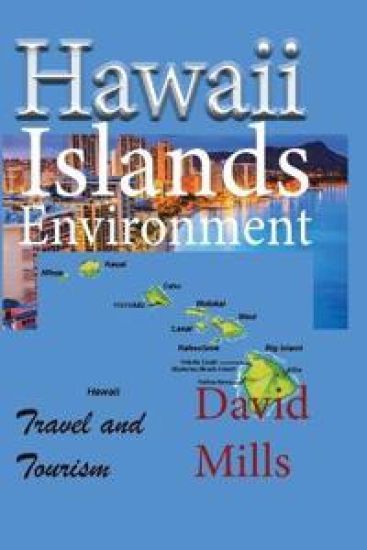
The Hawaiian Islands, Oahu Island, Maui Island, Kauai Island, Big Island, Lanai Island. Molokai Island are one of the most geographically isolated places on earth, over 2,400 miles and nearly 4,000 km to the closest landmass, which is California, USA. Born of a volcanic hotspot rising from the sea floor of the Pacific Ocean, the Hawaiian archipelago formed nearly 75 million years ago, with the eldest islands of the chain long since eroded and submerged beneath the sea's surface to the northwest and the youngest of the islands still forming beneath the sea's surface to the south east. This unique history of formation and isolation has given rise to breathtaking and extraordinary wonders. Perfect white sand beaches, abundant reefs, towering waterfalls, lush valleys, snow-capped mountains and fiery hot volcanic cauldrons captivate the hearts of those who visit as well as those who call this beautiful place home. A special culture has evolved from the unique natural environment of these islands. Native Hawaiians are the host culture here, and the values of Aloha have laid the foundation for the Hawaii we have today. Since the 1700s, peoples of various cultures have been arriving on these shores, bringing their foods, their music and their ways of life. Today Hawaii is a bold showcase for farm-to-table fusion cuisine, culturally conscious fashion and innovation. Visitors will find themselves spoiled for options between romantic boutique getaways and family friendly five star resorts. High-end retailers have put Hawaii on the map of world-class shopping destinations, and Hawaii's passionate chefs have created a foodie frenzy here. As far forward as Hawaii has evolved, those looking for a walk back in time can still find Old Hawaii tucked away off the beaten paths. And the ancient stories still exist in the lovely hula hands of dancers who have given themselves as keepers of the culture
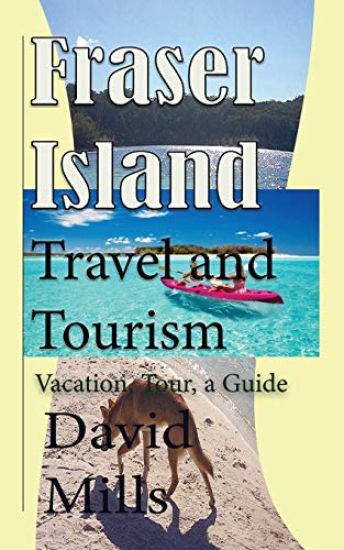
Fraser Island Travel and Tourism
Fraser Island Travel and Tourism. Vacation, Tour, a Guide. The local Butchulla people call it K'Gari paradise and for good reason. Sculpted from wind, sand and surf, the striking blue freshwater lakes, crystalline creeks, giant dunes and lush rainforests of this gigantic sandbar form an enigmatic island paradise unlike anywhere else. Fraser Island is the largest sand island in the world (measuring 120km by 15km), and is the only known place where rainforest grows on sand. Inland, the vegetation varies from dense tropical rainforest and wild heath to wetlands and wallum scrub, with sandblows, mineral streams and freshwater lakes opening onto long sandy beaches. The island, most of which is protected as part of the Great Sandy National Park, is home to a profusion of bird life and wildlife, including the famous dingo, while offshore waters teem with dugong, dolphins, manta rays, sharks and migrating humpback whales.
History of Cambridge, United Kingdom
History of Cambridge, United Kingdom. State of Advancement, Economy and Environment. Cambridge, the county town, and since 1951 a city, owes its position to the crossing of two natural lines of communication. The Cam, constituting a river route from south-west to north-east, was a main artery for traffic through the Fenland until the railway period; as the Recorder of Cambridge said in his speech to James I in 1615, 'This river, with navigation to the sea, is the life of traffic to this town and county.' It was the chalk and gravel ridge that determined the line of the road which continued the Worsted Street to Huntingdon. Known in the Middle Ages as Stoneway or Huntingdon Way, it crossed the river by 'the one bridge in England which gives name to a county'. Roads from St. Neots and Ely join the Huntingdon Road west of the bridge, and to the east roads from Newmarket, Bishop's Stortford, Ware, and Baldock converge on the city. To the end of the 18th century the built-up area of Cambridge was concentrated round the castle site north-west of the bridge and the market-place south-east of it, roughly 1 mile long and 1/2 mile broad, surrounded by the town fields which stretched east and west for 31/2 miles. Outlying settlements at Barnwell downstream and Newnham upstream were only absorbed by the expansion of the 19th century which, beginning along the Newmarket Road, extended the built-up areas southwards and northwards both sides of the river until the houses of Cambridge in 1951 extended 21/2 miles southeast of the bridge and a mile to the north. In 1912 and 1935 the Borough boundaries were successively extended to include the whole of Chesterton and Cherry Hinton and parts of Impington and Milton, Fen Ditton, Great Shelford, Trumpington, and Grantchester
Atherton Tablelands Tourism, Queensland Australia
Atherton Tablelands Tourism, Queensland Australia. Travel Guide. Great Barrier Reef. The Atherton Tablelands is the name given to the rich agricultural lands inland from Cairns. It is home to a number of towns like Kuranda, Ravenshoe and Atherton. Right troughout the region are many tourist attractions such as lake Eacham, the Curtain Fig tree and the Undarra Lava Tubes. From Cairns to Kuranda, the road winds up the mountain with views of the coast and rainforest. Upon arrival you will discover the quaint little township of Kuranda with country style markets and galleries. The Australian Butterfly Sanctuary is brilliant and the walk through free flight aviary of Birdworld, where birds live freely is a wonderful experience. You will discover lots to do in Kuranda and accommodation ranges from caravan parks to bed & breakfasts. Atherton Tablelands, Atherton Tablelands Guide, Atherton Tablelands Tour, Queensland tour, Australia travel guide, Great Barrier Reef tour, Books
Power Play

Power Play

Jay Scherer; David Mills; Linda Sloan McCulloch

University of Alberta Press
2019
pokkari
When the Rogers Place arena opened in downtown Edmonton in September 2016, no amount of buzz could drown out the rumours of manipulation, secret deals, and corporate greed undergirding the project. Working with documentary evidence and original interviews, the authors present an absorbing account of the machinations that got the arena and the adjacent Ice District built, with a price tag of more than $600 million. The arena deal, they argue, established a costly public financing precedent that people across North America should watch closely, as many cities consider building sports facilities for professional teams or international competitions. Their analysis brings clarity and nuance to a case shrouded in secrecy and understood by few besides political and business insiders. Power Play tells a dramatic story about clashing priorities where sports, money, and municipal power meet. Foreword by Richard Gruneau.
A Lesson Of Faith

A Lesson Of Faith

David Mills

Christian Faith Publishing, Inc
2018
sidottu
My father and paternal grandfather were both ministers; when I was very young, I spent a lot of time listening to them and others discussing the Scriptures. Judas's name would come up, and I could not understand why Judas would betray Jesus for any amount of money and why so many people viewed him as a villain. Judas must have known he would have been put to death by many of Jesus's followers who loved him very much. As time went by and I was reading the Bible on my own, I discovered that Judas was Jesus's friend and was only doing what Jesus asked him to do. This book, A Lesson in Faith, was written to emphasize the utmost importance of having faith in what Jesus said. On numerous occasions, the priest, scribes, and elders consulted that they might take Jesus by subtlety and kill him, so there was really no reason for betrayal (Matt. 26:3, 4). I think the reason for the betrayal in the beginning was to give all twelve of the apostles a chance to have enough faith in Jesus to give their lives as they said they would (Matt. 26:35). Only Judas had enough faith to give his life by hanging himself. Then the other eleven apostles forsook him and fled; they did not have faith in what Jesus said to them, "If any man will come after me, let him deny himself, and take up his cross daily and follow me. For whosoever will save his life shall loose it: but whosoever will lose his life for my sake, the same shall save it" (Luke 9:23-24). The eleven apostles lost their life in the end, but with Jesus's help, Judas's life was saved. Therefore, Judas must be the disciple whom Jesus loved A very good source for more information on the relationship between Jesus and Judas can be found in the book, THE LOST GOSPEL by Herbert Krosney.
A Lesson Of Faith

A Lesson Of Faith

David Mills

Christian Faith Publishing, Inc
2018
pokkari
My father and paternal grandfather were both ministers; when I was very young, I spent a lot of time listening to them and others discussing the Scriptures. Judas's name would come up, and I could not understand why Judas would betray Jesus for any amount of money and why so many people viewed him as a villain. Judas must have known he would have been put to death by many of Jesus's followers who loved him very much. As time went by and I was reading the Bible on my own, I discovered that Judas was Jesus's friend and was only doing what Jesus asked him to do. This book, A Lesson in Faith, was written to emphasize the utmost importance of having faith in what Jesus said. On numerous occasions, the priest, scribes, and elders consulted that they might take Jesus by subtlety and kill him, so there was really no reason for betrayal (Matt. 26:3, 4). I think the reason for the betrayal in the beginning was to give all twelve of the apostles a chance to have enough faith in Jesus to give their lives as they said they would (Matt. 26:35). Only Judas had enough faith to give his life by hanging himself. Then the other eleven apostles forsook him and fled; they did not have faith in what Jesus said to them, "If any man will come after me, let him deny himself, and take up his cross daily and follow me. For whosoever will save his life shall loose it: but whosoever will lose his life for my sake, the same shall save it" (Luke 9:23-24). The eleven apostles lost their life in the end, but with Jesus's help, Judas's life was saved. Therefore, Judas must be the disciple whom Jesus loved A very good source for more information on the relationship between Jesus and Judas can be found in the book, THE LOST GOSPEL by Herbert Krosney.
Scattered Thoughts from a Scattered Mind
Hello, and welcome again to the land of Scattered Thoughts, coming to you live from Neal Youngs Sugar Mountain And yes, we do have barkers and colored balloons. When last we spoke, it was 2016. Donald Trump had just won the White House, and everybody and his brother was raising hell. Negan from The Walking Dead would say, Not cool Not cool at all I hope by now youve seen there was no need whatsoever for all of the hoopla. Weve gone an entire year, and dig this, the talking heads performed admirably, no one detonated a nuclear device in anyone elses backyard, and garbage pickup continued to be spot-on. If you ask me, Im putting that in the win column. I trust youve fared well this year and celebrated the 2017 holidays properly with your friends and loved ones. I know I did. Again, my work is complete to the best of my ability. Yours is just beginning.