Kirjailija
David Mitchell
Kirjat ja teokset yhdessä paikassa: 145 kirjaa, julkaisuja vuosilta 1960–2026, suosituimpiin kuuluu Hannah. Vertaile teosten hintoja ja tarkista saatavuus suomalaisista kirjakaupoista.
145 kirjaa
Kirjojen julkaisuvuodet: 1960–2026.
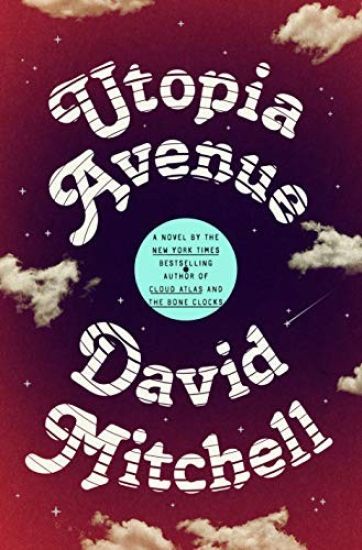
NEW YORK TIMES BESTSELLER - The long-awaited new novel from the bestselling, prize-winning author of Cloud Atlas and The Bone Clocks. New York Times Book Review Editors' Choice - "Mitchell's rich imaginative stews bubble with history and drama, and this time the flavor is a blend of Carnaby Street and Chateau Marmont."--The Washington Post "A sheer pleasure to read . . . Mitchell's prose is suppler and richer than ever . . . Making your way through this novel feels like riding a high-end convertible down Hollywood Boulevard."--Slate NAMED ONE OF THE BEST BOOKS OF THE YEAR BY The Washington Post - NPR - USA Today - The Guardian - The Independent - Kirkus Reviews - Men's Health - PopMatters Utopia Avenue is the strangest British band you've never heard of. Emerging from London's psychedelic scene in 1967, and fronted by folk singer Elf Holloway, blues bassist Dean Moss and guitar virtuoso Jasper de Zoet, Utopia Avenue embarked on a meteoric journey from the seedy clubs of Soho, a TV debut on Top of the Pops, the cusp of chart success, glory in Amsterdam, prison in Rome, and a fateful American sojourn in the Chelsea Hotel, Laurel Canyon, and San Francisco during the autumn of '68. David Mitchell's kaleidoscopic novel tells the unexpurgated story of Utopia Avenue's turbulent life and times; of fame's Faustian pact and stardom's wobbly ladder; of the families we choose and the ones we don't; of voices in the head, and the truths and lies they whisper; of music, madness, and idealism. Can we really change the world, or does the world change us?

This book shows the reader how to make a range of robust polyhedra from ordinary printer paper using a technique known as modular origami. Modular origami designs are made by first folding several, or sometimes many, sheets of paper into simple individual modules and then by putting these modules together, normally without the help of any kind of adhesive, to create a finished polyhedral form. Modular origami design has moved on since the hugely popular first edition which has been expanded and revised to present both a wider range of designs, and to introduce new designs which are more robust and offer more potential for mathematical adventures. Ideal for the classroom and fun for any enthusiast of either origami, or mathematics. David Mitchell gives clear step-by-step instructions.
Origami is the art of paper folding without the use of either scissors or glue. Each of the beautiful and fundamental mathematical shapes described in this book is achieved by folding sheets of standard A4 paper. It is remarkable what can been done and David Mitchell gives clear step by step instructions for each. This new second edition extends the selection massively and has been split into two volumes.
Sartre, Nietzsche and Non-Humanist Existentialism
David Mitchell
Springer Nature Switzerland AG
2020
sidottu
This book argues that existentialism’s concern with human existence does not simply make it another form of humanism. Influenced by Heidegger’s 1947 ‘Letter on Humanism’, structuralist and post-structuralist critics have both argued that existentialism is synonymous with a naïve ‘humanist’ idea of the subject. Such identification has led to the movement’s dismissal as a credible philosophy; this book aims to challenge such a view. Through a lucid and thought-provoking exploration of the concept of perversity in Sartre and Nietzsche, Mitchell argues that understanding the human as a ‘perversion’ of something other than itself allows us to have a philosophy of the human without the humanist subject. In short, through perversion, we can talk about the human as not merely having a relation to the world, but of being that relation. With an explicit defence of Sartre against the charge of humanism, accompanied by a novel and distinctive reinterpretation of Nietzsche, Mitchell recovers an existentialism that is at once both radical and philosophically relevant.
What Really Works in Special and Inclusive Education
David Mitchell; Dean Sutherland
Routledge
2020
sidottu
This fully revised and updated third edition presents teachers with a range of up-to-date evidence-based strategies they can use to tackle the challenges of inclusive education. An essential resource for the busy educator, each of the twenty-nine strategies explored in this book has a substantial research base drawn from a range of countries, a strong theoretical rationale and clear guidelines on their implementation, as well as cautionary advice where necessary. Key features of the third edition include: An easy to follow structure divided into four categories: behavioural approaches, social strategies, cognitive strategies and mixed strategies Eight new chapters, focusing on topical areas such as neuroscience, social and emotional education, visual learning and communication and the transition from school to post-school environments Updated chapters that consider the most diverse and up-to-date research in education, psychology, health and technology Whilst the focus of this book is on children with special educational needs, the strategies are universally applicable, making this essential reading for all classroom teachers, school leaders, teacher educators and students, educational psychologists, special needs coordinators and consultants and educational researchers.
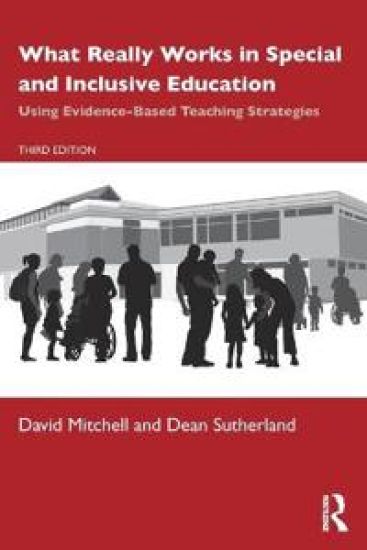
What Really Works in Special and Inclusive Education
David Mitchell; Dean Sutherland
Routledge
2020
nidottu
Halvin toimitettuna 52,20 €
This fully revised and updated third edition presents teachers with a range of up-to-date evidence-based strategies they can use to tackle the challenges of inclusive education. An essential resource for the busy educator, each of the twenty-nine strategies explored in this book has a substantial research base drawn from a range of countries, a strong theoretical rationale and clear guidelines on their implementation, as well as cautionary advice where necessary. Key features of the third edition include: An easy to follow structure divided into four categories: behavioural approaches, social strategies, cognitive strategies and mixed strategies Eight new chapters, focusing on topical areas such as neuroscience, social and emotional education, visual learning and communication and the transition from school to post-school environments Updated chapters that consider the most diverse and up-to-date research in education, psychology, health and technology Whilst the focus of this book is on children with special educational needs, the strategies are universally applicable, making this essential reading for all classroom teachers, school leaders, teacher educators and students, educational psychologists, special needs coordinators and consultants and educational researchers.
Inclusive Judaism
Jonathan Romain; David Mitchell; Maureen Lipman
Jessica Kingsley Publishers
2020
nidottu
One of the best-kept religious secrets has been the revolution that has been quietly taking place within Judaism over the last two decades, as it has sought to grapple with contemporary issues. These include mixed-faith marriages, gay relationships, women's empowerment, declining numbers, atheism and being trans. It has involved a willingness to abandon biblical laws that conflict with modern values. Most ground-breaking of all, it has meant re-defining what it means to be Jewish in the 21st century. Inclusive Judaism not only uncovers this religion revolution, but presents a challenge to all people of faith on how best to marry tradition and modernity. The book also reflects the soul-searching that has prompted rabbis to chart a new course, both out of principle and as a practical way of rescuing British Jewry from possible collapse if it did not adapt to the new social trends that affect us all.
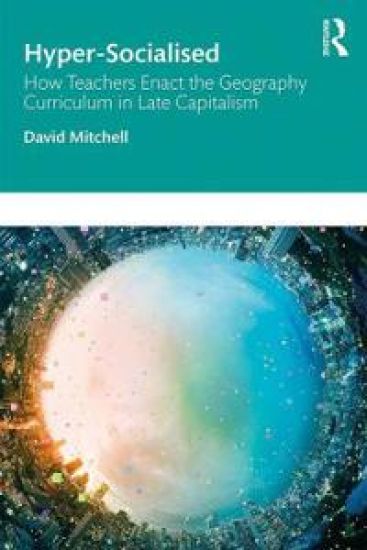
Hyper-Socialised: How Teachers Enact the Geography Curriculum in Late Capitalism
David Mitchell
Routledge
2019
nidottu
Hyper-socialised explores the challenges of late capitalist times for education systems, schools and teachers. It looks at how trends of accountability, ‘teaching to the test’, using pupil voice and reliance on network technologies are all connected to powerful social and economic forces, shaping the curriculum as it is taught in classrooms. Such forces threaten to overwhelm teachers but, in the right hands, they can also be harnessed to create, influence and teach a truly powerful curriculum for their students. Presenting a historical view of curriculum change, the book examines how society, curriculum and teachers are linked. Using geography as an illustrative subject, the chapters investigate what influences teachers, to what extent they are in control of the curriculum, and what else is shaping it. Divided into two parts, it offers An in-depth exploration of the relationship between society, teachers and the curriculum, including that what and how to teach remain wide open to debate Evidence-based research into the significance and implications of ‘hyper-socialised’ curriculum enactment for teachers and teacher education Four case study ‘portraits’ of geography departments and personal curriculum stories of each Head of Department Insights into the nature of teaching as a profession and how a crisis of teacher recruitment and retention may be addressed. Written in clear and accessible terms, this book is an essential resource for teacher educators, subject teachers, headteachers and educational researchers who want to understand how and why schools and teaching are changing – and what this means for them.
Hyper-Socialised: How Teachers Enact the Geography Curriculum in Late Capitalism
David Mitchell
Routledge
2019
sidottu
Hyper-socialised explores the challenges of late capitalist times for education systems, schools and teachers. It looks at how trends of accountability, ‘teaching to the test’, using pupil voice and reliance on network technologies are all connected to powerful social and economic forces, shaping the curriculum as it is taught in classrooms. Such forces threaten to overwhelm teachers but, in the right hands, they can also be harnessed to create, influence and teach a truly powerful curriculum for their students. Presenting a historical view of curriculum change, the book examines how society, curriculum and teachers are linked. Using geography as an illustrative subject, the chapters investigate what influences teachers, to what extent they are in control of the curriculum, and what else is shaping it. Divided into two parts, it offers An in-depth exploration of the relationship between society, teachers and the curriculum, including that what and how to teach remain wide open to debate Evidence-based research into the significance and implications of ‘hyper-socialised’ curriculum enactment for teachers and teacher education Four case study ‘portraits’ of geography departments and personal curriculum stories of each Head of Department Insights into the nature of teaching as a profession and how a crisis of teacher recruitment and retention may be addressed. Written in clear and accessible terms, this book is an essential resource for teacher educators, subject teachers, headteachers and educational researchers who want to understand how and why schools and teaching are changing – and what this means for them.
Originally published in 1967. The common aim of all logical enquiry is to discover and analyse correctly the forms of valid argument. In this book concise expositions of traditional, Aristotelian logic and of modern systems of propositional and predicative logic show how far that aim has been achieved.
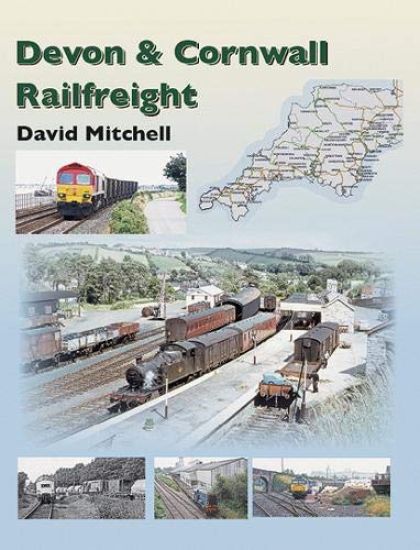
The way it was - an Historical perspective; traffic connected to an agriculture based economy, including a look at broccoli traffic etc. Supporting photos mainly steam from the 1950s (more b&w but some colour). - Milk traffic. A brief history with a more detailed (mainly pictorial) look at individual dairies from 1960s through to the end in 1981. Locations including Torrington, Lapford, Hemyock, Seaton Jn, Chard Jn, Totnes and Lostwithiel. A little steam, more diesel hydraulic and ending with diesel electric classes (mix of b&w and colour, weighted towards the former.) - China Clay. Probably the largest section of the book, perhaps 20%+. A bit of history with a few steam photos, but also a more detailed pictorial look at those loading points active from the 1970s to the present such as Burngullow and the Parkandillack branch, Par Harbour, Goonbarrow Jn, Fowey docks, Wenford, Moorswater and Plymouth. Views inclg related buildings, wagons etc (mainly colour). - Ball clay; Meeth and Heathfield branches - mainly 1970s to the end in early 2000's. - Grain and Fertiliser traffic; a short section, mainly on the Truro, Plymouth & Lapford service in the 1990s. - Coal. A general look, but majoring on Exmouth Jn Coal concentration depot (1967-92). Also 1990s flows for Plymstock cement works and Falmouth Docks. - Oil. Traffic flows to Exeter, Heathfield, Plymouth and Hayle Wharves etc (1970s to the end in 2012). - MOD. A shortish section, dealing with traffic to local bases, including nuclear from Devonport Dockyard. (1970s on). - Scrap Metal - from Plymouth, Exeter and St Blazey. (1970s on). - Cement. A brief look back to the 1960s-70s; Exeter Central, Plymouth and Chacewater in the 1980s; also the more recent Moorswater flow. - Timber. Traffic from Lapford (1980s), Exeter (1990s), Teignbridge & Exeter (present). - Aggregate. ( Mainly Mendip Rail to Exeter from 1990s on). - 'Speedlink', 'Enterprise' etc. Wagonload from 1970s to the end (2000s). Including a look at various locations, including Barnstaple, Whimple (cider), Pinhoe (bricks), Exeter, Plymouth, Cornwall (calcified seaweed) etc. - A short look at a couple of special 'one off' traffics. (1990s) - A section on 'civils' traffic, p.w. work trains. (Length might depend on space available after the above!), and - Railway ballast trains, mainly from Meldon Quarry (a little steam, photos from 1960s to the end). - Weed killers, RHTT and test trains.(Photos under the different sections could include some wagon views. All photos from 1990s on probably in colour; prior to that would be a mix.)
Originally published in 2005. David Mitchell provides a better understanding of the role presidents play in the decision-making process in terms of their influence on two key steps in the process: deliberation and outcome of policy making. The events that have taken place in relation to the Bush administration's decisions to fight the war on terrorism and invade Iraq highlight how important it is to understand the president's role in formulating policy. This influential study presents an advisory system theory of decision-making to examine cases of presidential policy formulation drawn from the Nixon, Carter, Reagan, Clinton and Bush administrations. Easily accessible to scholars, graduates and advanced undergraduates interested in US foreign policy or foreign policy analysis, presidential studies, and bureaucracy and public administrations scholars, and to practitioners and those with a general interest in International Relations.
David Mitchell's connection with cricket began when his grandad took him to Bradford in 1961 to watch Yorkshire play the Australians. It was the start of a lifelong passion for the game. Many hours were devoted to helping in the scorebox, playing Owzthat and listening to Test Match Special. `From Snicket to Wicket' is a personal, nostalgic and whimsical view of a game once played by white-clad players with a red ball. Now it is the opposite.
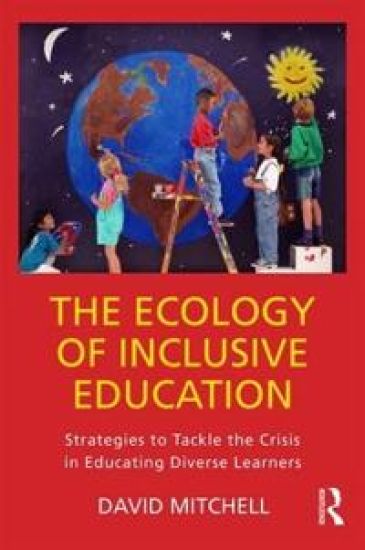
Educators today face two major challenges. The first, is to develop an education system which meets the needs of an ever more diverse student population. The second, is to successfully implement such a system. This requires nothing less than a revolutionary transformation of current approaches taken to education. Drawing on research-based evidence and offering over 70 concrete strategies to help educators respond to these challenges, this unique book provides a blueprint for an education system which will recognize the rights of all students, while engendering social cohesion and an equitable society. Broadening the scope of inclusive education, the author presents an ecological model – a system which places children at its centre and acknowledges the impacts of school, community, bureaucracy and society, to maximize opportunities for learning, and see students achieve the same levels of attainment, regardless of their gender, socio-economic status, ethnicity, religious beliefs or disability. A timely book which addresses the concerns of teachers and educators around the globe, The Ecology of Inclusive Education will give its readers the knowledge and confidence they require to meet the needs of each and every learner.
Politics and peace in Northern Ireland analyses the complex and contradictory process of implementing the Good Friday Agreement. Using the lens of security dilemma theory, it begins with an original overview of the conflict, the Agreement and post-1998 politics. The book then explores post-Agreement Northern Ireland through the eyes of each of the four main political parties, showing how they tried to shape the course of peace implementation, and how implementation, in turn, shaped the fates and fortunes of the parties. Drawing on extensive original research, this book explains the promise and limits of the Agreement. It shows how and why the two sides' mutual insecurities repeatedly derailed peace implementation, and reflects on the likely direction of parties and politics in the future. This clearly written and up-to-date book will be of interest to scholars and students of recent Northern Irish history, ethnic conflict and peace-making.