Kirjailija
David Morton
Kirjat ja teokset yhdessä paikassa: 26 kirjaa, julkaisuja vuosilta 1995–2025, suosituimpiin kuuluu The Lost Treasure of Blackbeard. Vertaile teosten hintoja ja tarkista saatavuus suomalaisista kirjakaupoista.
26 kirjaa
Kirjojen julkaisuvuodet: 1995–2025.
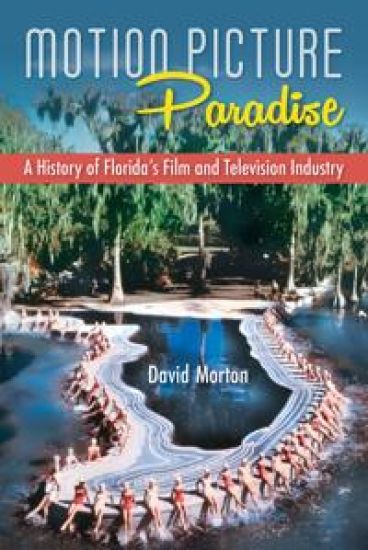
Highlighting Florida’s essential, often overlooked role in shaping American film and television ? Motion Picture Paradise is a sweeping story of filmmaking in Florida, featuring the activities of studios and filmmakers across the peninsula by looking at the many iconic films and television shows shot in the state. In the early years of the American film industry, Florida was a favorite location for pioneer movie makers, and David Morton chronicles the state’s importance to producers throughout the next 125 years. Often overshadowed by the well-known entertainment industries of Hollywood and New York, Florida has over time had several major film production centers. Morton follows the rise and fall of filmmaking destinations across the state, including Jacksonville, St. Augustine, Tampa Bay, Orlando, and Miami, as well as pioneering underwater and location-based films shot at Florida’s unique natural springs. He argues that conflicting policies set by Florida politicians have, at various times, enticed or pushed away movie and television companies, a pattern that has hampered serious investment.? Using a wealth of source materials, Morton offers a comprehensive history that demonstrates how films and television shows made in Florida have influenced the state’s sense of identity, drawing attention to Florida’s underacknowledged role as the “third coast” in American film history. Motion Picture Paradise adds new insights into the state’s dramatic social and economic transformations during the twentieth century.
Highlighting Florida’s essential, often overlooked role in shaping American film and televisionMotion Picture Paradise is a sweeping story of filmmaking in Florida, featuring the activities of studios and filmmakers across the peninsula by looking at the many iconic films and television shows shot in the state. In the early years of the American film industry, Florida was a favorite location for pioneer movie makers, and David Morton chronicles the state’s importance to producers throughout the next 125 years. Often overshadowed by the well-known entertainment industries of Hollywood and New York, Florida has over time had several major film production centers. Morton follows the rise and fall of filmmaking destinations across the state, including Jacksonville, St. Augustine, Tampa Bay, Orlando, and Miami, as well as pioneering underwater and location-based films shot at Florida’s unique natural springs. He argues that conflicting policies set by Florida politicians have, at various times, enticed or pushed away movie and television companies, a pattern that has hampered serious investment. Using a wealth of source materials, Morton offers a comprehensive history that demonstrates how films and television shows made in Florida have influenced the state’s sense of identity, drawing attention to Florida’s underacknowledged role as the “third coast” in American film history. Motion Picture Paradise adds new insights into the state’s dramatic social and economic transformations during the twentieth century.
Nortons of Russellville, KY. is an unchanged, high-quality reprint of the original edition of 1891. Hansebooks is editor of the literature on different topic areas such as research and science, travel and expeditions, cooking and nutrition, medicine, and other genres. As a publisher we focus on the preservation of historical literature. Many works of historical writers and scientists are available today as antiques only. Hansebooks newly publishes these books and contributes to the preservation of literature which has become rare and historical knowledge for the future.
This is a story of life in a large lake and of Morris the Mirror Carp who is now old, and happy to live out the rest of his days grazing on the gravel lake-bed, looking for cheese. His peace is disturbed when Queen Thea, a Tench, asks him to search the lake and find out what is happening to the fish, as the population is getting smaller, and if a war is about to start with the Pikes who are suspected of taking more food than they are allowed. The Queen insists her royal bodyguard, a Japanese Koi carp called Kenzo, goes with him. However, the royal princess, Tina, tags along as well and their adventure begins. Morris confronts the King of the Pike's, Gaspard, but he is only a puppet king now. His kingdom is being run by his two sons who are suspected of planning a take-over of the lake. Can Morris persuade Gaspard to join them and find out who is taking the fish? Join Morris and his friends, and discover who is responsible for the unrest in Lily Lake, and if Morris will ever find the right cheese.
An ordinary family are making a new start in life. Dad has a new job in Portsmouth Dockyard, which means his wife and two sons have to endure an apprehensive relocation and have a change of friends and lifestyle to experience as they adapt to life in their new home, Portsmouth. Their adventures take us through a swashbuckling pirate journey of treasure maps and shipwrecks marooned on a desert island from the early 1700s. We witness the finale of Lord Nelson's illustrious life and the Battle of Trafalgar in 1805. Take a deep breath, as the voyage really begins when the boys explore their new home and the old parts of the city of Portsmouth, which is steeped in maritime history. They befriend a knowledgeable old sea dog who helps them reach a fantastic conclusion that only dreams are made of...
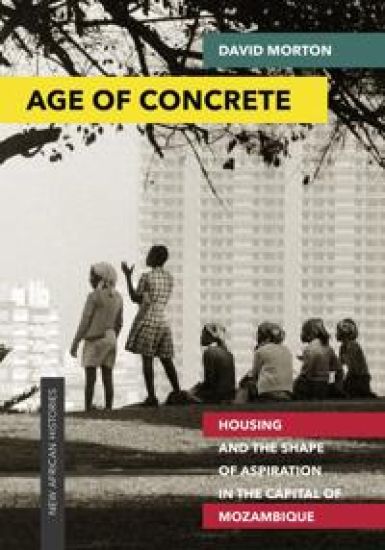
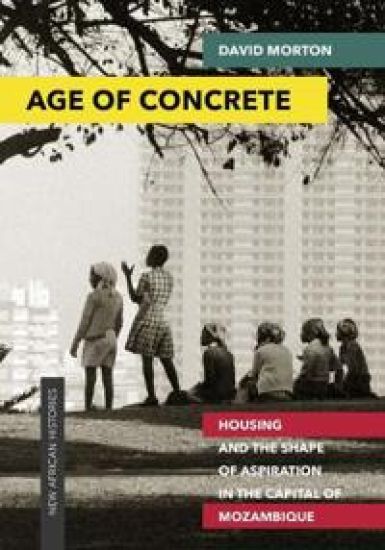
Age of Concrete is a history of the making of houses and homes in the subúrbios of Maputo (Lourenço Marques), Mozambique, from the late 1940s to the present. Often dismissed as undifferentiated, ahistorical "slums," these neighborhoods are in fact an open-air archive that reveals some of people's highest aspirations. At first people built in reeds. Then they built in wood and zinc panels. And finally, even when it was illegal, they risked building in concrete block, making permanent homes in a place where their presence was often excruciatingly precarious. Unlike many histories of the built environment in African cities, Age of Concrete focuses on ordinary homebuilders and dwellers. David Morton thus models a different way of thinking about urban politics during the era of decolonization, when one of the central dramas was the construction of the urban stage itself. It shaped how people related not only to each other but also to the colonial state and later to the independent state as it stumbled into being. Original, deeply researched, and beautifully composed, this book speaks in innovative ways to scholarship on urban history, colonialism and decolonization, and the postcolonial state. Replete with rare photographs and other materials from private collections, Age of Concrete establishes Morton as one of a handful of scholars breaking new ground on how we understand Africa's cities.
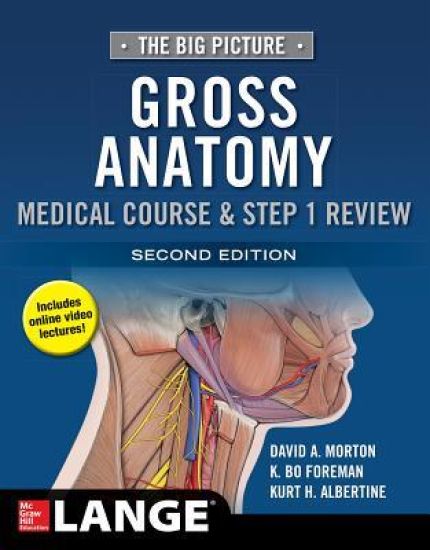
The Big Picture: Gross Anatomy, Medical Course & Step 1 Review, Second Edition
David Morton; K. Bo Foreman; Kurt Albertine
McGraw-Hill Education
2019
nidottu
More than 400 full-color illustrations along with brief, memorable text help you understand gross anatomy in the context of healthcareNEW! High-quality videos on each major topic – great for visual learners! A Doody’s Core Title for 2024 & 2022! The Big Picture: Gross Anatomy, Second Edition is the perfect bridge between reviews and textbooks. With an emphasis on what you truly need to know versus “what’s nice to know”, it features more than 400 full-color illustrations, along with a simple, effective page design that gives you a complete, yet concise, overview of essential anatomy. The book’s user-friendly presentation consists of text on the left-hand page and beautiful full-color illustrations on the right-hand page. In this way, you get a “big picture” of anatomy principles, delivered one concept at a time – making them easier to understand and remember. Zero-in on what you really need to know to ace the course and board exams with:NEW! Access to high-quality videos on each major topic -- students can view them before reading the text or attending lecturesKey structures highlighted in bold when they are first mentionedBullets and numbers used to break down important conceptsMore than 400 full-color figures illustrate essential anatomyHigh-yield clinically relevant concepts indicated by a special iconStudy questions and answers following each sectionA final exam at the end of the bookIf you want a well-illustrated, succinct, high-yield review to help you excel on your coursework and the boards, your search ends with The Big Picture: Gross Anatomy, Second Edition. PowerPoint™ images of every illustration in the book are available to faculty
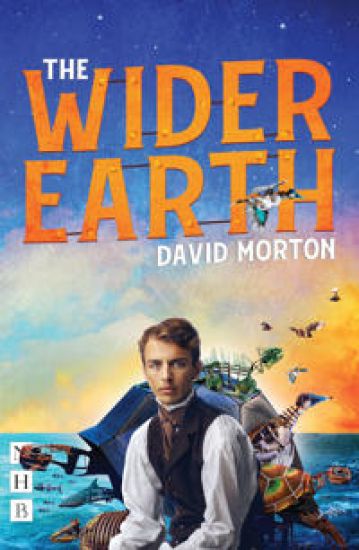
In 1831, Charles Darwin, a twenty-two-year-old aspiring naturalist, stepped on board HMS Beagle. Little did he realise that the voyage would last five years, changing not only his own life – but also the history of the entire world. The Wider Earth brings this era-defining adventure to life, from traversing the dizzying heights of the Andes to diving into the depths of the Brazilian rainforest, through weathering the storms of Tierra del Fuego, to exploring the endless wonders of the Galápagos Islands. It's a coming-of-age story about science and faith – of how one inquisitive young man asked a question of Mother Nature, and was set on course to discover the answer to one of the greatest mysteries of life on Earth. David Morton's play received its widely acclaimed premiere at Queensland Theatre in Australia in 2016, before transferring to the Natural History Museum, London, in October 2018, presented by Trish Wadley Productions, Dead Puppet Society and Glass Half Full Productions, in a partnership project with the Natural History Museum. Originally performed in a dazzling state-of-the-art production with remarkable puppetry and cinematic animations, the powerful story at the heart of The Wider Earth will inspire schools, colleges and amateur theatre companies to create simpler – but no less spectacular – stagings of their own. This edition includes 4 pages of colour production photos from the 2018 Sydney Festival and Sydney Opera House production.
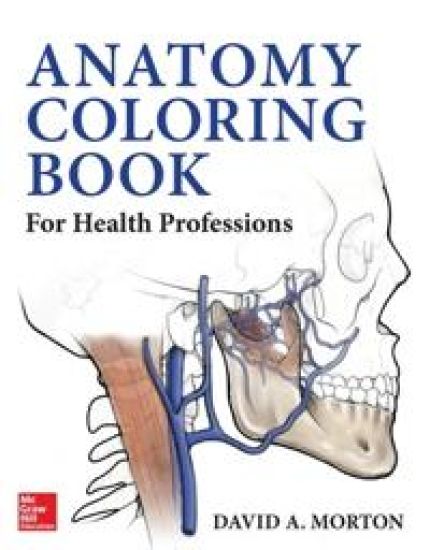
Anatomy Coloring Book for Health Professions
David Morton; Kurt Albertine
McGraw-Hill Medical
2014
nidottu
Publisher's Note: Products purchased from Third Party sellers are not guaranteed by the publisher for quality, authenticity, or access to any online entitlements included with the product. A CREATIVE, FUN, AND EFFECTIVE WAY TO LEARN HUMAN ANATOMYMore than 200 illustrationsIf you're looking for an interesting and innovative way to learn the various parts and systems of the human body, your search ends here! Anatomy Coloring Book for Health Professions is a fresh, fun way for students to grasp the big picture of human anatomy through a regional approach (head and neck and limbs). Anatomy Coloring Book for Health Professions is designed for the most effective learning possible:The left-hand page features a numerated structure listThe right-hand page has illustrations correlating to the numerated structure listSimply choose a color and shade in a term on the left and the correlated structure on the right. Repeat for each structure in the list. White space is provided to enable you to transfer anatomy and clinical information fromyour lecture notes to the appropriate illustration or term. After an illustration is fully colored and notes have been transferred you will have created your ownpersonalized textbook specific to your anatomy course! You will find that coloring imprints on your mind the shape and location of each body part, making later visualization much easier. The connection between eye and hand when coloring anatomic structures will prove to be an active and effective way to learn human anatomy.
Publisher's Note: Products purchased from Third Party sellers are not guaranteed by the publisher for quality, authenticity, or access to any online entitlements included with the product. Get the BIG PICTURE of Histology – and zero-in on what you really need to know to ace the course and board exams! A Doody's Core Title for 2020!400 FULL-COLOR ILLUSTRATIONS Medical Histology: The Big Picture is a different kind of study tool. With an emphasis on what you “need to know” versus “what’s nice to know”, and featuring more than 400 full-color illustrations and micrographs, it offers a focused, streamlined overview of human histology. You’ll find a succinct, user-friendly presentation designed to make even the most complex concepts understandable in a short amount of time. With just right balance of information to give you the edge at exam time, this unique combination text and atlas features:An efficient, study-enhancing design consisting of text on the left-hand page and related illustrations on the right-hand page – allowing you to grasp individual principles, one concept at a timeThe inclusion of detail, often clinical in nature, that clarifies the link between the structural and functional applications of histologyReview questions and answers at the end of each chapterA complete final exam at the end of the bookIcons that indicate high-yield, clinically relevant concepts Key Structures highlighted when they first appear to indicate their importanceMore than 400 full-color illustrations and micrographs depicting essential histologyConcise, easy-to-remember bulleted text
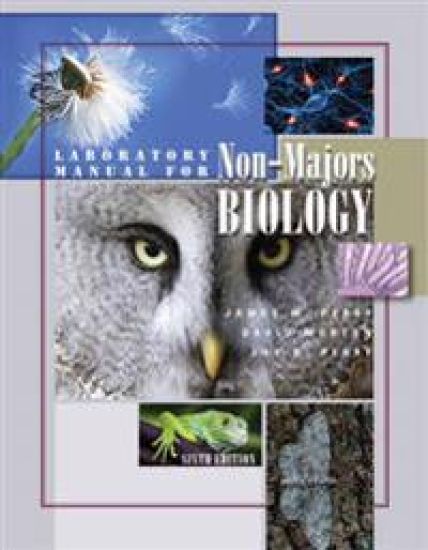
Laboratory Manual for Non-Majors Biology, International Edition
James Perry; David Morton; Joy B. Perry
Brooks/Cole
2012
nidottu
Succeed in biology with LABORATORY MANUAL FOR NON-MAJORS BIOLOGY, 6E, International Edition! Through hands-on lab experience, this biology laboratory manual reinforces biology concepts to help you get a better grade. Exercises, pre-lab questions, and post-lab questions enhance your understanding and make lab assignments easy to complete and easy to comprehend.
Laboratory Manual for Non-Majors Biology
James Perry; David Morton
Cengage Learning, Inc
2012
nidottu
Succeed in biology with LABORATORY MANUAL FOR NON-MAJORS BIOLOGY! Through hands-on lab experience, this biology laboratory manual reinforces biology concepts to help you get a better grade. Exercises, pre-lab questions, and post-lab questions enhance your understanding and make lab assignments easy to complete and easy to comprehend.
The Renaissance of Irish Poetry, 1880-1930 is a comprehensive study of the Irish literary revival during the late 19th and early 20th centuries. Written by David Morton, the book explores the emergence of a new generation of Irish poets who sought to revive the country's literary traditions and create a distinct national identity through their work. The book begins with an overview of the cultural and political climate in Ireland during this period, including the impact of the Gaelic Revival and the struggle for Irish independence. It then delves into the lives and works of key poets of the era, including W. B. Yeats, Lady Gregory, and James Joyce, among others. Morton examines the themes and styles of these poets, exploring how they drew on traditional Irish mythology and folklore to create a new literary aesthetic. He also considers the influence of other literary movements of the time, such as Symbolism and Modernism, on the development of Irish poetry. Throughout the book, Morton provides detailed analysis of individual poems and explores the wider cultural and historical context in which they were written. He also considers the role of poetry in shaping Irish national identity and the impact of the Irish literary revival on the wider world of literature. Overall, The Renaissance of Irish Poetry, 1880-1930 is a valuable resource for anyone interested in the history of Irish literature and the cultural and political forces that shaped it during this pivotal period. This scarce antiquarian book is a facsimile reprint of the old original and may contain some imperfections such as library marks and notations. Because we believe this work is culturally important, we have made it available as part of our commitment for protecting, preserving, and promoting the world's literature in affordable, high quality, modern editions, that are true to their original work.
Lab Manual for Majors General Biology
James Perry; David Morton; Joy B. Perry
Brooks/Cole
2008
kierre
Featuring a clear format and a wealth of illustrations, this lab manual helps biology majors learn science by doing it. This manual includes numerous inquiry-based experiments, relevant activities, and supporting questions that assess recall, understanding, and application. The exercises support any biology text used in a majors course.