Kirjojen hintavertailu – 12 903 725 kirjaa ja 27 kauppaa

Kirjailija

David Muggleton

Kirjat ja teokset yhdessä paikassa: 8 kirjaa, julkaisuja vuosilta 2000–2025, suosituimpiin kuuluu Chichester Pubs. Vertaile teosten hintoja ja tarkista saatavuus suomalaisista kirjakaupoista.

8 kirjaa

Kirjojen julkaisuvuodet: 2000–2025.

Horsham Pubs

Horsham Pubs

David Muggleton

AMBERLEY PUBLISHING
2025
nidottu
Horsham is the natural capital of the western end of Sussex’s forest ridge, its significance and development dating from the medieval period when it became an important market centre and home to the county assizes. Horsham also became a very significant brewing town, being the home of King & Barnes. Although the family firm, closed in 2000, the legacy continues to be reflected in the town’s drinking culture today and with the opening of a number of small breweries in the town and surrounding area in recent years. In Horsham Pubs David Muggleton guides us through this high Wealden town to visit its fascinating and varied hostelries, many of which have retained features and traditions of previous ages. The originally expanded around The Carfax, in which stands the eighteenth-century Crown Inn. The Bishopric is another ancient street and home to the Kings Arms, known by 1667, and the probably even older Olive Branch, originally the Green Dragon and timber-framed with wattle and daub panels. Other pubs include the Brewhouse & Kitchen recently opened in the former Horse & Groom pub; the Malt Shovel, formerly the Michell Arms after one of the town’s former brewers and rebuilt in 1939; and the Anchor Tap, once appurtenant to the Anchor Hotel and reopened as a pub in 2016 – the local branch of the Campaign for Real Ale was founded here in 1975. Our tour also takes us out of the town centre to the Foresters Arms, a genuine community pub for a residential area; the Boars Head, a country farmhouse that became the Fox & Hounds until being renamed in 1971; and the new Chapeau Brewery taproom located on an industrial estate. This carefully crafted guide will initiate readers into the fascinating history of Horsham’s pubs.
Worthing Pubs

Worthing Pubs

David Muggleton; Colin Walton; James Henry

Amberley Publishing
2020
nidottu
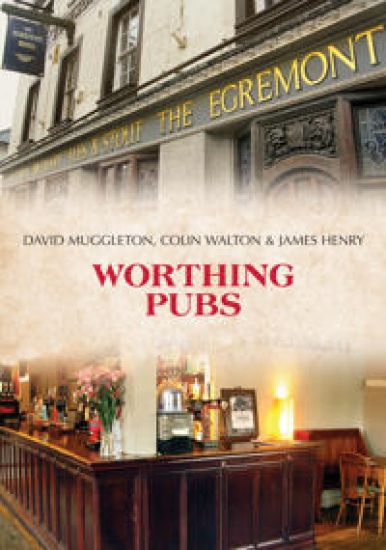
The hamlet of Worthing began to develop as a fashionable seaside resort during the late eighteenth century. It attained town status in 1803 when its administration was invested in a board of commissioners that first met at the Nelson Hotel. Inns of greater antiquity were the White Horse at West Tarring, the Maltsters Arms at Broadwater and the Anchor in Worthing High Street. Other well-established pubs, such as the town centre Warwick and the Cricketers at Broadwater, began as basic beer retailers and brewing victuallers of the early Victorian period. Several pubs in the area are of architectural interest. The ornate Grand Victorian opened in 1900 as the Central Hotel, the half-timbered design of the Thomas á Becket (1910) was in homage to the nearby medieval Parsonage Row cottages, while the imposing Downlands was built in 1939 in the classic roadhouse style. Worthing Pubs takes us on a fully illustrated tour of the historical hostelries in the district, yet also acknowledges how the local drinking culture has been shaped by the contemporary craft-beer bar and the burgeoning micropub scene.
Bognor Regis Pubs

Bognor Regis Pubs

David Muggleton

Amberley Publishing
2019
nidottu
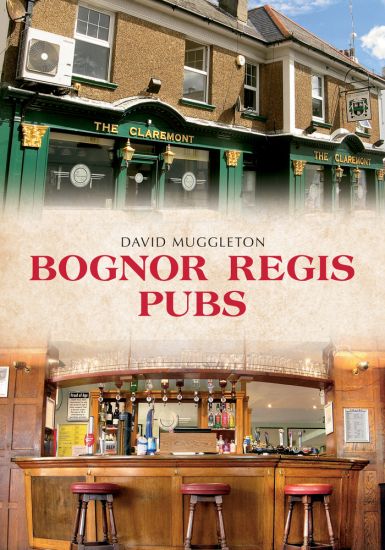
Once a small fishing hamlet, the origins of modern Bognor Regis lie in the attempt by Sir Richard Hotham to develop this part of the south coast as a fashionable resort in the late eighteenth century. Hotham’s original profession is given in the name of the town’s JD Wetherspoon outlet, the Hatter’s Inn, while the pub originally called the Railway Tavern has recently been renamed the Hothampton Arms in memory of Hotham’s preferred name for his resort. The oldest pub still trading in the town is the William Hardwicke, which was built by 1817 as the New Inn. Bognor expanded with the arrival of the railway in 1864, which led to the building of new pubs such as the Terminus and the development of those already existing such as the Alexander Tavern. David Muggleton takes us on a walking tour of this seaside town’s finest pubs, taking in the ex-Berkeley Arms, now home to the town museum; the Claremont Inn, whose interwar interior makes it a CAMRA heritage pub of some regional importance; and the Punch & Judy, originally the Orlando, but recently renamed as a reminder of the Tony Hancock film The Punch & Judy Man, filmed partly on location in the town. Well researched and beautifully illustrated, Bognor Regis Pubs provides something for everyone, whether they have lived in this venerable old seaside resort all their lives or are visiting this part of the West Sussex coast for the first time.
Chichester Pubs

Chichester Pubs

David Muggleton

Amberley Publishing
2017
nidottu
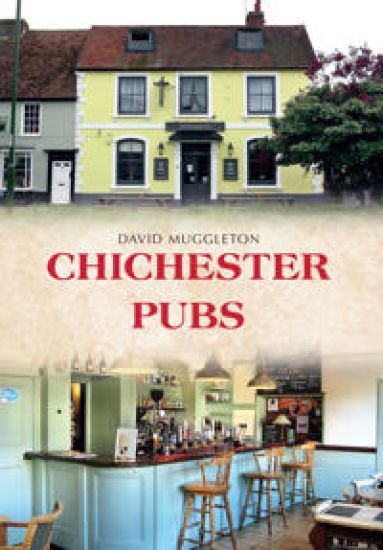
As a principal market town, many of Chichester’s inns and taverns were established at an early date, including those offering hospitality for pilgrims travelling to the cathedral for worship at the thirteenth-century shine of St Richard. Of nearly all the medieval houses – such as the Tabard, the Star, and the Plough – nothing except names in old documents survives. The number of pub closures has escalated since the 1980s. Yet Chichester still has at least three pubs continuously trading since the eighteenth century, while several others now closed retain original architectural features worthy of note. The deregulation of the trade has also seen the emergence of contemporary café-bar-pubs, such as the Belle Isle. David Muggleton takes us on a tour of this compact but elegant city, taking in the classical Georgian Ship Hotel, where General Eisenhower stayed in the lead-up to D-Day; the mid-Victorian Four Chesnuts and the mystery of its missing ‘T’; the gabled and jettied mock-Tudor Nags Head of 1925; and the Duke & Rye, recently established in a Gothic Revival church building.
Brewing in West Sussex

Brewing in West Sussex

David Muggleton

Amberley Publishing
2017
nidottu
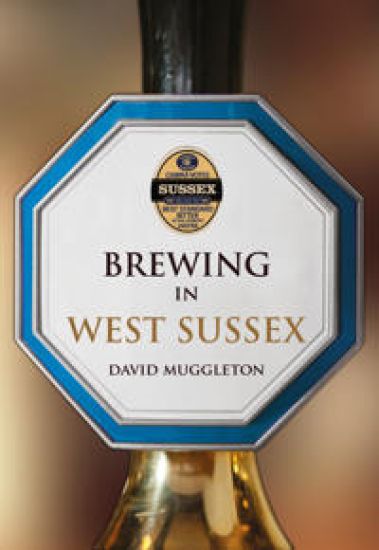
Beer originated in the Middle East about 8000 BC and took another three-and-a-half millennia to arrive across the Channel in Britain. In sixth-century Sussex – the kingdom of the South Saxons – social life centred upon the alehouse. Throughout the Middle Ages, brewing remained a domestic occupation: beer was sweet, and flavoured with herbs and spices. By 1600, when Henry Stanton was brewing in Crawley, the use of hops to flavour and preserve beer had become standard practice. The growth of the large commercial brewers was a product of the Industrial Revolution, from which era date famous West Sussex family concerns such as the Hentys of Chichester, the Ockendens of Crawley and the Constables of Littlehampton. That these are no longer with us is due to a long process of acquisition during the twentieth century. With the takeover of the last of their line, King & Barnes of Horsham, in 2000, brewing in West Sussex was left to just a handful of small independents. Yet today there are nearly thirty breweries in this part of the county. This fully illustrated and informative book pays homage to the brewing heritage of West Sussex while celebrating the current outpouring of creativity known as the microbrewery revolution.
Inside Subculture

Inside Subculture

David Muggleton

Berg Publishers
2002
nidottu
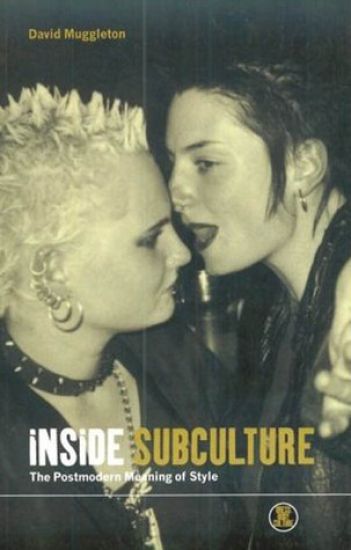
What motivates people to dress in a manner that marks them out as different to the conventional norm? Is it true that, with dress, 'anything goes' in our mix-and-match postmodern culture? Have easily recognizable, authentic subcultures imploded in a glut of ironic revivals and stylistic fragmentation? Does this supposed 'post-subcultural' generation actively celebrate ephemerality, transience and disposability, merely casting off and trying on one alternative identity after another in an ever-accelerating fashion frenzy? This exciting book is a considered sociological examination of such questions. By listening to the voices of the subcultural stylists themselves - their subjective perceptions of their style and the ideas that lie behind them - the author provides original insights into issues of subjectivity and identity. Situating an empirical case study within a wider consideration of postmodernism and cultural change, the author rejects cultural studies perspectives that attempt to 'read' subcultures as texts. Drawing on extensive interviews with people who dress in what might be deemed a stylistically unconventional manner, he seeks instead to establish whether contemporary subcultures display modern or postmodern sensibilities and forms. He argues persuasively that they do both - a stress on postmodern hyperindividualism, fluidity and fragmentation runs alongside a modernist emphasis on authenticity and underlying essence. He concludes that a Romantic libertarianism has permeated working-class culture and that the distinction between 'individualistic' middle-class countercultures and 'collectivist' working-class subcultures has been over-emphasized.
Inside Subculture

Inside Subculture

David Muggleton

BLOOMSBURY PUBLISHING PLC
2000
sidottu
What motivates people to dress in a manner that marks them out as different to the conventional norm? Is it true that, with dress, 'anything goes' in our mix-and-match postmodern culture? Have easily recognizable, authentic subcultures imploded in a glut of ironic revivals and stylistic fragmentation? Does this supposed 'post-subcultural' generation actively celebrate ephemerality, transience and disposability, merely casting off and trying on one alternative identity after another in an ever-accelerating fashion frenzy? This exciting book is a considered sociological examination of such questions. By listening to the voices of the subcultural stylists themselves - their subjective perceptions of their style and the ideas that lie behind them - the author provides original insights into issues of subjectivity and identity. Situating an empirical case study within a wider consideration of postmodernism and cultural change, the author rejects cultural studies perspectives that attempt to 'read' subcultures as texts. Drawing on extensive interviews with people who dress in what might be deemed a stylistically unconventional manner, he seeks instead to establish whether contemporary subcultures display modern or postmodern sensibilities and forms. He argues persuasively that they do both - a stress on postmodern hyperindividualism, fluidity and fragmentation runs alongside a modernist emphasis on authenticity and underlying essence. He concludes that a Romantic libertarianism has permeated working-class culture and that the distinction between 'individualistic' middle-class countercultures and 'collectivist' working-class subcultures has been over-emphasized.