
Kirjojen hintavertailu – 12 903 735 kirjaa ja 27 kauppaa

Kirjailija

David O'Connor

Kirjat ja teokset yhdessä paikassa: 24 kirjaa, julkaisuja vuosilta 1982–2025, suosituimpiin kuuluu York Minster. Vertaile teosten hintoja ja tarkista saatavuus suomalaisista kirjakaupoista.

Nimi esiintyy myös muodoissa: David O`connor

24 kirjaa

Kirjojen julkaisuvuodet: 1982–2025.

God and Inscrutable Evil

God and Inscrutable Evil

David O'Connor

Rowman Littlefield
1997
nidottu
In this important new book, David O'Connor discusses both logical and empirical forms of the problem of inscrutable evil, perennially the most difficult philosophical problem confronting theism. Arguing that both a version of theism ('friendly theism') and a version of atheism ('friendly atheism') are justified on the evidence in the debate over God and evil, O'Connor concludes that a warranted outcome is a philosophical d_tente between those two positions. On the way to that conclusion he develops two arguments from evil, a reformed version of the logical argument and an indirect version of the empirical argument, and deploys both against a central formulation of theism that he describes as orthodox theism. God and Inscrutable Evil makes a valuable contribution to contemporary debates in the philosophy of religion.
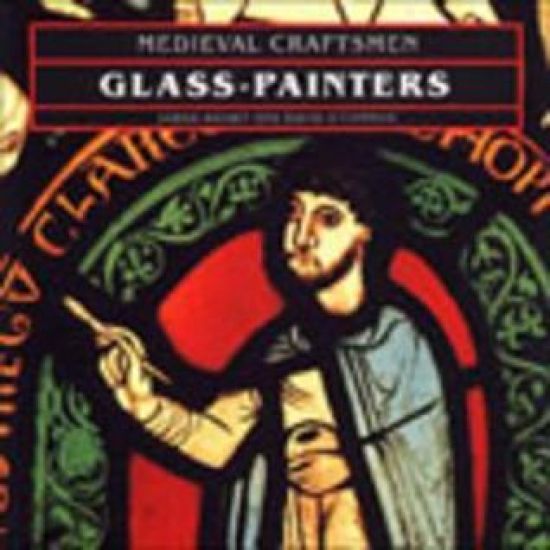
Glass-Painters

Glass-Painters

Sarah Brown; David O'Connor

University of Toronto Press
1991
pokkari
"For the human eye... marvels at the inestimable beauty of the glass and the infinitely rich and various workmanship." (Theophilus, early twelfth century) But what do we really know of the men and women who made stained glass windows, and the methods they used? Stained glassed was an invaluable medium for communicating religion to a largely illiterate populace and the glass-painter was its creator. This book describes the fascinating origins of the cragt and the techniques emplyed - including the design, colouring, and use of pattern books. The authors explain the circumstances of commission, who the patrons were, and how the glass-painter both designed and executed the window. They then discuss evidence of the education, position in society, and working practices of glass-painters. Finally, the recount the decline of this resplendent craft and the sad destruction of the windows as the Reformation and changes in fashion both took their toll. Beautifully illustrated with examples from cathedrals, churches, and castles throughout Europe, this book will enrich the understanding of all lovers of medieval art and architecture.
The Metaphysics of G. E. Moore

The Metaphysics of G. E. Moore

David O'Connor

Kluwer Academic Publishers
1982
sidottu
In this book, setting aside his consideration of specifically ethical topics, I try to provide a comprehensive interpretation of Moore's thought. Against the background of this general interpretation I examine in detail his work on some of the central problems of metaphysics and, because Moore's being able to sustain a consistent anti-skepticism is essential to the survival of the base from which he works on those problems, of epistemology too. The interpretation of which I speak involves my taking as the centerpiece of Moore's philosophical work his book, Some Main Problems of Philosophy, written in 1910 as the text of a lecture series but left unpublished for over forty years thereafter. That book is aptly titled, for the issues with which Moore deals in it are indeed among the main problems of philosophy. Not least of these are the problems of formulating a general categorial deSCription of the world and then of defending that formulation. However, while I will discuss Moore's work in light of its contribution to this project of taking metaphysical inventory, it is important to note that he, in common with many other major figures in contemporary analytical philosophy, did not approach specific philosophical puzzles with a view to possibly integrating solutions to them into a comprehensive theory about reality as a whole, that is, into what might be called a metaphysical system.