

Kirjailija
David Oswald
Kirjat ja teokset yhdessä paikassa: 5 kirjaa, julkaisuja vuosilta 2009–2026, suosituimpiin kuuluu Well Enough. Vertaile teosten hintoja ja tarkista saatavuus suomalaisista kirjakaupoista.
5 kirjaa
Kirjojen julkaisuvuodet: 2009–2026.
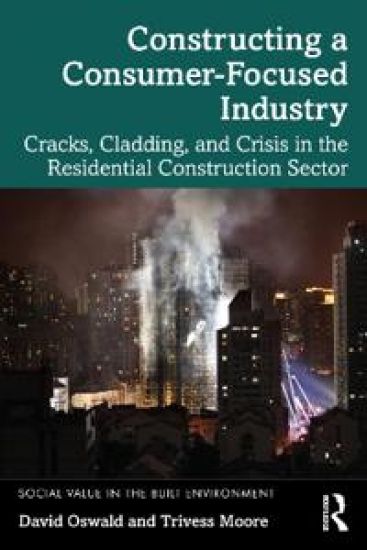
Constructing a Consumer-Focused Industry
David Oswald; Trivess Moore
TAYLOR FRANCIS LTD
2022
nidottu
The old saying ‘safe as houses’ is being challenged around the world like never before. Over recent decades homeowners have experienced the devastating effects of defects like asbestos, leaky buildings, structural failings, and more recently the combustible cladding crisis. The provision of safe and secure housing is a critical starting point to ensure that social value can be delivered in the built environment. However, some of these dangerous defects have resulted in a lack of security, safety, health, well-being, and social value for households and the wider community. The problems homeowners experience go beyond the substantial financial costs for defect rectification. Too often there has been a lack of government and industry support to help the housing consumer through these issues or to prevent them from occurring to begin with. It is time for a rethink and restructure of government policy, support, and industry practices to better protect housing consumers and deliver high-quality and sustainable housing that creates social value. Through evidence-based research and international case studies, this book focuses on the effects that dangerous defects have on the housing consumer. The ongoing construction cladding crisis is used as a primary case study throughout to highlight these implications, with other previous large-scale defect examples, such as leaky buildings and asbestos. Based upon the range of emerging evidence, we propose ideas for policy makers, construction and built environment professionals, owners corporations, and households on how to move forward towards a higher-quality, sustainable, and socially valuable way of residential living. Government policy has long focused on ‘making industry work’ through building regulations and standards. It is now time for greater government and industry focus on the consumer to make ‘consumer protection work’ in the built environment. There is a need to prevent dangerous defects like combustible cladding, better support consumers when defects emerge, and to create buildings for social value rather than minimum standards. Now is the time to build a better future for the end-user.
Constructing a Consumer-Focused Industry
David Oswald; Trivess Moore
TAYLOR FRANCIS LTD
2022
sidottu
The old saying ‘safe as houses’ is being challenged around the world like never before. Over recent decades homeowners have experienced the devastating effects of defects like asbestos, leaky buildings, structural failings, and more recently the combustible cladding crisis. The provision of safe and secure housing is a critical starting point to ensure that social value can be delivered in the built environment. However, some of these dangerous defects have resulted in a lack of security, safety, health, well-being, and social value for households and the wider community. The problems homeowners experience go beyond the substantial financial costs for defect rectification. Too often there has been a lack of government and industry support to help the housing consumer through these issues or to prevent them from occurring to begin with. It is time for a rethink and restructure of government policy, support, and industry practices to better protect housing consumers and deliver high-quality and sustainable housing that creates social value. Through evidence-based research and international case studies, this book focuses on the effects that dangerous defects have on the housing consumer. The ongoing construction cladding crisis is used as a primary case study throughout to highlight these implications, with other previous large-scale defect examples, such as leaky buildings and asbestos. Based upon the range of emerging evidence, we propose ideas for policy makers, construction and built environment professionals, owners corporations, and households on how to move forward towards a higher-quality, sustainable, and socially valuable way of residential living. Government policy has long focused on ‘making industry work’ through building regulations and standards. It is now time for greater government and industry focus on the consumer to make ‘consumer protection work’ in the built environment. There is a need to prevent dangerous defects like combustible cladding, better support consumers when defects emerge, and to create buildings for social value rather than minimum standards. Now is the time to build a better future for the end-user.

The Duino Elegies are one of the twentieth centurys great works of art. In the space of ten elegies, presented here in a bilingual edition, an impassioned monologue struggles to find an individual answer to what it means to be human in a world torn by modern consciousness. In his introduction, David Oswald writes, Rilkes poetry shows an unusual sensitivity to inner experience and to the symbolic processes of the psyche, two things that are important to me in my work as a Jungian analyst. His carefully crafted language conveys the movements of this otherwise unsayable realm and addresses the issues of finding the proper relationship to it. My goal has been to create a translation that preserves this sensitivity and precision
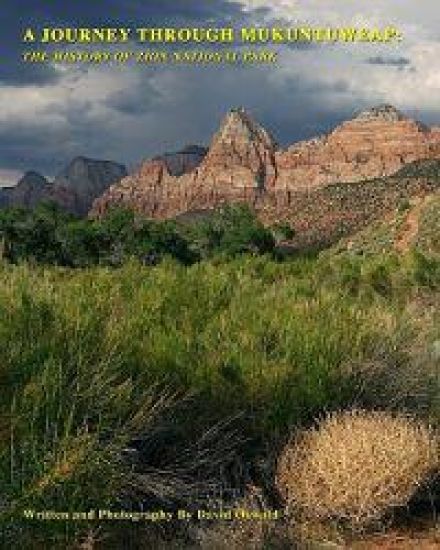
A Journey Through Mukuntuweap: The History Of Zion National Park
David Oswald
Createspace Independent Publishing Platform
2009
nidottu