Kirjojen hintavertailu – 12 859 819 kirjaa ja 27 kauppaa

Kirjailija

David P. D. Munns

Kirjat ja teokset yhdessä paikassa: 4 kirjaa, julkaisuja vuosilta 2014–2021, suosituimpiin kuuluu Legacies of the Manhattan Project. Vertaile teosten hintoja ja tarkista saatavuus suomalaisista kirjakaupoista.

Nimi esiintyy myös muodoissa: David P.D. Munns

4 kirjaa

Kirjojen julkaisuvuodet: 2014–2021.

Legacies of the Manhattan Project

Legacies of the Manhattan Project

Mick Broderick; Hilary Dickerson; Ian Graig; M.S. Gerber; Laura J. Harkewicz; Daisy Henwood; Ronald L. Kathren; Ellen D. McGehee; David P.D. Munns

Washington State University Press
2020
pokkari
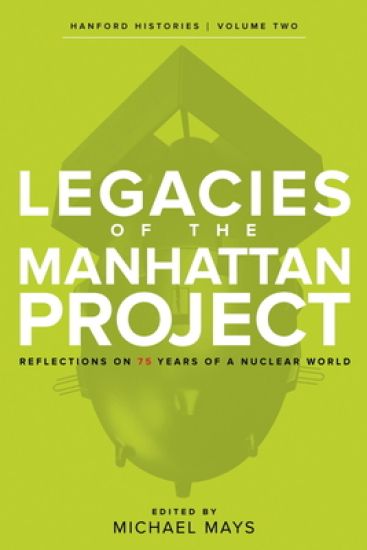
The Hanford History Project held the "Legacies of the Manhattan Project at 75 Years" conference in March 2017. Its Richland, Washington, meeting venue was a stone's throw from the southern-most edge of the Hanford Nuclear Site--the place where workers produced the plutonium that fueled the "Fat Man" nuclear bomb dropped on Nagasaki on August 9, 1945. The symposium's appeal extended well beyond local interest. Professionals from a broad array of backgrounds--working scientists, government employees, retired health physicists, downwinders, representatives from community groups, impassioned lay people, as well as scholars working in a host of different academic fields--attended and gave presentations. The diverse gathering, with its wide range of expertise, stimulated a genuinely remarkable exchange of ideas. In Legacies of the Manhattan Project, Hanford Histories series editor Michael Mays combines extensively revised essays first presented at the conference with newly commissioned research. Together, they provide a timely reevaluation of the Manhattan Project and its many complex repercussions, as well as some beneficial innovations. Covering topics from print journalism, activism, nuclear testing, and science and education to health physics, environmental cleanup, and kitsch, the compositions delve deep into familiar matters, but also illuminate historical crevices left unexplored by earlier generations of scholars. In the process, they demonstrate how the Manhattan Project lives on.
Far Beyond the Moon

Far Beyond the Moon

Kärin Nickelsen; David P. D. Munns

University of Pittsburgh Press
2021
sidottu
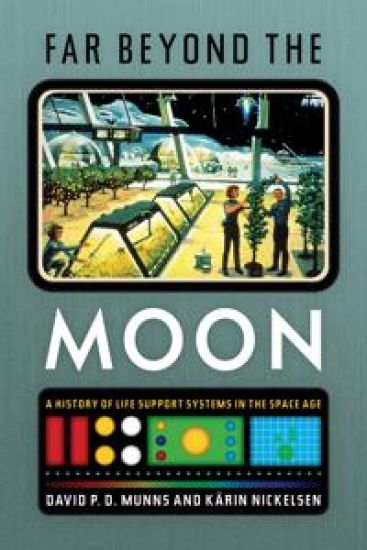
From the beginning of the space age, scientists and engineers have worked on systems to help humans survive for the astounding 28,500 days (78 years) needed to reach another planet. They've imagined and tried to create a little piece of Earth in a bubble travelling through space, inside of which people could live for decades, centuries, or even millennia. Far Beyond the Moon tells the dramatic story of engineering efforts by astronauts and scientists to create artificial habitats for humans in orbiting space stations, as well as on journeys to Mars and beyond. Along the way, David P. D. Munns and Kärin Nickelsen explore the often unglamorous but very real problem posed by long-term life support: How can we recycle biological wastes to create air, water, and even food in meticulously controlled artificial environments? Together, they draw attention to the unsung participants of the space program - the sanitary engineers, nutritionists, plant physiologists, bacteriologists, and algologists who created and tested artificial environments for space based on chemical technologies of life support - as well as the bioregenerative algae systems developed to reuse waste, water, and nutrients, so that we might cope with a space journey of not just a few days, but months, or more likely, years.
A Controlled Environment

A Controlled Environment

David P. D. Munns

University of Pittsburgh Press
2017
sidottu
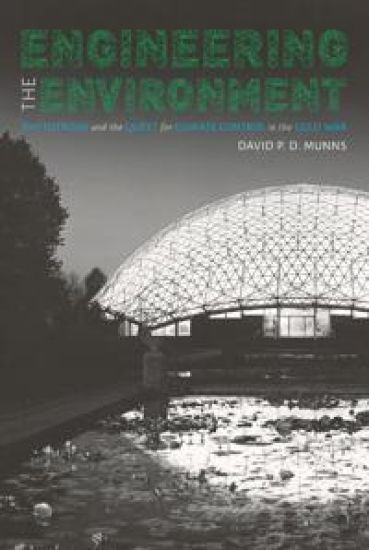
This is the first history of phytotrons, huge climate-controlled laboratories that enabled plant scientists to experiment on the environmental causes of growth and development of living organisms. Made possible by computers and other modern technologies of the early Cold War, such as air conditioning and humidity control, phytotrons promised an end to global hunger and political instability, spreading around the world to thirty countries after World War II. The United States built nearly a dozen, including the first at Caltech in 1949. By the mid-1960s, as support and funding for basic science dwindled, phytotrons declined and ultimately disappeared—until, nearly thirty years later, the British built the Ecotron to study the impact of climate change on biological communities. By recalling the forgotten history of phytotrons, Munns reminds us of the important role they can play in helping researchers unravel the complexities of natural ecosystems in the Anthropocene.
The Cannon of Learning: Reginald John Gardner's story, 1926-1999.

The Cannon of Learning: Reginald John Gardner's story, 1926-1999.

David P. D. Munns; Reginald John Gardner

Createspace Independent Publishing Platform
2014
nidottu
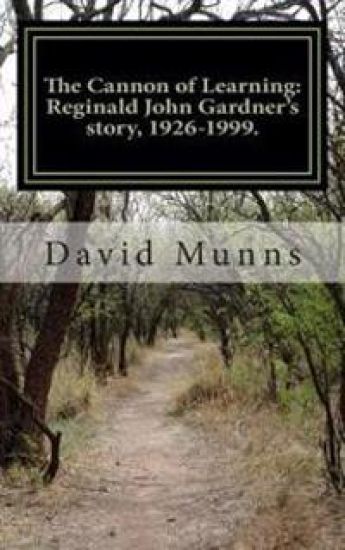
These are the memoirs of Reg Gardner. He grew up in Sydney and served in the military for over thirty years. At the peak of his career, he commanded the Australian artillery regiment in Vietnam and was the Australian defence attach to Japan. He was a witness and participant in many of the major events of Australia's Cold War. In the late 1970s, Reg retired from army service and became an undergraduate in classics at the Australian National University. There, through his undergraduate and Ph. D. years, Reg brought an inspiration that only a life lived in community can offer. Throughout his military and university life, Reg's story tells of his commitment to, and passion for, a deep belief in the positive value of maintaining traditions and fostering pride in a community. The Colonel-Doctor was a soldier and a scholar, a man of profound dignity, faith, and honour, a devoted family man, and the living definition of a gentlemen. Told with a wry sense of humour, the Cannon of Learning commemorates a rich and full life of service and inspiration.