Kirjojen hintavertailu – 12 859 829 kirjaa ja 27 kauppaa

Kirjailija

David Peterson

Kirjat ja teokset yhdessä paikassa: 44 kirjaa, julkaisuja vuosilta 1992–2026, suosituimpiin kuuluu Artificial Intelligence for Small Business. Vertaile teosten hintoja ja tarkista saatavuus suomalaisista kirjakaupoista.

44 kirjaa

Kirjojen julkaisuvuodet: 1992–2026.

Reasons for Miracles

Reasons for Miracles

David Peterson

Independently Published
2018
pokkari
This books shows the revelation of the heart of Miracles, rather than the works of miracles, it is an expository phenomenon bringing to light the motive of the Heart of Jesus, in every Miracle He performed in the book of Luke.
The Wiley-Blackwell Handbook of the Psychology of Coaching and Mentoring

The Wiley-Blackwell Handbook of the Psychology of Coaching and Mentoring

Jonathan Passmore; David Peterson; Teresa Freire

Wiley-Blackwell
2016
nidottu
A state-of-the-art reference, drawing on key contemporary research to provide an in-depth, international, and competencies-based approach to the psychology of coaching and mentoring. Puts cutting-edge evidence at the fingertips of organizational psychology practitioners who need it most, but who do not always have the time or resources to keep up with scholarly researchThematic chapters cover theoretical models, efficacy, ethics, training, the influence of emerging fields such as neuroscience and mindfulness, virtual coaching and mentoring and moreContributors include Anthony Grant, David Clutterbuck, Susan David, Robert Garvey, Stephen Palmer, Reinhard Stelter, Robert Lee, David Lane, Tatiana Bachkirova and Carol KauffmanWith a Foreword by Sir John Whitmore
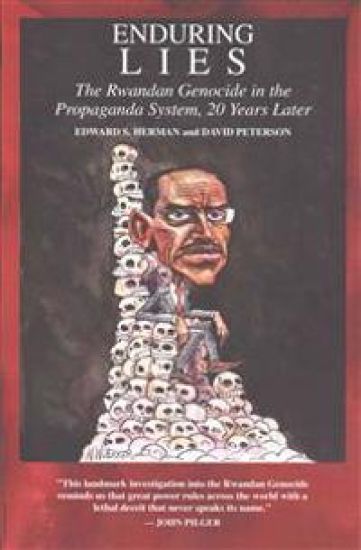
Enduring Lies: The Rwandan Genocide in the Propaganda System, 20 Years Later

Enduring Lies: The Rwandan Genocide in the Propaganda System, 20 Years Later

David Peterson; Edward S. Herman

Createspace Independent Publishing Platform
2014
nidottu
The Rwandan genocide of 1994 has been called the "fastest, most efficient killing spree of the twentieth century. In 100 days, some 800,000 Tutsi and politically moderate Hutu were murdered. The United States did almost nothing to try to stop it" (U. S. Ambassador to the United Nations Samantha Power, writing in 2002). In their book, Enduring Lies: The Rwandan Genocide in the Propaganda System, 20 Year Later (The Real News Books), Edward S. Herman and David Peterson challenge these beliefs. With sections devoted to "The 'Rwandan Genocide' by the Numbers," the Tutsi-led Rwandan Patriotic Front's October 1990 invasion of Rwanda from Uganda and Paul Kagame's ensuing 46-month war of conquest, the April 6, 1994 shoot-down of the Hutu President Juv nal Habyarimana's jet on its return to Kigali, universally regarded as the event that triggered the mass bloodshed which followed, the mythical Hutu "conspiracy to commit genocide" against the country's minority Tutsi population, the West's alleged "failure to intervene" to stop the killings, Kagame Power's triumph in Rwanda and its spread to the neighboring Democratic Republic of Congo, with a death toll running in the millions, and to the pernicious role played by the U. S., U. K., and Canadian governments, as well as by the United Nations, human rights groups, the media and intellectuals in promulgating a false history of 1994 Rwanda, the authors cross-examine what they call the "standard model" of the Rwandan genocide. "A brilliant dissection of the Western propaganda system on Rwanda," writes Christopher Black, a Canadian attorney and the lead defense counsel before the International Criminal Tribunal for Rwanda.
The Drake Relays

The Drake Relays

David Peterson

University of Iowa Press
2014
nidottu
The Drake Relays are one of the iconic events of track and field in the United States. World and Olympic champions test their speed and stamina on the famed Blue Oval in Des Moines, Iowa, every April, and by spring 2013 they had set fourteen world records and fifty-one American records. But unlike most other top meets, this one also features college athletes from all over the country and high school athletes from across Iowa, giving them the experience of a lifetime - competing on the same track with the elite in their sport. This mix brings many enthusiastic spectators to the stadium and makes for an unusually close bond between fans and athletes - it’s as if everyone’s family is there cheering. Pulitzer Prize–winning photographer David Peterson has been covering the Drake Relays for nearly forty years, but his love affair with the meet started earlier, when he ran on three winning relay teams there for Kansas State University. Now, drawing upon an unmatched personal archive, he offers the pictures of a lifetime spent on the Blue Oval. He captures on camera athletes of all levels in triumph and defeat, in mid-stride or leap, embracing their fans, their mums and dads, and their kids. In addition to the stars of the past, such as Carl Lewis, Suzy Favor Hamilton, and Herschel Walker, and those of the ’00s, like Lolo Jones and Jeremy Wariner, we see teenagers who may be the stars of the future, as well as the many athletes who will never be famous but nonetheless show themselves - and their sport - at their best. A beautiful celebration of the Drake Relays and the diverse sports that make up “track and field,” this book will evoke memories and inspire runners, throwers and jumpers everywhere.
Encountering God Together

Encountering God Together

David Peterson

Inter-Varsity Press
2013
pokkari
I am often disturbed or disappointed by what I experience when I "go to church",' says David Peterson. 'At first glance the issues seem to be practical... Mostly, however, these practical failings seem to reveal a poor understanding of why we gather, little awareness of how to lead a gathering effectively, and an inadequate grasp of what we should expect from our time together.' In response, Peterson offers this accessible and stimulating exposition, intended to help everyone involved in planning and leading church services think more biblically and creatively about this important ministry. Our ultimate aim should be to honour and glorify God as we take our part in the edification of his church. 'We encounter God by listening to what he has revealed to us in Scripture and by responding to the work of his Son, as the gospel directs. The gift of his Spirit enables us to minister his truth to one another and to take our part in the building of his church. In biblically informed singing, in reading and reflecting on the Bible together, in biblically driven prayer and praise, and in sharing the Lord's Supper together, God confronts us with his character and will for us and makes it possible for us to submit to and serve him appropriately in every area of our lives.'
The Wiley-Blackwell Handbook of the Psychology of Coaching and Mentoring

The Wiley-Blackwell Handbook of the Psychology of Coaching and Mentoring

Jonathan Passmore; David Peterson; Teresa Freire

Wiley-Blackwell
2012
sidottu
A state-of-the-art reference, drawing on key contemporary research to provide an in-depth, international, and competencies-based approach to the psychology of coaching and mentoring. Puts cutting-edge evidence at the fingertips of organizational psychology practitioners who need it most, but who do not always have the time or resources to keep up with scholarly researchThematic chapters cover theoretical models, efficacy, ethics, training, the influence of emerging fields such as neuroscience and mindfulness, virtual coaching and mentoring and moreContributors include Anthony Grant, David Clutterbuck, Susan David, Robert Garvey, Stephen Palmer, Reinhard Stelter, Robert Lee, David Lane, Tatiana Bachkirova and Carol KauffmanWith a Foreword by Sir John Whitmore
The Politics of Genocide

The Politics of Genocide

Edward Herman; David Peterson; Noam Et Chomsky

Monthly Review Press,U.S.
2010
sidottu
In this impressive book, Edward S. Herman and David Peterson examine the uses and abuses of the word "genocide." They argue persuasively that the label is highly politicized and that in the United States it is used by the government, journalists, and academics to brand as evil those nations and political movements that in one way or another interfere with the imperial interests of U. S. capitalism. Thus the word "genocide" is seldom applied when the perpetrators are U. S. allies (or even the United States itself), while it is used almost indiscriminately when murders are committed or are alleged to have been committed by enemies of the United States and U. S. business interests. One set of rules applies to cases such as U. S. aggression in Vietnam, Israeli oppression of Palestinians, Indonesian slaughter of so-called communists and the people of East Timor, U. S. bombings in Serbia and Kosovo, the U. S. war of "liberation" in Iraq, and mass murders committed by U. S. allies in Rwanda and the Republic of Congo. Another set applies to cases such as Serbian aggression in Kosovo and Bosnia, killings carried out by U. S. enemies in Rwanda and Darfur, Saddam Hussein, any and all actions by Iran, and a host of others. With its careful and voluminous documentation, close reading of the U. S. media and political and scholarly writing on the subject, and clear and incisive charts, The Politics of Genocide is both a damning condemnation and stunning expose of a deeply rooted and effective system of propaganda aimed at deceiving the population while promoting the expansion of a cruel and heartless imperial system.
The Politics of Genocide

The Politics of Genocide

Edward S. Herman; David Peterson

Monthly Review Press,U.S.
2010
nidottu

Halvin toimitettuna 21,50 €

In this impressive book, Edward S. Herman and David Peterson examine the uses and abuses of the word "genocide." They argue persuasively that the label is highly politicized and that in the United States it is used by the government, journalists, and academics to brand as evil those nations and political movements that in one way or another interfere with the imperial interests of U. S. capitalism. Thus the word "genocide" is seldom applied when the perpetrators are U. S. allies (or even the United States itself), while it is used almost indiscriminately when murders are committed or are alleged to have been committed by enemies of the United States and U. S. business interests. One set of rules applies to cases such as U. S. aggression in Vietnam, Israeli oppression of Palestinians, Indonesian slaughter of so-called communists and the people of East Timor, U. S. bombings in Serbia and Kosovo, the U. S. war of "liberation" in Iraq, and mass murders committed by U. S. allies in Rwanda and the Republic of Congo. Another set applies to cases such as Serbian aggression in Kosovo and Bosnia, killings carried out by U. S. enemies in Rwanda and Darfur, Saddam Hussein, any and all actions by Iran, and a host of others. With its careful and voluminous documentation, close reading of the U. S. media and political and scholarly writing on the subject, and clear and incisive charts, The Politics of Genocide is both a damning condemnation and stunning expose of a deeply rooted and effective system of propaganda aimed at deceiving the population while promoting the expansion of a cruel and heartless imperial system.
Pro BizTalk 2009

Pro BizTalk 2009

George Dunphy; Harold Campos; Stephen Kaufman; Peter Kelcey; Sergei Moukhnitski; David Peterson
APress
2009
nidottu
A compendium of best practices and implementation wisdom, Pro BizTalk 2009 is a revision of the highly-successful and best-selling Pro BizTalk 2006. The book has been fully updated to cover developments in BizTalk 2009. You'll find chapters on topics such as developing WCF-compliant adapters using the WCF LOB adapter SDK, connecting BizTalk to IBM mainframe line-of-business applications and data using the Host Integration Server adapter, and riding the Enterprise Service Bus. All other chapters in the book have been updated to reflect developments in BizTalk 2009. Pro BizTalk 2009 is based upon real feedback from BizTalk developers. It is written by recognized experts George Dunphy and Sergei Moukhnitski, backed by a team of top-notch co-authors. The book is a labor of love in which the authors share their experiences and expertise to teach you the art of creating a BizTalk solution using the right tools from the BizTalk 2009 toolbox. Fully updated to cover developments in BizTalk 2009 Focuses on the art of creating a BizTalk solution by helping readers choose the right tool from the BizTalk toolbox for the task at hand Based upon the real–life experience of authors with many years of practice implementing BizTalk solutions for large enterprises
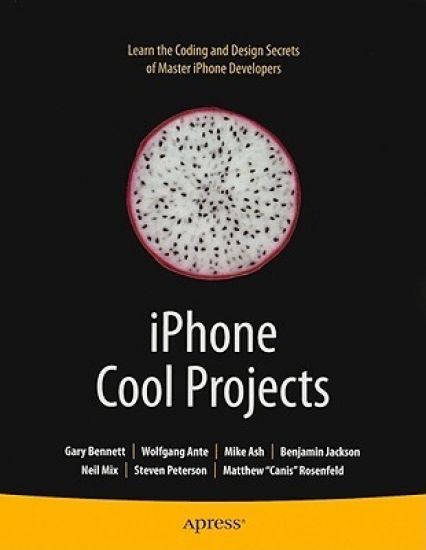
iPhone Cool Projects

iPhone Cool Projects

Wolfgang Ante; Gary Bennett; Benjamin Jackson; Neil Mix; Steven Peterson; Matthew Rosenfeld; Michael Ash; David Peterson; Doug Jackson; James Bennett

APress
2009
nidottu
The iPhone and iPod touch have provided all software developers with a level playing field—developers working alone have the same access to consumers as multinational software publishers. Very cool indeed! To make your application stand out from the crowd, though, it has to have that something extra. You must learn the skills to take your apps from being App Store filler to download chart-topping blockbusters. Developers with years of experience helped write this book. Spend some time understanding their code and why they took the approach they did. You will find the writing, illustrations, code, and sample applications second to none. No matter what type of application you are writing, you will find something in this book to help you make your app that little bit cooler. The book opens with Wolfgang Ante, the developer behind the Frenzic puzzle game, showing how timers, animation, and intelligence are used to make game play engaging. It moves on to Rogue Amoeba's Mike Ash explaining how to design a network protocol using UDP, and demonstrating its use in a peer-to-peer application—a topic not normally for the faint of heart, but explained here in a way that makes sense to mere mortals. Gary Bennett then covers the important task of multithreading. Multithreading can be used to keep the user interface responsive while working on other tasks in the background. Gary demonstrates how to do this and highlights traps to avoid along the way. Next up, Canis Lupus (aka Matthew Rosenfeld) describes the development of the Keynote-controlling application Stage Hand, how the user interface has evolved, and the lessons he has learned from that experience. Benjamin Jackson then introduces two open source libraries: cocos2d, for 2D gaming; and Chipmunk, for rigid body physics (think “collisions”). He describes the development of ArcadeHockey, an air hockey game, and explains some of the code used for this. Neil Mix of Pandora Radio reveals the science behind processing streaming audio. How do you debug what you can't see? Neil guides you through the toughest challenges, sharing his experience of what works and what to watch out for when working with audio. Finally, Steven Peterson demonstrates a comprehensive integration of iPhone technologies. He weaves Core Location, networking, XML, XPath, and SQLite into a solid and very useful application. Software development can be hard work. Introductory books lay the foundation, but it can be challenging to understand where to go next. This book shows some of the pieces that can be brought together to make complete, cool applications.
Why Did They Do That? An Introduction to Forensic Decision Analysis
Many legal disputes turn on some form of the question, Why did they do that? Using examples involving employment discrimination, political redistricting, jury selection and computer code theft, we demonstrate that a novel analytical framework connects these diverse cases. When this framework is applied to pay discrimination cases, it yields information that is more relevant to the issues in dispute than does the traditional framework.
Eat Smart in Brazil

Eat Smart in Brazil

Joan Peterson; David Peterson

Ginkgo Press Inc.,U.S.
2006
nidottu
This smartly designed culinary travel guidebook opens up the world of Brazilian food to travelers, including students studying abroad, and tells how to find the most delicious, authentic, and adventuresome eating experiences there. The second edition of ""Eat Smart in Brazil"" comes with a new cover design, as well as an updated resources chapter. In addition, the index has been supplemented with a Portuguese translation for each English entry, making the book more useful for any traveler. The author shares the secrets she's uncovered while hunting for something good to eat - from restaurant dining to home cooking to fresh market produce - to allow you to get to the heart of the culture through its cuisine. The book also includes recipes from some of the finest chefs in Brazil. As you know, food is one of the first and most immediate contacts a traveler makes with a foreign country. Travelers to Brazil can make it a more memorable contact by taking along the easy-to-use ""Eat Smart in Brazil"", one of the guides in the award-winning ""Eat Smart"" series. The authors show that traveling and eating in unfamiliar territory doesn't have to be gastronomical guesswork.
Hebrews and Perfection

Hebrews and Perfection

David Peterson

Cambridge University Press
2005
pokkari
The concept of perfection is central to the Epistle to the Hebrews but what is the precise meaning to be attached to the perfecting of Christ and the perfecting of Christians? Is teleioun to be understood in a cultic or ethical sense, or with reference to glorification; or is it employed in a formal sense so that the meaning has to be determined solely from the context? A thorough survey of the background literature suggests to Dr Peterson that it is only the context and, in particular, the object of the verb which can decide its sense on any specific occasion, and it is this method he pursues.