Kirjojen hintavertailu – 12 859 819 kirjaa ja 27 kauppaa
Kirjailija
David Pilling
Kirjat ja teokset yhdessä paikassa: 11 kirjaa, julkaisuja vuosilta 1900–2026, suosituimpiin kuuluu The Gifts of Reading. Vertaile teosten hintoja ja tarkista saatavuus suomalaisista kirjakaupoista.
Robert Macfarlane; William Boyd; Candice Carty-Williams; Chigozie Obioma; Philip Pullman; Imtiaz Dharker; Roddy Doyle; Pico Iyer; Andy Miller; Jackie Morris; Jan Morris; Sisonke Msimang; Dina Nayeri; Michael Ondaatje; David Pilling; Max Porter; Alice Pung; Jancis Robinson; S.F. Said; Madeleine Thien; Salley Vickers; John Wood; Markus Zusak
With contributions by: William Boyd, Candice Carty-Williams, Imtiaz Dharker, Roddy Doyle, Pico Iyer, Robert Macfarlane, Andy Miller, Jackie Morris, Jan Morris, Sisonke Msimang, Dina Nayeri, Chigozie Obioma, Michael Ondaatje, David Pilling, Max Porter, Philip Pullman, Alice Pung, Jancis Robinson, S. F. Said, Madeleine Thien, Salley Vickers, John Wood and Markus Zusak'This story, like so many stories, begins with a gift. The gift, like so many gifts, was a book...' So begins the essay by Robert Macfarlane that inspired this collection. In this cornucopia of an anthology, you will find essays by some of the world's most beloved novelists, nonfiction writers, essayists and poets. 'You will see books taking flight in flocks, migrating around the world, landing in people's hearts and changing them for a day or a year or a lifetime. 'You will see books sparking wonder or anger; throwing open windows into other languages, other cultures, other minds; causing people to fall in love or to fight for what is right. 'And more than anything, over and over again, you will see books and words being given, received and read - and in turn prompting further generosity.' Published to coincide with the 20th anniversary of global literacy non-profit, Room to Read, The Gifts of Reading forms inspiring, unforgettable, irresistible proof of the power and necessity of books and reading. Inspired by Robert Macfarlane Curated by Jennie Orchard
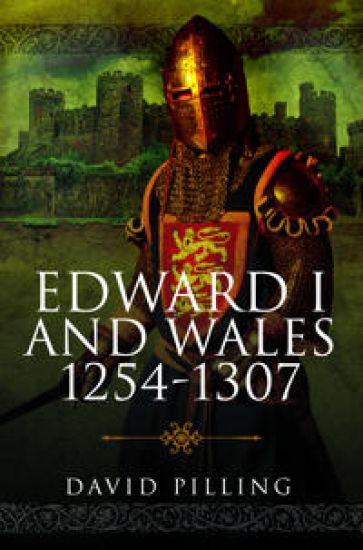
The late 13th century witnessed the conquest of Wales after two hundred years of conflict between Welsh princes and the English crown. In 1282 Llywelyn ap Gruffudd, the only native Prince of Wales to be formally acknowledged by a King of England, was slain by English forces. His brother Dafydd continued the fight, but was eventually captured and executed. Further revolts followed under Rhys ap Maredudd, a former crown ally, and Madog ap Llywelyn, a kinsman of the defeated lords of Gwynedd. The Welsh wars were a massive undertaking for the crown, and required the mobilisation of all resources. Edward’s willingness to direct the combined power of the English state and church against the Prince of Wales, to an unprecedented degree, resulted in a victory that had eluded all of his predecessors. This latest study of the Welsh wars of Edward I will draw upon previously untranslated archive material, allowing a fresh insight into military and political events. Edward’s personal relationship with Welsh leaders is also reconsidered. Traditionally, the conquest is dated to the fall of Llywelyn in December 1282, but this book will argue that Edward was not truly the master of Wales until 1294. In the years between those two dates he broke the power of the great Marcher lords and crushed two further large-scale revolts against crown authority. After 1294 he was able to exploit Welsh manpower on a massive scale. His successors followed the same policy during the Scottish wars and the Hundred Years War. Edward enjoyed considerable support among the ‘uchelwyr’ or Welsh gentry class, many of whom served him as diplomats and spies as well as military captains. This aspect of the king’s complex relationship with the Welsh will also feature.
The Anglo-French war of 1294-1303 has not been the subject of a major study since the early 1900s. Recent histories tend to treat it as a sideshow compared to Edward I’s wars in Wales and Scotland, which gives a false impression. In reality the Welsh and Scottish campaigns were distractions, and Edward regarded the war against France as his main focus. The main issue at stake was the defence and recovery of Aquitaine, the last substantial piece of the so-called ‘Angevin empire’. To that end Edward spent enormous sums of money on recruiting allies in the Low Countries and the Holy Roman Empire. Edward’s rival, Philip IV, also recruited allies to counter Edward, until the conflict engulfed much of Western Europe. The result was a series of military stalemates, demonstrating that neither England nor France could achieve outright victory in a head-to-head conflict. There were plenty of bloody incidents and much hard fighting: the hanging of Gascon prisoners from the walls of Rions in 1295, for instance, or the epic thirteen-week siege of Saint Sever. David Pilling places the war in its proper context and argues it was a vital step on the road to the more famous conflict we remember as the Hundred Years War.
The late 13th century witnessed the conquest of Wales after two hundred years of conflict between Welsh princes and the English crown. In 1282 Llywelyn ap Gruffudd, the only native Prince of Wales to be formally acknowledged by a King of England, was slain by English forces. His brother Dafydd continued the fight, but was eventually captured and executed. Further revolts followed under Rhys ap Maredudd, a former crown ally, and Madog ap Llywelyn, a kinsman of the defeated lords of Gwynedd. The Welsh wars were a massive undertaking for the crown, and required the mobilisation of all resources. Edward's willingness to direct the combined power of the English state and church against the Prince of Wales, to an unprecedented degree, resulted in a victory that had eluded all of his predecessors. This latest study of the Welsh wars of Edward I will draw upon previously untranslated archive material, allowing a fresh insight into military and political events. Edward's personal relationship with Welsh leaders is also reconsidered. Traditionally, the conquest is dated to the fall of Llywelyn in December 1282, but this book will argue that Edward was not truly the master of Wales until 1294\. In the years between those two dates he broke the power of the great Marcher lords and crushed two further large-scale revolts against crown authority. After 1294 he was able to exploit Welsh manpower on a massive scale. His successors followed the same policy during the Scottish wars and the Hundred Years War. Edward enjoyed considerable support among the 'uchelwyr' or Welsh gentry class, many of whom served him as diplomats and spies as well as military captains. This aspect of the king's complex relationship with the Welsh will also feature.
The second edition of the definitive book on how modern Japan works, now fully updated up to include the new 'Reiwa' Era and the year of the Olympics'A superb book that, better than any other I have read, manages to get the reader inside the skin of Japanese society ... astutely observed ... a great read brimming with insights' Japan TimesDespite years of stagnation, Japan remains one of the world's largest economies and a country which exerts a remarkable cultural fascination. David Pilling's new book is an entertaining, deeply knowledgeable and surprising analysis of a group of islands which have shown great resilience, both in the face of financial distress and when confronted with the overwhelming disaster of the 2011 earthquake and resulting tsunami. Bending Adversity is a superb work of reportage and the essential book even for those who already feel they know the country well.
In The Growth Delusion, author and prize-winning journalist David Pilling explores how economists and their cult of growth have hijacked our policy-making and infiltrated our thinking about what makes societies work. Our policies are geared relentlessly towards increasing our standard measure of growth, Gross Domestic Product. By this yardstick we have never been wealthier or happier. So why doesn't it feel that way? Why are we living in such fractured times, with global populism on the rise and wealth inequality as stark as ever? In a book that is simultaneously trenchant, thought-provoking and entertaining, Pilling argues that we need to measure our successes and failures using different criteria. While for economic growth, heroin consumption and prostitution are worth more than volunteer work or public services, in a rational world we would learn how to value what makes economies better, not just what makes them bigger. So much of what is important to our wellbeing, from clean air to safe streets and from steady jobs to sound minds, lies outside the purview of our standard measure of success. We prioritise growth maximisation without stopping to think about the costs. In prose that cuts through the complex language so often wielded by a priesthood of economists, Pilling argues that our steadfast loyalty to growth is informing misguided policies - and contributing to a rising mistrust of experts that is shaking the very foundations of our democracy.
" A]n excellent book..." --The Economist Financial Times Asia editor David Pilling presents a fresh vision of Japan, drawing on his own deep experience, as well as observations from a cross section of Japanese citizenry, including novelist Haruki Murakami, former prime minister Junichiro Koizumi, industrialists and bankers, activists and artists, teenagers and octogenarians. Through their voices, Pilling's Bending Adversity captures the dynamism and diversity of contemporary Japan. Pilling's exploration begins with the 2011 triple disaster of earthquake, tsunami, and nuclear meltdown. His deep reporting reveals both Japan's vulnerabilities and its resilience and pushes him to understand the country's past through cycles of crisis and reconstruction. Japan's survivalist mentality has carried it through tremendous hardship, but is also the source of great destruction: It was the nineteenth-century struggle to ward off colonial intent that resulted in Japan's own imperial endeavor, culminating in the devastation of World War II. Even the postwar economic miracle--the manufacturing and commerce explosion that brought unprecedented economic growth and earned Japan international clout might have been a less pure victory than it seemed. In Bending Adversity Pilling questions what was lost in the country's blind, aborted climb to #1. With the same rigor, he revisits 1990--the year the economic bubble burst, and the beginning of Japan's "lost decades"--to ask if the turning point might be viewed differently. While financial struggle and national debt are a reality, post-growth Japan has also successfully maintained a stable standard of living and social cohesion. And while life has become less certain, opportunities--in particular for the young and for women--have diversified. Still, Japan is in many ways a country in recovery, working to find a way forward after the events of 2011 and decades of slow growth. Bending Adversity closes with a reflection on what the 2012 reelection of Prime Minister Shinzo Abe, and his radical antideflation policy, might mean for Japan and its future. Informed throughout by the insights shared by Pilling's many interview subjects, Bending Adversity rigorously engages with the social, spiritual, financial, and political life of Japan to create a more nuanced representation of the oft-misunderstood island nation and its people. The Financial Times "David Pilling quotes a visiting MP from northern England, dazzled by Tokyo's lights and awed by its bustling prosperity: 'If this is a recession, I want one.' Not the least of the merits of Pilling's hugely enjoyable and perceptive book on Japan is that he places the denunciations of two allegedly "lost decades" in the context of what the country is really like and its actual achievements." The Telegraph (UK) "Pilling, the Asia editor of the Financial Times, is perfectly placed to be our guide, and his insights are a real rarity when very few Western journalists communicate the essence of the world's third-largest economy in anything but the most superficial ways. Here, there is a terrific selection of interview subjects mixed with great reportage and fact selection... he does get people to say wonderful things. The novelist Haruki Murakami tells him: "When we were rich, I hated this country"... well-written... valuable." Publishers Weekly (starred): "A probing and insightful portrait of contemporary Japan."
New paperback edition - The conflict that effectively laid the bloody foundations for the Hundred Years War and taught military and logistical lessons to both sides that would not be forgotten.