Kirjailija
David Potter
Kirjat ja teokset yhdessä paikassa: 70 kirjaa, julkaisuja vuosilta 1986–2026, suosituimpiin kuuluu Potter, D: History of the Scottish Cup. Vertaile teosten hintoja ja tarkista saatavuus suomalaisista kirjakaupoista.
70 kirjaa
Kirjojen julkaisuvuodet: 1986–2026.
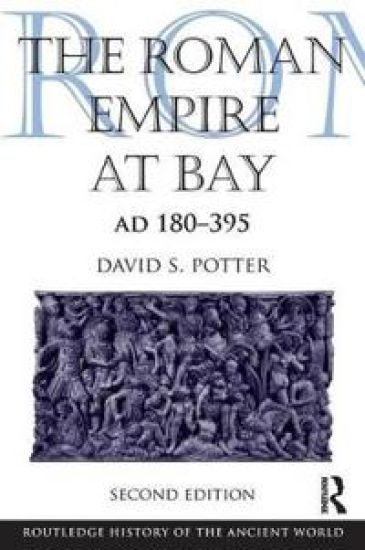
The Roman Empire at Bay is the only one volume history of the critical years 180-395 AD, which saw the transformation of the Roman Empire from a unitary state centred on Rome, into a new polity with two capitals and a new religion—Christianity. The book integrates social and intellectual history into the narrative, looking to explore the relationship between contingent events and deeper structure. It also covers an amazingly dramatic narrative from the civil wars after the death of Commodus through the conversion of Constantine to the arrival of the Goths in the Roman Empire, setting in motion the final collapse of the western empire. The new edition takes account of important new scholarship in questions of Roman identity, on economy and society as well as work on the age of Constantine, which has advanced significantly in the last decade, while recent archaeological and art historical work is more fully drawn into the narrative. At its core, the central question that drives The Roman Empire at Bay remains, what did it mean to be a Roman and how did that meaning change as the empire changed? Updated for a new generation of students, this book remains a crucial tool in the study of this period.
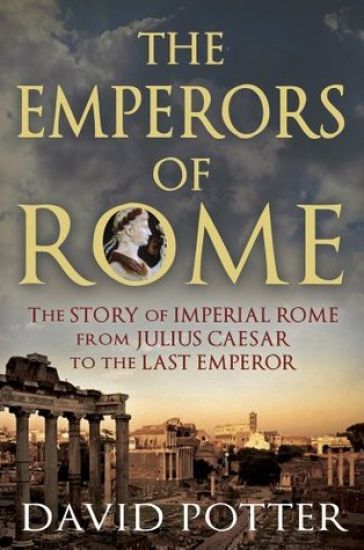
The Emperors of Rome charts the rise and fall of the Roman Empire through profiles of the greatest and most notorious of the emperors, from the autocratic Augustus to the feeble Claudius, the vicious Nero to the beneficent Marcus Aurelius, through to the maniac Commodus and beyond. Interwoven with these are vivid descriptions of sports and art, political intrigues and historic events. In this entertaining and erudite work, acclaimed classical scholar David Potter brings Imperial Rome, and the lives of the men who ruled it, to vivid life.
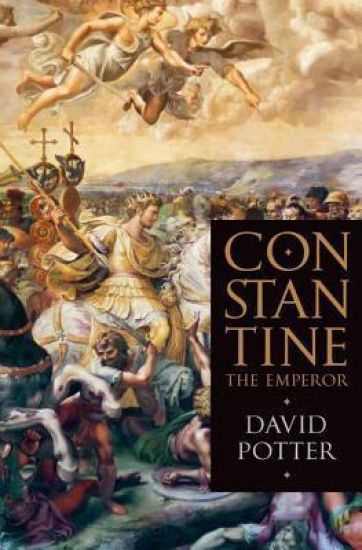
This year Christians worldwide will celebrate the 1700th anniversary of Constantine's conversion and victory at the Battle of the Milvian Bridge. No Roman emperor had a greater impact on the modern world than did Constantine. The reason is not simply that he converted to Christianity but that he did so in a way that brought his subjects along after him. Indeed, this major new biography argues that Constantine's conversion is but one feature of a unique administrative style that enabled him to take control of an empire beset by internal rebellions and external threats by Persians and Goths. The vast record of Constantine's administration reveals a government careful in its exercise of power but capable of ruthless, even savage actions. Constantine executed (or drove to suicide) his father-in-law, two brothers-in-law, his eldest son, and his once beloved wife. An unparalleled general throughout his life, even on his deathbed he was planning a major assault on the Sassanian Empire in Persia. Alongside the visionary who believed that his success came from the direct intervention of his God resided an aggressive warrior, a sometimes cruel partner, and an immensely shrewd ruler. These characteristics combined together in a long and remarkable career, which restored the Roman Empire to its former glory. Beginning with his first biographer Eusebius, Constantine's image has been subject to distortion. More recent revisions include John Carroll's view of him as the intellectual ancestor of the Holocaust (Constantine's Sword) and Dan Brown's presentation of him as the man who oversaw the reshaping of Christian history (The Da Vinci Code). In Constantine the Emperor, David Potter confronts each of these skewed and partial accounts to provide the most comprehensive, authoritative, and readable account of Constantine's extraordinary life.
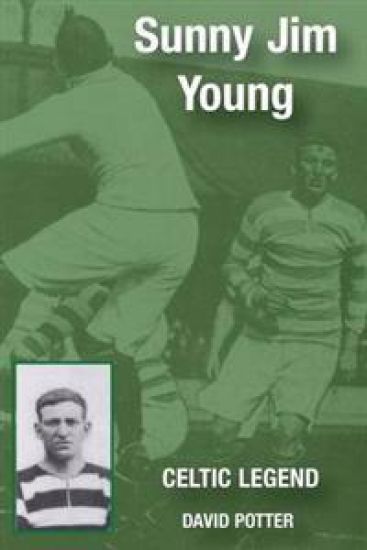
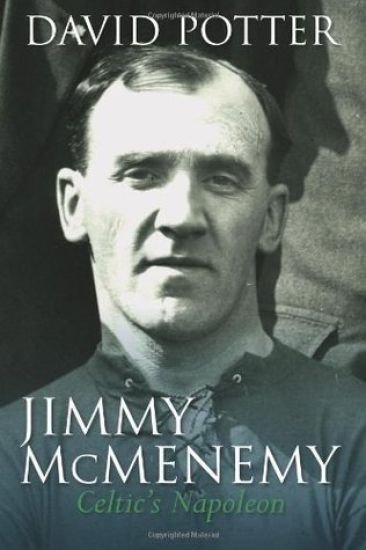
Jimmy McMenemy played for Celtic for almost twenty years at a time when Celtic were at the top of Scottish and world football. He remains without doubt one of the great characters of early 20th century Scottish football, and his story deserves to be told. Jimmy McMenemy was one of Celtic and Scotland's truly great players.
Newcastle United On This Day revisits all the most magical and memorable moments from the club's glorious past, mixing in a maelstrom of quirky anecdotes and legendary characters to produce an irresistibly dippable diary of Magpies history - with an entry for every day of the year. From the Victorian merger of Newcastle East End and Newcastle West End to within an ace of glory during the Premier League era, the St James' Park faithful have witnessed the triumphs of the 1900s when three league titles were won, three FA Cup victories in the 1950s and the heady European conquest of 1969, culminating against tough Hungarian opposition - all featured here. All-time great players including Peter McWilliam, Hughie Gallacher and Jackie Milburn, Malcolm Macdonald, Paul Gascoigne and Alan Shearer loom larger than life, appearing alongside Tyneside heroes such as Joe Harvey, Bobby Robson and Kevin Keegan.
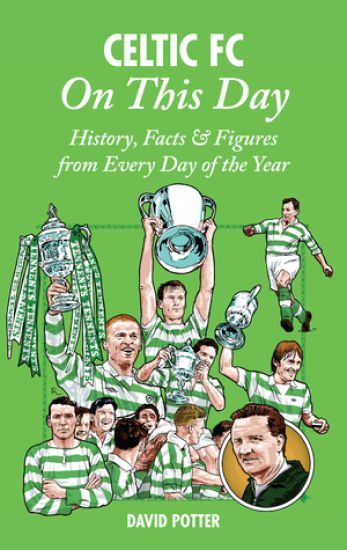
Celtic FC On This Day revisits all the most magical and memorable moments from the club's glorious past, mixing in a maelstrom of quirky anecdotes and legendary characters to produce an irresistibly dippable diary of Hoops history - with an entry for every day of the year. From humble yet proud origins, charitably assisting in feeding the poor of Glasgow's East End, the club is now a global institution with a worldwide following. Along the way, the green-and-white faithful have witnessed famous European exploits, record winning runs and attendances, countless triumphs on the Scottish scene and the one-off glories of all-British victories in 1902, 1938 and 1953 - all featured here. All-time greats including Jimmy Quinn, Patsy Gallacher and Jimmy McGrory, Billy McNeill, Kenny Dalglish and Henrik Larsson loom larger than life, appearing alongside all-conquering Celtic heroes such as Willie Maley, Jock Stein and Martin O'Neill.
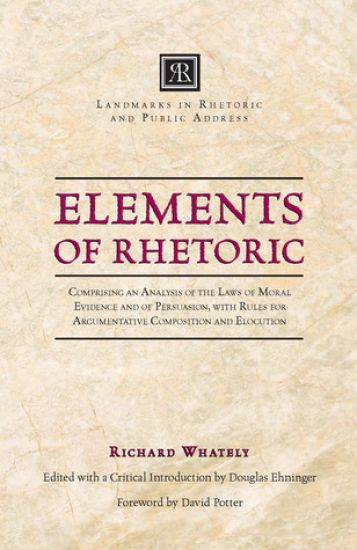
Essays from Select British Eloquence: Landmarks in Rhetoric and Public Address
Chauncey Allen Goodrich; Albert Craig Baird; David Potter
Literary Licensing, LLC
2012
nidottu
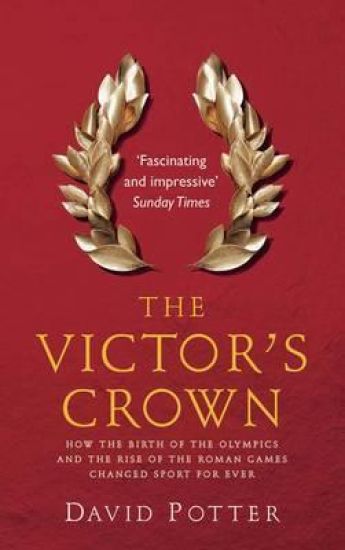
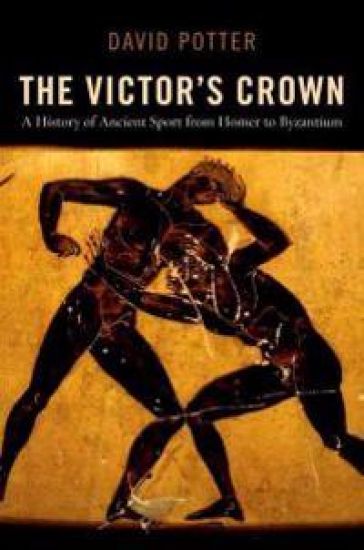
Incorporating the latest research, The Victor's Crown offers an analysis of how competitive sport emerged in Greece during the eighth century BC, and then how the great festival cycle of Classical Greece came into being during the sixth century BC. Special attention is paid to violent sports of boxing, wrestling and pancration. We meet the great athletes of the past and discover what it was that made them so great. It shows how the rise of the Roman Empire transformed the sporting world by popularizing new forms of entertainment (chiefly chariot racing, gladiatorial combat and beast hunts). David Potter vividly brings to life the experiences of being fan and competitor, and extrapolates skilfully to the modern day, creating not just a history of ancient sport, but also an examination of the social and cultural roles sport has played throughout history.
Victor's Crown: A History of Ancient Sport from Homer to Byzantium
David Potter
Oxford University Press
2011
nidottu
The Victor's Crown brings to vivid life the signal role of sport in the classical world. Ranging over a dozen centuries--from Archaic Greece through to the late Roman and early Byzantine empires--David Potter's lively narrative shows how sport, to the ancients, was not just a dim reflection of religion and politics but a potent social force in its own right. The passion for sport among the participants and fans of antiquity has been matched in history only by our own time. Potter first charts the origins of competitive athletics in Greece during the eighth century BC and the emergence of the Olympics as a preeminent cultural event. He focuses especially on the experiences of spectators and athletes, especially in violent sports such as boxing and wrestling, and describes the physiology of conditioning, training techniques, and sport's role in education. Throughout, we meet the great athletes of the past and learn what made them great. The rise of the Roman Empire transformed the sporting world by popularizing new entertainments, particularly gladiatorial combat, a specialized form of chariot racing, and beast hunts. Here, too, Potter examines sport from the perspectives of both athlete and spectator, as he vividly describes competitions held in such famous arenas as the Roman Coliseum and the Circus Maximus. The Roman government promoted and organized sport as a central feature of the Empire, making it a sort of common cultural currency to the diverse inhabitants of its vast territory. While linking ancient sport to events such as religious ceremonies and aristocratic displays, Potter emphasizes above all that it was the thrill of competition--to those who competed and those who watched--that ensured sport's central place in the Greco-Roman world. "Vivid and authoritative. Potter skillfully reveals how the gymnasium lay at the heart of Greek life and culture, but his passion is clearly for the Olympics. When Potter moves on to Roman sport, things get livelier still. He meticulously traces the origins, careers and lifestyles of athletes, gladiators and charioteers alike, and demolished some cherished myths along the way. Most gladiatorial combats apparently ended in surrender, not death, although a crowd might well call out "ingula " (kill ), running their thousands of thumbs under their throats in the original 'thumbs up' gesture. Fascinating and impressive."--James McConnachie, Sunday Times

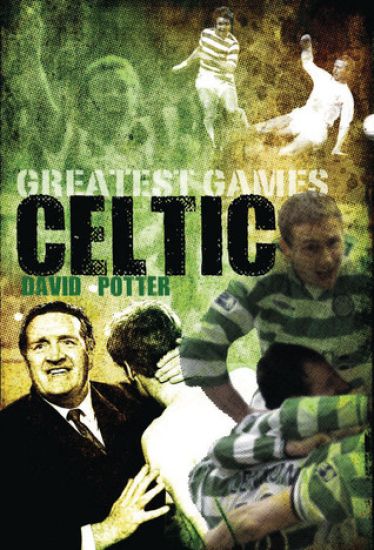
From the thousands of matches ever played by Celtic, stretching from the club's very first match in 1898 across more than 120 years to the SPL era, here are 50 of the club's most glorious, epochal and thrilling games of all! Expertly presented in evocative historical context, and described incident-by-incident in atmospheric detail, Celtic's Greatest Games offers a terrace ticket back in time, taking in an Edwardian Cup Final hat-trick, the 7-1 hammering of Rangers in 1957, the night that 'Ten Men Won the League in 1979, and many more recent triumphs. An irresistible cast list of club legends - Kenny Dalglish, Jimmy McGrory and Billy McNeill, Sandy McMahon, Jimmy Quinn and Henrik Larsson - springs to life in a thrilling selection of Cup crackers, hard-fought derbies and glorious European nights. In all, a journey through the highlights of Bhoys history which is guaranteed to make any fan's heart swell with pride.
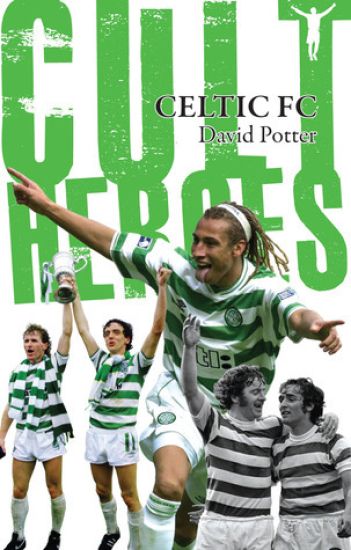
Celtic's Cult Heroes is devoted to 20 players who, over the years, have won a special place in the hearts of the Parkhead faithful - not necessarily the greatest footballers, but a unique brotherhood of mavericks and stalwarts, local lads and big signings. The cast list alone is enough to stir up the memories and tug at the heartstrings of any Hoops fan - Stein, Johnstone and Nicholas, Larsson, McInally and Aitken - recalling how these charismatic personalities used to ignite passion on the terraces. Find out which Celtic icon scored direct from a corner, was made to retake it and promptly scored again. Who celebrated his Scottish Cup Final hat-trick with a somersault, and which heroes were affectionately known as 'Yogi Bear' and 'The Golden Crust'. Discover and delight in the magical qualities of these 20 mere mortals elevated to cult status by the green half of Glasgow.
Selected Essays on Rhetoric
Thomas De Quincey; David Potter
Southern Illinois University Press
2010
nidottu
The five essays presented here—Rhetoric, Style, Language, Conversation, and Greek Literature—were published together for the first time in The Collected Writings of Thomas De Quincey in 1889–1890. Frederick Burwick brings the essays together again in this volume, introducing them by tracing the sources and development of a belletristic theory of rhetoric, which he says “is one of the most original, and for a few critics, the most puzzling of the nineteenth century.” Burwick makes the edition complete with a comprehensive index and a selected bibliography.
This is a reproduction of a book published before 1923. This book may have occasional imperfections such as missing or blurred pages, poor pictures, errant marks, etc. that were either part of the original artifact, or were introduced by the scanning process. We believe this work is culturally important, and despite the imperfections, have elected to bring it back into print as part of our continuing commitment to the preservation of printed works worldwide. We appreciate your understanding of the imperfections in the preservation process, and hope you enjoy this valuable book.
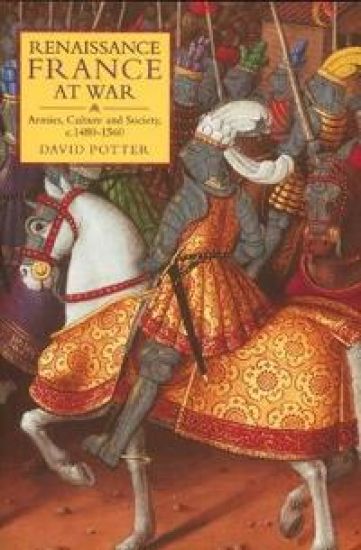
The rulers of Renaissance France regarded war as hugely important. This book shows why, looking at all aspects of warfare from strategy to its reception, depiction and promotion. The `other' Renaissance experienced by France was that of war. In Italy from 1494 to 1529, for instance, France was involved in at least a hundred battles, some of them `batttles of giants' like Marignano. After 1530, though the emphasis partly shifted away from Italy and major battles were replaced by complex sieges and wars of manoeuvre, the presence of war was universal. In the `Habsburg Valois' wars that began in 1521, the country was subjected to major military incursions but continued to make notable attempts to occupy contiguous territory in the Pyrenees, the Alps and the north-east. Explaining such prodigious military efforts is the theme of this book. Why did therulers of France attach so much importance to war and did the development of French armies in this period contribute to a significant modernisation of the country's military potential? The author attempts to answer these crucial questions, through an exploration of the strategy of the country's rulers in the light of contemporary writings, analysis of the nature of the country's high command, and a study of the major components of the king's armies. He argues that France was a society geared to war, persuaded by a sophisticated network of printed communications; the reception of the triumphalist view of war favoured by the rulers is discussed via an investigation of public opinion,as revealed in the literary, artistic and musical worlds. He also shows how the strengthening of the frontiers with new fortifications emerged as a major stage in the adaptation of France to age of artillery. DAVID POTTER is Reader in History at the University of Kent, Canterbury.