

Kirjailija
David Prior
Kirjat ja teokset yhdessä paikassa: 11 kirjaa, julkaisuja vuosilta 1998–2025, suosituimpiin kuuluu The Message of Joel, Micah and Habakkuk. Vertaile teosten hintoja ja tarkista saatavuus suomalaisista kirjakaupoista.
11 kirjaa
Kirjojen julkaisuvuodet: 1998–2025.

Where is God in times of disaster? How can God allow suffering? What are God's people to do about moral decay in society? People throughout the ages have pondered these questions, and three of the Bible's minor prophets--Joel, Micah, and Habakkuk--offer special insight on these perennial problems. David Prior's passage-by-passage exposition of these three books provides careful study and measured application for today's church. The people of Joel's day were devastated by a locust plague, which Joel said warned of the coming Day of the Lord. Micah rebuked a culture of corruption and moral evil. Habakkuk cried out to the Lord on account of a society bent on violence. All three point to a transcendent God who gives hope in times of uncertainty. Part of the beloved Bible Speaks Today series, The Message of Joel, Micah and Habakkuk offers an insightful, readable exposition of the biblical text and thought-provoking discussion of how its meaning relates to contemporary life. Used by students and teachers around the world, the Bible Speaks Today commentaries are ideal for those studying or preaching the Bible and anyone who wants to delve deeper into the text. This revised edition of a classic volume features lightly updated language and a new interior design.

Joel, Micah and Habakkuk - these ancient prophets have urgent relevance for a church and world at the beginning of a new millennium. They emphasise the life-or-death importance of listening to what God has to say, in times of disaster, disobedience and destruction. - Joel, facing the bleakness of national disaster, anticipates a future outpouring of God's Spirit. - Micah declares that God's punishment for wickedness is certain and just, but that he will preserve a faithful remnant. - Finally, facing imminent destruction of the city, the land and the people, Habakkuk remains sure that God's hidden purposes are being worked out. These prophets stood in their marketplace, powerfully applying their messages from God. David Prior shows that, like them, the church needs to be willing to share God's word in today's marketplace. Only this stand will bring hope, rather than despair, to a society under God's judgment. The Bible Speaks Today series covers every book of the Old and New Testaments, as well as Bible themes that run through the whole of Scripture. These revised editions are redesigned inside and out and have been sensitively updated with contemporary language and Bible translations to help you follow, study and teach the Bible in today's world.
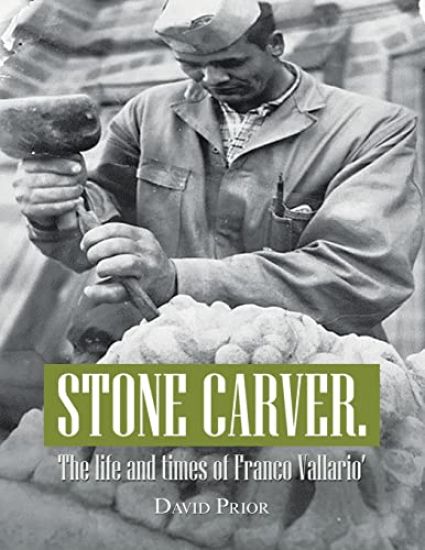
The manuscript is essentially about Franco Vallario's life as a carver sculptor and stonemason. Franco originates from multi generations of carvers from the small Italian village of St Andrea di Conza high up in the mountainous regions of central Italy. From very humble and spartan conditions Franco learns his trade from observation, trial and error as he discovers in his early life what he really wants to do. That is to carve a permanent reminder of his creative genius out of stone wherever possible. But first he must experience other avenues that appeal to him and joins the navy and the priesthood. These occupations do not satisfy his creative desires and so he opts to emigrate to Australia. In doing so he is following in the footsteps of many other Italian men form poor backgrounds who have a once in a lifetime opportunity to escape a life of poverty by taking advantage of the Australian government's immigration scheme in the 1950's. After working for successful entrepreneurs he is placed in charge of a team of stone masons to restore the gargoyles and bosses on Sydney University's historic gothic building. As he is not being paid for his talents he secures and completes his most challenging and exciting project independently in craving the capitals for the Mitchell Library. This is something none of the previous Vallario carvers have ever achieved He is inundated with request from the Australian media to be interviewed and as he is now successful decides to open his own business which he pursues with vigour. In doing so he abandons working in stone and starts creating in marble. In that endeavour he seeks the best quality marble overseas particularly from the quarries where Michelangelo sourced his material, at Carrara. He travels overseas extensively for his clients, many of whom are well known or famous identities in Australia. As he comes to the end of his career he sees his adopted country as having provided him with every opportunity to succeed as a carver and sculptor.
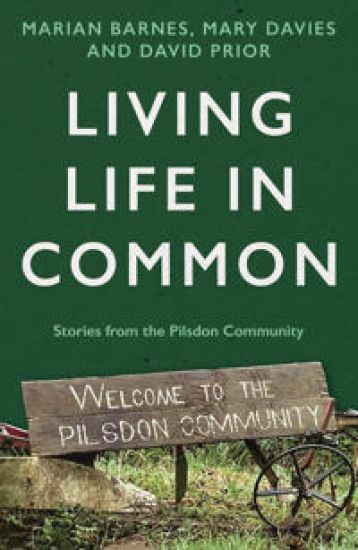
Pilsdon sits within a lengthy tradition of hospitality offered by faith communities of different types and of both monastic and lay community life. People of all faiths and none are welcomed as guests to live and work alongside the community members, staying for as long as they need to. Located in the West Dorset countryside, the community operates as a small farm, caring for cows, sheep, pigs, hens and extensive vegetable and fruit gardens through principles of environmental sustainability. It offers guests the opportunity to recover a positive sense of self through being alongside others and to start to repair what are often very broken lives. The stories told in the book through the voices of those who have experienced this way of life give a vivid and compelling account of the benefits of ‘living in common’. Moreover, the book locates this account within a broader analysis of the changing social, cultural and policy context as it relates to people with problems of mental illness, addiction and homelessness. Living Life in Common: Stories from the Pilsdon Community is about communal living, as practised by a community through a period of substantial cultural and social change. The book presents in their own words the first-hand experiences of people who have known and lived in the Pilsdon Community throughout its 62 year history. It reflects on the enduring values of a way of life that has survived both internal challenges and the shock of a global pandemic to offer hope and inspiration for how we can live well together.
The ancient city of Corinth was well-known for its prosperity, diversity--and debauchery. Any church planted there was bound to have problems. Indeed, snobbishness, divisiveness, insensitivity, doctrinal looseness, and overexuberance were all too common in the Corinthian church. When the apostle Paul heard about these difficulties, he was grieved because he had founded the church and felt closely tied to it. He wrote them an intense and pointed letter. In this revised Bible Speaks Today volume, David Prior plainly shows the relevance of 1 Corinthians for our times. Along with clear exposition of each passage and information about the letter's historical background, Prior identifies key principles and applications for today. When we understand the message of this epistle to the Corinthians, all churches may better live out the lordship of Christ in our cosmopolitan world. This redesigned new edition includes updated language and current NRSV Scripture quotations throughout.

In this fresh and gripping exposition, David Prior writes first of all as a pastor. His conviction is that 1 Corinthians is uniquely a tract for our times. His aim is that churches will recognise the problems and tensions inherent in being God's people in the increasingly urban world today, and not be ignorant of the true spirituality that is the work of the Holy Spirit. He wishes for each of them as a body to grow to express the total lordship of Christ. For Paul, he points out, Corinth as a strategic test case: if the gospel of Christ could change lives there, it could do so anywhere. He saw in the Corinthian believers the rich resources for Christian ministry and mission that are present in every local church.
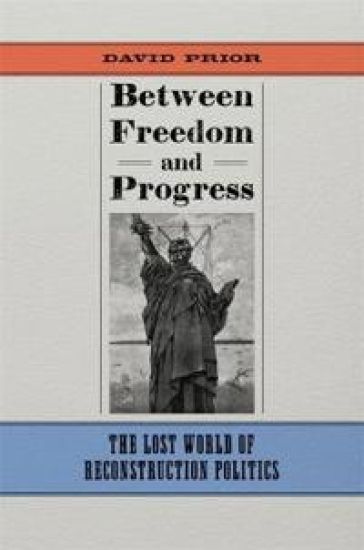
Between Freedom and Progress recovers and analyses the global imaginings of Reconstruction's partisans, those who struggled over and with Reconstruction, as they vied with one another to define the nature of their country after the Civil War. The remarkable technological and commercial transformations of the mid-nineteenth century, in particular, steam engines, telegraphs, and an expanded commercial printing capacity, created a constant stream of news, description, and storytelling from across and beyond the nation. Reconstruction's partisans contended with each other to make sense of this information, motivated by intense political antagonism combined with a shared but contested set of ideas about freedom and progress. As writers, lecturers, editors, travelers, moral reformers, racists, abolitionists, politicians, suffragists, soldiers, and diplomats, Reconstruction's partisans made competing claims about their place in the world. Understanding how, why, and when they did so helps ground our understanding of Reconstruction, itself a mysterious, transatlantic term, in its own intellectual context. Three factors proved pivotal to the making of Reconstruction's world. First, from 1865 to the early 1870s, the interconnected issues of how to remake the Union and how to remake the South exerted a powerful hold on federal politics, defining the partisan landscape and inspiring rival arguments about what was possible and what was good. The daunting nature of these issues created a sense of crisis across the political spectrum, with political discourse ranging in tone from combative to euphoric to apocalyptic. Second, though domestic in nature, these issues were refracted through two broadly held beliefs: that the causes of freedom and progress defined history and that distinctive peoples with their own characters composed the world's population. These beliefs produced a disposition to think of developments from across and beyond the United States as essentially relatable to each other, encouraging an intellectual style that favoured wide-ranging comparisons. Third, far from being confined to the elite, this mode of thinking and arguing about the world lived and breathed in public texts that were produced and consumed on a weekly and daily basis. This commercialised and politicised world of mass publishing was highly unequal in structure and content, but it was also impressively vibrant and popular. Together, these three factors made the world of Reconstruction a global landscape of information, argumentation, and imagination that derived much of its vigor from domestic political battles.
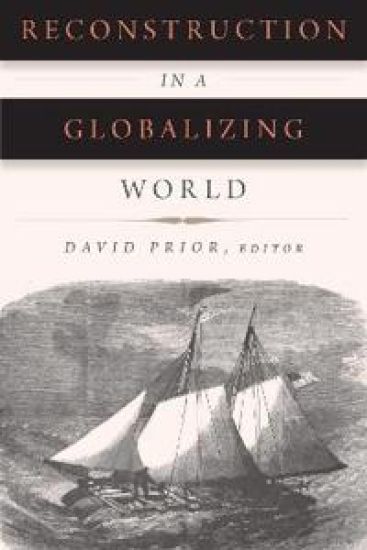
As one of the most complexly divisive periods in American history, Reconstruction has been the subject of a rich scholarship. Historians have studied the period's racial views, political maneuverings, divisions between labor and capital, debates about woman suffrage, and of course its struggle between freed slaves and their former masters. Yet, on each of these fronts scholarship has attended overwhelmingly to the eastern United States, especially the South, thereby neglecting important transnational linkages. This volume, the first of its kind, will examine Reconstruction's global connections and contexts in ways that, while honoring the field's accomplishments, move it beyond its southern focus. The volume will bring together prominent and emerging scholars to showcase the deepening interplay between scholarships on Reconstruction and on America's place in world history. Through these essays, Reconstruction in a Globalizing World will engage two dynamic fields of study to the benefit of them both. By demonstrating that the South and the eastern United States were connected to other parts of the globe in complex and important ways, the volume will challenge scholars of Reconstruction to look outwards. Likewise, examining these same connections will compel transnationally-minded scholars to reconsider Reconstruction as a pivotal era in the shaping of the United States' relations with the rest of the world.
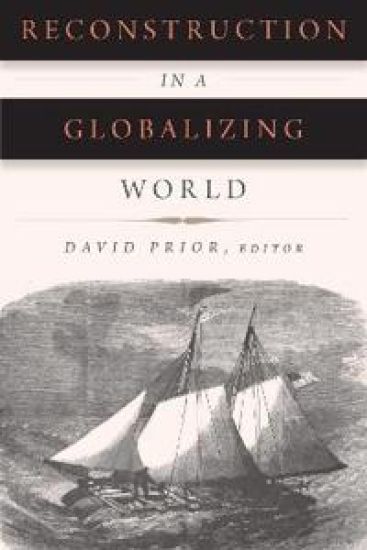
As one of the most complexly divisive periods in American history, Reconstruction has been the subject of a rich scholarship. Historians have studied the period's racial views, political maneuverings, divisions between labor and capital, debates about woman suffrage, and of course its struggle between freed slaves and their former masters. Yet, on each of these fronts scholarship has attended overwhelmingly to the eastern United States, especially the South, thereby neglecting important transnational linkages. This volume, the first of its kind, will examine Reconstruction's global connections and contexts in ways that, while honoring the field's accomplishments, move it beyond its southern focus. The volume will bring together prominent and emerging scholars to showcase the deepening interplay between scholarships on Reconstruction and on America's place in world history. Through these essays, Reconstruction in a Globalizing World will engage two dynamic fields of study to the benefit of them both. By demonstrating that the South and the eastern United States were connected to other parts of the globe in complex and important ways, the volume will challenge scholars of Reconstruction to look outwards. Likewise, examining these same connections will compel transnationally-minded scholars to reconsider Reconstruction as a pivotal era in the shaping of the United States' relations with the rest of the world.

Joel, Micah and Habakkuk - these ancient prophets have urgent relevance for a church and a world living at the beginning of a new millennium. They emphasise the life-or-death importance of listening to what God has to say, in times of disaster, disobedience and destruction. Joel, facing the bleakness of national disaster, anticipates a future outpouring of God's Spirit. Micah declares that God's punishment for wickedness is certain and thorough, but that he will preserve a faithful remnant. Facing imminent destruction of the city, the land and the people, Habakkuk is sure that God's hidden purposes are being worked out. The prophets stood in the market-place, powerfully applying their message from God. David Prior believes that, like them, the church today is to take its values into the market-place into the church. Only this stand will bring hope rather than despair to a society under God's judgment.