Kirjojen hintavertailu – 12 903 725 kirjaa ja 27 kauppaa

Kirjailija

David R. Orr

Kirjat ja teokset yhdessä paikassa: 4 kirjaa, julkaisuja vuosilta 2013–2022, suosituimpiin kuuluu A New Battlefield. Vertaile teosten hintoja ja tarkista saatavuus suomalaisista kirjakaupoista.

Nimi esiintyy myös muodoissa: David R Orr

4 kirjaa

Kirjojen julkaisuvuodet: 2013–2022.

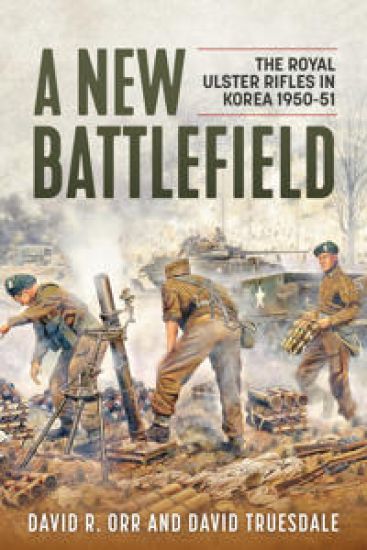
A New Battlefield

A New Battlefield

David R. Orr; David Truesdale

Helion Company
2013
nidottu
Since the publication of The Rifles Are There in 2005, which dealt with the 1st and 2nd Battalions Royal Ulster Rifles in the Second World War, it was felt by many that a follow up volume dealing with the Korean conflict was overdue. A limited yet competent history had been produced in 1953 by the then Adjutant Captain Hugh Hamill, although this has been long out of print. A New Battlefield follows the Battalion as it prepares for the first major conflict fought by Britain since the defeat of the Japanese in 1945. During the summer of 1950 the Battalion was stationed at Sobraon Barracks in Colchester and was in the process of being issued with desert kit for a tour of duty at Khartoum in the Sudan and its numbers were just under four hundred men. For service in Korea these numbers had to be drastically increased and drafts of volunteers and reservists were brought in from various sources. Consequently this 'Irish' Battalion contained men from the Lancastrian Brigade, Welsh Brigade, Mercian Brigade, the Light Infantry and other Battalions of the Irish Brigade. The Irish Brigade also reinforced other regiments, the Royal Inniskilling Fusiliers sending two officers and fifty 'other ranks' to the King's (Liverpool) Regiment. Despite their varied backgrounds all ranks soon coalesced into a professional unit that took the campaign in its stride. From winter temperatures that dropped well below 40f to a summer heat that rose to 105f with a humidity to match these men survived all and dealt with a brave and tenacious enemy. The Battalion sailed for Korea in October 1950 and fought its first major action in January 1951 at Chaegunghyon, or as it was known to the Rifles, 'Happy Valley'. Here, for the first time they faced an enemy that often literally fought to the death, despite overwhelming firepower, bombing and widespread use of napalm. Three months later, on the banks of the Imjin River, the Rifles, in conjunction with the remainder of 29 Brigade, faced an army that came in such numbers that running out of ammunition before the enemy ran out of men became a reality. Besides numerous photographs there are also appendices including Honours and Awards, Operation 'Spitfire', an Order of Battle for 29 Brigade, and a Nominal Roll, which includes casualties.
Ulster Will Fight

Ulster Will Fight

David R Orr

HELION COMPANY
2022
pokkari
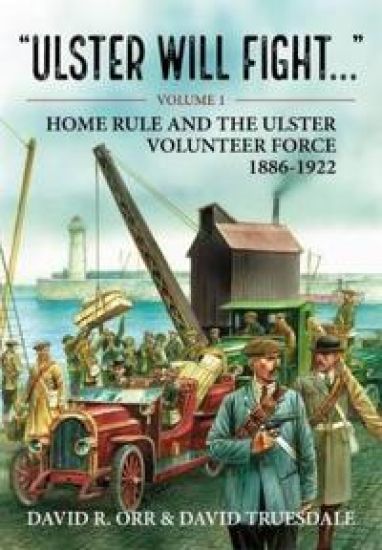
The various attempts at Home Rule for Ireland ultimately culminated in the Third Home Rule Bill which directly contributed to the creation of the Ulster Volunteer Force. The UVF spanned not just the geographic rural and urban Protestant Ulster from the Atlantic coast of Donegal to the shipyards of east Belfast, but also the diverse political ideals of individuals. By the outbreak of the Great War it had become an organization of armed volunteers, the first to use motorcycle dispatch riders and motor transport on a large scale and the first to use armored lorries in street patrols. It was also one of the first in the twentieth century to recognize the varied role for women in warfare against a backdrop of a rise in women's suffrage in the United Kingdom and the United States of America. The importance, role and significance of the existence of the UVF are well summed up in Sir Winston Churchill's book, Great Contemporaries, that "if Ulster had confined herself simply to constitutional agitation, it is extremely improbable that she would have escaped forcible inclusion in a Dublin Parliament." This book tells both the story of the Home Rule period and the Ulster Volunteer Force formed in response to the Home Rule crises. An important period in Irish politics and history this book draws on a number of first-hand accounts, contemporary newspaper reports, UVF papers and records from the Somme Museum. It is illustrated by a number of images never before published.
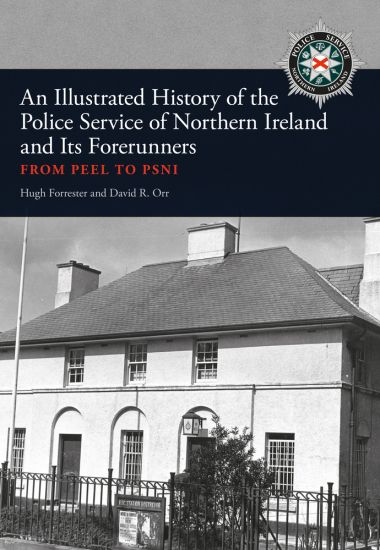
An Illustrated History of the Police Service in Northern Ireland and its Forerunners
Hugh Forrester and David R. Orr cover nearly 200 years of policing in Ireland using images drawn from the archives of the Police Museum in Belfast. Policing in Ireland has its own unique and often troubled history and has been influenced by many of the great changes in Irish history such as armed rebellion, partition and politics. Organised policing in the British Isles began in Ireland in response to the problems of governing an often divided society and evolved in a way distinct from the British model of urban and rural constabularies that developed in the nineteenth century. The requirements of security-based or ’colonial’ policing led to the adoption of a continental style gendarmerie with many military aspects, which survived with the RUC until the 1970s. Policing was and does remain divisive, particularly in Northern Ireland with its fraught recent history. Policing in Northern Ireland remains among the toughest and most scrutinised police jobs in the world, but one with a proud history; in the words of former RUC Chief Constable Sir Ronnie Flanagan, ‘a golden thread’ extends back to its inception in the hands of Sir Robert Peel. The unique combination of the two policing models means Irish policing has had a worldwide influence, providing training to police throughout the British Empire in the nineteenth and twentieth centuries, reforming policing in post-war Germany and Greece and participating in UN police missions to post conflict zones, such as in the Balkans and Iraq.
Ulster Will Fight - Volume 1

Ulster Will Fight - Volume 1

David R Orr

Helion Company
2016
sidottu
The various attempts at Home Rule for Ireland ultimately culminated in the Third Home Rule Bill which directly contributed to the creation of the Ulster Volunteer Force. The UVF spanned not just the geographic rural and urban Protestant Ulster from the Atlantic coast of Donegal to the shipyards of east Belfast but also the diverse political ideals of individuals. By the outbreak of the Great War it had become an organisation of armed volunteers, the first to use motorcycle despatch riders and motor transport on a large scale and the first to use armoured lorries in street patrols. It was also one of the first in the twentieth century to recognise the varied role for women in warfare against a backdrop of a rise in women's suffrage in the United Kingdom and the United States of America. The importance, role and significance of the existence of the UVF are well summed up in Sir Winston Churchill’s book, ‘Great Contemporaries’, that “if Ulster had confined herself simply to constitutional agitation, it is extremely improbable that she would have escaped forcible inclusion in a Dublin Parliament.” This book tells both the story of the Home Rule period and the Ulster Volunteer Force formed in response to the Home Rule crises. An important period in Irish politics and history this book draws on a number of first-hand accounts, contemporary newspaper reports, UVF papers and records from the Somme Museum. It is illustrated by a number of images never before published.