Kirjojen hintavertailu – 12 859 828 kirjaa ja 27 kauppaa

Kirjailija

David R. Segal

Kirjat ja teokset yhdessä paikassa: 6 kirjaa, julkaisuja vuosilta 1989–2024, suosituimpiin kuuluu Military Sociology. Vertaile teosten hintoja ja tarkista saatavuus suomalaisista kirjakaupoista.

Nimi esiintyy myös muodoissa: David R Segal

6 kirjaa

Kirjojen julkaisuvuodet: 1989–2024.

The Military In New Times

The Military In New Times

James Burk; Robert J Waldman; David R Segal; Charles C Moskos

TAYLOR FRANCIS LTD
2024
nidottu
What role will armed forces play in a world that is turbulent yet no longer organized by the bipolar conflict of East and West? In this volume, leading experts from several disciplines assess the rapidly changing global strategic and cultural landscape, examining how it will affect the responsibilities and social standing of the modern military. There are provocative disagreements among the contributors, especially over whether we should expect and prepare for another global war. However, the contributors generally agree on several broad themes that guide their analysis. Arguing that the Cold War has masked basic trends that have been reshaping the international system for a long time, they suggest that the sovereign states' dominance of the international system is rapidly coming to an end, as multinational, ethnic, regional, and religious groups–to name a few–increasingly affect the course of global affairs. In the absence of a clear "enemy," the military faces an identity crisis. In the postmodern atmosphere of this multicentric global order, authority is fragmented, and the exercise of any one authority is subject to greater scrutiny and challenge. The military has become more accepting of a variety of values, life-styles, and attitudes toward its tasks. At the same time, support for the military's mission is difficult to win, requiring endless justification. The authors believe that the principal missions for the military in these new times are peacekeeping, peacemaking, and humanitarian assistance. They examine the prospects for successful operations in these areas, taking into account the cultural lag between world structures that favor increased multinational peacekeeping forces and individual nations that supply token resources to support such efforts. This volume provides a sophisticated and thought-provoking perspective on the future role of the military in the coming decades. It is sure to enrich the vigorous debate surrounding these issues.
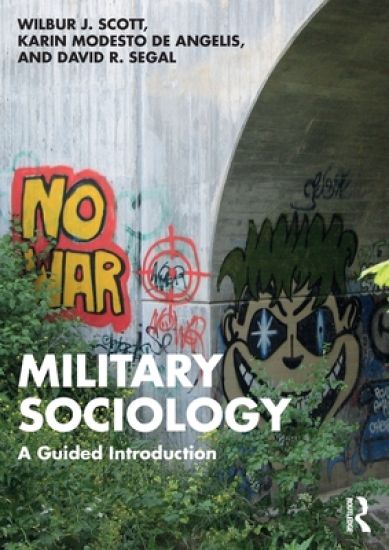
Military Sociology

Military Sociology

Wilbur J. Scott; Karin Modesto De Angelis; David R. Segal

TAYLOR FRANCIS LTD
2022
nidottu
This textbook introduces the reader to the field of military sociology through narrative reviews of selected key studies in the discipline. The book provides a guided introduction. In each chapter, the authors set the stage and then immerse the reader in Spotlights – that is, descriptions of essential studies that inform the discipline of military sociology. The goal is to afford readers a ready pathway into how sociologists and social scientists have thought about topics in the study of the military and war. Topics covered in the book include:What is military sociology? What does it have to offer in understanding armed forces, wars, and societies? What basic tools are needed to ply sociological, or more broadly, social science perspectives for studying war and the military? What are the bio-social bases of war? What does the spectrum of such societally organized violence look like? How do societies raise and maintain formal militaries? What are variations in their social composition and in the profiles of civil–military relations? How and why is military organization and war changing so dramatically in the 21st-century? What does the future hold? This book will be of great interest to students of military sociology, the armed forces and society, peace studies, and International Relations.
Military Sociology

Military Sociology

Wilbur J. Scott; Karin Modesto De Angelis; David R. Segal

TAYLOR FRANCIS LTD
2022
sidottu
This textbook introduces the reader to the field of military sociology through narrative reviews of selected key studies in the discipline. The book provides a guided introduction. In each chapter, the authors set the stage and then immerse the reader in Spotlights – that is, descriptions of essential studies that inform the discipline of military sociology. The goal is to afford readers a ready pathway into how sociologists and social scientists have thought about topics in the study of the military and war. Topics covered in the book include:What is military sociology? What does it have to offer in understanding armed forces, wars, and societies? What basic tools are needed to ply sociological, or more broadly, social science perspectives for studying war and the military? What are the bio-social bases of war? What does the spectrum of such societally organized violence look like? How do societies raise and maintain formal militaries? What are variations in their social composition and in the profiles of civil–military relations? How and why is military organization and war changing so dramatically in the 21st-century? What does the future hold? This book will be of great interest to students of military sociology, the armed forces and society, peace studies, and International Relations.
The Military In New Times

The Military In New Times

James Burk; Robert J Waldman; David R Segal; Charles C Moskos

Routledge
2019
sidottu
What role will armed forces play in a world that is turbulent yet no longer organized by the bipolar conflict of East and West? In this volume, leading experts from several disciplines assess the rapidly changing global strategic and cultural landscape, examining how it will affect the responsibilities and social standing of the modern military. There are provocative disagreements among the contributors, especially over whether we should expect and prepare for another global war. However, the contributors generally agree on several broad themes that guide their analysis. Arguing that the Cold War has masked basic trends that have been reshaping the international system for a long time, they suggest that the sovereign states' dominance of the international system is rapidly coming to an end, as multinational, ethnic, regional, and religious groups–to name a few–increasingly affect the course of global affairs. In the absence of a clear "enemy," the military faces an identity crisis. In the postmodern atmosphere of this multicentric global order, authority is fragmented, and the exercise of any one authority is subject to greater scrutiny and challenge. The military has become more accepting of a variety of values, life-styles, and attitudes toward its tasks. At the same time, support for the military's mission is difficult to win, requiring endless justification. The authors believe that the principal missions for the military in these new times are peacekeeping, peacemaking, and humanitarian assistance. They examine the prospects for successful operations in these areas, taking into account the cultural lag between world structures that favor increased multinational peacekeeping forces and individual nations that supply token resources to support such efforts. This volume provides a sophisticated and thought-provoking perspective on the future role of the military in the coming decades. It is sure to enrich the vigorous debate surrounding these issues.
Peacekeepers and Their Wives

Peacekeepers and Their Wives

David R. Segal; Mady Wechsler Segal

Praeger Publishers Inc
1993
sidottu
David and Mady Segal analyze the adaptation of American soldiers assigned to the Multinational Force and Observers (MFO) in the Sinai Desert in support of the Camp David Accords, in the context of the evolution of multinational peacekeeping forces as mechanisms for achieving international security. The reactions of soldiers and their wives to the peacekeeping assignment are considered from the perspective of the social construction of reality, in which the role of the military has been defined as war-fighting. The press has ignored peacekeeping until very recently, and it falls to military organizations, to soldiers and their families, to make sense of the mission. Lessons learned from the Sinai MFO experience should be used to help U. S. troops better prepare for their increasing role in multinational peacekeeping.
Recruiting for Uncle Sam

Recruiting for Uncle Sam

David R. Segal

University Press of Kansas
1989
nidottu
Examining citizenship and military manpower policy in the United States, this book reviews pertinent American history and investigates such issues as voluntarism versus conscription, forces-in-being versus mobilisation, social welfare versus military readiness, and big wars versus small.