Kirjojen hintavertailu – 12 903 727 kirjaa ja 27 kauppaa

Kirjailija

David Ray Griffin

Kirjat ja teokset yhdessä paikassa: 31 kirjaa, julkaisuja vuosilta 1988–2023, suosituimpiin kuuluu Archetypal Process. Vertaile teosten hintoja ja tarkista saatavuus suomalaisista kirjakaupoista.

31 kirjaa

Kirjojen julkaisuvuodet: 1988–2023.

Reenchantment Without Supernaturalism

Reenchantment Without Supernaturalism

David Ray Griffin

Cornell University Press
2000
pokkari
Occasionally, a book comes along that is definitive for its field of study, a book that marks a milestone in thought.... Griffin has written just such a book-a book that, by all rights, should mark a watershed in the academic study of religion.... Griffin makes about as strong a case as one can in a single volume for a genuine and viable alternative. - The Journal of Religion The process philosophy of Alfred North Whitehead and Charles Hartshorne has made many distinctive contributions to the philosophy of religion. David Ray Griffin now offers the first full-scale philosophy of religion written from this perspective, discussing such topics as the relationship between science and religion, the validity of religious experience, the nature and existence of God, religious pluralism, creation and evolution, and the problem of evil. Griffin's clear and comprehensive book also serves as a valuable introduction to process philosophy itself. In his vigorous defense of a worldview that is fully naturalistic and fully religious, Griffin shows not only how this position reconciles naturalism with freedom, genuine religious experience, and even life after death, but also how its naturalistic theism "reenchants" the world in the sense of providing cosmic support for moral values. Highly original and sometimes controversial, Griffin's book develops its stance in conversation with influential proponents of other philosophical positions, including William P. Alston, JÜrgen Habermas, John Hick, Colin McGinn, Alvin Plantinga, Hilary Putnam, Willard Quine, Ninian Smart, Jeffrey Stout, and Bernard Williams.
Reenchantment without Supernaturalism

Reenchantment without Supernaturalism

David Ray Griffin

CORNELL UNIVERSITY PRESS
2000
sidottu
The process philosophy of Alfred North Whitehead and Charles Hartshorne has made many distinctive contributions to the philosophy of religion. David Ray Griffin now offers the first full-scale philosophy of religion written from this perspective, discussing such topics as the relationship between science and religion, the validity of religious experience, the nature and existence of God, religious pluralism, creation and evolution, and the problem of evil. Griffin's clear and comprehensive book also serves as a valuable introduction to process philosophy itself. In his vigorous defense of a worldview that is fully naturalistic and fully religious, Griffin shows not only how this position reconciles naturalism with freedom, genuine religious experience, and even life after death, but also how its naturalistic theism "reenchants" the world in the sense of providing cosmic support for moral values. Highly original and sometimes controversial, Griffin's book develops its stance in conversation with influential proponents of other philosophical positions, including William P. Alston, Jürgen Habermas, John Hick, Colin McGinn, Alvin Plantinga, Hilary Putnam, Willard Quine, Ninian Smart, Jeffrey Stout, and Bernard Williams.
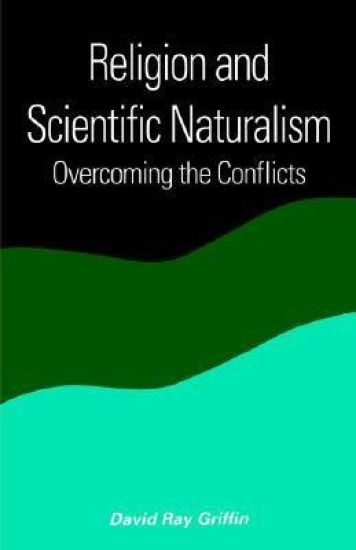
Religion and Scientific Naturalism

Religion and Scientific Naturalism

David Ray Griffin

State University of New York Press
2000
pokkari
Articulates a metaphysical position capable of rendering both science and religious experience simultaneously and mutually intelligible. Winner of the 2000 Scientific and Medical Network Book Prize In this book, David Ray Griffin argues that the perceived conflict between science and religion is based upon a double mistake-the assumption that religion requires supernaturalism and that scientific naturalism requires atheism and materialism.
Parapsychology, Philosophy, and Spirituality

Parapsychology, Philosophy, and Spirituality

David Ray Griffin

State University of New York Press
1997
pokkari
Examines why parapsychology has been held in disdain by scientists, philosophers, and theologians, explores the evidence for ESP, psychokinesis, and life after death, and suggests that these phenomena provide support for a meaningful postmodern spirituality. In this book, David Ray Griffin, best known for his work on the problem of evil, turns his attention to the even more controversial topic of parapsychology. Griffin examines why scientists, philosophers, and theologians have held parapsychology in disdain and argues that neither a priori philosophical attacks nor wholesale rejection of the evidence can withstand scrutiny. After articulating a constructive postmodern philosophy that allows the parapsychological evidence to be taken seriously, Griffin examines this evidence extensively. He identifies four types of repeatable phenomena that suggest the reality of extrasensory perception and psychokinesis. Then, on the basis of a nondualistic distinction between mind and brain, which makes the idea of life after death conceivable, he examines five types of evidence for the reality of life after death: messages from mediums; apparitions; cases of the possession type; cases of the reincarnation type; and out-of-body experiences. His philosophical and empirical examinations of these phenomena suggest that they provide support for a postmodern spirituality that overcomes the thinness of modern religion without returning to supernaturalism.
Process Theology

Process Theology

John B. Cobb Jr.; David Ray Griffin

Westminster/John Knox Press,U.S.
1996
nidottu
Process Theology is an introductory exposition of the theological movement that has been strongly influenced by the philosophies of Alfred North Whitehead and Charles Hartshorne. It offers an interpretation of the basic concepts of process philosophy and outlines a "process theology" that will be especially useful for students of theology, teachers of courses in contemporary philosophy, ministers, and those interested in current theological and philosophical trends.
Evil Revisited

Evil Revisited

David Ray Griffin

State University of New York Press
1991
pokkari
Griffin responds to critiques of his earlier work God, Power, and Evil: A Process Theodicy. In this book Griffin responds to critiques of his earlier work-God, Power, and Evil: A Process Theodicy-and discusses ways in which his position has changed in the intervening years. In so doing, he examines the problem of evil, theodicy, and philosophical theology, and contrasts traditional theism and process theism with regard to the question of omnipotence.
A Process Christology

A Process Christology

David Ray Griffin

University Press of America
1990
nidottu
This book, originally published by The Westminster Press in 1973, was the first full-scale Christology based upon process thought. Its thesis: Whitehead's process philosophy provides a basis for explicating the idea that Jesus of Nazareth is God's decisive self-revelation, in a manner that is consistent with both modern thought and Christian faith. A Process Christology brings together three dimensions of recent theology: the new quest for the historical Jesus, the new-orthodox emphasis on God's self-revealing activity in history, and the theology based primarily on the process philosophy of Alfred North Whitehead and Charles Hartshorne. This edition contains a new Preface.
Archetypal Process

Archetypal Process

David Ray Griffin

Northwestern University Press
1990
sidottu
Archetypal Process is a pioneering study linking the ideas of process philosophy, as developed by Alfred North Whitehead and Charles Hartshorne, with the archetypal psychology of C. G. Jung and James Hillman. This is the first work to examine the interconnections of these two modes of thought.
Archetypal Process

Archetypal Process

David Ray Griffin

Northwestern University Press
1989
nidottu
Archetypal Process is a pioneering study linking the ideas of process philosophy, as developed by Alfred North Whitehead and Charles Hartshorne, with the archetypal psychology of C. G. Jung and James Hillman. This is the first work to examine the interconnections of these two modes of thought. Archetypal Process examines the importance of cosmological thinking and the need to ground archetypal psychology in a metaphysical, philosophical framework. It treats the necessity for symbol and myth, the nature of the spirit, and language as a metaphorical vehicle of thought, and finally, it adds a much-needed feminist perspective to the debate.
Varieties of Postmodern Theology

Varieties of Postmodern Theology

David Ray Griffin; William A. Beardslee; Joe Holland

State University of New York Press
1989
pokkari
Sorts out the confusion created by the use of the term "postmodern" in relation to widely divergent theological positions. This book sorts out the confusion created by the use of the term "postmodern" in relation to widely divergent theological positions. Four different types of postmodern theology are distinguished in the preface: constructive, deconstructive, liberationist, and conservative. Two forms of each type are discussed in the book. Writing from a constructive, postmodern perspective, the authors enter into dialogue with the deconstructive postmodernism of Mark C. Taylor and Jean-François Lyotard, with the liberationist postmodernism of Harvey Cox and Cornel West, and with the conservative postmodernism of George William Rutler and John Paul II.
God and Religion in the Postmodern World

God and Religion in the Postmodern World

David Ray Griffin

State University of New York Press
1988
pokkari
Addressed to readers who have found liberal theology empty or who believe that one cannot be religious and fully rational and empirical at the same time. The naturalistic theism presented in this book is addressed to readers who have found liberal theology empty or who believe that one cannot be religious and fully rational and empirical at the same time. Griffin shows that the postmodern view is more empirical and rational than that of late modern materialism. This is not a return to early modern dualistic supernaturalism. The mechanism and sensationalism of Descartes and Newton precluded a real union of religion and science. Griffin's postmodernism offers a deeply religious and fully scientific theology, providing a new basis for spiritual discipline and for a pacific mortality that could reverse the militarism of modernity. Griffin proposes a revisionary, constructive postmodern theology challenging the deconstructive philosophy that calls itself postmodern and leads to relativism and nihilism.