

Kirjailija
David Robinson
Kirjat ja teokset yhdessä paikassa: 86 kirjaa, julkaisuja vuosilta 1985–2027, suosituimpiin kuuluu Charles Chaplin's The Freak. Vertaile teosten hintoja ja tarkista saatavuus suomalaisista kirjakaupoista.
86 kirjaa
Kirjojen julkaisuvuodet: 1985–2027.


Buying and Maintaining a Home with a Slate Roof: Guide to Inspections, Contractors and Repairs for Home Owners and Property Managers
David Robinson
Createspace Independent Publishing Platform
2009
nidottu
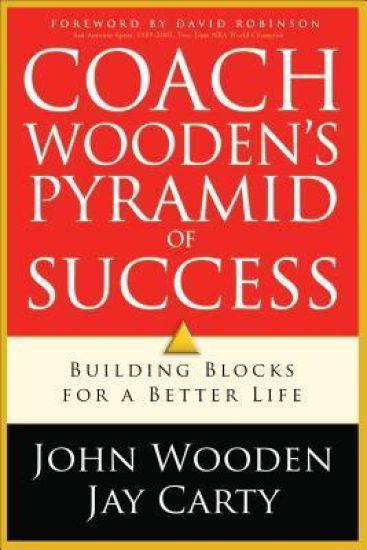
Coach Wooden`s Pyramid of Success
John Wooden; Jay Carty; David Robinson
Revell, a division of Baker Publishing Group
2009
nidottu
Halvin toimitettuna 20,90 €
The Coach of the Century Reveals His Secret to SuccessLegendary college basketball coach John Wooden and Jay Carty know that when it comes down to it, success is an equal opportunity player. Anyone can create it in his or her career, family, and beyond. Based on John Wooden's own method to victory, Coach Wooden's Pyramid of Success reveals that success is built block by block, where each block is a crucial principle contributing to lifelong achievement. With these 32 daily readings, you will? take an in-depth look at each block of the pyramid and explore what each one means? understand how all the blocks together form the structure of the pyramid of success? reflect on each principle and how it is present in your life? learn how to put your best foot forward to reach achievement in every area of life? obtain peace of mind from knowing you did your best to become the best that you are capable of becomingJoin John Wooden and Jay Carty to discover the building blocks and key values--from confidence to faith--that have brought Coach to the pinnacle of success as a leader, a teacher, and a follower of God.
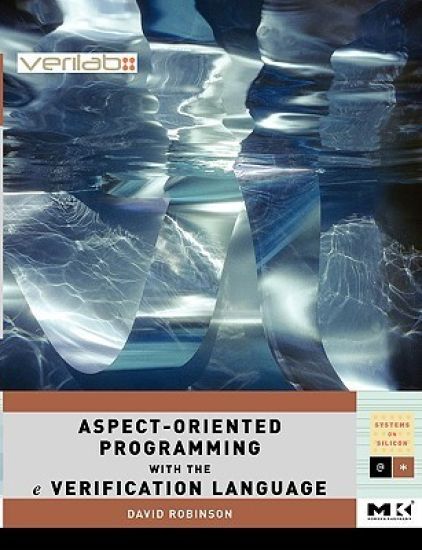
Aspect-Oriented Programming with the e Verification Language
David Robinson
Morgan Kaufmann Publishers In
2007
nidottu
What’s this AOP thing anyway, really—when you get right down to it—and can someone please explain what an aspect actually is? Aspect-Oriented Programming with the e Verification Language takes a pragmatic, example based, and fun approach to unraveling the mysteries of AOP. In this book, you’ll learn how to: • Use AOP to organize your code in a way that makes it easy to deal with the things you really care about in your verification environments. Forget about organizing by classes, and start organizing by functionality, layers, components, protocols, functional coverage, checking, or anything that you decide is important to you • Easily create flexible code that eases your development burden, and gives your users the power to quickly do what they need to do with your code • Truly create a plug-and-play environment that allows you to add and remove functionality without modifying your code. Examples include how to use AOP to create pluggable debug modules, and a pluggable module that lets you check that your testbench is still working before you begin a regression • Utilize AOP to sidestep those productivity roadblocks that seem to plague all projects at the most inconvenient of times • Discover why “return? is evil, and some other “gotchas? with the AOP features of e All of the methodologies, tips, and techniques described in this book have been developed and tested on real projects, with real people, real schedules and all of the associated problems that come with these. Only the ones that worked, and worked well, have made it in, so by following the advice given in this book, you’ll gain access to the true power of AOP while neatly avoiding the effort of working it all out yourself.
Game theory has implications for all the social sciences and beyond. It now provides the theoretical basis for almost all teaching in economics, and 2x2 games provide the very basis of game theory. Here, Goforth and Robinson here have delivered a well-written and knowledgeable, 'periodic table' of the most common games including:* the prisoner's dilemma* coordination games* chicken* the battle of the sexes. This book will provide a valuable reference for students of microeconomics and business mathematics.

Why does a blonde commit suicide off a bridge in Luxembourg? Whose telephone number is on a pink piece of crumpled paper? Who is the girl in the porn film? Jason Evans seeks the solution whilst on holiday visiting his brother Shaun in the Grand Duchy of Luxembourg. Undercover Detective Ernie Meyer and his assistant Gendarme Tammy Hammer are hot on the trail. What is the meaning of an unusual tattoo? Who is the old man in a nursing home in Berlin? Why is a trip to Frankfurt so important? What is the secret language on the letter? Why is a Luxembourg tour guide involved? Luxembourg & The Jenisch Connection is David Robinson's first fictional novel which visits the seedy exploitive world of cabaret bars, the Luxembourg State secret police and the tunnels of the former fortress to uncover a secret that's been dormant for nearly sixty years.
Enduring change: The experience of the Community Links Social Enterprise Zone
Matthew Smerdon; David Robinson
Policy Press
2004
nidottu
This report describes how Community Links, a community organisation in Newham, East London, has worked through its Social Enterprise Zone project. The report revisits the original proposal for Social Enterprise Zones made in 1996 and reflects on how the idea has adapted to the policy environment under New Labour.


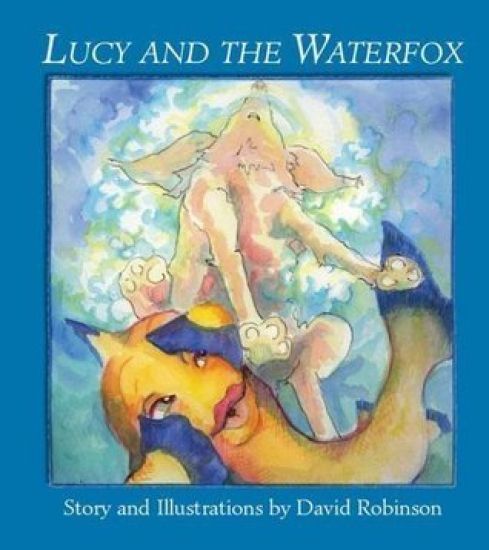
Lucy is a little red fox who has a secret; she can fly. Her heart soars when she takes to the skies. One afternoon, after her fellow foxes see her flying, they shame her, yelling, "Everyone knows that foxes can't fly." Lucy hears their words and for a brief moment, believes them, and falls to the ground. This only reinforces her self-doubt. She begins to lose her playful spunk and the sheen of her coat grows duller by the day. Lucy has become a sad, disheartened, and disempowered little fox. One night the wise old story fox appears out of the forest to share an evening of foxlore with Lucy's pack. He tells the story of Milton, a young fox that was long ago banished from the land for learning to swim like a fish. It was the banishment of Milton that gave rise to the popular saying used by older foxes when they see the young ones straying, "You don't want to end up like Milton, remember, ..." and they chant, "Neither fox nor fish." The old story fox's tale unsettles Lucy. After tossing and turning and trying to sleep (counting sheep doesn't work for a fox), Lucy goes to the pond for a drink. There, she meets the wise old story-fox. Through the magic of this encounter, she learns to believe in herself again, her paws lift from the ground and she, once again, points her nose up and takes to the skies.
Examining a series of processes (Islamization, Arabization, Africanization) and case studies from North, West and East Africa, this book gives snapshots of Muslim societies in Africa over the last millennium. In contrast to traditions which suggest that Islam did not take root in Africa, author David Robinson shows the complex struggles of Muslims in the Muslim state of Morocco and in the Hausaland region of Nigeria. He portrays the ways in which Islam was practiced in the 'pagan' societies of Ashanti (Ghana) and Buganda (Uganda) and in the ostensibly Christian state of Ethiopia - beginning with the first emigration of Muslims from Mecca in 615 CE, well before the foundational hijra to Medina in 622. He concludes with chapters on the Mahdi and Khalifa of the Sudan and the Murid Sufi movement that originated in Senegal, and reflections in the wake of the events of September 11, 2001.
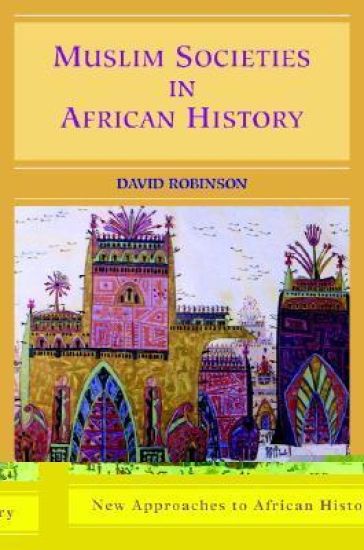
Examining a series of processes (Islamization, Arabization, Africanization) and case studies from North, West and East Africa, this book gives snapshots of Muslim societies in Africa over the last millennium. In contrast to traditions which suggest that Islam did not take root in Africa, author David Robinson shows the complex struggles of Muslims in the Muslim state of Morocco and in the Hausaland region of Nigeria. He portrays the ways in which Islam was practiced in the ‘pagan’ societies of Ashanti (Ghana) and Buganda (Uganda) and in the ostensibly Christian state of Ethiopia - beginning with the first emigration of Muslims from Mecca in 615 CE, well before the foundational hijra to Medina in 622. He concludes with chapters on the Mahdi and Khalifa of the Sudan and the Murid Sufi movement that originated in Senegal, and reflections in the wake of the events of September 11, 2001.
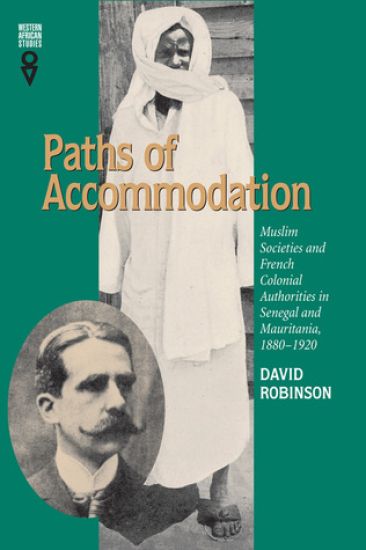
Between 1880 and 1920, Muslim Sufi orders became pillars of the colonial regimes and economies of Senegal and Mauritania. In Paths of Accommodation, David Robinson examines the ways in which the leaders of the orders negotiated relations with the Federation of French West Africa in order to preserve autonomy within the religious, social, and economic realms while abandoning the political sphere to their non-Muslim rulers. This was a striking development because the local inhabitants had a strong sense of belonging to the Dar al-Islam, the "world of Islam" in which Muslims ruled themselves. Drawing from a wide variety of archival, oral, and Arabic sources, Robinson describes the important roles played by Muslim merchants and the mulatto community of St. Louis, Senegal. He also examines the impact of the electoral institutions established by the Third Republic, and the French effort to develop a reputation as a "Muslim power"—a European imperial nation with a capacity for ruling over Islamic subjects. By charting the similarities and differences of the trajectories followed by leading groups within the region as they responded to the colonial regimes, Robinson provides an understanding of the relationship between knowledge and power, the concepts of civil society and hegemony, and the transferability of symbolic, economic, and social capital.
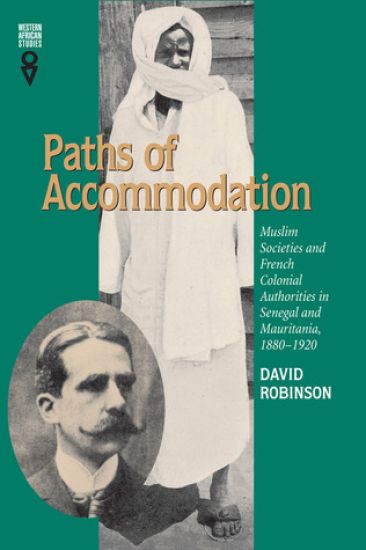
Between 1880 and 1920, Muslim Sufi orders became pillars of the colonial regimes and economies of Senegal and Mauritania. In Paths of Accommodation, David Robinson examines the ways in which the leaders of the orders negotiated relations with the Federation of French West Africa in order to preserve autonomy within the religious, social, and economic realms while abandoning the political sphere to their non-Muslim rulers. This was a striking development because the local inhabitants had a strong sense of belonging to the Dar al-Islam, the "world of Islam" in which Muslims ruled themselves. Drawing from a wide variety of archival, oral, and Arabic sources, Robinson describes the important roles played by Muslim merchants and the mulatto community of St. Louis, Senegal. He also examines the impact of the electoral institutions established by the Third Republic, and the French effort to develop a reputation as a "Muslim power"—a European imperial nation with a capacity for ruling over Islamic subjects. By charting the similarities and differences of the trajectories followed by leading groups within the region as they responded to the colonial regimes, Robinson provides an understanding of the relationship between knowledge and power, the concepts of civil society and hegemony, and the transferability of symbolic, economic, and social capital.
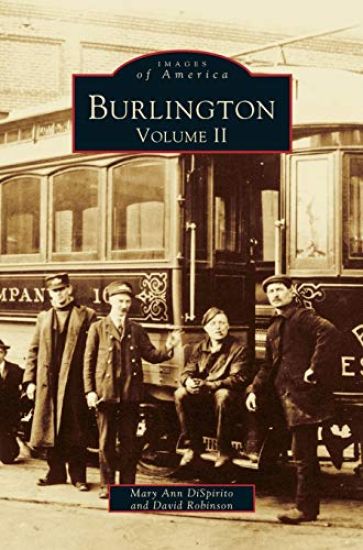
Burlington, Volume II
Mary Ann Dispirito; David Robinson
Arcadia Publishing Library Editions
1999
sidottu
Film critic David Robinson chronicles the early use of film as vaudeville sideshow; as sheer spectacle of moving images precluding any notion of plot development or drama; and as a fledgling dramatic effort, ranging from prizefights to Passion plays. He also takes readers to the nickelodeon theaters, and replete with more than 150 drawings and photographs, shows how the earliest devices of cinematic prehistory--machines with colorful names like the Phantascope and the Wheel of Life--led to the technology of filmmaking we know today.