Kirjojen hintavertailu – 12 903 725 kirjaa ja 27 kauppaa

Kirjailija

David Rudolph

Kirjat ja teokset yhdessä paikassa: 5 kirjaa, julkaisuja vuosilta 2017–2025, suosituimpiin kuuluu Litigating Corporate Surveillance. Vertaile teosten hintoja ja tarkista saatavuus suomalaisista kirjakaupoista.

5 kirjaa

Kirjojen julkaisuvuodet: 2017–2025.

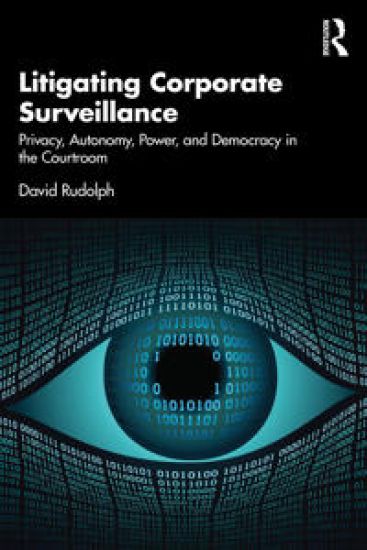
Litigating Corporate Surveillance

Litigating Corporate Surveillance

David Rudolph

TAYLOR FRANCIS LTD
2025
nidottu
This book interrogates the legality of corporate surveillance, offering a corrective approach to protecting privacy through litigation--not through legislation. Explosive revelations, from the Snowden disclosures to the Cambridge Analytica scandal, have shown us that our daily lives are embedded in a network of pervasive, panoptic surveillance designed to manipulate. This corporate surveillance network has grown to encompass and absorb the basic digital substrate of our daily lives. Received wisdom, among commentators, the press, and even legal academia, is that this is all legal: corporate surveillance has flourished because there are no legal tools to reign in its pervasive and invasive practices. Analysing recent developments in data privacy law in light of ever-increasing data aggregation and cybersurveillance practices by corporations and governments, this book examines the pervasive, multimodal corporate surveillance practices that now permeate both our digital and offline lives, and offers a prescription for fighting back through the courts. Interweaving discussions of the statutory, common law, and constitutional frameworks that are currently being applied in legal challenges to these activities, this book considers current critiques of privacy law as conceptualized by both legal scholars and practitioners. Additionally, it makes suggestions for navigating the future of privacy rights in the face of our increasingly digitized lives. This book will be of interest to researchers and practitioners in the field of corporate surveillance, digital law, and privacy law.
Litigating Corporate Surveillance

Litigating Corporate Surveillance

David Rudolph

TAYLOR FRANCIS LTD
2025
sidottu
This book interrogates the legality of corporate surveillance, offering a corrective approach to protecting privacy through litigation--not through legislation. Explosive revelations, from the Snowden disclosures to the Cambridge Analytica scandal, have shown us that our daily lives are embedded in a network of pervasive, panoptic surveillance designed to manipulate. This corporate surveillance network has grown to encompass and absorb the basic digital substrate of our daily lives. Received wisdom, among commentators, the press, and even legal academia, is that this is all legal: corporate surveillance has flourished because there are no legal tools to reign in its pervasive and invasive practices. Analysing recent developments in data privacy law in light of ever-increasing data aggregation and cybersurveillance practices by corporations and governments, this book examines the pervasive, multimodal corporate surveillance practices that now permeate both our digital and offline lives, and offers a prescription for fighting back through the courts. Interweaving discussions of the statutory, common law, and constitutional frameworks that are currently being applied in legal challenges to these activities, this book considers current critiques of privacy law as conceptualized by both legal scholars and practitioners. Additionally, it makes suggestions for navigating the future of privacy rights in the face of our increasingly digitized lives. This book will be of interest to researchers and practitioners in the field of corporate surveillance, digital law, and privacy law.
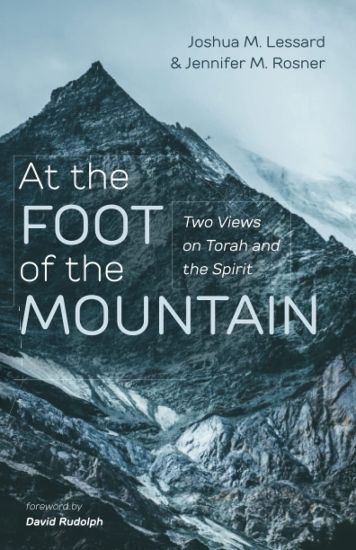
At the Foot of the Mountain

At the Foot of the Mountain

Joshua M Lessard; Jennifer M Rosner; David Rudolph

Resource Publications (CA)
2021
pokkari
Where does a relatively young movement turn for identity and direction when it straddles the fence between two competing major religions? Messianic Jews have done something that for centuries was considered untenable. Like Christians, they have embraced Jesus as the divine Messiah, but they have refused to surrender their place within the Jewish people. How compatible are these two sides of Messianic Jewish faith? Can Messianic Jews participate as full members in both the body of Messiah and the people of Israel? Can they be led by the Holy Spirit that Jesus promised while also following the rulings of the Jewish sages? Did Jesus affirm rabbinic authority, or does that authority now lie elsewhere within the new covenant? In this volume, Messianic Jewish rabbi Joshua Lessard and Messianic Jewish scholar Jennifer Rosner debate the path forward for Messianic Judaism as it grapples with being the child of divorced parents--the church and Israel. Both Lessard and Rosner are committed to the success of Messianic Judaism, though they put forth contrasting visions of what that means. The discussion herein is unique and provocative, not only for Messianic Jews, but for all who have wrestled at the crossroads of Torah, tradition, and Spirit.
At the Foot of the Mountain

At the Foot of the Mountain

Joshua M Lessard; Jennifer M Rosner; David Rudolph

Resource Publications (CA)
2021
sidottu
Where does a relatively young movement turn for identity and direction when it straddles the fence between two competing major religions? Messianic Jews have done something that for centuries was considered untenable. Like Christians, they have embraced Jesus as the divine Messiah, but they have refused to surrender their place within the Jewish people. How compatible are these two sides of Messianic Jewish faith? Can Messianic Jews participate as full members in both the body of Messiah and the people of Israel? Can they be led by the Holy Spirit that Jesus promised while also following the rulings of the Jewish sages? Did Jesus affirm rabbinic authority, or does that authority now lie elsewhere within the new covenant? In this volume, Messianic Jewish rabbi Joshua Lessard and Messianic Jewish scholar Jennifer Rosner debate the path forward for Messianic Judaism as it grapples with being the child of divorced parents--the church and Israel. Both Lessard and Rosner are committed to the success of Messianic Judaism, though they put forth contrasting visions of what that means. The discussion herein is unique and provocative, not only for Messianic Jews, but for all who have wrestled at the crossroads of Torah, tradition, and Spirit.