Kirjojen hintavertailu – 12 859 824 kirjaa ja 27 kauppaa

Kirjailija

David Sanders

Kirjat ja teokset yhdessä paikassa: 22 kirjaa, julkaisuja vuosilta 1999–2023, suosituimpiin kuuluu Political Choice in Britain. Vertaile teosten hintoja ja tarkista saatavuus suomalaisista kirjakaupoista.

22 kirjaa

Kirjojen julkaisuvuodet: 1999–2023.

Uncaging Prolific Leadership

Uncaging Prolific Leadership

David Sanders

CURRY BROTHERS PUBLISHING
2021
nidottu
This book is a supplement for strong leaders who need simple tenets on how to remain focus on what's really important. These daily haikus serve to keep the most productive leader highly proficient and effective. David Sanders opens up his heart by revealing the essentials of what leadership is all about. He elevates your understanding of leadership by taking the reader to a who new level.
Political Choice in Britain

Political Choice in Britain

Harold D. Clarke; David Sanders; Marianne C. Stewart; Paul Whiteley

Oxford University Press
2004
sidottu
Why do people vote as they do? Indeed, why do they vote at all? What do they think about elections, political parties, and democracy? This important book by four leading scholars addresses these questions. Using a wealth of data from the 1964-2001 British election studies, monthly Gallup polls, and numerous other national surveys conducted over the past four decades, the authors test the explanatory power of rival sociological and individual rationality models of turnout and party choice. Analyses of party choice endorse a valence politics model that challenges the long-dominant social class model. British voters make their political choices by evaluating the performance of parties and party leaders in economic and other important policy areas. Although these evaluations may be products of events and conditions that occur long before an election campaign officially begins, parties' national and local campaign activities are also influential. Consistent with the valence politics model, partisan attachments display individual- and aggregate-level dynamics that reflect ongoing judgements about the managerial abilities of parties and their leaders. A general incentives model provides the best explanation of turnout. Calculations of the costs and influence-discounted benefits of voting and sense of civic duty are key variables in this model. Significantly, the decline in turnout in recent elections does not reflect more general negative trends in public attitudes about the political system. Voters judge the performance of British democracy in much the same way as they evaluate its parties and politicians. Support at all levels of the system is a renewable resource, but one that must be renewed. A command of theory, data, models, and method ensure that Political Choice in Britain will be a major resource for all those interested in elections, voting, and democracy.
Political Choice in Britain

Political Choice in Britain

Harold D. Clarke; David Sanders; Marianne C. Stewart; Paul Whiteley

Oxford University Press
2004
nidottu
Why do people vote as they do? Indeed, why do they vote at all? What do they think about elections and democracy? This book addresses these questions by focusing on the explanatory power of rival sociological and "individual rationality" models. Data from the latest British Election Study, earlier election studies and monthly opinion polls reveal that government and party performance, rather than social class, provides the superior explanation of vote choice.
The Struggle for Health

The Struggle for Health

David Sanders

Oxford University Press
2023
nidottu
The first edition of The Struggle for Health was published in 1985 and was widely acclaimed by those seeking a broader and deeper political understanding of ill health, beyond the medical model of care. It was a revolutionary book, charting new ways of understanding and tackling the causes of ill health, and suggesting strategies to enable health for all. This second edition includes health problems that have emerged since the 1980s, notably HIV/AIDs, COVID-19, and other epidemics, and the increase in non-communicable diseases, such as cardiovascular disease and diabetes. It examines some of the health impacts of globalization, specifically on the food and pharmaceutical value chains, and considers the consequences of climate change on the health of populations. However, this edition does not depart from the core message of the original book: Health for All can only be achieved through a more equitable distribution of wealth, resources, and power. The Struggle for Health, Second Edition, utilises the same approach as the first, with a narrative that begins with diseases, then describes historical trends and the limitation of the medical (and commercial) model of care. At each juncture, it asks the question 'WHY' - why do people, especially children, still die in large numbers throughout the world, from wholly preventable diseases? Why is it that appropriate provision for health care is not available to every individual in the world? What changes can be made to improve this situation? Most importantly, this edition presents a strengthened call to action, building upon the original work and advocating for systemic changes to ensure justice and equity in health for all.

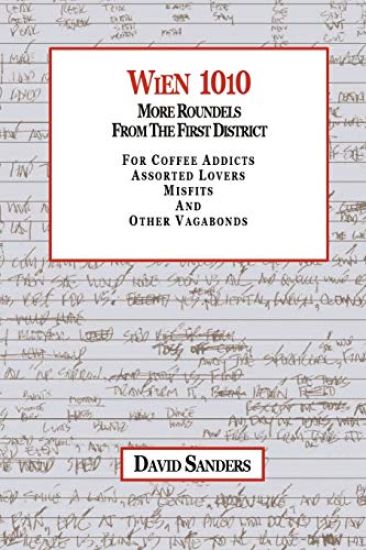
The Selected Poems of David Sanders

The Selected Poems of David Sanders

David Sanders

Xlibris Us
2022
pokkari
David Sanders resides in Jersey City and in Baiting Hollow on the North Fork of Long Island. Sanders will always be a New Yorker at heart: he grew up in Westbury, Long Island, and spent most of his adult life just a stone's throw from the fields and tennis courts of Central Park. A graduate of Georgetown University he writes, paints, and composes music. Sanders also has a great deal of product design, digital design, and architectural experience. He has written eight volumes of poetry. Currently he is finishing his first collection of digital prints under his brand Mates 4or Life as well as composing the music for an original ballet based upon one of his roundels. He is very happy to be publishing The Selected Poems, his eighth volume of poetry by agreement with Random House's xlibris.com.
JJ's Shot to Save the World

JJ's Shot to Save the World

David Sanders; Elyse Sanders

Sanders Publishing
2021
sidottu
JJ's Shot to Save the World is a story about a young girl who conquers her fear of going to the doctor's to get a vaccination. While vaccines can be scary, JJ shows courage and strength on her journey to become a germ-fighting hero. Dr. David Sanders and Elyse Sanders conceived the idea for this book after navigating their daughter's own experience with her routine vaccinations. They wrote it with the hope to inspire bravery in young children and help them understand the benefits of getting vaccinated.
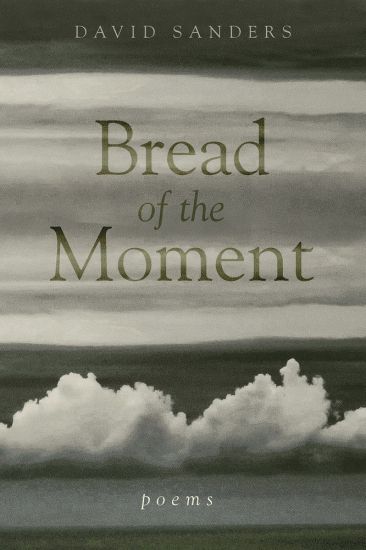
Bread of the Moment

Bread of the Moment

David Sanders

Swallow Press
2021
pokkari
A collection of poems about time, solitude, and wisdom that leads readers to hover between acceptance of and alienation from our fragility. Bread of the Moment, the follow-up to David Sanders' Compass and Clock (Swallow Press, 2016), devotes keen attention to the porous nature of the past and how the unbidden evidence of ordinary life pervades the world, provoking a spectrum of moments from which to draw meaning and find solace. These poems, characterized by a mix of free and formal verse, depict quiet days at home or in nature, as well as close calls and brushes with death: chronic illness, a house fire, a car crushed by a boulder. In this way, these poems amplify the fragility of the commonplace, a mystery from which we are, amid the noise of our everyday lives, sometimes estranged. Through this exploration, Sanders constructs a precarious balance between alienation and acceptance, striking a note at once recognizable and new.
There's More Room in an Empty Heart
Two hundred new poems from David Sanders including: Just to the East of Despair Just to the east of despair Is a land of devil-may-care, A place to go when nothing is fair Just to the east of despair. Your chances to dismiss This potentially harmful abyss Are better if you forget what you miss. Just to the east of despair Is a land of truth-or-dare, A place to go at the end of an affair Just to the east of despair.
Losing an Empire, Finding a Role

Losing an Empire, Finding a Role

David Sanders; David Houghton

Red Globe Press
2017
nidottu
Informed by Winston Churchill’s famous metaphor, successive British governments have shaped their foreign policy thinking around the belief that Britain’s overseas interests lie in three interlocking ‘circles’: in Europe, in the Commonwealth, and in the ‘special relationship’ across the Atlantic. Recent administrations may have updated the language in terms of ‘bridges’, ‘hubs’ and ‘networks’, but the notion of Britain as somehow at the centre of things remains a vital idea. In this updated edition of a classic text, David Sanders and David Patrick Houghton examine British foreign policy since 1945 through the prism of these three circles. Taking account of major developments from the ending of the Cold War, through 9/11 and the so-called War on Terror, to Britain’s historic decision to leave the European Union, it provides a masterly account of Britain’s changing place in the world and of the policy calculations and deeper structural factors that help explain changes in strategy. Combining chronological narrative with careful consideration of the main theories of foreign policy analysis and international relations, this book provide a reliable and comprehensive introduction to the evolution of British external policy, including economic and defence policy, in the postwar period. Characterized by its accessible style and depth of analysis, and now fully updated in line with 21st century developments, Losing an Empire, Finding a Role will remain an invaluable guide to British foreign policy for students of international relations or foreign policy at any level. New to this Edition:- Updated coverage of events, including 'the War on Terror' and Brexit- Reformulated analysisto cover the updates inscholarship
Compass and Clock

Compass and Clock

David Sanders

Swallow Press
2016
pokkari
The poems of Compass and Clock take their inspiration from the intersection of the natural world and the human, exploring the landscapes in which those intersections occur. Those landscapes range from David Sanders's native midwestern countryside to the caves of Lascaux and an enchanted lake where relics of lost lives are washed ashore. Yet, the true source of the poems' vitality is Sanders's attention to the missed or misread moments, those times when the act fails, and the perceived clashes with the actual. Here, the satisfying pairing of elegance and vulnerability invites the reader to tour those uncanny landscapes from which one returns irrevocably changed—refreshed, but wistful. In a review of his earlier limited-edition work, Time in Transit, the Hudson Review called David Sanders "a poet to watch." With the Swallow Press publication of Compass and Clock, we have the realization of that promise.
Affluence, Austerity and Electoral Change in Britain

Affluence, Austerity and Electoral Change in Britain

Paul Whiteley; Harold D. Clarke; David Sanders; Marianne C. Stewart

Cambridge University Press
2013
sidottu
Affluence, Austerity and Electoral Change in Britain investigates the political economy of party support for British political parties since Tony Blair led New Labour to power in 1997. Using valence politics models of electoral choice and marshalling an unprecedented wealth of survey data collected in the British Election Study's monthly Continuous Monitoring Surveys, the authors trace forces affecting support for New Labour during its thirteen years in office. They then study how the recessionary economy has influenced the dynamics of party support since the Conservative–Liberal Democrat Coalition came to power in May 2010 and factors that shaped voting in Britain's May 2011 national referendum on changing the electoral system. Placing Britain in comparative perspective with cross-national survey data gathered in the midst of the worst recession since the 1930s, the authors investigate how the economic crisis has affected support for incumbent governments and democratic politics in over twenty European countries.
Affluence, Austerity and Electoral Change in Britain

Affluence, Austerity and Electoral Change in Britain

Paul Whiteley; Harold D. Clarke; David Sanders; Marianne C. Stewart

Cambridge University Press
2013
pokkari
Affluence, Austerity and Electoral Change in Britain investigates the political economy of party support for British political parties since Tony Blair led New Labour to power in 1997. Using valence politics models of electoral choice and marshalling an unprecedented wealth of survey data collected in the British Election Study's monthly Continuous Monitoring Surveys, the authors trace forces affecting support for New Labour during its thirteen years in office. They then study how the recessionary economy has influenced the dynamics of party support since the Conservative–Liberal Democrat Coalition came to power in May 2010 and factors that shaped voting in Britain's May 2011 national referendum on changing the electoral system. Placing Britain in comparative perspective with cross-national survey data gathered in the midst of the worst recession since the 1930s, the authors investigate how the economic crisis has affected support for incumbent governments and democratic politics in over twenty European countries.
The Political Integration of Ethnic Minorities in Britain

The Political Integration of Ethnic Minorities in Britain

Anthony F. Heath; Stephen D. Fisher; Gemma Rosenblatt; David Sanders; Maria Sobolewska

Oxford University Press
2013
sidottu
Britain has become increasingly diverse over the last fifty years and she has been fortunate to attract relatively highly educated immigrants with democratic values and positive perceptions of the British political system. But Britain's ethnic minorities have suffered prejudice, harassment and discrimination, while politicians increasingly argue that they have failed to integrate adequately into British society and accuse them of leading separate lives. In this book we set out to explore the extent and nature of the political rather than the economic integration of Britain's growing ethnic minority population. We consider what ethnic minorities in Britain think about and how they engage in British politics. This includes political knowledge and interest, political values and policy preferences, perceptions of parties, preferences for parties, what parties offer ethnic minorities, electoral registration, turnout and vote choice, other forms of political participation (such as signing petitions and demonstrations) and trust in political institutions and satisfaction with the democratic system. The book considers the ways in which ethnic minorities resemble or differ from the white British population, and differences between different minority groups. The analysis is based on the largest and broadest academic survey ever of the political attitudes and behaviour of Britain's main ethnic minority groups, the 2010 Ethnic Minority British Election Study, in conjunction with the nationally representative British Election Study and other surveys. The findings are based on complex statistical regression models but they are presented and interpreted for more general readers. To what extent does discrimination at work and social exclusion alienate ethnic minorities from the political process? Are those minorities who associate more with those from their own ethnic group less engaged politically? Are those who were born in Britain better integrated than immigrants? This study addresses these and related questions. Despite there being many reasons for minorities to disassociate themselves from British politics they engage in positive and constructive ways. But there are important differences between the nature of white British and ethnic minority political engagement and between different minority groups, and especially between immigrants and their descendants. As a result politicians and political parties should not take the political support of ethnic minorities for granted.
A Divided Poet

A Divided Poet

David Sanders

Camden House Inc
2011
sidottu
Frost's breakthrough book of poetry seen anew as an artistic whole and in the context of the poet's career and development. North of Boston, Robert Frost's second book of verse and arguably his greatest, brought him suddenly into national prominence in 1915. Though completed and first published in England in 1914, the book was rooted in the decade, 1900-1910, that Frost spent in Derry, New Hampshire, where he witnessed the decline of its traditional farming culture. In presenting this "drama of disappearance," twelve of the book's fifteen principal poems are literally dramatic, composed mainly of direct dialogue. Among them are three of Frost's most famous lyrics, each featuring a signature task of New England life and underlining the book's tribute to a fading culture. Collectively, the poems bring the diction and tones of a New England vernacular within a traditional metric frame, making "music," as Frost boasted, "from the sound of sense" and poetry of "a language absolutely unliterary." Such adaptations of ordinary language and experience to blank verse drama made Frost a founder of American modernism and North of Boston one of its monuments. Exploring Frost's complex connection to his poetic characters, this study provides new readingsof the individual poems and a new look at North of Boston's development. To a degree no other study has done, it addresses the book's design as an artistic whole while placing it in the context of Frost's unfolding career. David Sanders is Professor Emeritus of English at St. John Fisher College, Rochester, New York.
Performance Politics and the British Voter

Performance Politics and the British Voter

Harold D. Clarke; David Sanders; Marianne C. Stewart; Paul F. Whiteley

Cambridge University Press
2009
sidottu
What matters most to voters when they choose their leaders? This book suggests that performance politics is at the heart of contemporary democracy, with voters forming judgments about how well competing parties and leaders perform on important issues. Given the high stakes and uncertainty involved, voters rely heavily on partisan cues and party leader images as guides to electoral choice. However, the authors argue that the issue agenda of British politics has changed markedly in recent years. A cluster of concerns about crime, immigration and terrorism now mix with perennial economic and public service issues. Since voters and parties often share the same positions on these issues, political competition focuses on who can do the best job. This book shows that a model emphasizing flexible partisan attachments, party leader images and judgments of party competence on key issues can explain electoral choice in contemporary Britain.
Performance Politics and the British Voter

Performance Politics and the British Voter

Harold D. Clarke; David Sanders; Marianne C. Stewart; Paul F. Whiteley

Cambridge University Press
2009
pokkari
What matters most to voters when they choose their leaders? This book suggests that performance politics is at the heart of contemporary democracy, with voters forming judgments about how well competing parties and leaders perform on important issues. Given the high stakes and uncertainty involved, voters rely heavily on partisan cues and party leader images as guides to electoral choice. However, the authors argue that the issue agenda of British politics has changed markedly in recent years. A cluster of concerns about crime, immigration and terrorism now mix with perennial economic and public service issues. Since voters and parties often share the same positions on these issues, political competition focuses on who can do the best job. This book shows that a model emphasizing flexible partisan attachments, party leader images and judgments of party competence on key issues can explain electoral choice in contemporary Britain.