Kirjailija
David Simpson
Kirjat ja teokset yhdessä paikassa: 73 kirjaa, julkaisuja vuosilta 1979–2024, suosituimpiin kuuluu A Discourse on Dreams and Night-Visions, with Numerous Examples Ancient and Modern. by the Revd. David Simpson, M.A.. Vertaile teosten hintoja ja tarkista saatavuus suomalaisista kirjakaupoista.
73 kirjaa
Kirjojen julkaisuvuodet: 1979–2024.
This book is a comprehensive review of the genera of Hydrocharitaceae, a flowering plant family, found in tropical East Africa. It presents information on their character, occurrence, habitat, phenotypic variations and distribution of each of the species under these genera.
Practical Onshore Gas Field Engineering delivers the necessary framework to help engineers understand the needs of the reservoir, including sections on early transmission and during the life of the well. Written from a reservoir perspective, this reference includes methods and equipment from gas reservoirs, covering the gathering stage at the gas facility for transportation and processing. Loaded with real-world case studies and examples, the book offers a variety of different types of gas fields that demonstrate how surface systems can work through each scenario. Users will gain an increased understanding of today’s gas system aspects, along with tactics on how to optimize bottom line revenue. As reservoir and production engineers face many challenges in getting gas from the reservoir to the final sales point, especially as a result of the shale boom, a new demand for more facility engineers now exists in the market. This book addresses new challenges in the market and brings new tactics to the forefront.
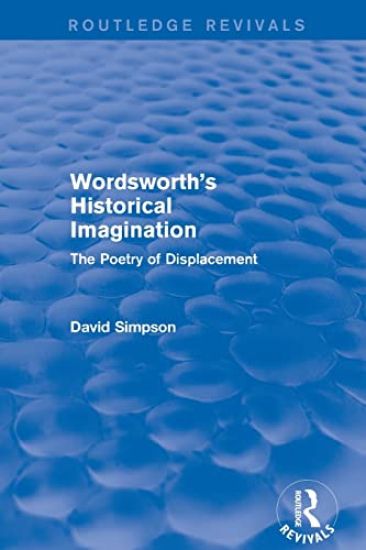
Traditionally, Wordsworth’s greatness is founded on his identity as the poet of nature and solitude. The Wordsworthian imagination is seen as an essentially private faculty, its very existence premised on the absence of other people. In this title, first published in 1987, David Simpson challenges this established view of Wordsworth, arguing that it fails to recognize and explain the importance of the context of the public sphere and the social environment to the authentic experience of the imagination. Wordsworth’s preoccupation with the metaphors of property and labour shows him to be acutely anxious about the value of his art in a world that he regarded as corrupted. Through close examination of a few important poems, both well-known and relatively unknown, Simpson shows that there is no unitary, public Wordsworth, nor is there a conflict or tension between the private and the public. The absence of any clear kind of authority in the voice that speaks the poems makes Wordsworth’s poetry, in Simpson’s phrase, a ‘poetry of displacement’.

Civil Asset Forfeiture Reform in Texas: Fighting Contraband While Upholding Civil Liberties
David Simpson; Andrew Kloster; Shannon Edmonds
Createspace Independent Publishing Platform
2014
nidottu
Traditionally, Wordsworth’s greatness is founded on his identity as the poet of nature and solitude. The Wordsworthian imagination is seen as an essentially private faculty, its very existence premised on the absence of other people. In this title, first published in 1987, David Simpson challenges this established view of Wordsworth, arguing that it fails to recognize and explain the importance of the context of the public sphere and the social environment to the authentic experience of the imagination. Wordsworth’s preoccupation with the metaphors of property and labour shows him to be acutely anxious about the value of his art in a world that he regarded as corrupted. Through close examination of a few important poems, both well-known and relatively unknown, Simpson shows that there is no unitary, public Wordsworth, nor is there a conflict or tension between the private and the public. The absence of any clear kind of authority in the voice that speaks the poems makes Wordsworth’s poetry, in Simpson’s phrase, a ‘poetry of displacement’.
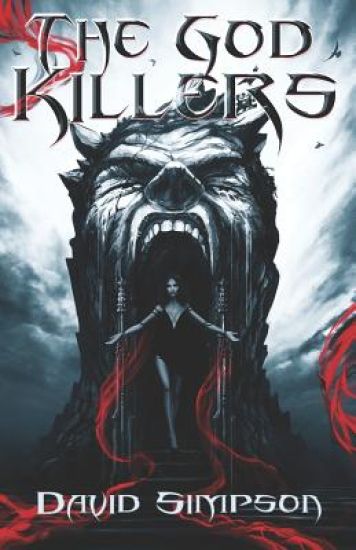
In this edgy thriller, a creature pretending to be God tricks dying people with a heavenly white light - only to consume their souls forever. But Cipher, Han, Natalie, and Father Hurley know the truth - can they save humanity from its terrifying fate?
This is a book about Scouse, the language of Liverpool and how it evolved. It goes back to early times looking at the different groups of people who have contributed to Liverpool's rich speech and culture and examines the features that make Scouse so unique.
All About Liverpool traces the origins and history of Liverpool through its streets, suburbs and buildings and is crammed with fascinating facts about the city.
Antony Gormley's Angel of the North has only been around since 1998 but it is hard to imagine Gateshead without it. Today it is the most widely recognised symbol of Gateshead and the North East and has quickly become a cherished national icon. This book features facts, quotes and opinions about the Angel, its setting and its lasting legacy.
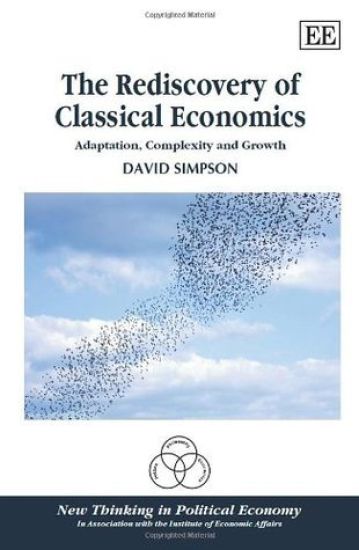
David Simpson skilfully argues that a market economy can be best understood as a human complex system, a perspective that represents a continuation of the classical tradition in economic thought. In the classical tradition, growth rather than allocative efficiency is the principal object of enquiry, economic phenomena are recognised to be elements of processes rather than structures, and change is evolutionary. The book shows the common principles that connect the early classical school, the Austrian school and complexity theory in a single line of thought. It goes on to show how these principles can be applied to explain the characteristic features of a market economy - namely incessant change, growth, the business cycle and the market process itself - and argues that static equilibrium theory, whether neoclassical or neo-Keynesian, cannot satisfactorily account for these phenomena. This fascinating book will provide a stimulating read for academics, postgraduate students and all those with an interest in economic theory and economic policy.
1993 saw Clinton take up office in the Whitehouse and Mr Blobby riding high in the charts. Buckingham Palace opened its doors, MI5 became more open and the EU was established. The Czech Republic and Slovakia separated, Britains railways were privatised and Robbie Coltrane created his brilliant interpretation of Fitz in Jimmy McGoverns Cracker.
1944 saw the war drawing to a close with the D-Day landings and the liberation of Rome and Paris. It was the year Danny DeVito, Jerry Springer and Diana Ross were born, that Cluedo was invented and P. A. Y. E was introduced. This was the year the King and Queen took a meal with the miners and band leader Glenn Miller mysteriously disappeared.
In 1996 the EU enforced a ban on British Beef, Oasis sang Dont Look Back in Anger and Never Mind the Buzzcocks made its TV debut. Take That split, Sir Cliff sang in the rain at Wimbledon and Dolly the Sheep was cloned. Football came home in Euro 96 and the popular computer games of Quake and Tomb Raider were launched.
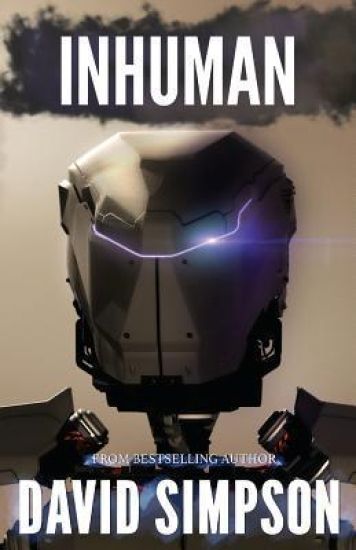
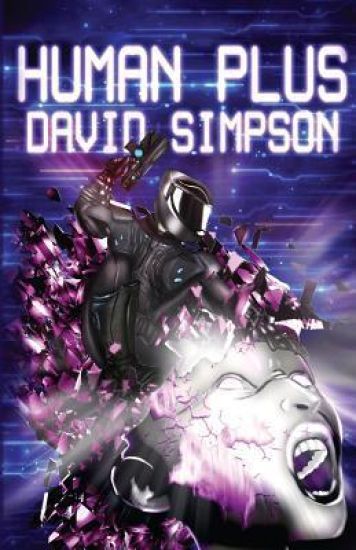
In this sequel to Post-Human, humanity will be forced to face a future more advanced than it could have imagined if it wants to survive. Nineteen months have passed since the A. I. turned against humanity and was subsequently destroyed. In the meantime, James Keats has turned over the A. I.'s powers to a non-intelligent, easily controlled operating system. He and Thel have left the planet and spent six months vacationing on Venus, which has been newly terraformed without the consent or knowledge of the Governing Council. The A. I. has been deleted, but the message it sent out into the abyss of space in search of a companion has been answered. An alien force dwarfing the Earth is on its way to find out why the A. I. has stopped communicating. Keats and company can only assume its intentions will be hostile when it finds out the truth. Only one thing is for sure: nothing will ever be the same again. Welcome to the Trans-Human era. Welcome to the singularity." A thought-provoking, energetic sci-fi book, with a robust dose of high-octane exploits." -By A. F. Stewart, author of Chronicles of the Undead