Kirjojen hintavertailu – 12 859 827 kirjaa ja 27 kauppaa

Kirjailija

David Skinner

Kirjat ja teokset yhdessä paikassa: 12 kirjaa, julkaisuja vuosilta 1999–2026, suosituimpiin kuuluu Time Management for Lawyers. Vertaile teosten hintoja ja tarkista saatavuus suomalaisista kirjakaupoista.

12 kirjaa

Kirjojen julkaisuvuodet: 1999–2026.

Time Management for Lawyers

Time Management for Lawyers

Catrin Mills; Anna Marra; Joanna Gaudoin; Todd Hutchison; Karen Dunn Skinner; David Skinner; Jean-Baptiste Lebelle; Alice Boullier de Branche; Sarah Murphy; Gary Miles; Mila Trezza; Rachel Brushfield; Nikki Alderson

Globe Law and Business Ltd
2025
nidottu
Time Management for Lawyers: Making Every Six Minutes Count is a comprehensive guide designed to help legal professionals take control of their time and enhance both productivity and wellbeing. In a fast-paced and high-pressure profession, time management is the key to thriving – not just surviving. This book explores practical strategies for managing overwhelming caseloads, maintaining a healthy work–life balance, and preventing burnout. It covers the latest technological influences, including how AI is reshaping how lawyers manage time and tasks, while also addressing the mental and emotional challenges of working in law. From optimising focus to managing client demands and avoiding distractions, this book helps lawyers achieve peak performance while still leaving room for creativity, innovation, and personal wellbeing. With expert advice on delegation, prioritisation and setting clear goals, Time Management for Lawyers: Making Every Six Minutes Count equips you with the tools to reclaim your time and thrive in your legal career.
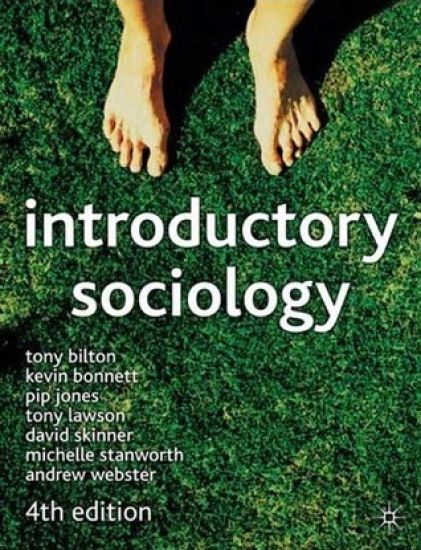
Introductory Sociology

Introductory Sociology

Tony Bilton; Kevin Bonnett; Pip Jones; Tony Lawson; David Skinner; Michelle Stanworth; Andrew Webster

Red Globe Press
2002
nidottu
"Introductory Sociology" is a textbook structured to cover all the main substantive topics studied at an introductory level within a framework that engages with contemporary debates about modernity, globalization and social identity.
A Political Economy of Canadian Broadcasting

A Political Economy of Canadian Broadcasting

David Skinner

University of British Columbia Press
2025
pokkari
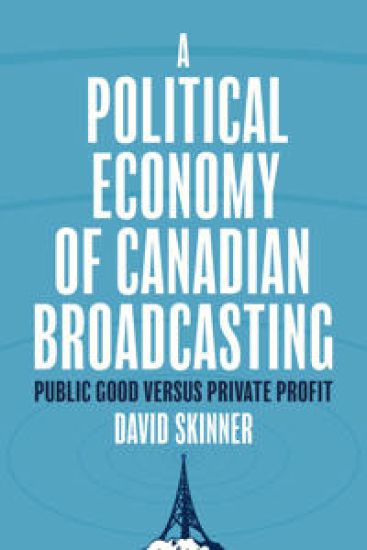
A Political Economy of Canadian Broadcasting takes readers from the days of the telegraph to the current digital age, examining the role of public broadcasting in the wider context of regulation, private capital, and foreign programming. This comprehensive history spans over a hundred years, highlighting the shifting technological character of the media system within anglophone Canada and the key place of public broadcasting within it. Situated in Canada's broader economic history, David Skinner's account ably demonstrates how broadcast regulation has been derived from the historical relationships between the Canadian state and private capital, and that this has tended to sideline its social goals. The book concludes with suggestions for encouraging the creation of distinctively Canadian programming. Coming just after the first major reform to Canada's broadcast legislation in three decades, A Political Economy of Canadian Broadcasting is a timely contribution to the history of broadcasting and the policy discussions that frame it.
A Political Economy of Canadian Broadcasting

A Political Economy of Canadian Broadcasting

David Skinner

University of British Columbia Press
2025
sidottu
A Political Economy of Canadian Broadcasting takes readers from the days of the telegraph to the current digital age, examining the role of public broadcasting in the wider context of regulation, private capital, and foreign programming. This comprehensive history spans over a hundred years, highlighting the shifting technological character of the media system within anglophone Canada and the key place of public broadcasting within it. Situated in Canada's broader economic history, David Skinner's account ably demonstrates how broadcast regulation has been derived from the historical relationships between the Canadian state and private capital, and that this has tended to sideline its social goals. The book concludes with suggestions for encouraging the creation of distinctively Canadian programming. Coming just after the first major reform to Canada's broadcast legislation in three decades, A Political Economy of Canadian Broadcasting is a timely contribution to the history of broadcasting and the policy discussions that frame it.
Cirsova Magazine of Thrilling Adventure and Daring Suspense Issue #14 / Spring 2023
The Unshrouded StarsBy DAVID SKINNERWhen an astronaut confronts a lamia, she has a proposition for him: she will refrain from eating children for an entire year...if he will take her into outer space Hunger in the VoidBy ANDREW GALLANTAllan Buxley, a daring-hearted Voyager, ventures into an Orion Gate with his robot companion Sigma-6 in the Sagan-12... and finds a black hole on the other side The Gold Exigency(Part 1 of 4)By MICHAEL TIERNEYA race of birdlike alien humanoids are being hunted and murdered for the gems grown in their skins A cop seeking answers and looking to stop the killings is approached by an unlikely benefactor: Achilles Hister of the Artomique Corporation QuicksilverBy J. COMERCartmill Station has an outbreak of a deadly virus Can a daring rescue mission to deliver nanomedicines using a dangerous experimental rocket reach them in time? Comes the HunterBy BILL WILLINGHAMFollowing the trail of dead, the hunter closes in on his quarry: the last of the wizard knights His magic exhausted, can he defeat his dastardly foe with his wits alone? Starring Hedy LamarrBy TROY RISERAn alien intelligence on the moon with the ability to possess victims engages in an all out secret war against Earth It's up to a secret world-wide conspiracy to stop it The Feast of the FedaiBy JIM BREYFOGLEKat is intent on raising an army to reclaim Alness Can she and Mangos arrange to recruit an elite core of highly trained Fedai in Alomar before her secret gets out? EggBy JAIME FAYE TORKELSONA geo-seismic research team is stationed on the strange moon Epsilon Epsilon Six, better known as Egg, a smooth and volatile body that could go at any moment Search PatternBy WILLIAM SUBOSKIA strange woman seemingly miraculously cures a man's terminal cancer His son has devoted his life to data sciences, but can he follow the clues to track her down? My Name is John Carter (Part 15)By JAMES HUTCHINGS
The Story of Ain't

The Story of Ain't

David Skinner

HarperPerennial
2020
nidottu
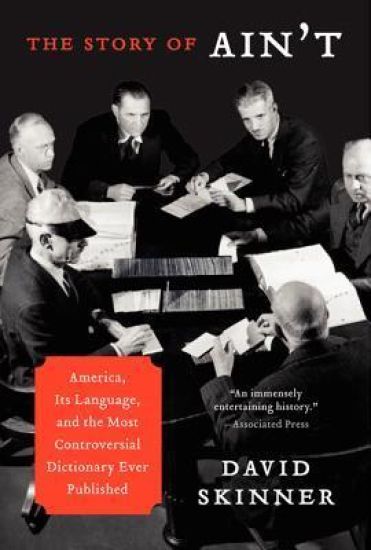
Created by the most respected American publisher of dictionaries and supervised by the editor Philip Gove, Webster's Third broke with tradition, adding thousands of new words and eliminating artificial notions of correctness, basing proper usage on how language was actually spoken. The dictionary's revolutionary style sparked what David Foster Wallace called the Fort Sumter of the Usage Wars. Editors and scholars howled for Gove's blood, calling him an enemy of clear thinking, a great relativist who was trying to sweep the English language into chaos. Critics bayed at the dictionary's permissive handling of ain't. Literary intellectuals such as Dwight Macdonald believed the dictionary's scientific approach to language and its abandonment of the old standard of usage represented nothing less than the unraveling of civilization. Entertaining and erudite, and a New York Times Book Review Editor's Choice, The Story of Ain't describes a great societal metamorphosis, tracing the fallout of the world wars, the rise of an educated middle class, and the emergence of America as the undisputed leader of the free world, and illuminating how those forces shaped our language. Never before or since has a dictionary so embodied the cultural transformation of the United States.
The Antichrist of Kokomo County

The Antichrist of Kokomo County

David Skinner

BOWER HOUSE
2016
nidottu
Frankie Horvath is not happy. He's almost forty. He's fat. His wife is dead. He designs forks for a living. And his son? Well, he might just be the Antichrist. Which is why Frankie is about to meet with Satanists to find out the truth once and for all. And taking into account Frankie's lifelong delusions of grandeur (and the gun stuffed down the front of his pants) a bloody showdown for the fate of mankind is not out of the question. If you love the dark humor of Chuck Palahniuk or Brett Easton Ellis, this one is for you.
The Physics of Quantum Mechanics

The Physics of Quantum Mechanics

James Binney; David Skinner

Oxford University Press
2013
nidottu
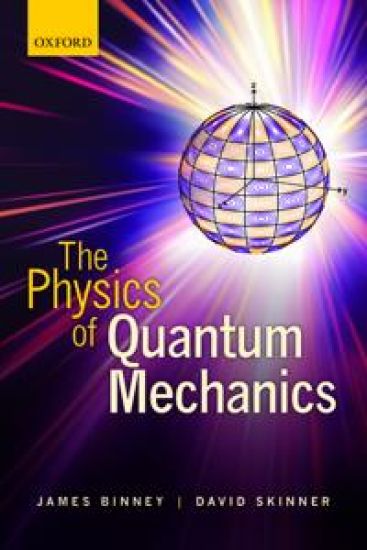
The Physics of Quantum Mechanics aims to give students a good understanding of how quantum mechanics describes the material world. It shows that the theory follows naturally from the use of probability amplitudes to derive probabilities. It stresses that stationary states are unphysical mathematical abstractions that enable us to solve the theory's governing equation, the time-dependent Schroedinger equation. Every opportunity is taken to illustrate the emergence of the familiar classical, dynamical world through the quantum interference of stationary states. The text stresses the continuity between the quantum world and the classical world, which is merely an approximation to the quantum world. The connections between observables, operators and transformations are clearly explained and the standard commutation rules derived from the properties of spacetime. A chapter is devoted to entanglement, quantum computation, density operators and their role in thermodynamics, and the measurement problem. Scattering phenomena, including the origin of radioactivity, are handled early on in the accessible context of one dimension, and at the end of the book with some rigour in three dimensions. Hydrogen and helium are discussed in some detail and it is shown that quantum mechanics enables us to understand the structure of the periodic table without engaging with the complexities of many-electron atoms. Dirac notation is used from the outset and students are trained to move easily from one representation to another, choosing whichever representation is best suited to a particular problem. The mathematical prerequisites are no more than simple vector algebra, Taylor series expansion and the use of integrating factors to solve linear first order differential equations. Rigorous algebraic methods are preferred to the solution of partial differential equations.
The Physics of Quantum Mechanics

The Physics of Quantum Mechanics

James Binney; David Skinner

Oxford University Press
2013
sidottu
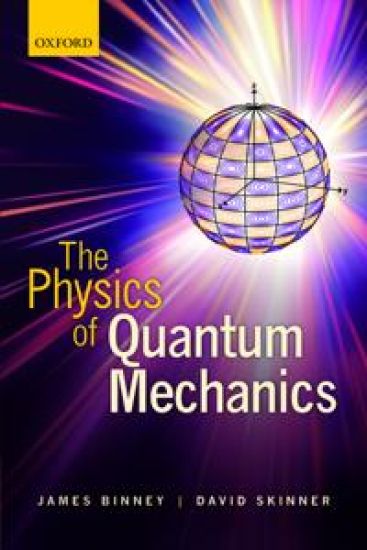
The Physics of Quantum Mechanics aims to give students a good understanding of how quantum mechanics describes the material world. It shows that the theory follows naturally from the use of probability amplitudes to derive probabilities. It stresses that stationary states are unphysical mathematical abstractions that enable us to solve the theory's governing equation, the time-dependent Schroedinger equation. Every opportunity is taken to illustrate the emergence of the familiar classical, dynamical world through the quantum interference of stationary states. The text stresses the continuity between the quantum world and the classical world, which is merely an approximation to the quantum world. The connections between observables, operators and transformations are clearly explained and the standard commutation rules derived from the properties of spacetime. A chapter is devoted to entanglement, quantum computation, density operators and their role in thermodynamics, and the measurement problem. Scattering phenomena, including the origin of radioactivity, are handled early on in the accessible context of one dimension, and at the end of the book with some rigour in three dimensions. Hydrogen and helium are discussed in some detail and it is shown that quantum mechanics enables us to understand the structure of the periodic table without engaging with the complexities of many-electron atoms. Dirac notation is used from the outset and students are trained to move easily from one representation to another, choosing whichever representation is best suited to a particular problem. The mathematical prerequisites are no more than simple vector algebra, Taylor series expansion and the use of integrating factors to solve linear first order differential equations. Rigorous algebraic methods are preferred to the solution of partial differential equations.
Valuing Technology

Valuing Technology

Janice McLaughlin; Paul Rosen; David Skinner; Andrew Webster

Routledge
1999
sidottu
How does new information technology become part of the fabric of organisational life? Drawing on insights from social studies of technology, gender studies and the sociology of consumption, Valuing Technology opens up new directions in the analysis of sociotechnical change within organisations. Based on a major research project focused upon the introduction of management of information systems in health, higher education and retailing, I explores the active role of end-users in innovation. This book argues that it is through the , often difficult, engagement between users and technology that new computer systems come to gain value within organisations. Key themes developed through analysis of case studies include:*the valuing of technology via the on-going construction of needs, uses and utilities*occupational identities, organisational inequalities and technological change*the gendering of technological and organisational change*interpretive flexibility and the 'stabilisation' of technological systems and their incorporation into the lives of people in organisations. A stimulating blend of the theoretical and substantive, this book demands a radical redefinition of 'technology acquisition'. It's highly original approach makes Valuing Technology essential reading for students, lecturers and researchers within the fields of organisation studies and the sociology of technology.
Valuing Technology

Valuing Technology

Janice McLaughlin; Paul Rosen; David Skinner; Andrew Webster

Routledge
1999
nidottu
How does new information technology become part of the fabric of organisational life? Drawing on insights from social studies of technology, gender studies and the sociology of consumption, Valuing Technology opens up new directions in the analysis of sociotechnical change within organisations. Based on a major research project focused upon the introduction of management of information systems in health, higher education and retailing, I explores the active role of end-users in innovation. This book argues that it is through the , often difficult, engagement between users and technology that new computer systems come to gain value within organisations. Key themes developed through analysis of case studies include:*the valuing of technology via the on-going construction of needs, uses and utilities*occupational identities, organisational inequalities and technological change*the gendering of technological and organisational change*interpretive flexibility and the 'stabilisation' of technological systems and their incorporation into the lives of people in organisations. A stimulating blend of the theoretical and substantive, this book demands a radical redefinition of 'technology acquisition'. It's highly original approach makes Valuing Technology essential reading for students, lecturers and researchers within the fields of organisation studies and the sociology of technology.