Kirjojen hintavertailu – 12 859 828 kirjaa ja 27 kauppaa
Kirjailija
David Spiegel
Kirjat ja teokset yhdessä paikassa: 8 kirjaa, julkaisuja vuosilta 2000–2025, suosituimpiin kuuluu Scrolls of Bonefairy Castle. Vertaile teosten hintoja ja tarkista saatavuus suomalaisista kirjakaupoista.
Young Hunter knew very little about his family's history. After experiencing a very embarrassing moment at school, Hunter knew he must discover who his ancestors are. By simply asking his grandpa where his ancestors came from, it opened the door to the most outrageous adventure of his life. He learned all about his namesake, Sir Hunter, who was the leader of the Royalmen who served the Queen of the Bonefairy Castle. Sir Hunter led the Royalmen in all battles to safeguard the land of the Bonefairy Castle. Sir Hunter encountered numerous challenges that were extremely dangerous and frightening, while returning from battle to the Bonefairy Castle. Sir Hunter knew he must fulfill his obligations to the Queen. The most powerful of all queens. This Queen wrote everything in scrolls, the same scrolls that young Hunter found. Young Hunter soon understood why he was named Hunter and was given a mission by the Queen. This was a very important mission that will change the way of the world. With young Hunter's new founded friend Galaxy, the leader of all the Queen's fairies, Hunter and Izzy made their assigned mission their own life endeavor. Their new endeavor will be a crucial element to the human race.
Young Hunter knew very little about his family's history. After experiencing a very embarrassing moment at school, Hunter knew he must discover who his ancestors are. By simply asking his grandpa where his ancestors came from, it opened the door to the most outrageous adventure of his life. He learned all about his namesake, Sir Hunter, who was the leader of the Royalmen who served the Queen of the Bonefairy Castle. Sir Hunter led the Royalmen in all battles to safeguard the land of the Bonefairy Castle. Sir Hunter encountered numerous challenges that were extremely dangerous and frightening, while returning from battle to the Bonefairy Castle. Sir Hunter knew he must fulfill his obligations to the Queen. The most powerful of all queens. This Queen wrote everything in scrolls, the same scrolls that young Hunter found. Young Hunter soon understood why he was named Hunter and was given a mission by the Queen. This was a very important mission that will change the way of the world. With young Hunter's new founded friend Galaxy, the leader of all the Queen's fairies, Hunter and Izzy made their assigned mission their own life endeavor. Their new endeavor will be a crucial element to the human race.
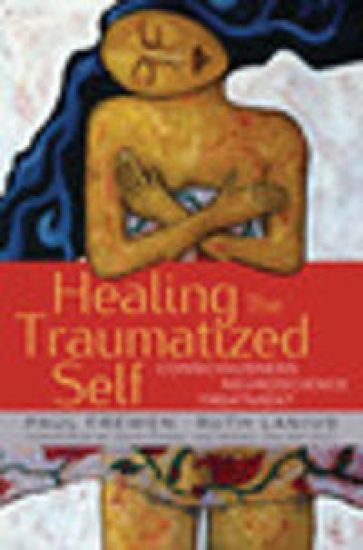
Cultivation of emotional awareness is difficult, even for those of us not afflicted by serious mental illness. This book discusses the neurobiology behind emotional states and presents exercises for developing self awareness. Topics include mood (both unipolar and bipolar), anxiety (particularly PTSD), and dissociative disorders. Frewen and Lanius comprehensively review psychological and neurobiological research, and explain how to use this research to become aware of emotional states within both normal and psychopathological functioning. Therapists will be able to help survivors of trauma, mood disorders, anxiety disorders, and dissociative disorders develop emotional awareness. The book also includes case studies, detailed instructions for clinicians, and handouts ready for use in assessment/therapy with patients/clients.
What is hypnosis? Despite widespread misconceptions, hypnosis is not a treatment in itself; instead, it is a facilitator - a useful diagnostic tool that can help the practitioner choose an appropriate treatment modality and accelerate various primary treatment strategies. The second edition of this remarkable work (first published 25 years ago) is written to provide both beginning and seasoned practitioners with a brief, disciplined technique for mobilizing and learning from an individual's capacity to concentrate. Putting to rest both exaggerated fears about hypnosis and overblown statements of its efficacy, this compelling volume brings scientific discipline to a systematic exploration of the clinical uses and limitations of hypnosis. The challenge was to develop a clinical measurement that could transform a fascinating amalgam of anecdotes, speculations, clinical intuitions and observations, and laboratory advances into a more fruitful and systematic body of information. Thus was born the authors' Hypnotic Induction Profile (HIP), a crucial 10-minute clinical assessment procedure that relates the spectrum of hypnotizability to personality style, psychopathology, and treatment outcome. Structured to reflect the flow of a typical evaluation and treatment session and highlighted by case examples throughout, this remarkable synthesis describes how to use the HIP, reviews relevant literature, and details principles and short- and long-term treatment strategies for smoking control; eating disorders; anxiety, concentration, and insomnia; phobias; pain control; psychosomatic disorders and conversion symptoms; trichotillomania; stuttering; and acute and posttraumatic stress disorders and dissociation. Meticulously referenced and indexed, this in-depth work concludes with an appendix on the interpretation and standardization of the HIP. This unique work stands out in the literature because ; It is written both as an introduction for practitioners new to hypnosis and as an in-depth guide for practitioners with wide experience in hypnosis. Unlike current clinical works, it emphasizes the importance of performing a systematic assessment of hypnotizability to identify, measure, and utilize a given patient's optimal therapeutic potential - a process that, until now, has been relegated to clinical intuition. It describes human behavior phenomenologically as it relates to hypnosis in a probable rather than an absolute fashion. It reviews only specific portions of the literature that are particularly relevant to the important themes presented by the authors. Wherever possible, the authors apply statistical methods to test their hypotheses. The realm of scientific investigation encompassing hypnosis and psychological dysfunction is comparatively new. This exceptional volume, with its profusion of systematic data, will spark controversy and interest among scientific students of hypnosis everywhere, from psychiatrists, psychologists, and psychoanalysts to physicians, dentists, and other interested clinicians.
This extraordinary resource celebrates and expands on Dr. David Spiegel's discovery that a shared intimacy with mortality creates very different concerns in the patient from those that apply in conventional settings. Spiegel and Classen introduce mental health professionals to the awareness as well as the tools they will need to facilitate groups coping with existential crises. The result is a model for helping that actually helps.