Kirjailija
David Stevens
Kirjat ja teokset yhdessä paikassa: 43 kirjaa, julkaisuja vuosilta 1997–2026, suosituimpiin kuuluu The Domestic Workers. Vertaile teosten hintoja ja tarkista saatavuus suomalaisista kirjakaupoista.
43 kirjaa
Kirjojen julkaisuvuodet: 1997–2026.
Theatre is an interpretive art based upon a director's emotional reaction to reading a play and imagining a production of that play. Before the audience experiences the production, the director must go through a process, part art and part craft, to create it. This book is intended to introduce undergraduate students with a solid theatre background to that process. Stevens includes chapters covering theatre and art, the interpretation of the script, composition and movement, working with actors, and matters of style. Each chapter contains exercises in order for students to consolidate what they have learned. The complete text of John Millington Synge's "Riders to the Sea" is included as an example and study text, and Stevens relates many examples from his own rich directing background. Twenty production photos, two sample floor plans, and numerous diagrams round out the text. The study of directing is a life-long project, and in this book Stevens provides a basis for that study.
In this sequel to Wait-A-Minute Bridge, national tournament winner David Stevens teaches techniques of duplicate bridge for the advancing player. He includes such topics as advanced bidding systems (Two-Over-One; Precision); the squeeze play; the strip and endplay; the Principle of Restricted Choice; and several techniques and conventions for better slam bidding, play, and defense. Stevens retains the popular device of having an anonymous reader interrupt the narrative from time to time by crying, "Wait a minute!" He then explains a point in more detail, with the goal of a more complete understanding of the topic. This book is aimed at advancing bridge players who have been having some success and want to play against better competition. This book will help them succeed at the next level, and enjoy the process. Full of robust humor and many examples, Wait-A-Minute Bridge, II, is sure to be as popular as its predecessor. Have more fun; play better bridge!
From Bobcat to Wolf: The Story of Den Seven, Pack Four
L. S. Gardner; David Stevens
Literary Licensing, LLC
2011
nidottu
Cross-Curricular Teaching and Learning in the Secondary School ... English
David Stevens
Routledge
2010
sidottu
What is the role of the individual school 'subject' and 'subject teacher' within school? Is it to teach a set of core subject knowledge, skills and understanding in a way that remains faithful to long-standing subject cultures and pedagogies? Or is there another way to consider how the curriculum and the notion of individual subjects and teachers' pedagogy could be constructed? Cross-Curricular Teaching and Learning in the Secondary School ... English brings together ongoing debates about personalised learning, creativity and ICT in education to establish a clear theoretical framework for cross-curricular teaching and learning in English and literacy. Presenting an appropriate pedagogy for cross-curricular teaching that draws on this framework, it promotes radical new approaches to English teaching as part of a widened curriculum through practical examples and theoretical discussions, blended with engaging stories of current practice. With links to other curriculum subjects and current education policy, features include:theoretical examination of key issues;assessment of the strengths and weaknesses of different curricular models;clear principles for effective assessment;a wide range of case studies;summaries of key research linked to suggestions for further reading; professional development activities to promote cross-curricular dialogue. Part of the Cross-Curricular Teaching and Learning in the Secondary School series, this timely, interdisciplinary textbook is essential reading for all students on Initial Teacher Training courses and practising teachers looking to holistically introduce cross-curricular themes and practices in secondary English teaching.
Cross-Curricular Teaching and Learning in the Secondary School ... English
David Stevens
Routledge
2010
nidottu
What is the role of the individual school 'subject' and 'subject teacher' within school? Is it to teach a set of core subject knowledge, skills and understanding in a way that remains faithful to long-standing subject cultures and pedagogies? Or is there another way to consider how the curriculum and the notion of individual subjects and teachers' pedagogy could be constructed? Cross-Curricular Teaching and Learning in the Secondary School ... English brings together ongoing debates about personalised learning, creativity and ICT in education to establish a clear theoretical framework for cross-curricular teaching and learning in English and literacy. Presenting an appropriate pedagogy for cross-curricular teaching that draws on this framework, it promotes radical new approaches to English teaching as part of a widened curriculum through practical examples and theoretical discussions, blended with engaging stories of current practice. With links to other curriculum subjects and current education policy, features include:theoretical examination of key issues;assessment of the strengths and weaknesses of different curricular models;clear principles for effective assessment;a wide range of case studies;summaries of key research linked to suggestions for further reading; professional development activities to promote cross-curricular dialogue. Part of the Cross-Curricular Teaching and Learning in the Secondary School series, this timely, interdisciplinary textbook is essential reading for all students on Initial Teacher Training courses and practising teachers looking to holistically introduce cross-curricular themes and practices in secondary English teaching.
Subtitled A Complete System for Bridge Beginners and Advancing Players, Wait-A-Minute Bridge teaches the basics and more advanced techniques of the play of the hand, bidding, and defense. Stevens uses the device of stopping the action from time to time b
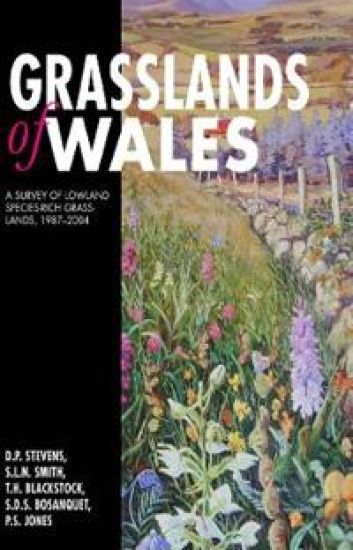
Grasslands of Wales
David Stevens; Stuart Smith; Tim Blackstock
University of Wales Press
2010
sidottu
"Grasslands of Wales" provides a thorough account of the vegetation of species-rich grasslands in lowland Wales at the end of the 20th century. It sets out the findings of 18 years of research and survey of all significant stands of agriculturally unimproved lowland grasslands and their associated vegetation. Such wildlife-rich grasslands have been widely replaced by much less diverse rye-grass swards. The survey covered 1070 sites of varying size and pioneered the use of the National Vegetation Classification for identifying and mapping vegetation at a regional scale. Over 150 different vegetation types were recorded, and this book characterises their forms and relationships, and extent and distribution within species-rich grasslands in lowland Wales. "Grasslands of Wales" includes detailed phytosociological floristic descriptions, extent data and distribution maps of lowland grassland plant communities and sub-communities, with critical comments on how each differs from similar plant communities and what vegetation types each is typically associated with in the field. Quadrat records are summarised in synoptic tables. Technical analyses of the data are presented giving insights into community distribution patterns and associations. New information on the physical and environmental characteristics of lowland grassland communities within Wales is assembled, and data on soil characteristics of Welsh lowland grasslands and associated flush communities are given in detail. Also reviewed in this book are the rare and uncommon plant species associated with lowland grasslands in this part of western Britain. The authors have worked for most of their careers in applied conservation biology, and a strong conservation current runs through the book.
Australia has often been described as a nation shaped by war. From an early age, every Australian is taught the significance of Gallipoli and the Anzac legend. This, however, is but one dimension of the military's impact on our nation's coming of age. Australia, after all, is an island. It was the Navy which explored and founded European Australia, and it is the Navy which has been critical to our national security ever since. With its ancestry in the Royal Navy and the former colony-based navies, the Australian Navy was established in 1901. Since that time it has helped Australia enter the international community as a modern, self-reliant nation and has been indispensable in protecting Australia's sovereignty and national interests. Despite the Navy being one of Australia's oldest and most important institutions, the links between nation-building and the Navy have never before received detailed study. Bringing together scholars from Australia and overseas, The Navy and the Nation examines the extent of the Navy's contribution to our national development and shows how the Navy has played a vital role in defining our independent national identity.
At a time when school-based English is in danger of becoming reductive and mechanistic, the authors of this book reconsider the fundamental philosophy of English teaching, evaluate current practice and offer a practical framework for new approaches to teaching this important subject. The authors draw on recent initiatives in the area, including the National Literacy Strategy, but also offer wider perspectives on the formation and development of both English and English teaching in a modern society. This will help teachers develop both a personal philosophy and a critical perspective on the various traditions of English teaching as well as on current initiatives and reforms. The book includes:provocative quotations from writers, artists and thinkersresponses to key figures in modern educational thoughtexploration and development of the principle areas, illuminating key issues, tensions and opportunitiespractical possibilities for classroom practice. The Art of Teaching Secondary English is a practical and accessible resource for everyone involved in English teaching.
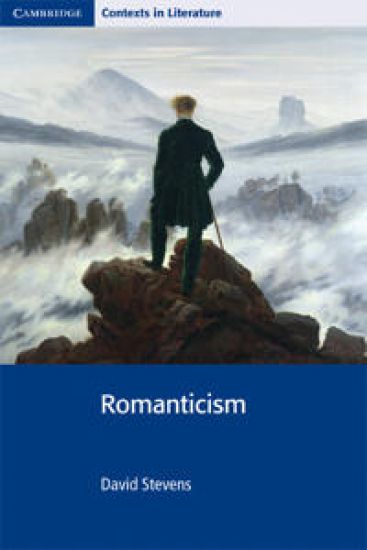
Critical introductions to a range of literary topics and genres. Romanticism offers guidance through the diversity of uses and meanings of the word 'romantic', not in terms of fixed definitions or essential qualifying characteristics, but rather in giving a helpful framework for questions and exploration. The focus throughout tends to be on the Western European cultural world of the latter half of the 18th century and the first half of the 19th, as befits English literary study, but the context is far broader.
Naval history is sometimes criticised for concentrating on the technical side of operations at the expense of the human. The Face of Naval Battle breaks new ground in that for the first time the authors closely examine the individual and group experience of maritime warfare in the twentieth century. What is it that makes naval battle different from combat in the air or on the ground? What is the future of maritime warfare? Ranging from lively accounts of individual acts of heroism through to critical studies of the problems of command at sea, The Face of Naval Battle highlights the multi-dimensional nature of maritime warfare. Drawing on the latest research from around the world, many hitherto ignored aspects of war at sea are brought to light and placed in the context of the broader human experience of conflict. Illustrated with many previously unpublished photographs, this book will be of interest to students and scholars of naval, military and strategic affairs, as well as to the general reader.
Between State and Market
Jim Phillips; Bruce Chapman; David Stevens
McGill-Queen's University Press
2001
nidottu
The first section of the book contains an overview of the charitable sector in Canada, a sociological review of altruism in different societies, a discussion of altruism in various philosophical and religious traditions, an economic analysis of "rational voluntarism," and an assessment of the relationship between the charitable sector and the welfare state. The second section contains five papers on the legal definition of charity, both general (the jurisprudence of the Federal Court of Appeal and a proposal for rethinking the concept of "public benefit"), and particular (the political purposes doctrine, religion as charity, and a commentary on the recent major Supreme Court decision on the meaning of charity). The third section deals with the tax status of charities: two papers evaluate the current tax credit system and one deals with the administration of charities by the Canada Customs and Revenue Agency. The final section contains essays on charities and commercial enterprise, on the regulation of fund-raising, and on needed reforms in non-profit corporation law. At a time when the federal government is about to embark on a wide range of policy initiatives to assist and regulate the non-profit sector, these essays are necessary reading for anyone concerned with the future of the charitable sector in Canada. Contributors include Neil Brooks (Osgoode Hall Law School), Cara Cameron (McGill), Bruce Chapman, Kevin Davis (Toronto), Abraham Drassinower (Toronto), David Duff (Toronto), Richard Janda (McGill), Will Kymlicka (Queen's), Andree Lajoie (Montreal), Mayo Moran (Toronto), Charles-Maxime Panaccio (office of Mr Justice Charles Gonthier), Jim Phillips, Jane Allyn Piliavin (Wisconsin-Madison), David Sharpe (Attorney-General's Office, New York State), Lorne Sossin (Osgoode Hall Law School), David Stevens, and Jen-Chieh Ting (Academia Sinica).
Meeting the Standards in Secondary English
Michael Fleming; Frank Hardman; David Stevens; John Williamson
Routledge
2001
nidottu
Meeting the Standards in Secondary English provides detailed subject knowledge, including the detailed pedagogical knowledge needed to teach English in secondary schools, support activities for work in schools and self-study and information on professional development for secondary schools. This practical, comprehensive and accessible book should prove invaluable for students on secondary initial teacher training courses, PGCE students, lecturers on English programmes and newly qualified secondary teachers.
The Online Learning Handbook
Alan Jolliffe; Jonathan Ritter; David Stevens
Kogan Page Ltd
2001
nidottu
A guide to developing Web-based learning materials. It provides advice, tools and techniques to help readers harness the potential of on-line methods of instruction and education. Taking a simple step-by-step approach, it proceeds from the basics through to operating computer-managed learning.
A family saga focuses on matriarch Mama Flora, an African American woman whose husband dies at the hand of white landowners.
This practical guide demonstrates the place of different types of assessment in education. There are tables, charts, figures and practical tips to help make course evaluation easier. This edition includes information on using the Internet as part of a course.