Kirjojen hintavertailu – 12 903 725 kirjaa ja 27 kauppaa

Kirjailija

David Stone

Kirjat ja teokset yhdessä paikassa: 65 kirjaa, julkaisuja vuosilta 2005–2026, suosituimpiin kuuluu The Christian Walk. Vertaile teosten hintoja ja tarkista saatavuus suomalaisista kirjakaupoista.

65 kirjaa

Kirjojen julkaisuvuodet: 2005–2026.

Fighting for the Fatherland

Fighting for the Fatherland

David Stone; Richard Holmes

Potomac Books Inc
2009
pokkari
Fighting for the Fatherland traces and analyzes three and a half centuries of the evolution of the German fighting man and the armies in which he served. It sets his patriotism against his cultural background and against the ever-changing national imperatives of his time. The German soldier's cultural legacy encompasses the romanticized Teutonic legends of Germanic mythology. The more immediate and pragmatic imperatives of Brandenburg's and Prussia's national survival during the seventeenth and eighteenth centuries reinforced the Germans' emerging awareness of their wider national identity, precipitating the heady brew of spectacular military victories and imperialist aspirations that dominated the following century. But then came the humiliating Versailles Treaty and the pervasive lure of National Socialism, a perverse path that left Germany divided in 1945 after a world war that saw both the zenith and nadir of the German soldier's fortunes. Finally, yet another culture, with its very different priorities, today underwrites the post-Cold War Bundeswehr of a reunified Germany. David Stone explores the true nature of the German soldier-his motivation, his preparation for war, his conduct in battle-and those aspects of his training, organization, leadership, and lifestyle that reveal why this fighter for his fatherland has proven so formidable and has had such a pronounced impact upon European and world history during the past 350 years. With a foreword by Richard Holmes.

Hotel Veronica

Hotel Veronica

David Stone

Lulu.com
2006
pokkari
When Martin Lawrence starts his journey of recovery from alcoholism he is not on his own. He has a supportive family and a team of professionals to help him. But he also has a host of painful memories, stretches of time he can remember nothing about and half a million pounds in his bank account that isn't his. As he struggles to come to terms with his past, make sense of the present and build plans for the future he collects a colourful array of friends and enemies in an adventure, told at breakneck speed, that is as heartwarming as it is disturbing.
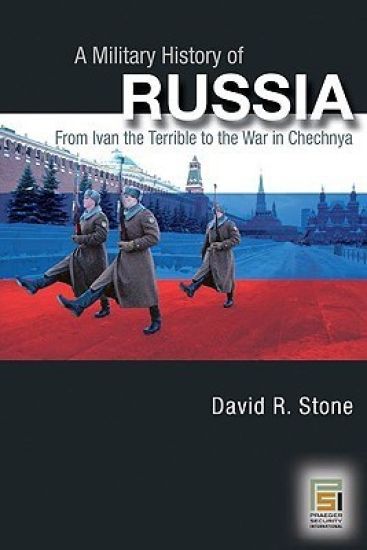
A Military History of Russia

A Military History of Russia

David Stone

Praeger Publishers Inc
2006
sidottu
This book brings to light Russia's undeservedly-obscure military past, rectifying the tendency of American and Western military historians to neglect the Russian side of things. Russia, as both a Western and non-Western society, challenges our thinking about Western military superiority. Russia has always struggled with backwardness in comparison with more developed powers, at some times more successfully than others. The imperatives of survival in a competitive international environment have, moreover, produced in Russian society a high degree of militarization. While including operational and tactical detail that appeals to military history enthusiasts, this book simultaneously integrates military history into the broader themes of Russian history and draws comparisons to developments in Europe. The book also challenges old assumptions about the Russian military. Russian military history cannot be summed up simply in a single stock phrase, whether perennial incompetence or success only through stolid, stoic defense; it also shows numerous examples of striking offensive successes. Stone traces Russia's fascinating military history, and its long struggle to master Western military technology without Western social and political institutions. It covers the military dimensions of the emergence of Muscovy, the disastrous reign of Ivan the Terrible, and the subsequent creation of the new Romanov dynasty. It deals with Russia's emergence as a great power under Peter the Great and culminating in the defeat of Napoleon. After that triumph, the book argues, Russia's social and economic stagnation undermined its enormous military power and brought catastrophic defeat in the Crimean War. The book then covers imperial Russia's long struggle to reform its military machine, with mixed results in the Russo-Japanese War and World War I. The Russian Revolution created a new Soviet Russia, but this book shows the continuity across that divide. The Soviet Union's interwar innovations and its harrowing experience in World War II owed much to imperial Russian precedents. A superpower after the war, the Soviet Union's military might was purchased at the expense of continuing economic backwardness. Paradoxically, the very militarization intended to provide security instead destroyed the Soviet Union, leaving a new Russia behind the West economically. Just as there was a great deal of continuity after 1917, this book demonstrates how the new Russian military has inherited many of its current problems from its Soviet predecessor. The price that Russia has paid for its continued existence as a great power, therefore, is the overwhelming militarization of its society and economy, a situation it continues to struggle with.
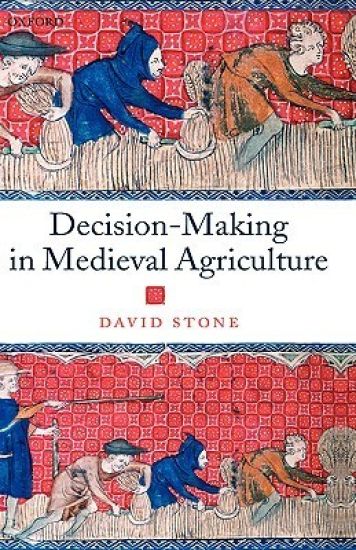
Decision-Making in Medieval Agriculture

Decision-Making in Medieval Agriculture

David Stone

Oxford University Press
2005
sidottu
This fascinating and important book uses a wealth of contemporary sources to reconstruct the mental world of medieval farmers and, by doing so, argues that these key figures in the Middle Ages have been unfairly stereotyped. David Stone overturns the traditional view of medieval countrymen as economically backward and instead reveals that agricultural decision-making was as rational in the fouteenth century as in modern times. Investigating agricultural mentalities first at a local level and then for England as a whole, Dr Stone argues that human action shaped the course of the rural economy to a much greater extent than has hitherto been appreciated, and challenges the commonly held view that the medieval period was dominated by ecological and economic crises. Focusing in particular on responses to commercial forces and the adoption of agricultural technology, this book has significant implications for our understanding of agricultural development throughout the last thousand years.