Kirjojen hintavertailu – 12 859 818 kirjaa ja 27 kauppaa

Kirjailija

David Stromberg

Kirjat ja teokset yhdessä paikassa: 6 kirjaa, julkaisuja vuosilta 2000–2023, suosituimpiin kuuluu IDIOT LOVE and the Elements of Intimacy. Vertaile teosten hintoja ja tarkista saatavuus suomalaisista kirjakaupoista.

Nimi esiintyy myös muodoissa: David Strömberg

6 kirjaa

Kirjojen julkaisuvuodet: 2000–2023.

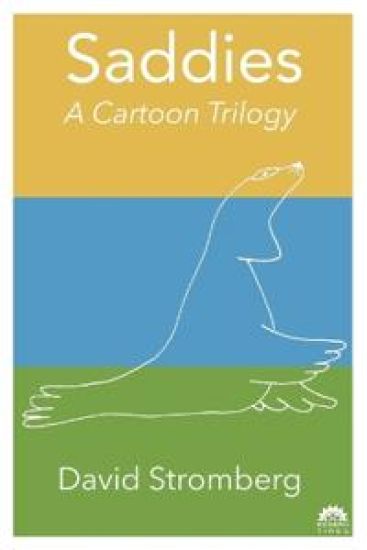
Saddies

Saddies

David Stromberg

Modern Times Publishing
2023
pokkari
Saddies, a collection of single-panel cartoons, was the first book by writer, translator, and essayist David Stromberg. Funded by a public arts grant from the UCLA Student Union, while still an undergraduate in applied math, Saddies was published in October 2000 as an art book designed by fellow UCLA student Jancy Liu. Inspired by the cartoons of James Thurber and the art pocketbooks of Ed Ruscha, Saddies brought together the literary tone of the 1920s and 1930s with the conceptualism of the 1960s and 1970s, placing added focus on the poetics of image and text. It was sold at independent book shops, museum stores, art fairs, and on the streets of Los Angeles and New York. Armed with cash from the sales of his first book, David Stromberg again teamed up with Jancy Liu to design Confusies, published in October 2002. As a follow-up to the first collection, Confusies placed greater emphasis on the thematic layers of the cartoons. It also introduced increasingly intricate drawings inspired by the literary cartoonist Edward Gorey. Whereas Saddies was printed with a laser-based printing machine, Confusies was produced using standard offset printing, creating a richer image on the page. Building on the success of the first book, Confusies quickly found its audience. In 2003, David Stromberg produced a third volume, Desperaddies, this time taking on the design of the book. Appropriating elements from the Paris-based Olympia Press, Stromberg created a cartoon book that would pass for a pocketbook novel, structuring the table of contents as a literary narrative. While each drawing worked independently, the collection as a whole laid out a thematic story of young love, alienation, childhood trauma, and the need for comic relief. It was the last art book Stromberg created using a pocketbook format. About the Author: David Stromberg is a writer, translator, and scholar whose work has appeared in The American Scholar, Smart Set, and Los Angeles Review of Books, among other publications. His recent books include Old Truths and New Clich s, an edited collection of Isaac Bashevis Singer's essays, and a speculative nonfiction novella, A Short Inquiry into the End of the World. His new essay, "The Eternal Hope of the Wandering Jew," appears in The Hedgehog Review. See more at www.davidstromberg.com.

Baddies

Baddies

Aimee Bender; David Stromberg

Modern Times Publishing
2023
pokkari
Cult cartoonist David Stromberg has been dubbed "Thurber on speed" at the legendary Gotham Book Mart. It's easy to see why in the weird world of Baddies, an absurdist graphic collection of gags, ideas, and late night thoughts that harkens back to the days of witty New Yorker cartoonists . . . even as it seems so edgy as to be completely new. Baddies looks aslant at everyday life, unearthing its most hilarious and ridiculous aspects amidst even our darkest fears and phobias. Inhabited by an antic and eclectic assortment of odd-ball characters, who star in chapters such as "Action and Its Doubt," "The Day and Its Battle," "Mystery and Its Carnality," these captioned cartoons capture a world forever veering off from the normal, the rational, and the "well adjusted." And they introduce us to a startlingly original artist, where the art and the writerly wit combine in a way that's both disarmingly funny and strangely familiar, not to mention refreshingly, bitingly smart.
IDIOT LOVE and the Elements of Intimacy

IDIOT LOVE and the Elements of Intimacy

David Stromberg

Springer Nature Switzerland AG
2021
nidottu
This book turns our search for intimacy on its head, suggesting that our way to creativity in love may be through idiocy. The book takes its readers on a journey through the work of Plato and Melanie Klein in theorizing the dynamics of intimacy while exploring some of the paradoxical aspects of love in works by Fyodor Dostoevsky and French filmmaker Catherine Breillat. Revisiting core concepts of how we think about relationships, the book lays out a model for relational breakdown—the idiot lovecycle—in which we are constantly in the flux between seeing ourselves and seeing the other. Effecting close readings of literary, philosophical, and psychoanalytical sources, the book draws on parallels between these fields of inquiry while tracing their shared intellectual genealogy, suggesting that the tension between Narcissus and Cassandra, with its inherent conflicts, is also the space through which love emerges from intimacy.
IDIOT LOVE and the Elements of Intimacy

IDIOT LOVE and the Elements of Intimacy

David Stromberg

Springer Nature Switzerland AG
2020
sidottu
This book turns our search for intimacy on its head, suggesting that our way to creativity in love may be through idiocy. The book takes its readers on a journey through the work of Plato and Melanie Klein in theorizing the dynamics of intimacy while exploring some of the paradoxical aspects of love in works by Fyodor Dostoevsky and French filmmaker Catherine Breillat. Revisiting core concepts of how we think about relationships, the book lays out a model for relational breakdown—the idiot lovecycle—in which we are constantly in the flux between seeing ourselves and seeing the other. Effecting close readings of literary, philosophical, and psychoanalytical sources, the book draws on parallels between these fields of inquiry while tracing their shared intellectual genealogy, suggesting that the tension between Narcissus and Cassandra, with its inherent conflicts, is also the space through which love emerges from intimacy.
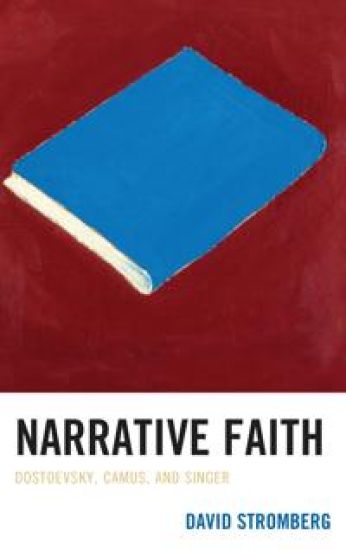
Narrative Faith

Narrative Faith

David Stromberg

University of Delaware Press
2017
sidottu
Narrative Faith engages with the dynamics of doubt and faith to consider how literary works with complex structures explore different moral visions. The study describes a literary petite histoire that problematizes faith in two ways—both in the themes presented in the story, and the strategies used to tell that story—leading readers to doubt the narrators and their narratives. Starting with Dostoevsky’s Demons (1872), a literary work that has captivated and confounded critics and readers for well over a century, the study examines Albert Camus’s The Plague (1947) and Isaac Bashevis Singer’s The Penitent (1973/83), works by twentieth-century authors who similarly intensify questions of faith through narrators that generate doubt. The two postwar novelists share parallel preoccupations with Dostoevsky’s art and similar personal philosophies, while their works constitute two literary responses to the cataclysm of the Second World War—extending questions of faith into the current era. The book’s last section looks beyond narrative inquiry to consider themes of confession and revision that appear in all three novels and open onto horizons beyond faith and doubt—to hope.