Kirjojen hintavertailu – 12 903 725 kirjaa ja 27 kauppaa

Kirjailija

David Suzuki

Kirjat ja teokset yhdessä paikassa: 36 kirjaa, julkaisuja vuosilta 1987–2026, suosituimpiin kuuluu David Suzuki's Green Guide. Vertaile teosten hintoja ja tarkista saatavuus suomalaisista kirjakaupoista.

36 kirjaa

Kirjojen julkaisuvuodet: 1987–2026.

There's a Barnyard in My Bedroom

There's a Barnyard in My Bedroom

David Suzuki

Greystone Books,Canada
2010
pokkari
This fun and engaging story makes an engrossing -- but not overwhelming -- introduction to environmental issues for young readers. With the help of their parents and their own imaginations, Jamie and Megan discover that natural magic is all around them, even in their own home. Sheets and pillows, fruits and furniture -- they all come from nature. What's more, the air isn't just empty space -- it's full of smells, sounds, water, and life-giving gases. And their backyard contains clues to both past and future: rocks from millions of years ago, a nail from pioneer times, and seeds that will grow into food for the summer. Beautiful full-color illustrations bring each adventure to vibrant life, with a forest growing in the living room and a stream appearing in the back garden. Each chapter ends with a page of related activities, and a glossary is included at the back.
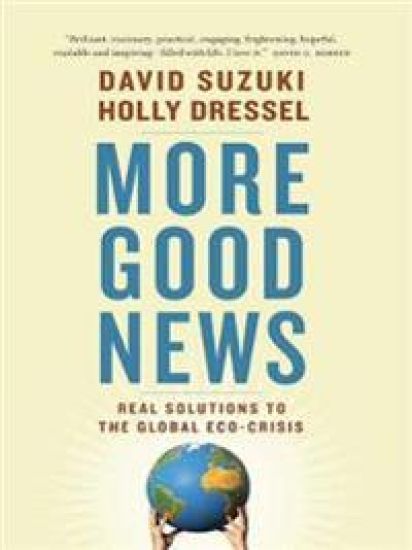
More Good News

More Good News

David Suzuki; Holly Dressel

Greystone Books,Canada
2010
pokkari
In this edition of their bestseller, the sequel to the best-selling Good News for a Change, authors David Suzuki and Holly Dressel provide the latest inspiring stories about individuals, groups, and businesses that are making real change in the world. More Good News features the most up-to-date information about critical subjects, such as energy and the economy, not covered in the previous edition. These stories offer compelling proof from the front lines that sustainable solutions already exist.
Dodging the Toxic Bullet

Dodging the Toxic Bullet

David R. Boyd; David Suzuki

Greystone Books,Canada
2010
pokkari
Dodging the Toxic Bullet presents workable strategies that show how we can live longer, healthier lives by breathing clean air, eating healthy food, drinking safe water, and using non-toxic products. Author David R. Boyd provides accessible background on a range of hazards including mercury in fish, carcinogens in cleaning products, lead in toys, and lethal E. coli in ground beef. His clear directions for reducing risk include growing lots of houseplants, choosing whole foods, avoiding consumer products with strong or long-lasting smells, and using green cleaning products. Easy-to-follow advice and informative sidebars and checklists make this a must-have guide, especially for parents of infants and children.
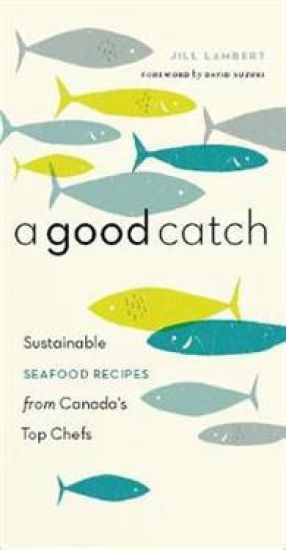
A Good Catch

A Good Catch

Jill Lambert; David Suzuki

Greystone Books,Canada
2009
pokkari
Eating responsibly may mean including new and different foods in one's diet, but it doesn't mean having to forgo flavor. A Good Catch incorporates the most responsible and delicious seafood choices into more than 90 mouthwatering recipes from celebrity chefs across Canada. The book begins with a brief introduction that explains what questions conscientious consumers should be asking about seafood and provides a quick-reference chart of recommended choices. But the heart of the book is the recipes. Featured are culinary delights such as Salmon and Edamame Salad with Wasabi Mayonnaise, Dungeness Crab Cake Benedicts with Chive Hollandaise Sauce, and Grilled Pacific Halibut with Charred Jalapeno-Honey Vinaigrette. Produced in conjunction with the David Suzuki Foundation, this elegant, easy-to-use cookbook is a must-have resource with sustainable suggestions and alternatives for conscious foodies.
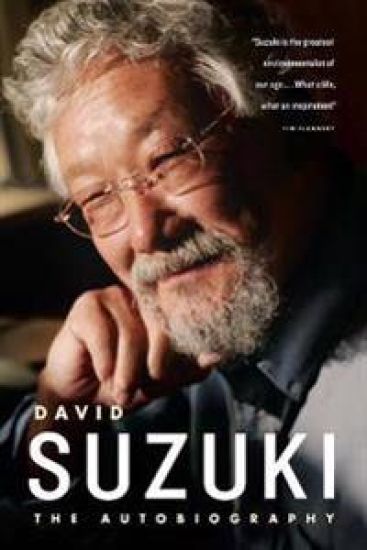
David Suzuki

David Suzuki

David Suzuki

Greystone Books,Canada
2007
pokkari
David Suzuki’s autobiography limns a life dedicated to making the world a better place. The book expands on the early years covered in Metamorphosis and continues to the present, when, at age 70, Suzuki reflects on his entire life ? and his hopes for the future. The book begins with his life-changing experience of racism interned in a World War II concentration camp, and goes on to discuss his teenage years, his college and postgraduate experiences in the U. S., and his career as a geneticist and then as the host of The Nature of Things. With characteristic candor and passion, he describes how he became a leading environmentalist, writer, and thinker; the establishment of the David Suzuki Foundation; his world travels and meetings with luminaries like Nelson Mandela and the Dalai Lama; and the abiding role of nature and family in his life. David Suzuki is an intimate and inspiring look at a modern-day visionary.
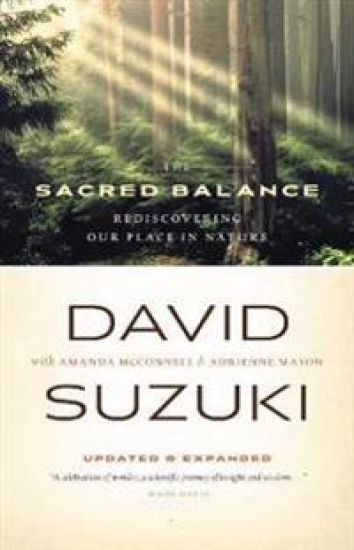
The Sacred Balance

The Sacred Balance

David Suzuki

Greystone Books,Canada
2007
pokkari
In this extensively revised and enlarged edition of his best-selling book, David Suzuki reflects on the increasingly radical changes in nature and science ? from global warming to the science behind mother/baby interactions ? and examines what they mean for humankind’s place in the world. The book begins by presenting the concept of people as creatures of the Earth who depend on its gifts of air, water, soil, and sun energy. The author explains how people are genetically programmed to crave the company of other species, and how people suffer enormously when they fail to live in harmony with them. Suzuki analyzes those deep spiritual needs, rooted in nature, that are a crucial component of a loving world. Drawing on his own experiences and those of others who have put their beliefs into action, The Sacred Balance is a powerful, passionate book with concrete suggestions for creating an ecologically sustainable, satisfying, and fair future by rediscovering and addressing humanity’s basic needs.
Salmon Forest

Salmon Forest

David Suzuki; Sarah Ellis

Greystone Books,Canada
2006
pokkari
One fall day, Kate goes with her father, a fish biologist, to the river where he works ? a river in the Pacific rain forest ? the ?salmon forest,” as he calls it. Together they watch the sockeye salmon returning to the river to spawn, and witness a bear scooping up a salmon. Next, Kate and her dad run into a Native boy named Brett and his family fishing at a pool in the river. From her adventures, Kate discovers how the forest and the salmon need each other and why the forest is called the salmon forest. David Suzuki and Sarah Ellis’s charming and informative text and Sheena Lott’s watercolors magically evoke the spirit and mystery of the West Coast rain forest.
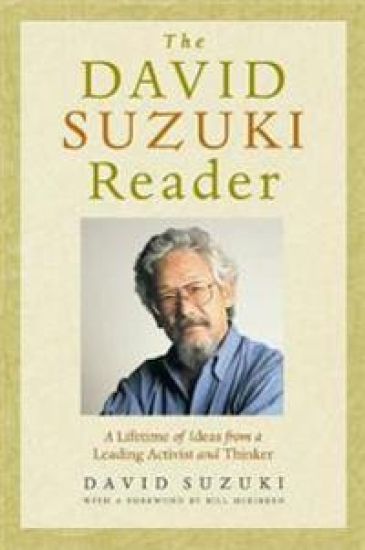
The David Suzuki Reader

The David Suzuki Reader

David Suzuki; Bill McKibben

Greystone Books,Canada
2004
pokkari
David Suzuki’s collected writings on science, nature, technology, economics, politics, and the connectedness of all things. The David Suzuki Reader brings together for the first time the scientific and philosophical thought of North America’s leading environmentalist. Drawing from Suzuki’s published and unpublished writings, this collection reveals the underlying themes that have informed his work for over four decades. In these incisive and provocative essays, Suzuki explores the limits of knowledge and the connectedness of all things; looks unflinchingly at the destructive forces of globalization, political shortsightedness, and greed; cautions against blind faith in science, technology, politics, and economics; and provides inspiring examples of how and where to make those changes that will matter to all of us and to future generations. He also offers a vision of hope based on our love of children and nature. In this time of global unrest and uncertainty, Suzuki provides an important reminder of how we are all connected and of what really matters. Written with clarity, passion, and wisdom, this book is essential reading for anyone who is an admirer of David Suzuki, who wants to understand what science can and can’t do, or who wants to make a difference.
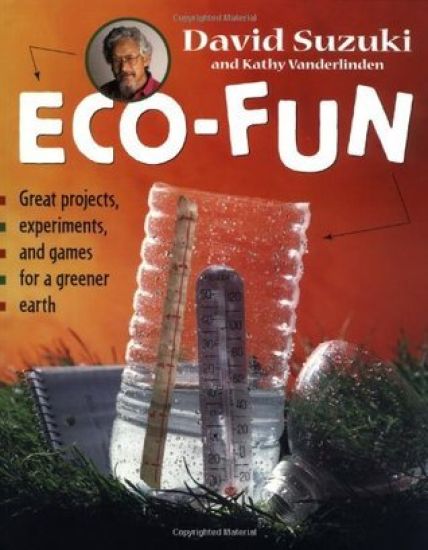
Eco-Fun

Eco-Fun

David Suzuki; Kathy Vanderlinden

Greystone Books,Canada
2003
sidottu
Kids will discover their connection with nature and have fun by doing these amazing science?based activities. They can build a solar panel, make recycled paper, build a worm composter and create a forest ecosystem in a jar.
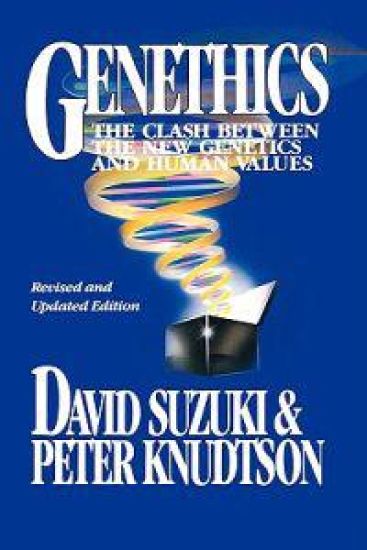
Genetics

Genetics

Burton Guttman; David Suzuki; Tara Cullis; Anthony Griffiths

Oneworld Publications
2002
pokkari
Starting with the history of genetics, from primitive breeding programmes to Mendel's Law, and moving on to a full explanation of genetics and its role in our future, this book offers a comprehensive survey of genetics past, present and future.
Petrotyranny

Petrotyranny

John Bacher; David Suzuki

Science for Peace
2000
pokkari
High gas prices aren't the end of the world- but they may be the beginning of the end. This, at least, is the feeling of many who shudder at the staggering power oil-rich countries have over the world's political affairs. In Petrotyranny, John Bacher uncovers the frightening facts of the world's oil industry. He reveals that the worst dictatorships control six times the reserves that are under democratic control, and explores the potential for global conflict that exists as the demand for energy increases and the oil supply decreases. What kind of power will these dictatorships possess in the future? How many wars will be fought over the ever-shrinking supply of oil? Bacher takes an optimistic approach, viewing the problem as a challenge: the world's democracies need to devise a creative response to avoid the looming crisis. That is, start replacing fossil-fuel burning with renewable energy - and start the process now.
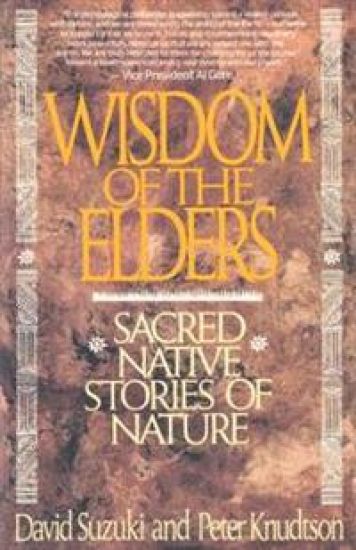
Wisdom of the Elders: Sacred Native Stories of Nature

Wisdom of the Elders: Sacred Native Stories of Nature

David Suzuki; Peter Knudtson

BANTAM
1993
nidottu

Halvin toimitettuna 26,00 €

An in-depth, meticulously documented exploration of the ecological wisdom of Native Peoples from around the world Arranged thematically, Wisdom of the Elders contains sacred stories and traditions on the interrelationships between humans and the environment as well as perspectives from modern science, which more often than not validate the sacred, ancient Wisdom of the Elders. Native peoples and environments discussed range from the Inuit Arctic and the Native Americans of the Northwest coast, the Sioux of the Plains, and the Pueblo, Hopi, and Navajo of the Southwest to the Australian Outback, to the rich, fecund tropics of Africa, Malaysia, and the Amazon. "Our technological civilization is speeding toward a violent collision with nature, and we are threatening the ability of the Earth--our home--to support life as we know it. Suzuki and Knudtson's extraordinary work powerfully reminds us that we are indeed one with the Earth. We are truly indebted to them for charting for us the course toward a healthy and sustaining relationship with our planet."--Vice President Al Gore
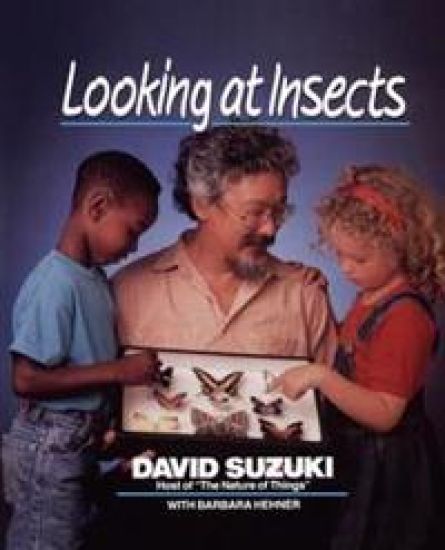
Looking at Insects

Looking at Insects

David Suzuki; Koichi Ed S. Ed Koichi Ed S. Suzuki

WILEY
1992
nidottu
Introduces the world of insects, their body parts, behavior, life cycles, and orders of classification, and includes activities such as capturing live insects
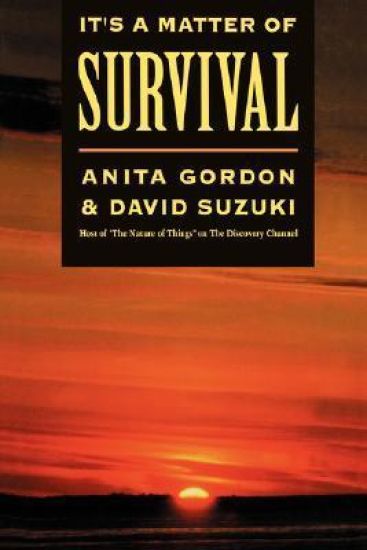
It's a Matter of Survival

It's a Matter of Survival

Anita Gordon; David Suzuki

Harvard University Press
1992
pokkari
"The greenhouse effect is us, and it is specifically us in the Western world" This is one of the messages at the beginning of Anita Gordon and David Suzuki's startling view of our future on Earth. More than any other time in history, the 1990s have marked a turning point for human civilization. Not only are we facing ecological disasters that will affect our ability to survive, but the crisis is forcing us to reexamine the entire value system that has governed our lives for the past two thousand years. Anita Gordon and Suzuki warn us of the transition we will need to make if we are to arrive safely in the next century. More than a book on the environment, this is a book about us as a species: our shortsightedness, our failure to read the warnings, our inability to grasp the significance of our actions-and the tough decisions we have to make in order to save ourselves. The power of the book lies in the consensus of the many voices, those of scientists and other scholars, that speak through it. The components of our predicament--global warming, soil erosion, acid rain, species depletion, ozone damage, rainforest destruction, overpopulation--are quantified with authority. And never before has such a strong consensus been expressed in a single warning. The message we receive is that our actions are taking place in a political and economic world that demands radical change. In an effort to counteract this blueprint for disaster, Gordon and Suzuki present a resounding rebuttal of technological optimism and the belief that continued economic growth is a prerequisite for environmental reform. The intellectual fog of sustainable development is incisively dispelled, and in its place the authors suggest practical contributions that individuals as well as governments can make toward creating a "conserver society."