Kirjojen hintavertailu – 12 859 828 kirjaa ja 27 kauppaa

Kirjailija

David Taras

Kirjat ja teokset yhdessä paikassa: 9 kirjaa, julkaisuja vuosilta 1989–2022, suosituimpiin kuuluu Digital Mosaic. Vertaile teosten hintoja ja tarkista saatavuus suomalaisista kirjakaupoista.

9 kirjaa

Kirjojen julkaisuvuodet: 1989–2022.

Electoral Campaigns, Media, and the New World of Digital Politics

Electoral Campaigns, Media, and the New World of Digital Politics

David Taras; Richard Davis

THE UNIVERSITY OF MICHIGAN PRESS
2022
sidottu
Today, political leaders and candidates for office must campaign in a multimedia world through traditional forums—newspapers, radio, and television—as well as new digital media, particularly social media. Electoral Campaigns, Media, and the New World of Digital Politics chronicles how Twitter, Facebook, Reddit, email, and memes are used successfully and unsuccessfully to influence elections. Each of these platforms have different affordances and reach various audiences in different ways. Campaigns often have to wage different campaigns on each of these mediums. In some instances, they are crucial in altering coverage in the mainstream media. In others, digital media remains underutilized and undeveloped. As has always been the case in politics, outcomes that depend on economic and social conditions often dictate people’s readiness for certain messages. However, the method and content of those messages has changed with great consequences for the health and future of democracy. This book answers several questions: How do candidates/parties reach audiences that are preoccupied, inattentive, amorphous, and bombarded with so many other messages? How do they cope with the speed of media reporting in a continuous news cycle that demands instantaneous responses? How has media fragmentation altered the campaign styles and content of campaign communication, and general campaign discourse? Finally and most critically, what does this mean for how democracies function?
Electoral Campaigns, Media, and the New World of Digital Politics

Electoral Campaigns, Media, and the New World of Digital Politics

David Taras; Richard Davis

THE UNIVERSITY OF MICHIGAN PRESS
2022
nidottu
Today, political leaders and candidates for office must campaign in a multimedia world through traditional forums—newspapers, radio, and television—as well as new digital media, particularly social media. Electoral Campaigns, Media, and the New World of Digital Politics chronicles how Twitter, Facebook, Reddit, email, and memes are used successfully and unsuccessfully to influence elections. Each of these platforms have different affordances and reach various audiences in different ways. Campaigns often have to wage different campaigns on each of these mediums. In some instances, they are crucial in altering coverage in the mainstream media. In others, digital media remains underutilized and undeveloped. As has always been the case in politics, outcomes that depend on economic and social conditions often dictate people’s readiness for certain messages. However, the method and content of those messages has changed with great consequences for the health and future of democracy. This book answers several questions: How do candidates/parties reach audiences that are preoccupied, inattentive, amorphous, and bombarded with so many other messages? How do they cope with the speed of media reporting in a continuous news cycle that demands instantaneous responses? How has media fragmentation altered the campaign styles and content of campaign communication, and general campaign discourse? Finally and most critically, what does this mean for how democracies function?
The End of the CBC?

The End of the CBC?

David Taras; Christopher Waddell

University of Toronto Press
2020
sidottu
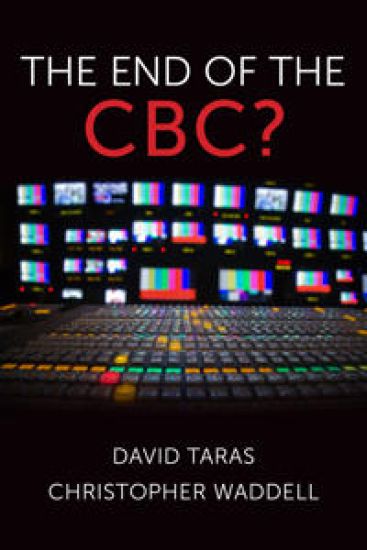
The End of the CBC? is about three overlapping crises: the crisis that has enveloped the CBC, the crisis of news, and the crisis of democracy. The emergence of platforms such as Google, Facebook, Twitter, and Netflix, the hyper-targeting of individual users through data analytics, the development of narrow online identity communities, and the rise of an attention economy have changed the media landscape in dramatic ways. Describing the failure of successive governments to address problems faced by the public broadcaster, this book explains how the CBC lost its place in sports, drama, and entertainment. Taras and Waddell propose a way forward for the CBC – one in which the corporation concentrates its resources on news and current affairs and re-establishes a reputation for depth and quality.
The End of the CBC?

The End of the CBC?

David Taras; Christopher Waddell

University of Toronto Press
2020
pokkari
The End of the CBC? is about three overlapping crises: the crisis that has enveloped the CBC, the crisis of news, and the crisis of democracy. The emergence of platforms such as Google, Facebook, Twitter, and Netflix, the hyper-targeting of individual users through data analytics, the development of narrow online identity communities, and the rise of an attention economy have changed the media landscape in dramatic ways. Describing the failure of successive governments to address problems faced by the public broadcaster, this book explains how the CBC lost its place in sports, drama, and entertainment. Taras and Waddell propose a way forward for the CBC – one in which the corporation concentrates its resources on news and current affairs and re-establishes a reputation for depth and quality.
Digital Mosaic

Digital Mosaic

David Taras

University of Toronto Press
2015
pokkari
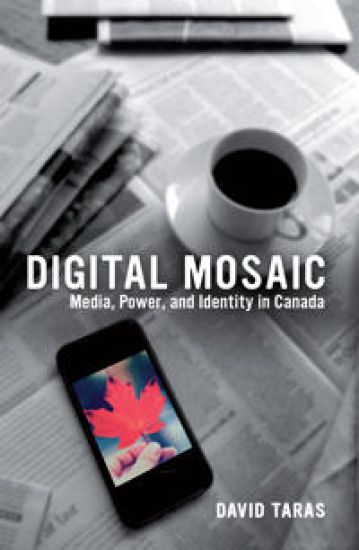
Digital Media has transformed the way Canadians socialize and interact, conduct business, experience culture, fight political battles, and acquire knowledge. Traditional media, including newspapers and conventional TV networks, remain the primary link to Canada's political sphere but are under concerted attack. YouTube, blogs, online broadcasting, Facebook, and Twitter have opened new and exciting avenues of expression but offer little of the same "nation-building glue" as traditional media. Consequently, Canada is experiencing a number of overlapping crises simultaneously: a crisis in news and journalism, threats to the survival of the media system as a whole, and a decline in citizen engagement. In Digital Mosaic, David Taras both embraces and challenges new media by arguing that these coinciding crises bring exciting opportunities as well as considerable dangers to democratic life and citizen engagement in Canada.
Last Word

Last Word

Florian Sauvageau; David Schneiderman; David Taras

University of British Columbia Press
2005
pokkari
Media coverage of the Supreme Court of Canada has emerged as a crucial factor not only for judges and journalists but also for the public. It's the media, after all, that decide which court rulings to cover and how. They translate highly complex judgments into concise and meaningful news stories that will appeal to, and be understood by, the general public. Thus, judges lose control of the message once they hand down decisions, and journalists have the last word. To show how the Supreme Court has fared under the media spotlight, Sauvageau, Schneiderman, and Taras examine a year in the life of the court and then focus on the media coverage of four high-profile decisions: the Marshall case, about Aboriginal rights; the Vriend case, about gay rights; the Quebec Secession Reference; and the Sharpe child pornography case. They explore the differences between television and newspaper coverage, national and regional reporting, and the French- and English-language media. They also describe how judges and journalists understand and interact with one another amid often-clashing legal and journalistic cultures, offering a rich and detailed account of the relationship between two of the most important institutions in Canadian life.
Last Word

Last Word

Florian Sauvageau; David Schneiderman; David Taras

University of British Columbia Press
2005
sidottu
Media coverage of the Supreme Court of Canada has emerged as a crucial factor not only for judges and journalists but also for the public. It's the media, after all, that decide which court rulings to cover and how. They translate highly complex judgments into concise and meaningful news stories that will appeal to, and be understood by, the general public. Thus, judges lose control of the message once they hand down decisions, and journalists have the last word. To show how the Supreme Court has fared under the media spotlight, Sauvageau, Schneiderman, and Taras examine a year in the life of the court and then focus on the media coverage of four high-profile decisions: the Marshall case, about Aboriginal rights; the Vriend case, about gay rights; the Quebec Secession Reference; and the Sharpe child pornography case. They explore the differences between television and newspaper coverage, national and regional reporting, and the French- and English-language media. They also describe how judges and journalists understand and interact with one another amid often-clashing legal and journalistic cultures, offering a rich and detailed account of the relationship between two of the most important institutions in Canadian life.
Power and Betrayal in the Canadian Media

Power and Betrayal in the Canadian Media

David Taras

University of Toronto Press
2001
pokkari
The Canadian media system, which in many respects is this society's "meeting ground"-its public square-is in the midst of a profound shift away from the foundations on which it has rested comfortably for decades. The publicly financed Canadian Broadcasting Corporation, long the backbone of the broadcasting system, is threatened by budget cuts and by technological change. The newspaper industry has fallen into the hands of a few powerful individuals. Huge global corporations and a vast communications revolution are dramatically altering the nature of news and entertainment. This book argues that unless action is taken these changes will narrow our access to the information we need as citizens and damage our capacity to communicate with each other and reflect on ourselves as a community. Power and Betrayal in the Canadian Media is a sweeping exploration of the Canadian media system and the impact it has on Canadian society, politics, and culture.
The Domestic Battleground

The Domestic Battleground

David Taras; David Goldberg

McGill-Queen's University Press
1989
sidottu
Few international issues have aroused as much passionate interest and political activity among Canadians. The contest on "the domestic battleground" has been decisive in determining Canada's policies in the Middle East. The Domestic Battleground provides the history and background needed to understand Canadian attitudes toward both the explosive unrest occurring in the West Bank and Gaza Strip and the participants in the conflict - Israel, the Palestinians, and the rest of the Arab world. Taras and Goldberg analyse the struggles over the levers of decision making in Ottawa and the battle between moral stances and convictions that has taken place among concerned Canadians. The Domestic Battleground is the first book devoted to analysing the study of Canada's Middle Eastern policy. David Taras and David H. Goldberg take readers inside the Canadian decision-making process on key issues regarding the Middle East over the last forty years. Bringing together articles by scholars with differing perspectives, this volume brings to light the positions and actions of Canadian political leaders - Mackenzie King, Lester B. Pearson, Joe Clark, Pierre Trudeau, and Brian Mulroney - and assess the impact of media coverage, corporate and governmental interests, and Arab and Jewish lobby groups. The Domestic Battleground addresses the narrowing of the emotional distance separating Canada from the conflicts and disputes indigenous to the Middle East and responds to the presence of the Arab-Israeli conflict in the mainstream of daily life and politics in Canada.