Kirjojen hintavertailu – 12 903 735 kirjaa ja 27 kauppaa

Kirjailija

David Thackeray

Kirjat ja teokset yhdessä paikassa: 3 kirjaa, julkaisuja vuosilta 2013–2021, suosituimpiin kuuluu Age of Promises. Vertaile teosten hintoja ja tarkista saatavuus suomalaisista kirjakaupoista.

3 kirjaa

Kirjojen julkaisuvuodet: 2013–2021.

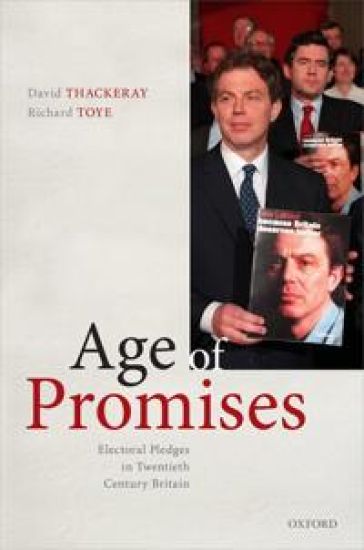
Age of Promises

Age of Promises

David Thackeray; Richard Toye

Oxford University Press
2021
sidottu
Age of Promises explores the issue of electoral promises in twentieth century Britain - how they were made, how they were understood, and how they evolved across time - through a study of general election manifestos and election addresses. The authors argue that a history of the act of making promises - which is central to the political process, but which has not been sufficiently analysed - illuminates the development of political communication and democratic representation. The twentieth century saw a broad shift away from politics viewed as a discursive process whereby, at elections, it was enough to set out broad principles, with detailed policymaking to follow once in office following reflection and discussion. Over the first part of the century parties increasingly felt required to compile lists of specific policies to offer to voters, which they were then considered to have an obligation to carry out come what may. From 1945 onwards, moreover, there was even more focus on detailed, costed, pledges. We live in an age of growing uncertainty over the authority and status of political promises. In the wake of the 2016 EU referendum controversy erupted over parliamentary sovereignty. Should 'the will of the people' as manifested in the referendum result be supreme, or did MPs owe a primary responsibility to their constituents and/or to the party manifestos on which they had been elected? Age of Promises demonstrates that these debates build on a long history of differing understandings about what status of manifestos and addresses should have in shaping the actions of government.
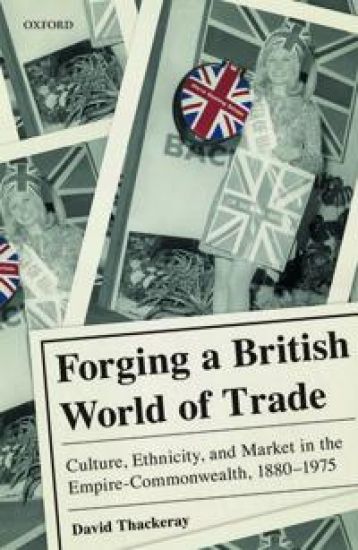
Forging a British World of Trade

Forging a British World of Trade

David Thackeray

Oxford University Press
2019
sidottu
Brexit is likely to lead to the largest shift in Britain's economic orientation in living memory. Some have argued that leaving the EU will enable Britain to revive markets in Commonwealth countries with which it has long-standing historical ties. Their opponents maintain that such claims are based on forms of imperial nostalgia which ignore the often uncomfortable historical trade relations between Britain and these countries, as well as the UK's historical role as a global, rather than chiefly imperial, economy. Forging a British World of Trade explores how efforts to promote a 'British World' system, centred on promoting trade between Britain and the Dominions, grew and declined in influence between the 1880s and 1970s. At the beginning of the twentieth century many people from London, to Sydney, Auckland, and Toronto considered themselves to belong to culturally British nations. British politicians and business leaders invested significant resources in promoting trade with Australia, Canada, New Zealand, and South Africa out of a perception that these were great markets of the future. However, ideas about promoting trade between 'British' peoples were racially exclusive. From the 1920s onwards, colonized and decolonizing populations questioned and challenged the basis of British World networks, making use of alternative forms of international collaboration promoted firstly by the League of Nations, and then by the United Nations. Schemes for imperial collaboration amongst ethnically 'British' peoples were hollowed out by the actions of a variety of political and business leaders across Asia and Africa who reshaped the functions and identity of the Commonwealth.
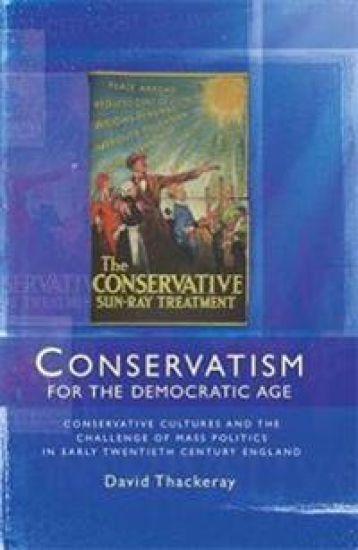
Conservatism for the Democratic Age

Conservatism for the Democratic Age

David Thackeray

Manchester University Press
2013
sidottu
This book offers a new interpretation of the Conservative party’s revival and adaptation to democratic politics in the early twentieth century. We cannot appreciate the Conservatives’ unique success in British politics without exploring the dramatic cultural transformation which occurred within the party during the early decades of the century. This was a seminal period in which key features of the modern Conservative party emerged: a mass women’s organisation, a focus on addressing the voter as a consumer, targeted electioneering strategies, and the use of modern media to speak to a mass audience. This book provides the first substantial attempt to assess the Conservatives’ adaptation to democracy across the early twentieth century from a cultural perspective and will appeal to academics and students with an interest in the history of political communication, gender and class in modern Britain.