
Kirjailija
David Vance
Kirjat ja teokset yhdessä paikassa: 8 kirjaa, julkaisuja vuosilta 1988–2026, suosituimpiin kuuluu Command-Line Utility Construction. Vertaile teosten hintoja ja tarkista saatavuus suomalaisista kirjakaupoista.
8 kirjaa
Kirjojen julkaisuvuodet: 1988–2026.
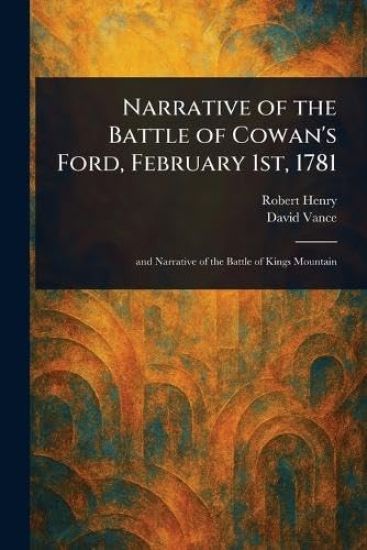
Narrative of the Battle of Cowan's Ford, February 1st, 1781
Robert Henry; David Vance
Anson Street Press
2025
pokkari
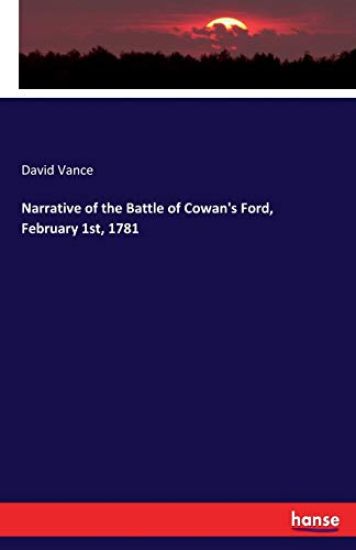
Narrative of the Battle of Cowan's Ford, February 1st, 1781 is an unchanged, high-quality reprint of the original edition of 1891. Hansebooks is editor of the literature on different topic areas such as research and science, travel and expeditions, cooking and nutrition, medicine, and other genres. As a publisher we focus on the preservation of historical literature. Many works of historical writers and scientists are available today as antiques only. Hansebooks newly publishes these books and contributes to the preservation of literature which has become rare and historical knowledge for the future.
Corporate Restructuring is a practical approach to rescuing troubled companies and driving underperforming companies to top performance. It combines proven restructuring strategies with rigorous theoretical analysis. This book explains how to set and achieve asset, staffing, sales and profit goals. Topics include diagnostic tools to identify the root cause of problems, the human dynamics that cause a company to thrive or wither, customer service and relationship marketing, customer intelligence systems, new product development, process mapping, continuous process improvement and re-engineering as well as integrating IT into corporate strategy. It is also discussed how to find the resources needed to keep a company alive during restructuring and how to use bankruptcy offensively and defensively. Corporate Restructuring emphasizes execution. All the restructuring theories in the world weigh less than a simple plan, well executed.
Corporate Restructuring is a practical approach to rescuing troubled companies and driving underperforming companies to top performance. It combines proven restructuring strategies with rigorous theoretical analysis. This book explains how to set and achieve asset, staffing, sales and profit goals. Topics include diagnostic tools to identify the root cause of problems, the human dynamics that cause a company to thrive or wither, customer service and relationship marketing, customer intelligence systems, new product development, process mapping, continuous process improvement and re-engineering as well as integrating IT into corporate strategy. It is also discussed how to find the resources needed to keep a company alive during restructuring and how to use bankruptcy offensively and defensively. Corporate Restructuring emphasizes execution. All the restructuring theories in the world weigh less than a simple plan, well executed.

With the advent of the computer, electronic cataloging of museum collections is becoming a reality. This book is a useful guide to starting a computer cataloging project. It lays out the rudiments of computer retrieval, database organization, and image processing. It does not purport to dictate a particular computer system, since museums have individualized needs, but it offers case studies and examples to help museums make informed decisions. The glossary and bibliography of the book are also helpful. Museum libraries and academic collections supporting museum and computer studies will appreciate this introductory text. ARBAWritten for museum executives, curators, and computer programmers and librarians with museum clients, this book offers a detailed exploration of the use of computers to record and control the physical objects that comprise museum collections. Equally applicable to collections contained in major museums and to those residing in the far more numerous small museums, Museum Collections and Today's Computers show how computers can be effectively and cost-efficiently used to perform a number of museum activities, including accession, registration, cataloging, inventory control, lending, exhibiting, and research. Throughout, the authors focus on the unique nature of museum collections and the special needs that result from uniqueness.