Kirjojen hintavertailu – 12 867 025 kirjaa ja 27 kauppaa
Kirjailija
David W T Brattston
Kirjat ja teokset yhdessä paikassa: 16 kirjaa, julkaisuja vuosilta 2014–2023, suosituimpiin kuuluu Original Christian Ethics Today. Vertaile teosten hintoja ja tarkista saatavuus suomalaisista kirjakaupoista.
What were the "peace principles" of the early Christian Church? What did believers view as the proper response to unprovoked personal attacks and disputes among themselves? How did Christians view violence in sports, capital punishment, war, abortion, and euthanasia? Brattston examines these topics using New Testament and other Christian sources dating from before the middle of the third century. In so doing, he provides modern Christians with important clarity on early Christian thought.
What were the "peace principles" of the early Christian Church? What did believers view as the proper response to unprovoked personal attacks and disputes among themselves? How did Christians view violence in sports, capital punishment, war, abortion, and euthanasia? Brattston examines these topics using New Testament and other Christian sources dating from before the middle of the third century. In so doing, he provides modern Christians with important clarity on early Christian thought.
The Rise of Bishops reveals how Christian congregations, which were self-governing in the second and third centuries, became subject to the general supervision and direction of diocesan bishops and higher officeholders, thus ending their independence from outside the local parish. The New Testament says nothing about church government after the apostles. Thus, the question becomes who replaced the apostles? Local church congregations in the period between AD 100 to 300 appear to have been administered by bishops and deacons, and sometimes elders, all as congregational officeholders, with no superstructure above the congregation. Yet, the fourth century sees congregations governed in groups by a collective hierarchy, based on diocesan bishops. This book attributes most of the change to Constantine the Great and his immediate successors, motivated by desire for more efficient functioning and greater control by the emperors once the majority church was co-opted into the Roman state. Although bishops have long been key officials in the church, surprisingly little has been written in our time on how the framework for choosing and regulating them developed in early times. What little is available consists of journal articles rather than standalone publications. The Rise of Bishops helps close this gap.
The Rise of Bishops reveals how Christian congregations, which were self-governing in the second and third centuries, became subject to the general supervision and direction of diocesan bishops and higher officeholders, thus ending their independence from outside the local parish. The New Testament says nothing about church government after the apostles. Thus, the question becomes ""who replaced the apostles?"" Local church congregations in the period between AD 100 to 300 appear to have been administered by bishops and deacons, and sometimes elders, all as congregational officeholders, with no superstructure above the congregation. Yet, the fourth century sees congregations governed in groups by a collective hierarchy, based on diocesan bishops. This book attributes most of the change to Constantine the Great and his immediate successors, motivated by desire for more efficient functioning and greater control by the emperors once the majority church was co-opted into the Roman state. Although bishops have long been key officials in the church, surprisingly little has been written in our time on how the framework for choosing and regulating them developed in early times. What little is available consists of journal articles rather than standalone publications. The Rise of Bishops helps close this gap.
This book deals with questions or problems encountered in the Bible where answers can be found in the ante-Nicene fathers. The fathers were uniquely qualified by being close in time and culture to Christ himself, when his unwritten teachings and Scripture interpretations, and those of the apostles, were still fresh in Christian memory. It is designed for sincere readers of the Bible who may from time to time be puzzled by the occasional passage which seems out-of-step with the rest of the Scriptures or our usual impression of Christian teaching. This work is written for individual and group Bible students without advanced theological qualifications, rather than the intellectual market. It is written for use in Bible studies in local congregations, or church history classes, especially in sessions when the pastor or teacher is unable to attend. Bible Problems Solved by Early Christians is different from almost all other works and ministries, which give solutions to problems or questions, because the answers in the book come not from a modern-day comparison of different verses within the Bible itself or from the interpretations of any particular religious denomination, but from Christian writers who lived in the first centuries after Jesus.
This book deals with questions or problems encountered in the Bible where answers can be found in the ante-Nicene fathers. The fathers were uniquely qualified by being close in time and culture to Christ himself, when his unwritten teachings and Scripture interpretations, and those of the apostles, were still fresh in Christian memory. It is designed for sincere readers of the Bible who may from time to time be puzzled by the occasional passage which seems out-of-step with the rest of the Scriptures or our usual impression of Christian teaching. This work is written for individual and group Bible students without advanced theological qualifications, rather than the intellectual market. It is written for use in Bible studies in local congregations, or church history classes, especially in sessions when the pastor or teacher is unable to attend. Bible Problems Solved by Early Christians is different from almost all other works and ministries, which give solutions to problems or questions, because the answers in the book come not from a modern-day comparison of different verses within the Bible itself or from the interpretations of any particular religious denomination, but from Christian writers who lived in the first centuries after Jesus.
This book is the first in generations to examine writers in the early church in order to ascertain the original Christian intent as to how early Christian clergy were chosen, their powers and responsibilities, and the methods of placing people in church office and displacing them. This book demonstrates what the first writers meant when they advocated apostolic succession, the scope of authority particular church officers would possess, and how their authority would be transmitted. Besides concentrating on writings in the first to third centuries AD, this book draws on later material to question the assertions made today for bishops claiming apostolic succession. It reveals they are contrary to early church thought, that the doctrine or theory of apostolic succession cannot be proved, and does not work in practice even in our own day. This publication is rare in the field of Christian scholarship in that it challenges the fundamental claims that diocesan bishops do or can trace their lines of ordinations back to the apostles. This unusual book will comfort many, and disquiet many, and surprise all, because it investigates what many assume, without solid proof, to be the bedrock of church authority.
This book is the first in generations to examine writers in the early church in order to ascertain the original Christian intent as to how early Christian clergy were chosen, their powers and responsibilities, and the methods of placing people in church office and displacing them. This book demonstrates what the first writers meant when they advocated apostolic succession, the scope of authority particular church officers would possess, and how their authority would be transmitted. Besides concentrating on writings in the first to third centuries AD, this book draws on later material to question the assertions made today for bishops claiming apostolic succession. It reveals they are contrary to early church thought, that the doctrine or theory of apostolic succession cannot be proved, and does not work in practice even in our own day. This publication is rare in the field of Christian scholarship in that it challenges the fundamental claims that diocesan bishops do or can trace their lines of ordinations back to the apostles. This unusual book will comfort many, and disquiet many, and surprise all, because it investigates what many assume, without solid proof, to be the bedrock of church authority.
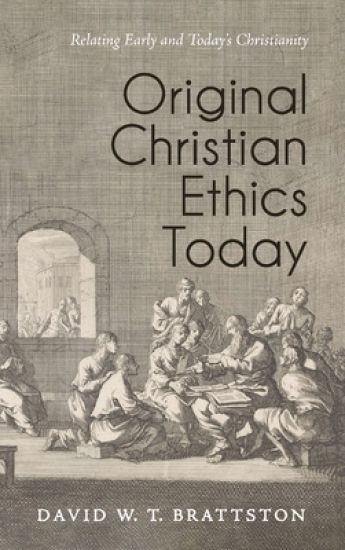
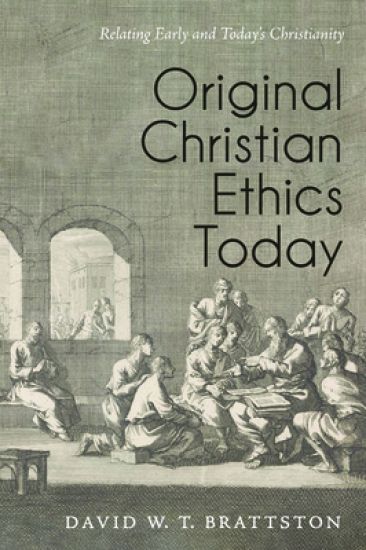
This book is a collection drawn from over three hundred and ninety of my magazine and website articles synthesizing early and modern Christianity, extracted from writings by or about Christians who flourished prior to the Decian Persecution and mass apostasy of AD 249-251. The subject matter is New Testament and other Christian statements on ethics before AD 250, and their applicability to the twenty-first century. Some of these articles have been published more than once, by more than one Christian communion, and in more than one country. They vary in length from a few hundred words to over four thousand. This book does not discuss moral theories or frameworks, but presents concrete practice of specific principles, commandments, and prohibitions.
This book is a collection drawn from over three hundred and ninety of my magazine and website articles synthesizing early and modern Christianity, extracted from writings by or about Christians who flourished prior to the Decian Persecution and mass apostasy of AD 249-251. The subject matter is New Testament and other Christian statements on ethics before AD 250, and their applicability to the twenty-first century. Some of these articles have been published more than once, by more than one Christian communion, and in more than one country. They vary in length from a few hundred words to over four thousand. This book does not discuss moral theories or frameworks, but presents concrete practice of specific principles, commandments, and prohibitions.