

Kirjailija
David Wagner
Kirjat ja teokset yhdessä paikassa: 55 kirjaa, julkaisuja vuosilta 1990–2026, suosituimpiin kuuluu Hide in Plain Sight. Vertaile teosten hintoja ja tarkista saatavuus suomalaisista kirjakaupoista.
55 kirjaa
Kirjojen julkaisuvuodet: 1990–2026.
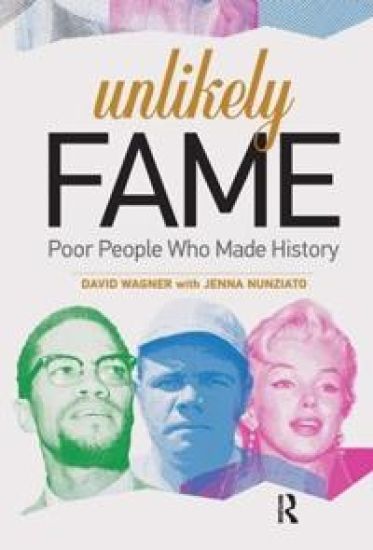
This unique book depicts the stories of Americans born in poverty, who achieved national or international fame. Accessible to students and lay readers, this scholarly study describes poverty as a disability that typically stunts important areas of growth in childhood. Wagner shows how poverty hampers individuals and groups for their entire lives, even many of those who emerge from poverty. Examples of individuals with difficult childhoods who faced residual lifelong challenges are presented in the stories of 27 Americans, including athlete Babe Ruth, birth control advocate Margaret Sanger, singer Billie Holliday, author Jack London, actress Marilyn Monroe, black leader Malcolm X, singer Johnny Cash, comedian Richard Pryor, author Stephen King, and entertainer Oprah Winfrey. In over 200 engaging and accessible pages, Unlikely Fame yields insight into successful individuals and how they coped, adapted and ultimately achieved success.



Helen Keller and her teacher, Annie Sullivan, remain two of the best-known American women. But few people know how Sullivan came to her role as teacher of the deaf and blind Keller. Contrasting their lives with Franklin Benjamin Sanborn, the era's prominent abolitionist, this book sheds light on the gender and disability expectations that affected the public perception of Sullivan and Keller. This book provides a fascinating insight into class, ethnicity, gender, and disability issues in the Gilded Age and Progressive-Era America.

Helen Keller and her teacher, Annie Sullivan, remain two of the best-known American women. But few people know how Sullivan came to her role as teacher of the deaf and blind Keller. Contrasting their lives with Franklin Benjamin Sanborn, the era's prominent abolitionist, this book sheds light on the gender and disability expectations that affected the public perception of Sullivan and Keller. This book provides a fascinating insight into class, ethnicity, gender, and disability issues in the Gilded Age and Progressive-Era America.


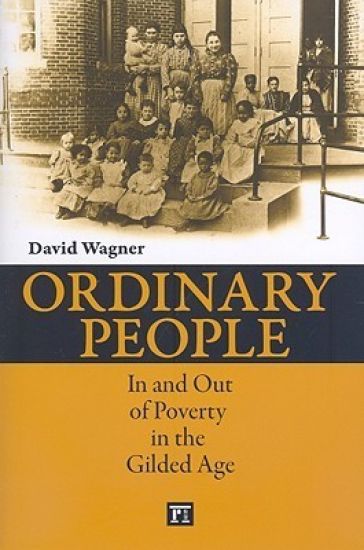
David Wagner explores the lives of poor people during the three decades after the Civil War, using a unique treasure of biographies of people who were (at one point in time) inmates in a large almshouse, combined with genealogical and other official records to follow their later lives. Ordinary People develops a more fluid picture of "poverty" as people's lives change over the course of time.

David Wagner explores the lives of poor people during the three decades after the Civil War, using a unique treasure of biographies of people who were (at one point in time) inmates in a large almshouse, combined with genealogical and other official records to follow their later lives. Ordinary People develops a more fluid picture of "poverty" as people's lives change over the course of time.

Many of us grew up hearing our parents exclaim 'you are driving me to the poorhouse!' or remember the card in the 'Monopoly' game which says 'Go to the Poorhouse! Lose a Turn!' Yet most Americans know little or nothing of this institution that existed under a variety of names for approximately three hundred years of American history. Surprisingly these institutions variously named poorhouses, poor farms, sometimes almshouses or workhouses, have received rather scant academic treatment, as well, though tens of millions of poor people were confined there, while often their neighbors talked in hushed tones and in fear of their own fate at the 'specter of the poorhouse.' Based on the author's study of six New England poorhouses/poor farms, a hidden story in America's history is presented which will be of popular interest as well as useful as a text in social welfare and social history. While the poorhouse's mission was character reform and 'repressing pauperism,' these goals were gradually undermined by poor people themselves, who often learned to use the poorhouse for their own benefit, as well as by staff and officials of the houses, who had agendas sometimes at odds with the purposes for which the poorhouse was invented.

A groundbreaking critique of American charity which Barbara Ehrenreich says "demolishes the conventional wisdom that private philanthropy is innately superior to public welfare measures." What's Love Got to Do with It? is an insightful debunking of the way charitable giving disguises American neglect of the public welfare. Award-winning Professor of Social Work and Sociology David Wagner points out that while the United States prides itself on being one of the most generous nations, it provides its citizens with the lowest public benefits of any Western society and has rates of poverty and inequality among the highest in the industrialized world. These two facts, Wagner argues, are not unrelated: independent philanthropy actually provides a cover for the harshness of America's free-market capitalism. In a book that Howard Zinn, author of A People's History of the United States, says "raises sobering questions for all of us who want to live in a just society," Wagner offers a provocative contribution to our thinking on philanthropy and social welfare. Author Biography: David Wagner's previous books include the award-winning Checkerboard Square and The New Temperance. He is a professor of social work and sociology at the University of Southern Maine.

The war on drugs , the campaigns against smoking cigarettes , v-chips to control what children watch on TV , censoring the Internet and Calvin Klein jeans ads, bipartisan lectures about the dangers of teen sex , constant warnings about food and fat , all are examples of what David Wagner terms the New Temperance." The New Temperance contrasts the new obsession with personal behaviour in America during the last two decades with the brief period of relative freedom in the 1960s and early 1970s and suggests strong consistencies with our past. In particular, the late twentieth century appears to have re-created the mood of the Victorian and Progressive Periods, when social movements such as the Temperance, Social Purity, and Vice and Vigilance movements held sway. The New Temperance questions the constant mantra in the media and in political debates about the dangers of personal behaviour and challenges America's love affair with repression.

This book, based on in-depth interviews of radical social workers, who at one time were associated with the Catalyst collective, explores through oral history the social psychological effects of upward mobility on political ideology. Historically large numbers of idealistic activists entered social work and other human services professions, but there have been few studies about the careers of such individuals and what has happened to radicals who pursue careers as community organizers, caseworkers or therapists, administrators or planners. Contents: A Radical Professionalism?; Radical Social Work; The Moral Careers of Radical Social Service WorkersóBecoming Radical, Becoming Social Workers, Images of Success/Worlds of Pain, and Occupations and Ideology; Radicalism, Social Action, and Social Service CareersóThe Decline of Oppositional Activism, Politics at the Retail Level: "Radical Practice", The Absorption of Radicalism; and Bibliography.

This book, based on in-depth interviews of radical social workers, who at one time were associated with the Catalyst collective, explores through oral history the social psychological effects of upward mobility on political ideology. Historically large numbers of idealistic activists entered social work and other human services professions, but there have been few studies about the careers of such individuals and what has happened to radicals who pursue careers as community organizers, caseworkers or therapists, administrators or planners. Contents: A Radical Professionalism?; Radical Social Work; The Moral Careers of Radical Social Service Workers-Becoming Radical, Becoming Social Workers, Images of Success/Worlds of Pain, and Occupations and Ideology; Radicalism, Social Action, and Social Service Careers-The Decline of Oppositional Activism, Politics at the Retail Level: 'Radical Practice', The Absorption of Radicalism; and Bibliography.