Kirjojen hintavertailu – 12 859 827 kirjaa ja 27 kauppaa

Kirjailija

David Waldstreicher

Kirjat ja teokset yhdessä paikassa: 9 kirjaa, julkaisuja vuosilta 2002–2025, suosituimpiin kuuluu John Quincy Adams and the Politics of Slavery. Vertaile teosten hintoja ja tarkista saatavuus suomalaisista kirjakaupoista.

9 kirjaa

Kirjojen julkaisuvuodet: 2002–2025.

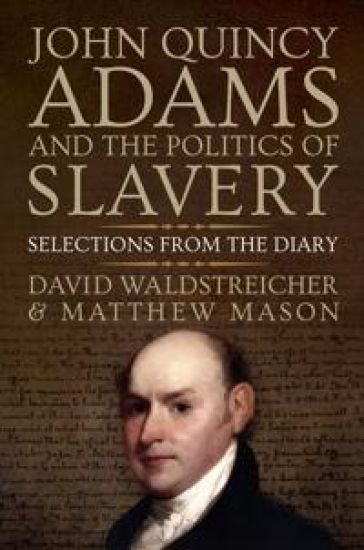
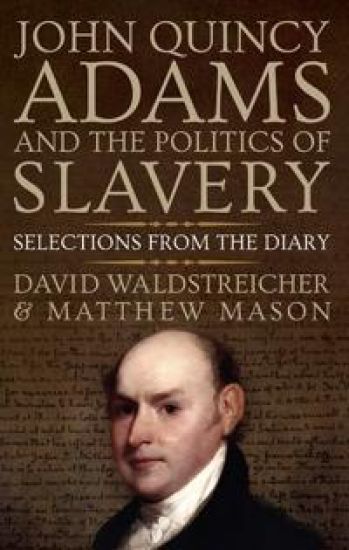
John Quincy Adams and the Politics of Slavery

John Quincy Adams and the Politics of Slavery

David Waldstreicher; Matthew Mason

Oxford University Press Inc
2019
nidottu
In the final years of his political career, President John Quincy Adams was well known for his objections to slavery, with rival Henry Wise going so far as to label him "the acutest, the astutest, the archest enemy of southern slavery that ever existed." As a young statesman, however, he supported slavery. How did the man who in 1795 told a British cabinet officer not to speak to him of "the Virginians, the Southern people, the democrats," whom he considered "in no other light than as Americans," come to foretell "a grand struggle between slavery and freedom"? How could a committed expansionist, who would rather abandon his party and lose his U. S. Senate seat than attack Jeffersonian slave power, later come to declare the Mexican War the "apoplexy of the Constitution," a hijacking of the republic by slaveholders? What changed? Entries from Adams's personal diary, more extensive than that of any American statesman, reveal a highly dynamic and accomplished politician in engagement with one of his generation's most challenging national dilemmas. Expertly edited by David Waldstreicher and Matthew Mason, John Quincy Adams and the Politics of Slavery offers an unusual perspective on the dramatic and shifting politics of slavery in the early republic, as it moved from the margins to the center of public life and from the shadows to the substance of Adams's politics. The editors provide a lucid introduction to the collection as a whole and frame the individual documents with brief and engaging insights, rendering both Adams's life and the controversies over slavery into a mutually illuminating narrative. By juxtaposing Adams's personal reflections on slavery with what he said-and did not say-publicly on the issue, the editors offer a nuanced portrait of how he interacted with prevailing ideologies during his consequential career and life. John Quincy Adams and the Politics of Slavery is an invaluable contribution to our understanding of the complicated politics of slavery that set the groundwork for the Civil War.
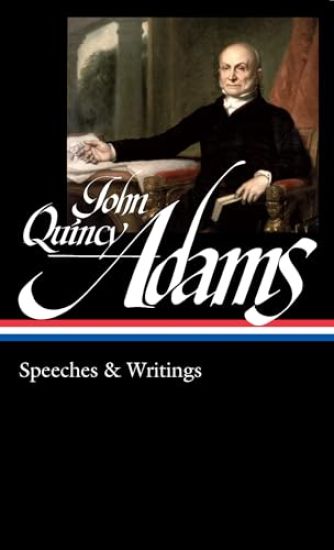
John Quincy Adams: Speeches & Writings (LOA #390)

John Quincy Adams: Speeches & Writings (LOA #390)

John Quincy Adams; David Waldstreicher

THE LIBRARY OF AMERICA
2025
sidottu

Halvin toimitettuna 35,40 €

21 essential works trace a great statesman's lifelong engagement with the promise of America and the legacy of the Founding Fathers "Few presidents ever thought about words as carefully as John Quincy Adams. Thankfully, we can now hear his words again, in this instantly essential volume."--Ted Widmer, historian and former presidential speechwriter John Quincy Adams was one of the most accomplished American statesmen of his or any era. He brought all his eloquence, erudition, and fierce energy to bear on the politics of the nation over the course of a remarkable career that spanned from the founding era to the sectional crisis that preceded the Civil War. Despite a persistent interest in this pivotal figure, there has never been a single-volume collection of Adams's essential political writings, until now. Here, for the first time in an edition for general readers and students alike, are the profound insights of a far-seeing political leader who was also a consummate American stylist. From his prophetic college commencement address in 1787 to his vigorous denunciation of slavery in 1843, this Library of America volume offers a compact and compelling record of America's fractious evolution as a democratic republic, presenting some of the most important political writings in our history. These writings are more urgently needed than ever. In the words of biographer Fred Kaplan: "His values, his definition of leadership, and his vision for the nation's future--particularly the difficulty of transforming vision into reality in a country that often appears ungovernable--are as much about twenty-first century America as about Adams' life and times."
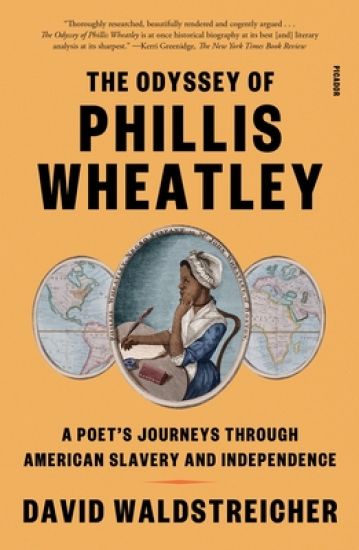
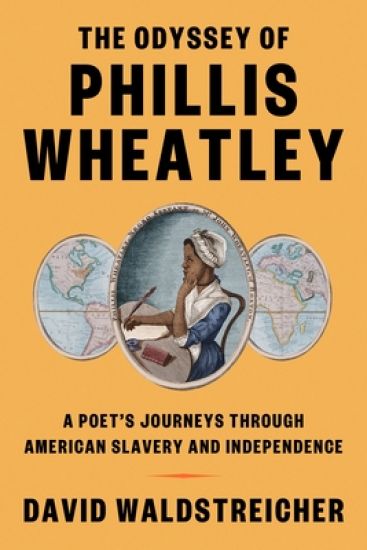
The Odyssey of Phillis Wheatley

The Odyssey of Phillis Wheatley

David Waldstreicher

St Martin's Press
2024
nidottu
Admired by George Washington, ridiculed by Thomas Jefferson, published in London, and read far and wide, Phillis Wheatley led one of the most extraordinary American lives. Seized in West Africa and forced into slavery as a child, she was sold to a merchant family in Boston, where she became a noted poet at a young age. Mastering the Bible, Greek and Latin translations, and the works of Pope and Milton, she composed elegies for local elites, celebrated political events, praised warriors, and used her verse to variously lampoon, question, and assert the injustice of her enslaved condition. “Can I then but pray / Others may never feel tyrannic sway?” By doing so, she added her voice to a vibrant, multisided conversation about race, slavery, and discontent with British rule; before and after her emancipation, her verses shook up racial etiquette and used familiar forms to create bold new meanings. She demonstrated a complex but crucial fact of the times: that the American Revolution both strengthened and limited Black slavery. In this new biography, the historian David Waldstreicher offers the fullest account to date of Wheatley’s life and works, correcting myths, reconstructing intimate friendships, and deepening our understanding of her verse and the revolutionary era. Throughout The Odyssey of Phillis Wheatley, he demonstrates the continued vitality and resonance of a woman who wrote, in a founding gesture of American literature, “Thy Power, O Liberty, makes strong the weak / And (wond’rous instinct) Ethiopians speak.”
The Odyssey of Phillis Wheatley: A Poet's Journeys Through American Slavery and Independence
A New York Times notable book of 2023 A finalist for the Los Angeles Times Book Prize for biography Winner of the 2024 George Washington Prize" An] erudite, enlightening new biography . . . Waldstreicher's] interpretations equal Wheatley's own intentional verse, making it a joy to follow along as he unpacks her words and their arrangement." --Tiya Miles, The Atlantic"Thoroughly researched, beautifully rendered and cogently argued . . . The Odyssey of Phillis Wheatley is . . .] historical biography at its best." --Kerri Greenidge, The New York Times Book Review (Editors' Choice)A paradigm-shattering biography of Phillis Wheatley, whose extraordinary poetry set African American literature at the heart of the American Revolution. Admired by George Washington, ridiculed by Thomas Jefferson, published in London, and read far and wide, Phillis Wheatley led one of the most extraordinary American lives. Seized in West Africa and forced into slavery as a child, she was sold to a merchant family in Boston, where she became a noted poet at a young age. Mastering the Bible, Greek and Latin translations, and the works of Pope and Milton, she composed elegies for local elites, celebrated political events, praised warriors, and used her verse to variously lampoon, question, and assert the injustice of her enslaved condition. "Can I then but pray / Others may never feel tyrannic sway?" By doing so, she added her voice to a vibrant, multisided conversation about race, slavery, and discontent with British rule; before and after her emancipation, her verses shook up racial etiquette and used familiar forms to create bold new meanings. She demonstrated a complex but crucial fact of the times: that the American Revolution both strengthened and limited Black slavery. In this new biography, the historian David Waldstreicher offers the fullest account to date of Wheatley's life and works, correcting myths, reconstructing intimate friendships, and deepening our understanding of her verse and the revolutionary era. Throughout The Odyssey of Phillis Wheatley, he demonstrates the continued vitality and resonance of a woman who wrote, in a founding gesture of American literature, "Thy Power, O Liberty, makes strong the weak / And (wond'rous instinct) Ethiopians speak."
John Quincy Adams and the Politics of Slavery

John Quincy Adams and the Politics of Slavery

David Waldstreicher; Matthew Mason

Oxford University Press Inc
2017
sidottu
John Quincy Adams's remarkable diary is an unusually accessible window into the thinking of a president long before, during, and well after his own administration. It is enormous in scope--examining all subjects that came to Adams's interest and stretching from the late 1780s to his death in 1848. David Waldstreicher and Matthew Mason produce an edition of the diary that is not only of accessible length but also focused on one issue: the politics of slavery. Adams's long journey from nationalist diplomacy to culture war with the southern plantocracy is not well understood. How did the man who in 1795 told a British cabinet officer not to speak to him of the Virginians, the Southern people, the democrats, whom he considered in no other light than as Americans, come to predict a grand struggle between slavery and freedom? How could an expansionist who had left his party and lost his U. S. Senate seat rather than attack the Jeffersonian slave power, later come to declare the Mexican War the apoplexy of the Constitution, a hijacking of the republic by slaveholders? What changed? Entries in the diary touching on the politics of slavery increased over time and reflect national events as well as Adams' changes in attitude. The diary enables the reader to perceive and weigh the relative importance and interaction of ideology, politics, and personal ambition in one highly consequential life. The editors provide a lucid introduction to the collection as a whole and illuminate the individual documents with brief and engaging comments, deftly placing Adams's public statements alongside his private reflections. By juxtaposing Adams's personal reflections on slavery with what he said--and did not say--publicly on the issue, the editors offer a unique perspective on a topic historians of the early republic, and especially of Jacksonian democracy, have trouble integrating into their stories: the complicated politics of slavery.
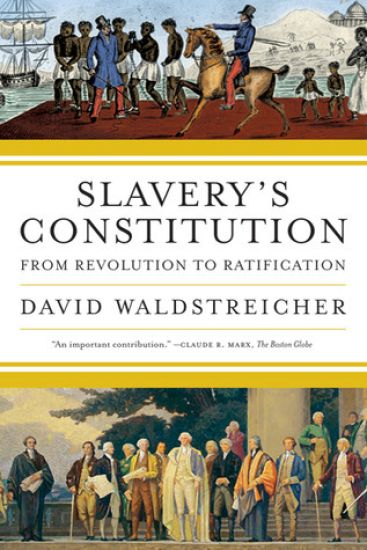
Slavery's Constitution

Slavery's Constitution

David Waldstreicher

Hill Wang Inc.,U.S.
2010
nidottu
Taking on decades of received wisdom, David Waldstreicher has written the first book to recognize slavery's place at the heart of the U. S. Constitution. Famously, the Constitution never mentions slavery. And yet, of its eighty-four clauses, six were directly concerned with slaves and the interests of their owners. Five other clauses had implications for slavery that were considered and debated by the delegates to the 1787 Constitutional Convention and the citizens of the states during ratification. This 'peculiar institution' was not a moral blind spot for America's otherwise enlightened framers, nor was it the expression of a mere economic interest. Slavery was as important to the making of the Constitution as the Constitution was to the survival of slavery. By tracing slavery from before the revolution, through the Constitution's framing, and into the public debate that followed, Waldstreicher rigorously shows not only that slavery was actively discussed behind the closed and locked doors of the Constitutional Convention but also that it was deftly woven into the Constitution itself. Finding meaning in silences that have long been ignored, "Slavery's Constitution" is a vital and sorely needed contribution to the conversation about the origins, impact, and meaning of our nation's founding document.
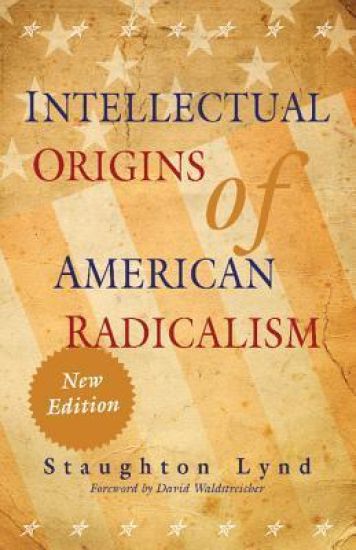
Intellectual Origins of American Radicalism

Intellectual Origins of American Radicalism

Staughton Lynd; David Waldstreicher

Cambridge University Press
2009
sidottu
Now an established classic, Intellectual Origins of American Radicalism was the first book to explore this alternative current of American political thought. Stemming back to the seventeenth-century English Revolution, many questioned private property, the sovereignty of the nation-state, and slavery, and affirmed the common man's ability to govern. By the time of the American Revolution, Thomas Paine was the great exemplar of the alternative intellectual tradition. In the nineteenth century, the antislavery movement took hold of Thomas Paine's ideas and fashioned them into an ideology that ultimately justified civil war. This updated edition contains a preface by the author, which describes the inquiries that he undertook in his books of the 1960s and their conclusions. David Waldstreicher has contributed a new historiographical essay that discusses the book's lasting importance and contrasts its ideas with the work of Bernard Bailyn and Gordon Wood.
Intellectual Origins of American Radicalism

Intellectual Origins of American Radicalism

Staughton Lynd; David Waldstreicher

Cambridge University Press
2009
pokkari
Now an established classic, Intellectual Origins of American Radicalism was the first book to explore this alternative current of American political thought. Stemming back to the seventeenth-century English Revolution, many questioned private property, the sovereignty of the nation-state, and slavery, and affirmed the common man's ability to govern. By the time of the American Revolution, Thomas Paine was the great exemplar of the alternative intellectual tradition. In the nineteenth century, the antislavery movement took hold of Thomas Paine's ideas and fashioned them into an ideology that ultimately justified civil war. This updated edition contains a preface by the author, which describes the inquiries that he undertook in his books of the 1960s and their conclusions. David Waldstreicher has contributed a new historiographical essay that discusses the book's lasting importance and contrasts its ideas with the work of Bernard Bailyn and Gordon Wood.
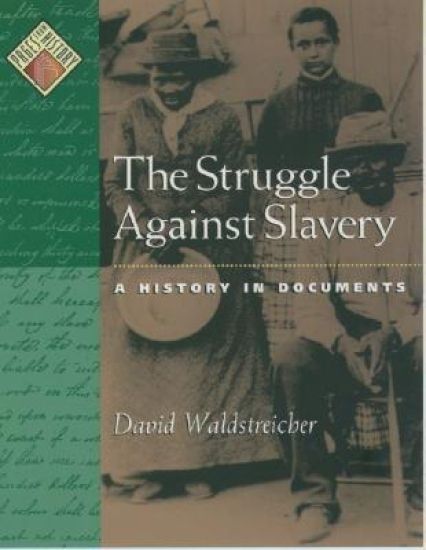
The Struggle against Slavery

The Struggle against Slavery

David Waldstreicher

Oxford University Press Inc
2002
sidottu
Presents and places in context original illustrations and documents about the origins of slavery, African Americans in the Revolution, antislavery movements, various types of resistance, and the coming of emancipation.