Kirjojen hintavertailu – 12 903 725 kirjaa ja 27 kauppaa

Kirjailija

David Walsh

Kirjat ja teokset yhdessä paikassa: 49 kirjaa, julkaisuja vuosilta 1994–2026, suosituimpiin kuuluu The Unseen Alliance. Vertaile teosten hintoja ja tarkista saatavuus suomalaisista kirjakaupoista.

49 kirjaa

Kirjojen julkaisuvuodet: 1994–2026.

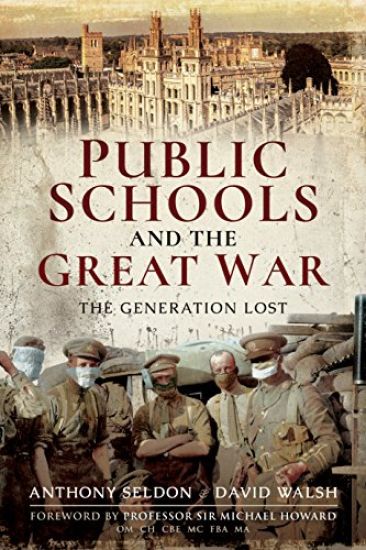
Public Schools and the Great War

Public Schools and the Great War

Anthony Seldon; David Walsh

Pen Sword Military
2018
nidottu

Halvin toimitettuna 26,90 €

The book examines the impact which the Great War had on the Public Schools and the sacrificial contribution made to the victory which came in 1918. The war consumed about a fifth of all the public schoolboys who fought, while the survivors were scarred by the loss of so many friends. Based largely on source material from school archives and histories, it moves from the naive excitement of the summer of 1914 to the many moving stories that emerge from the carnage of the Western Front. It looks at school life in those war years, boys with their futures on hold and the prospect of death always very close, Headmasters and staff devastated by the loss of so many young lives. About one distinguished Headmaster, who died in January 1919, it was said that the War killed him as straightly and surely as if he had fallen at the front". The book ranges across many topics including the selflessness and pride of Public Schools across the British Empire and in Ireland; the role of the Officers Training Corps in militarising a generation; the letters written from the Front to teachers; the pride taken by schools in the Victoria Crosses etc won by Old Boys; the statistical terms in which the Public Schools contribution can be measured; the ways in which schools commemorated the war, and still do so today. Finally the legacy of the war is examined, both the effect on the schools themselves but also the contribution made by writers and artists to the disillusionment of the inter-war years.

Wealth of Persons

Wealth of Persons

John McNerney; David Walsh

Cascade
2016
sidottu
Thomas Piketty's Capital in the Twenty-First Century initiated a great debate not just about inequality but also regarding the failures found in the economic models used by theoreticians and practitioners alike. Wealth of Persons offers a totally different perspective that challenges the very terms of the debate. The Great Recession reveals a great existential rift at the core of certain economic reflections, thereby showing the real crisis of the crisis of economics. In the human sciences we have created a kind of "Tower of Babel" where we cannot understand each other any longer. The "breakdowns" occur equally on the personal, social, political, and economic levels. There is a need for an "about-face" in method to restore harmony among dissociated disciplines. Wealth of Persons offers a key to such a restoration, applying insights and analysis taken from different economic scholars, schools of thought, philosophical traditions, various disciplines, and charismatic entrepreneurs. Wealth of Persons aims at recapturing an adequate understanding of the acting human person in the economic drama, one that measures up to the reality. The investigation is a passport allowing entry into the land of economic knowledge, properly unfolding the anthropological meaning of the free economy. "John McNerney's Wealth of Persons is an amazing tour de force--his focus on the human person in economics not only opens up economics for the nonprofessional economist, it's a bracing exposition of the philosophy of the human person, all the more impressive when seen immersed in economic action. By focusing on the Austrian and the later Bologna schools' insistence on the role of the entrepreneur he critiques, on the one hand, an economy overfocused on profit and, on the other, Marx's (and later Piketty's) misreading of economics as a struggle between capital and labor. It should be required reading for all students (and teachers) of economics as well as of applied philosophical anthropology." --Brendan Purcell, Adjunct Professor at the School of Philosophy and Theology, University of Notre Dame Australia, Sydney "This book is a welcome addition to the field of Catholic social teachings and more generally to the debate over the use of economics and its limits . . . The author aims to explain the 'crisis' in economics and in the economy without blaming the usual suspects, especially human greed. This research program is sorely needed, especially coming from someone outside of the field of economics." --Frederic Sautet, Associate Professor of Economics at the Catholic University of America "McNerney . . . is not afraid to suggest that theological and metaphysical issues are needed to put the right limits on economics. And he shows how this might be done without undermining the integrity of the discipline itself--indeed, how such issues flow out of the discipline and its activities among real persons] acting together . . . What McNerney is really getting at is a placing of economics in its true place, with the realization that the acting person also has a transcendent destiny that is really why he is doing anything at all in the first place, as Augustine said." --Professor James V. Schall, Retired Professor of Political Philosophy in the Department of Government at Georgetown University John McNerney is head chaplain at University College Dublin. Author of John Paul II: Poet and Philosopher (2004), he is also an occasional lecturer to undergraduate and graduate students in the fields of business ethics and philosophy. He has given talks at various international conferences in North America, Europe, and Asia, and is a member of the national Economy of Communion commission in Ireland.
Politics of the Person As the Politics of Being

Politics of the Person As the Politics of Being

David Walsh

University of Notre Dame Press
2015
nidottu
Readers expecting a traditional philosophical work will be surprised and delighted by David Walsh's Politics of the Person as the Politics of Being, his highly original reflection on the transcendental nature of the person. A specialist in political theory, Walsh breaks new ground in this volume, arguing, as he says in the introduction, "that the person is transcendence, not only as an aspiration, but as his or her very reality. Nothing is higher. That is what Politics of the Person as the Politics of Being strives to acknowledge." The analysis of the person is the foundation for thinking about political community and human dignity and rights. Walsh establishes his notion of the person in the first four chapters. He begins with the question as to whether science can in any sense talk about persons. He then examines the person's core activities, free choice and knowledge, and reassesses the claims of the natural sciences. He considers the ground of the person and of interpersonal relationships, including our relationship with God. The final three chapters explore the unfolding of the person, imaginatively in art, in the personal "time" of history, and in the "space" of politics. Politics of the Person as the Politics of Being is a new way of philosophizing that is neither subjective nor objective but derived from the persons who can consider such perspectives. The book will interest students and scholars in contemporary political philosophy, philosophy of religion, and any groups interested in the person, personalism, and metaphysics.
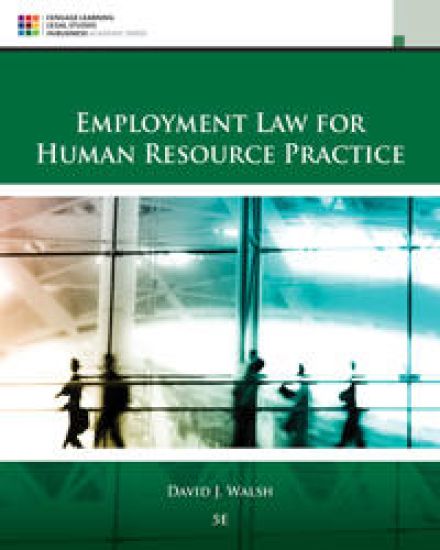
Employment Law for Human Resource Practice

Employment Law for Human Resource Practice

David Walsh

South-Western College Publishing
2015
sidottu
Packed with cutting-edge cases and hands-on applications, EMPLOYMENT LAW FOR HUMAN RESOURCE PRACTICE, 5TH EDITION explains the major issues and rules of employment law and how they apply to your human resource career. The text addresses human resource practices associated with each stage of the employment process--from hiring, to managing, to firing. Clippings of current news stories, hypothetical situations, and real cases help you understand how legal concepts apply to business situations, while practical advice for what to do as a manager is summarized at the end of each chapter. Covering the most important employment law topics, the text is completely up to date with the latest legislation, new regulations, and recent case law. It includes extended coverage of the rights of vulnerable employees under the Americans with Disabilities Act, racial discrimination, the use of background checks, the Family Medical Leave Act, and more.
The Military Balance in the Cold War
This book examines the impact of American perceptions of the military balance between the United States and the Soviet Union during the key period of 1976-1985. That decade witnessed the decline of the US-Soviet détente and the resurgence of superpower confrontation, often called the ‘Second Cold War’. Among the factors contributing to this shift was the American view of the military balance – whether the United States had been or was being overtaken by the Soviet Union in terms of military capability. Since then, the military balance has been viewed within the overall context of issues impacting superpower relations during this era. David Walsh examines the full range of issues - strategic and European-based forces, power-projection capabilities, and military spending - and their role in shaping perceptions, not just of the military balance but also in such key areas of international relations as arms control, trans-Atlantic diplomacy and Third World conflict. In doing so, he shows how the perceptions of the 1970s contributed to key policy decisions in the 1980s, which themselves played a significant role in bringing the Cold War to an end. The Military Balance in the Cold War will be of interest to advanced students of Cold War history, strategic studies, US foreign policy and international relations in general.
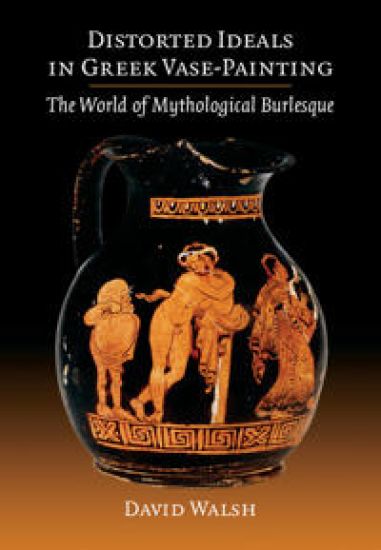
Distorted Ideals in Greek Vase-Painting

Distorted Ideals in Greek Vase-Painting

David Walsh

Cambridge University Press
2014
pokkari
This book examines Greek vase-paintings that depict humorous, burlesque, and irreverent images of Greek mythology and the gods. Many of the images present the gods and heroes as ridiculous and ugly. While the narrative content of some images may appear to be trivial, others address issues that are deeply serious. When placed against the background of the religious beliefs and social frameworks from which they spring, these images allow us to explore questions relating to their meaning in particular communities. Throughout, we see indications that Greek vase-painters developed their own comedic narratives and visual jokes. The images enhance our understanding of Greek society in just the same way as their more sober siblings in 'serious' art.
Why Do They Act That Way?: A Survival Guide to the Adolescent Brain for You and Your Teen
This anniversary edition--revised and updated--goes beyond raging hormones and peer pressure to explain why adolescents act the way they do and what parents and teachers can do about it. Why Do They Act That Way? was the first book to explain the scientific, brain-based reasons behind teens' impulsive behavior, lack of focus, self-consciousness, territoriality, fatigue, and their quickness to anger and take risks--to name just a few common teen problems. Now, award-winning psychologist Dr. David Walsh has updated this classic with the latest research into the adolescent brain and the new challenges that they face with social media and the 24/7 online world. With practical advice and reassuring guidance, Walsh provides realistic solutions for dealing with every day and major challenges. As a parent, psychologist, coach, and trusted expert, Dr. Walsh offers the best advice to help adolescents thrive and parents survive.
Oileain - the Irish Islands Guide

Oileain - the Irish Islands Guide

David Walsh

Pesda Press
2014
pokkari
Completely revised, this is the second edition of the sea kayaking guidebook describes over 570 islands. Suitable for kayakers or anyone in a small boat, it includes information on: landings, camping, drinking water and tidal information. It is illustrated throughout with colour photographs and maps.
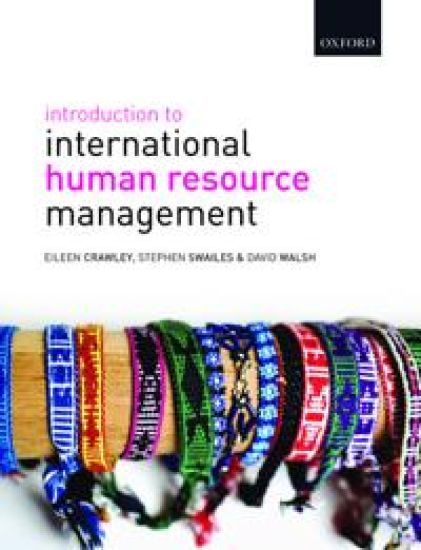
Introduction to International Human Resource Management

Introduction to International Human Resource Management

Eileen Crawley; Stephen Swailes; David Walsh

Oxford University Press
2013
nidottu
This text is an ideal introduction to international human resource management. Accessible language and real-life examples are employed, and no prior understanding of HRM or labour economics is assumed. This makes the text perfectly suited for the large number of students who do not hold an undergraduate degree in business or HRM, or for whom English is not their first language. The text will also be welcomed by students who have taken an introductory module in HRM but would like to be reminded of the core concepts before exploring how these work in an international context. A wide range of examples is explored from countries such as China, Malaysia, Singapore, Spain, Germany, Japan and Bangladesh as well as from the UK and USA. Discussion activities are embedded throughout the text to encourage a critical approach to the subject. A glossary of terms is provided for ease of reference. The book is clearly structured in two parts. The comparative approach in Part 1 ensures the student understands the implications of the changing business environment on IHRM, demonstrating the importance of national culture and institutional differences and how this informs the debates and theories. Part 2 presents the practice of IHRM, showing the decisions organizations have to make, and the dilemmas they face when implementing HRM policy and practice. The table of contents has been designed to map closely to courses. A chapter on international talent management explores a particularly 'hot topic' in HRM, which is under-represented in existing texts. The final chapter on the 'dark side' of international human resource management takes a critical approach and uncovers the exploitation that can occur within this area, again something that is under-discussed in other texts. Online Resource Centre For lecturers: 1000-word case study, with questions and answers for lecturers; one case for each chapter of the book Seminar discussion ideas For students: Web links Answers to the end-of-chapter questions.
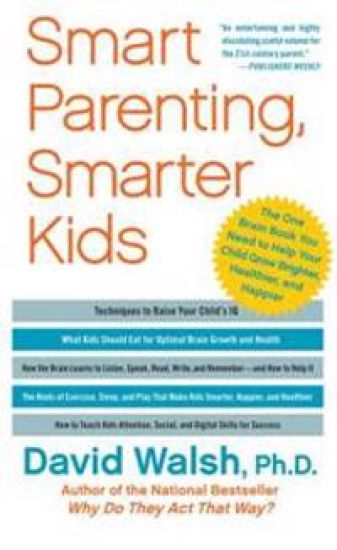
Smart Parenting, Smarter Kids: The One Brain Book You Need to Help Your Child Grow Brighter, Healthier, and Happier
Now in paperback--launched in hardcover with major TV and radio interviews--author David Walsh's latest groundbreaking book is "an entertaining and highly elucidating useful volume for the twenty-first-century parent" (Publishers Weekly). From birth onward, a child's brain develops in amazing ways. Whether you're pregnant with your first child or trying to figure out why adolescents act the way they do, parenting expert Dr. David Walsh shows you how to make the most of the latest breakthroughs in brain science and psychology in this complete, cradle-to-college guide to parenting. Backed by science and filled with stories, Smart Parenting, Smarter Kids finds the practical advice in groundbreaking scientific headlines about memory, language, emotions, nutrition, play, and more. Dr. Walsh equips you with usable information about exercise, sleep, emotional intelligence, connection--all of which work together to help kids reach their full potential. Some of the recent discoveries in neuroscience confirm age-old parental wisdom, while other discoveries will prompt some immediate changes. With accessible explanations and handy tool kits for building your personalized brain-wise parenting plan, Dr. Walsh helps you help your kids grow up healthy, happy, and smart as you navigate today's unique challenges--including bullying, stress, and the risks of the Internet and other digital media. Particularly timely in its information on the highly adaptable teenage brain and how to help adolescents manage the transition into adulthood, this is a personal plan for the most important job in the world: raising kids.
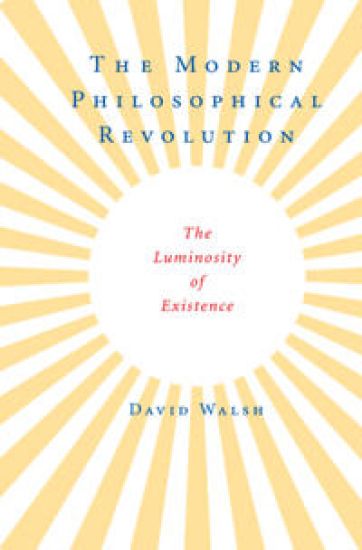
The Modern Philosophical Revolution

The Modern Philosophical Revolution

David Walsh

Cambridge University Press
2008
sidottu
The Modern Philosophical Revolution breaks new ground by demonstrating the continuity of European philosophy from Kant to Derrida. Much of the literature on European philosophy has emphasised the breaks that have occurred in the course of two centuries of thinking. But as David Walsh argues, such a reading overlooks the extent to which Kant, Hegel, and Schelling were already engaged in the turn toward existence as the only viable mode of philosophising. Where many similar studies summarise individual thinkers, this book provides a framework for understanding the relationships between them. Walsh thus dispels much of the confusion that assails readers when they are only exposed to the bewildering range of positions taken by the philosophers he examines. His book serves as an indispensable guide to a philosophical tradition that continues to have resonance in the post-modern world.
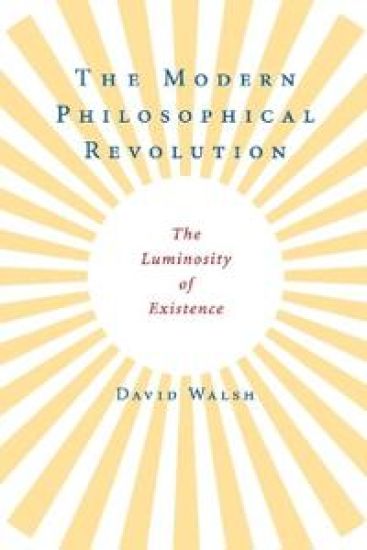
The Modern Philosophical Revolution

The Modern Philosophical Revolution

David Walsh

Cambridge University Press
2008
pokkari
The Modern Philosophical Revolution breaks new ground by demonstrating the continuity of European philosophy from Kant to Derrida. Much of the literature on European philosophy has emphasised the breaks that have occurred in the course of two centuries of thinking. But as David Walsh argues, such a reading overlooks the extent to which Kant, Hegel, and Schelling were already engaged in the turn toward existence as the only viable mode of philosophising. Where many similar studies summarise individual thinkers, this book provides a framework for understanding the relationships between them. Walsh thus dispels much of the confusion that assails readers when they are only exposed to the bewildering range of positions taken by the philosophers he examines. His book serves as an indispensable guide to a philosophical tradition that continues to have resonance in the post-modern world.