Kirjojen hintavertailu – 12 903 725 kirjaa ja 27 kauppaa

Kirjailija

David Weisbach

Kirjat ja teokset yhdessä paikassa: 4 kirjaa, julkaisuja vuosilta 2010–2016, suosituimpiin kuuluu Climate Change Justice. Vertaile teosten hintoja ja tarkista saatavuus suomalaisista kirjakaupoista.

4 kirjaa

Kirjojen julkaisuvuodet: 2010–2016.

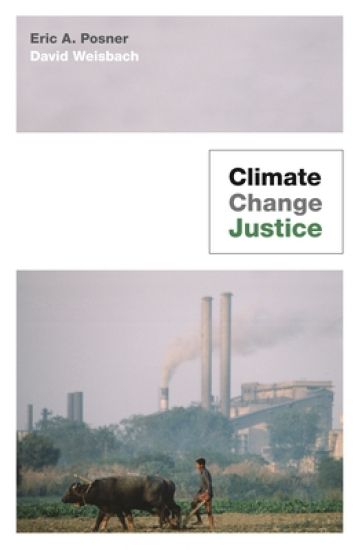
Climate Change Justice

Climate Change Justice

Eric A. Posner; David Weisbach

Princeton University Press
2015
pokkari
Climate change and justice are so closely associated that many people take it for granted that a global climate treaty should--indeed, must--directly address both issues together. But, in fact, this would be a serious mistake, one that, by dooming effective international limits on greenhouse gases, would actually make the world's poor and developing nations far worse off. This is the provocative and original argument of Climate Change Justice. Eric Posner and David Weisbach strongly favor both a climate change agreement and efforts to improve economic justice. But they make a powerful case that the best--and possibly only--way to get an effective climate treaty is to exclude measures designed to redistribute wealth or address historical wrongs against underdeveloped countries. In clear language, Climate Change Justice proposes four basic principles for designing the only kind of climate treaty that will work--a forward-looking agreement that requires every country to make greenhouse--gas reductions but still makes every country better off in its own view. This kind of treaty has the best chance of actually controlling climate change and improving the welfare of people around the world.
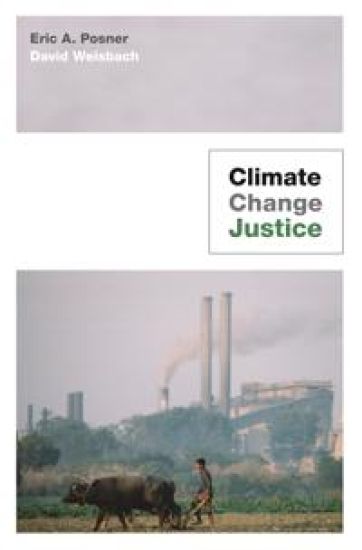
Climate Change Justice

Climate Change Justice

Eric A. Posner; David Weisbach

Princeton University Press
2010
sidottu
Climate change and justice are so closely associated that many people take it for granted that a global climate treaty should--indeed, must--directly address both issues together. But, in fact, this would be a serious mistake, one that, by dooming effective international limits on greenhouse gases, would actually make the world's poor and developing nations far worse off. This is the provocative and original argument of Climate Change Justice. Eric Posner and David Weisbach strongly favor both a climate change agreement and efforts to improve economic justice. But they make a powerful case that the best--and possibly only--way to get an effective climate treaty is to exclude measures designed to redistribute wealth or address historical wrongs against underdeveloped countries. In clear language, Climate Change Justice proposes four basic principles for designing the only kind of climate treaty that will work--a forward-looking agreement that requires every country to make greenhouse--gas reductions but still makes every country better off in its own view. This kind of treaty has the best chance of actually controlling climate change and improving the welfare of people around the world.

Debating Climate Ethics

Debating Climate Ethics

David Weisbach

Oxford University Press Inc
2016
sidottu
In this volume, Stephen M. Gardiner and David A. Weisbach present arguments for and against the relevance of ethics to global climate policy. Gardiner argues that climate change is fundamentally an ethical issue, since it is an early instance of a distinctive challenge to ethical action (the perfect moral storm), and ethical concerns (such as with justice, rights, political legitimacy, community and humanity's relationship to nature) are at the heart of many of the decisions that need to be made. Consequently, climate policy that ignores ethics is at risk of "solving " the wrong problem, perhaps even to the extreme of endorsing forms of climate extortion. This is especially true of policy based on narrow forms of economic self-interest. By contrast, Weisbach argues that existing ethical theories are not well suited to addressing climate change. As applied to climate change, existing ethical theories suffer from internal logical problems and suggest infeasible strategies. Rather than following failed theories or waiting indefinitely for new and better ones, Weisbach argues that central motivation for climate policy is straightforward: it is in their common interest for people and nations to agree to policies that dramatically reduce emissions to prevent terrible harms.
Debating Climate Ethics

Debating Climate Ethics

David Weisbach

Oxford University Press Inc
2016
nidottu
In this volume, Stephen M. Gardiner and David A. Weisbach present arguments for and against the relevance of ethics to global climate policy. Gardiner argues that climate change is fundamentally an ethical issue, since it is an early instance of a distinctive challenge to ethical action (the perfect moral storm), and ethical concerns (such as with justice, rights, political legitimacy, community and humanity's relationship to nature) are at the heart of many of the decisions that need to be made. Consequently, climate policy that ignores ethics is at risk of "solving " the wrong problem, perhaps even to the extreme of endorsing forms of climate extortion. This is especially true of policy based on narrow forms of economic self-interest. By contrast, Weisbach argues that existing ethical theories are not well suited to addressing climate change. As applied to climate change, existing ethical theories suffer from internal logical problems and suggest infeasible strategies. Rather than following failed theories or waiting indefinitely for new and better ones, Weisbach argues that central motivation for climate policy is straightforward: it is in their common interest for people and nations to agree to policies that dramatically reduce emissions to prevent terrible harms.