Kirjojen hintavertailu – 12 859 828 kirjaa ja 27 kauppaa

Kirjailija

David Welky

Kirjat ja teokset yhdessä paikassa: 7 kirjaa, julkaisuja vuosilta 2008–2017, suosituimpiin kuuluu Marching Across the Color Line: A. Philip Randolph and Civil Rights in the World War II Era. Vertaile teosten hintoja ja tarkista saatavuus suomalaisista kirjakaupoista.

7 kirjaa

Kirjojen julkaisuvuodet: 2008–2017.

A Wretched and Precarious Situation

A Wretched and Precarious Situation

David Welky

WW Norton Co
2017
nidottu
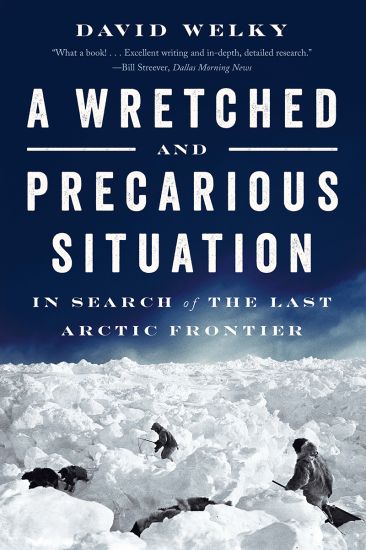
In 1906, from the ice fields northwest of Greenland, Commander Robert E. Peary spotted an unknown land in the distance. He called it “Crocker Land”. Scientists and explorers agreed that Peary had found a new continent. Several years later, two of his disciples, George Borup and Donald MacMillan—with the sponsorship of the American Museum of Natural History—assembled a team to investigate. They pitched their two-year mission as a scientific tour de force to fill in the last blank space on the globe. But the Crocker Land Expedition became a five-year ordeal that endured a fatal boating accident, a drunken captain, a shipwreck, marooned rescue parties, disease, dissension and a crewman-turned-murderer. Based on a trove of unpublished letters, diaries and field notes, A Wretched and Precarious Situation is a harrowing adventure.
A Wretched and Precarious Situation

A Wretched and Precarious Situation

David Welky

WW NORTON CO
2016
sidottu
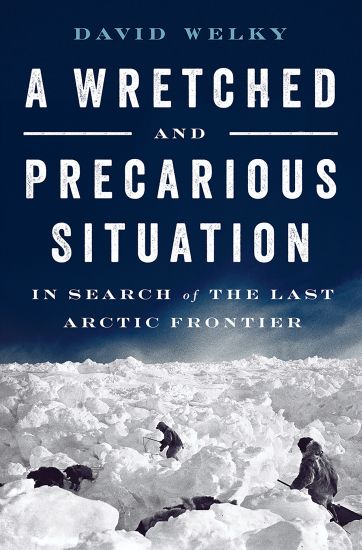
In 1906, from the ice fields northwest of Greenland, Commander Robert E. Peary spotted an unknown land in the distance. He called it “Crocker Land”. Scientists and explorers agreed that Peary had found a new continent. Several years later, two of his disciples, George Borup and Donald MacMillan—with the sponsorship of the American Museum of Natural History—assembled a team to investigate. They pitched their two-year mission as a scientific tour de force to fill in the last blank space on the globe. But the Crocker Land Expedition became a five-year ordeal that endured a fatal boating accident, a drunken captain, a shipwreck, marooned rescue parties, disease, dissension and a crewman-turned-murderer. Based on a trove of unpublished letters, diaries and field notes, A Wretched and Precarious Situation is a harrowing adventure.
Hollywood's America

Hollywood's America

Steven Mintz; Randy W. Roberts; David Welky

John Wiley Sons Inc
2016
nidottu
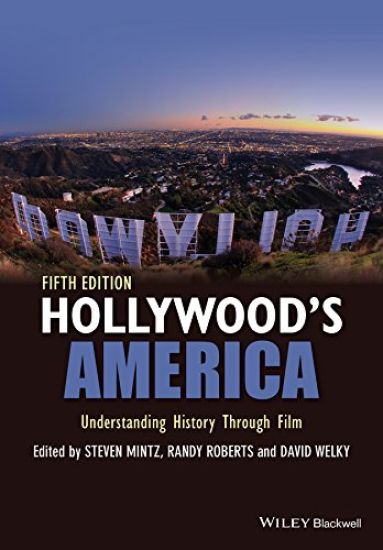
Fully revised, updated, and extended, the fifth edition of Hollywood’s America provides an important compilation of interpretive essays and primary documents that allows students to read films as cultural artifacts within the contexts of actual past events. A new edition of this classic textbook, which ties movies into the broader narrative of US and film historyThis fifth edition contains nine new chapters, with a greater overall emphasis on recent film history, and new primary source documents which are unavailable onlineEntries range from the first experiments with motion pictures all the way to the present dayWell-organized within a chronological framework with thematic treatments to provide a valuable resource for students of the history of American film
Marching Across the Color Line: A. Philip Randolph and Civil Rights in the World War II Era
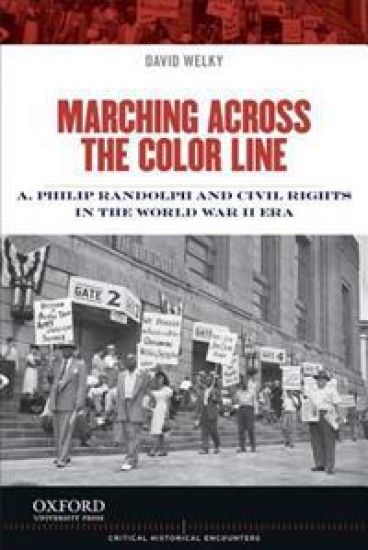
Once labeled the most dangerous black man in America, A. Philip Randolph was a tireless crusader for civil rights and economic justice. In Marching Across the Color Line: A. Philip Randolph and Civil Rights in the World War II Era, author David Welky examines Randolph's central role in the African American struggle for equality during the World War II era. Frustrated by unequal treatment in the military and civilian life, Randolph threatened to march 100,000 African Americans to Washington, DC, unless President Franklin Roosevelt expanded employment opportunities for blacks. Roosevelt backed down following a tense standoff, issuing an executive order guaranteeing equal opportunities for all Americans to get jobs in the growing defense industry. Armed with this victory, Randolph led wartime charges to integrate the military, further expand job opportunities, and end discrimination against minorities. He staged massive rallies, badgered political leaders, and pricked the conscience of a nation fighting for democracy overseas while reluctant to create it at home. A lively, engaging narrative set against a turbulent backdrop of political maneuvering, race riots, and the largest war in human history, Marching Across the Color Line exposes students to an array of fascinating characters who wrote the dramatic opening chapters in America's civil rights saga.
The Thousand-Year Flood

The Thousand-Year Flood

David Welky

University of Chicago Press
2011
sidottu
In the early days of 1937, the Ohio River, swollen by heavy winter rains, began rising. And rising. And rising. By the time the waters crested, the Ohio and Mississippi had climbed to record heights. Nearly four hundred people had died, while a million more had run from their homes. The deluge caused more than half a billion dollars of damage at a time when the Great Depression still battered the nation. Timed to coincide with the flood's seventy-fifth anniversary, "The Thousand-Year Flood" is the first comprehensive history of one of the most destructive disasters in American history. David Welky first shows how decades of settlement put Ohio valley farms and towns at risk and how politicians and planners repeatedly ignored the dangers. Then he tells the gripping story of the river's inexorable rise: residents fled to refugee camps and higher ground, towns imposed martial law, prisoners rioted, Red Cross nurses endured terrifying conditions, and FDR dispatched thousands of relief workers. In a landscape fraught with dangers - from unmoored gas tanks that became floating bombs to powerful currents of filthy floodwaters that swept away whole towns - people hastily raised sandbag barricades, piled into overloaded rowboats, and marveled at water that stretched as far as the eye could see. In the flood's aftermath, Welky explains, New Deal reformers, utopian dreamers, and hard-pressed locals restructured not only the flood-stricken valleys, but also the nation's relationship with its waterways, changes that continue to affect life along the rivers to this day. A striking narrative of danger and adventure - and the mix of heroism and generosity, greed and pettiness that always accompany disaster - "The Thousand-Year Flood" breathes new life into a fascinating yet little-remembered American story.

Everything Was Better in America

Everything Was Better in America

David Welky

University of Illinois Press
2008
nidottu
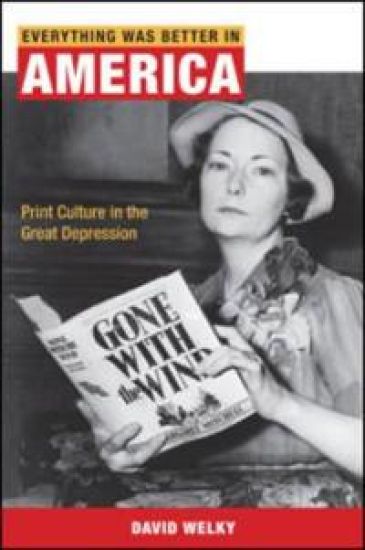
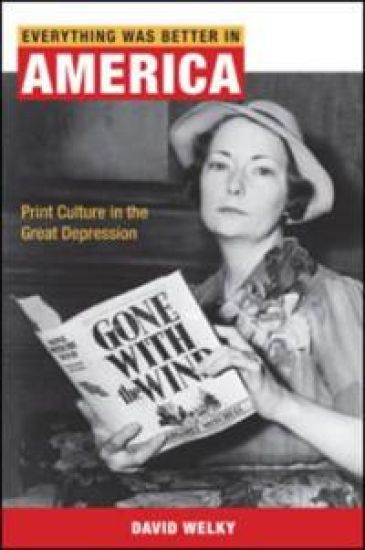
As a counterpart to research on the 1930s that has focused on liberal and radical writers calling for social revolution, David Welky offers this eloquent study of how mainstream print culture shaped and disseminated a message affirming conservative middle-class values and assuring its readers that holding to these values would get them through hard times. Through analysis of the era's most popular newspaper stories, magazines, and books, Welky examines how voices both outside and within the media debated the purposes of literature and the meaning of cultural literacy in a mass democracy. He presents lively discussions of such topics as the newspaper treatment of the Lindbergh kidnapping, issues of race in coverage of the 1936 Olympic games, domestic dynamics and gender politics in cartoons and magazines, Superman's evolution from a radical outsider to a spokesman for the people, and the popular consumption of such novels as the Ellery Queen mysteries, Gone with the Wind, and The Good Earth. Through these close readings, Welky uncovers the subtle relationship between the messages that mainstream media strategically crafted and those that their target audience wished to hear.
Everything Was Better in America

Everything Was Better in America

David Welky

University of Illinois Press
2008
sidottu
As a counterpart to research on the 1930s that has focused on liberal and radical writers calling for social revolution, David Welky offers this eloquent study of how mainstream print culture shaped and disseminated a message affirming conservative middle-class values and assuring its readers that holding to these values would get them through hard times. Through analysis of the era's most popular newspaper stories, magazines, and books, Welky examines how voices both outside and within the media debated the purposes of literature and the meaning of cultural literacy in a mass democracy. He presents lively discussions of such topics as the newspaper treatment of the Lindbergh kidnapping, issues of race in coverage of the 1936 Olympic games, domestic dynamics and gender politics in cartoons and magazines, Superman's evolution from a radical outsider to a spokesman for the people, and the popular consumption of such novels as the Ellery Queen mysteries, Gone with the Wind, and The Good Earth. Through these close readings, Welky uncovers the subtle relationship between the messages that mainstream media strategically crafted and those that their target audience wished to hear.