Kirjojen hintavertailu – 12 859 828 kirjaa ja 27 kauppaa

Kirjailija

David Whitehouse

Kirjat ja teokset yhdessä paikassa: 29 kirjaa, julkaisuja vuosilta 1973–2026, suosituimpiin kuuluu Mediaeval Lazio. Vertaile teosten hintoja ja tarkista saatavuus suomalaisista kirjakaupoista.

29 kirjaa

Kirjojen julkaisuvuodet: 1973–2026.

Seo for Sme's - Search Engine Optimisation for Beginners
SEO for SME's will outline the entire process behind Search Engine Optimisation for small to medium enterprises with a breakdown of its elements in simplified terms, as there are no hidden secrets or black magic to it - no matter what some companies may have you believe. All you need is some basic knowledge in the area and very quickly the mist will start to clear as this book helps you to become an expert too. By the time you have finished reading this, you will not only understand the 'digital mind' of the search engines, but also be able to do some SEO work yourself. More importantly it will ensure that you are not being exploited by one of the thousands of SEO companies out there who are often out to make a quick buck from businesses who do not necessarily understand what they are paying for.
Bed

Bed

David Whitehouse

Scribner Book Company
2012
nidottu
Now in paperback, David Whitehouse's "ingenious" (The New York Times), "deeply affecting" (People) and award-winning debut novel about two brothers, obesity, celebrity, and the redemptive power of love. Mal Ede, a child of untamed manners and unbounded curiosity, is the eccentric eldest son of an otherwise typical middle-class family. But as the wonders of childhood fade into the responsibilities of adulthood, Mal's spirits fade too. On his twenty-fifth birthday, disillusioned, Mal goes to bed--back to his childhood bed--and never emerges again. Over the course of two decades, immobility and a gargantuan appetite combine to make Mal the fattest man in the world. Despite his seclusion, Mal's condition earns him worldwide notoriety and a cult of followers convinced he is making an important statement about modern life. But his actions will also change the lives of his haunted parents, his brother and the woman they both love, Lou. Upon Bed's publication, Kirkus Reviews declared, "Once in a great while a book will emerge from nowhere to acclaim." In Bed, David Whitehouse has put a magnifying glass on contemporary society. The result--a parable about mortality, obesity, celebrity, depression and the broken promises of adulthood-- is "as soulful as it is funny" (The Guardian).
Glass

Glass

David Whitehouse

British Museum Press
2012
nidottu
The fragile beauty of glass has ensured its popularity through the ages in forms ranging from simple beakers to ornate decorative masterpieces. This beautifully illustrated book traces the story of glass from its origins in Mesopotamia some 5000 years ago, to the creation of the elegant vessels of the Islamic Near East, the superb mastery of Renaissance Venice and the creation of modern glassware for daily use.
Molecular and Cellular Therapeutics

Molecular and Cellular Therapeutics

David Whitehouse; Ralph Rapley

John Wiley Sons Inc
2012
sidottu
Molecular and Cellular Therapeutics aims to bring together key developments in the areas of molecular diagnostics, therapeutics and drug discovery. The book covers topics including diagnostics, therapeutics, model systems, clinical trials and drug discovery. The developing approaches to molecular and cellular therapies, diagnostics and drug discovery are presented in the context of the pathologies they are devised to treat.
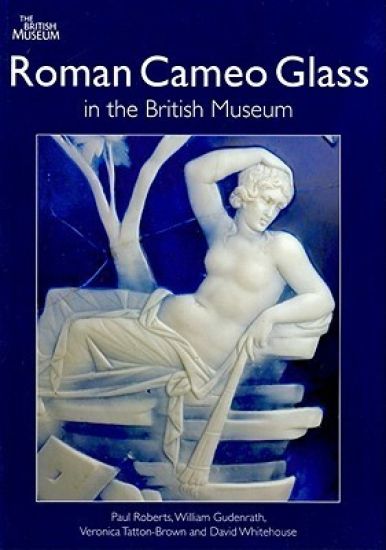
Roman Cameo Glass in the British Museum

Roman Cameo Glass in the British Museum

Paul Roberts; William Gudenrath; Veronica Tatton-Brown; David Whitehouse

British Museum Press
2010
nidottu
Cameo glass represents the ultimate achievement in Roman luxury glass, and the British Museum has the world's largest and finest collection. This comprises over seventy pieces, including two of only a dozen surviving complete cameo glass vessels: the celebrated Portland Vase, the greatest surviving example of Roman cameo glass, and the Auldjo Jug, each with its complex and intriguing history. The catalogue, begun by Veronica Tatton-Brown and William Gudenrath of the Corning Museum of Glass, has been revisited and enhanced by Paul Roberts of the British Museum and David Whitehouse and William Gudenrath of the Corning Museum of Glass. This publication presents the collection in its entirety for the first time. Each piece is illustrated in colour and line drawing, with full description and discussion. The book also presents the results of ground-breaking new research. The authors construct a comprehensive context, using archaeological, technological, iconographic and typological evidence to look at the origins of cameo glass and its place in contemporary Roman art and craftsmanship. They also propose a relative and absolute chronology for cameo glass, and suggest possible models for the organisation of the workshop(s) that produced it.
Muhammad, Charlemagne and the Origins of Europe

Muhammad, Charlemagne and the Origins of Europe

Richard Hodges; David Whitehouse

Bristol Classical Press
1998
pokkari
Henri Pirennewas a Belgian historian whose career was devoted to promoting the thesis since named after him. His claim (in Mohammed and Charlemagne, 1939) was that the classical world survived the Germanic invasions of the fourth and fifth centuries, that the Islamic conquests destroyed the classical world by putting an end to Mediterranean trade upon which the classical world relied, and that the Carolingian Renaissance was due entirely to domestic resources. This thesis was disputed from the start, but mainly on the terms of literary evidence. In this concise, well argued book, Richard Hodges and David Whitehouse use data from archaeology to challenge all of these claims.
The Anglo-Saxon Achievement

The Anglo-Saxon Achievement

Richard Hodges; David Whitehouse

Bristol Classical Press
1991
nidottu
The year 1066 has been regarded traditionally as a great divide in English history, an apparent break with the past which has gained even greater status recently as historians have pushed back the origins of English society to earlier and earlier medieval generations. Further than 1066 it is difficult to go, for this marks the point beyond which the English peasantry cannot be identified from written sources. Archaeology, however, concerned as it is mainly with small farms and simple town dwellings, has yielded a wealth of data on life in pre-Conquest England, opening a vista on the Anglo-Saxon peasantry, the Anglo-Saxon state and the Anglo-Saxon social and economic structure as a whole which alters radically our perspective of England's past. In this book Dr Hodges draws on the growing archaeological record to trace the genesis of English Culture right back to King Alfred, and even to the Anglo-Saxon migrations that followed the end of Roman occupation. In a profound analysis of what gave the English their individuality he offers a new assessment of the achievements of the first millennium, showing that a more of less continuous line connects the age of Bede with the Industrial Revolution.
Mohammed, Charlemagne, and the Origins of Europe

Mohammed, Charlemagne, and the Origins of Europe

Richard Hodges; David Whitehouse

Cornell University Press
1983
pokkari
The archaeology of the period A. D. 500-1000 has taken off in the Mediterranean (where prehistoric and classical studies formerly enjoyed a virtual monopoly in most areas) and in the Islamic world. Here, as in northern Europe, field survey, careful excavation and improved methods of dating are beginning to supply information which now is not only more abundant but also of much higher quality than ever before. The 'New Archaeology', pioneered in the United States in the 1960s, has taught the archaeologist the value of anthropological models in the study of the past. The new data and models positively compel us to take a new look at the written sources and reconsider the 'making of the Middle Ages'. Mohammed, Charlemagne, and the Origins of Europe attempts to prove the point. Henri Pirenne's classic history of Europe between the fifth and ninth centuries, Mohammed and Charlemagne, although published on the eve of the Second World War, remains an important work. Many parts of its bold framework have been attacked, but seldom decisively, for until now the evidence has been insufficient. In their concise book, Richard Hodges and David Whitehouse review the 'Pirenne thesis' in the light of archaeological information from northern Europe, the Mediterranean and western Asia. In doing so, they have two objectives: to tackle the major issue of the origins of the Carolingian Empire and to indicate the almost staggering potential of the archaeological data. This book, then, is an attempt to rekindle interest in an important set of questions and to draw attention to new sets of data—and to persuade readers to look across traditional boundaries between classical and medieval, east and west, history and archaeology.
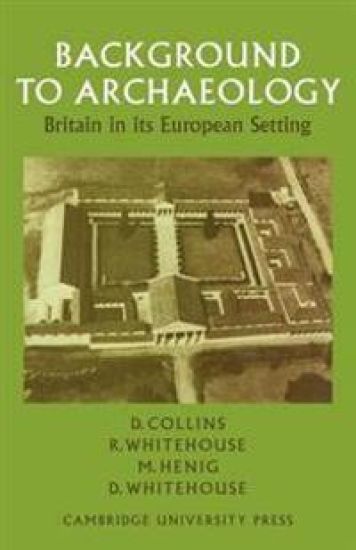
Background to Archaeology

Background to Archaeology

Desmond Collins; Ruth Whitehouse; Martin Henig; David Whitehouse

Cambridge University Press
1973
pokkari
A concise, clearly written introduction to the early past of Britain and Europe from the beginnings up to the twelfth century AD, which presents archaeological research in a readily understandable form. Written, and originally published in 1973, for readers with no specialist knowledge or the subject, a major virtue of this book is the way in which it brings into focus all the separate strands of evidence to present a coherent narrative development. The account starts with a brief survey of human evolution and a consideration of the evidence of tool-making in the Old Stone Age. It goes on to describe the origins and spread of farming and the subsequent development of metallurgy and full urban civilization and the contribution made by the urban civilization of Rome to the development of Europe. It looks at the Migration Period through to the reestablishment of urban culture in northern Europe concluding with a brief description of conditions in the twelfth century.