
Kirjailija
David Whitman
Kirjat ja teokset yhdessä paikassa: 7 kirjaa, julkaisuja vuosilta 2012–2026, suosituimpiin kuuluu Body Counting. Vertaile teosten hintoja ja tarkista saatavuus suomalaisista kirjakaupoista.
7 kirjaa
Kirjojen julkaisuvuodet: 2012–2026.
Most of us know little about for-profit colleges, in part because they're widely viewed as the "second-class citizens" of higher education. Parents dream of sending their kids to an Ivy League school, a flagship research university, their alma mater, or a regional NCAA powerhouse, but not of sending their children to a for-profit college. That's a mistaken bias. Each year, good for-profit colleges train thousands to work as medical assistants, business administrators, RNs, cosmetologists-jobs that can change their lives. Bad for-profit colleges, however, leave many thousands of students in debt and jobless. The federal government heavily subsidizes for-profit colleges, so regulation could determine the fate of billions of taxpayer dollars and is therefore of interest to all of us-we're helping fund those colleges, including the disreputable ones. Typically, the students who attend for-profit colleges are among America's most vulnerable: single moms, disadvantaged adults, veterans, minority students, and mid-career employees looking to better their lives. The worst scandal in higher education is the subpar training that so many of them receive at inadequate for-profit institutions. The 2019 college-admissions bribery scandal pales beside the injustices that countless adults suffer at the hands of low-performing and predatory schools. In 2019, three such college chains closed a total of eighty campuses midsemester, stranding 32,000 students just partway through their courses. After years of sacrifice and hard work, they faced trying to complete their degrees at other institutions-if they could find any that would accept their credits-or canceling their federal loans and starting their career education all over again. Since 2016, nearly 300,000 students have filed to have their loans forgiven, alleging that their for-profit colleges defrauded them. What could our government do to limit such abuses? The Profits of Failure offers a definitive answer.
Most of us know little about for-profit colleges, in part because they're widely viewed as the "second-class citizens" of higher education. Parents dream of sending their kids to an Ivy League school, a flagship research university, their alma mater, or a regional NCAA powerhouse, but not of sending their children to a for-profit college. That's a mistaken bias. Each year, good for-profit colleges train thousands to work as medical assistants, business administrators, RNs, cosmetologists-jobs that can change their lives. Bad for-profit colleges, however, leave many thousands of students in debt and jobless. The federal government heavily subsidizes for-profit colleges, so regulation could determine the fate of billions of taxpayer dollars and is therefore of interest to all of us-we're helping fund those colleges, including the disreputable ones. Typically, the students who attend for-profit colleges are among America's most vulnerable: single moms, disadvantaged adults, veterans, minority students, and mid-career employees looking to better their lives. The worst scandal in higher education is the subpar training that so many of them receive at inadequate for-profit institutions. The 2019 college-admissions bribery scandal pales beside the injustices that countless adults suffer at the hands of low-performing and predatory schools. In 2019, three such college chains closed a total of eighty campuses midsemester, stranding 32,000 students just partway through their courses. After years of sacrifice and hard work, they faced trying to complete their degrees at other institutions-if they could find any that would accept their credits-or canceling their federal loans and starting their career education all over again. Since 2016, nearly 300,000 students have filed to have their loans forgiven, alleging that their for-profit colleges defrauded them. What could our government do to limit such abuses? The Profits of Failure offers a definitive answer.
13 blood-soaked tales of terror." A Better World": A man, after a sexual encounter with the graveyard ghost of his dead lover, inherits an extremely unusual infant." A Momentary Thing" In this surreal and violent TWILIGHT ZONE homage, two strangers find themselves trapped in an elevator that opens up into a violent alternate reality." Except for Ophelia": Ian and Ophelia, two supernatural creatures, find themselves hunted down by the local townsfolk after a visit to a carnival turns into a blood-splattered fight for survival." Family Plotting" Fred enlists the help of his estranged and twisted mafia family to help him hide the body of a woman he has accidentally killed. Could this opportunity be used to finally do away with Dad?" Undenied": In this story, inspired by Bradbury's SOMETHING WICKED THIS WAY COMES, two twelve year old boys try to discover why a mysterious man visits his wife's mausoleum every evening. What they find out will change their lives forever." Feeling Alive" Two serial killers team up on the night of the supposed Apocalypse." They All Dream About Them Here" A man finds himself the cell-mate of a mentally challenged prisoner named Rabbit. Only Rabbit seems to know why dreams and reality have somehow merged together." Rosahella's Footprints" Edward Covington follows his dead daughter's spectral footprints through the snow and into the wilderness." Some Of Us Are Looking at the Stars" A soldier is sent to an obscure outpost in deep space with orders to kill his now insane war friend Sydney Vale in this science fiction retelling of APOCALYPSE NOW and HEART OF DARKNESS." The Dark Reality of Bannen Wilde" A woman encounters a frightening being on a subway train that has the ability to travel into different worlds." Standing Betwixt Worlds in Delightful Agony" A disfigured self-mutilator believes he can see threatening creatures from another world by causing himself pain in this tale of modern trepanning." Feeling Katherine" A serial killer falls in love with his victim in this surreal and blood splattered horror tale." With Quiet Violence" On a getaway into the Pennsylvania woods, a man finds the frozen body of his dead little girl standing in snow outside his cabin door.

SCARY REDNECKS collects twenty-three stories of horror, madness, and humor set in the rural south of America's heartland. The stories run the gauntlet from terror to outrageousness. Packed with everything from abusive parents, cannibals, deer hunters, demonic catfish, UFO abductions, voodoo priestesses, vampire moonshiners, and other Appalachian monstrosities; it will amuse you, disturb you, and leave you hungering for more. Don't miss APPALACHIAN GALAPAGOS - the hilarious, frightening, and must-read sequel to Scary Rednecks & Other Inbred Horrors
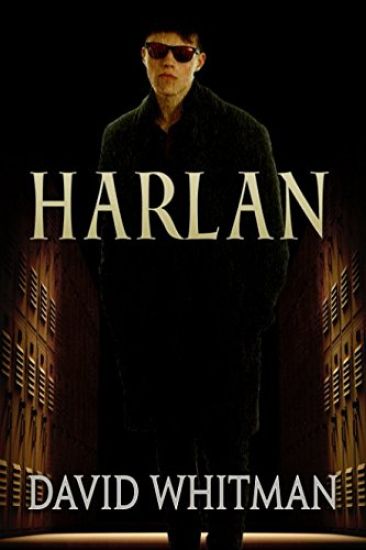
"...there are times where they probably will punish you for asking. But that only means that you're having an effect on the system."---Harlan SextonHarlan is about a suicidal, death-obsessed teenager by the name of Harlan Sexton. Turning himself into a ticking bomb, he has decided to kill himself at the end of the school year unless his closest friend Julian can find a way to change his mind. And that's just the beginning--the tension is amped up by the return of his abusive redneck father, a town serial killer stalking his female classmates, and an all out violent war between Harlan and a jock bully from school. If John Hughes had directed a movie inspired by the Columbine tragedy it would be this book.
Fundamentals of Engineering Economics and Decision Analysis
David Whitman; Ronald Terry
Springer International Publishing AG
2012
nidottu
The authors cover two general topics: basic engineering economics and risk analysis in this text. Within the topic of engineering economics are discussions on the time value of money and interest relationships. These interest relationships are used to define certain project criteria that are used by engineers and project managers to select the best economic choice among several alternatives. Projects examined will include both income- and service-producing investments. The effects of escalation, inflation, and taxes on the economic analysis of alternatives are discussed. Risk analysis incorporates the concepts of probability and statistics in the evaluation of alternatives. This allows management to determine the probability of success or failure of the project. Two types of sensitivity analyses are presented. The first is referred to as the range approach while the second uses probabilistic concepts to determine a measure of the risk involved. The authors have designed the text to assist individuals to prepare to successfully complete the economics portions of the Fundamentals of Engineering Exam. Table of Contents: Introduction / Interest and the Time Value of Money / Project Evaluation Methods / Service Producing Investments / Income Producing Investments / Determination of Project Cash Flow / Financial Leverage / Basic Statistics and Probability / Sensitivity Analysis