Kirjojen hintavertailu – 12 859 818 kirjaa ja 27 kauppaa

Kirjailija

David Wittenberg

Kirjat ja teokset yhdessä paikassa: 6 kirjaa, julkaisuja vuosilta 2002–2025, suosituimpiin kuuluu Philosophy, Revision, Critique. Vertaile teosten hintoja ja tarkista saatavuus suomalaisista kirjakaupoista.

6 kirjaa

Kirjojen julkaisuvuodet: 2002–2025.

Big Culture

Big Culture

David Wittenberg

THE UNIVERSITY OF CHICAGO PRESS
2025
sidottu

Halvin toimitettuna 117,70 €

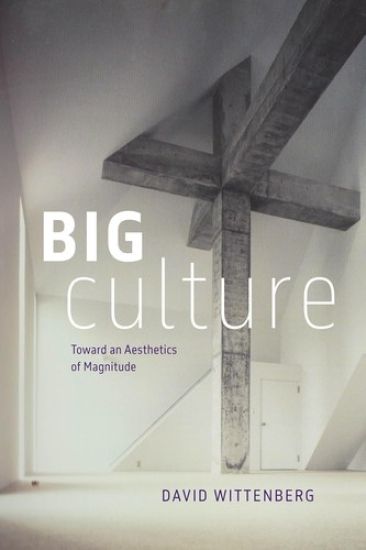
A philosophical exploration of our relationship to large objects and their outsized psychological effects. Big Culture asks a simple question: why do big things give us big feelings? Skyscrapers, disasters, and other large phenomena can elicit fear, attraction, and awe. David Wittenberg argues that these feelings cannot be explained through objects’ size alone. Instead, he contends that an encounter with bigness is a primal, even violent sensation like little else that we experience in our well-proportioned adult lives. Drawing on examples as commonplace and as singular as atomic bombs, cinematic effects, pornographic “macrophilia,” monstrous creatures, and more, Wittenberg demonstrates how big things tap into our earliest experiences of the world, reigniting our most fundamental feelings about reality. In doing so, Wittenberg offers a new aesthetics of magnitude and of the special role that bigness plays in our everyday perception of objects and images.
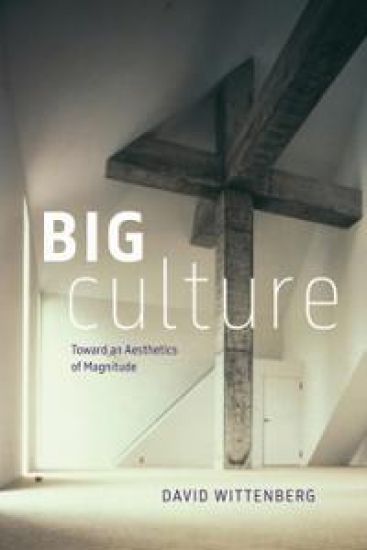
Big Culture

Big Culture

David Wittenberg

THE UNIVERSITY OF CHICAGO PRESS
2025
nidottu
A philosophical exploration of our relationship to large objects and their outsized psychological effects. Big Culture asks a simple question: why do big things give us big feelings? Skyscrapers, disasters, and other large phenomena can elicit fear, attraction, and awe. David Wittenberg argues that these feelings cannot be explained through objects’ size alone. Instead, he contends that an encounter with bigness is a primal, even violent sensation like little else that we experience in our well-proportioned adult lives. Drawing on examples as commonplace and as singular as atomic bombs, cinematic effects, pornographic “macrophilia,” monstrous creatures, and more, Wittenberg demonstrates how big things tap into our earliest experiences of the world, reigniting our most fundamental feelings about reality. In doing so, Wittenberg offers a new aesthetics of magnitude and of the special role that bigness plays in our everyday perception of objects and images.
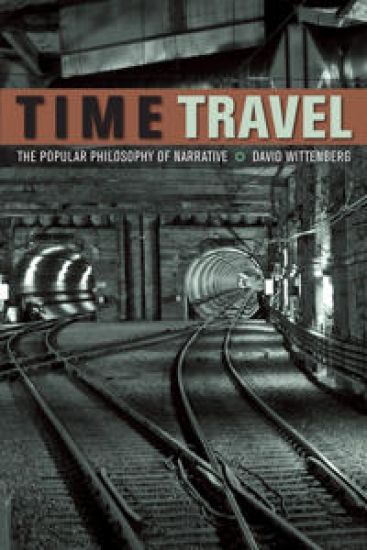
Time Travel

Time Travel

David Wittenberg

Fordham University Press
2012
sidottu
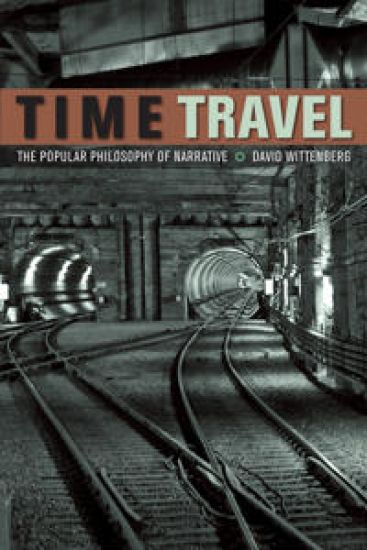
This book argues that time travel fiction is a narrative "laboratory," a setting for thought experiments in which essential theoretical questions about storytelling—and, by extension, about the philosophy of temporality, history, and subjectivity—are represented in the form of literal devices and plots. Drawing on physics, philosophy, narrative theory, psychoanalysis, and film theory, the book links innovations in time travel fiction to specific shifts in the popularization of science, from evolutionary biology in the late 1800s, through relativity and quantum physics in the mid–20th century, to more recent "multiverse" cosmologies. Wittenberg shows how increasing awareness of new scientific models leads to surprising innovations in the literary "time machine," which evolves from a "vehicle" used chiefly for sociopolitical commentary into a psychological and narratological device capable of exploring with great sophistication the temporal structure and significance of subjects, viewpoints, and historical events. The book covers work by well-known time travel writers such as H. G. Wells, Edward Bellamy, Robert Heinlein, Samuel Delany, and Harlan Ellison, as well as pulp fiction writers of the 1920s through the 1940s, popular and avant-garde postwar science fiction, television shows such as "The Twilight Zone" and "Star Trek," and current cinema. Literature, film, and TV are read alongside theoretical work ranging from Einstein, Schrödinger, and Stephen Hawking to Gérard Genette, David Lewis, and Gilles Deleuze. Wittenberg argues that even the most mainstream audiences of popular time travel fiction and cinema are vigorously engaged with many of the same questions about temporality, identity, and history that concern literary theorists, media and film scholars, and philosophers.
Time Travel

Time Travel

David Wittenberg

Fordham University Press
2012
pokkari
This book argues that time travel fiction is a narrative "laboratory," a setting for thought experiments in which essential theoretical questions about storytelling—and, by extension, about the philosophy of temporality, history, and subjectivity—are represented in the form of literal devices and plots. Drawing on physics, philosophy, narrative theory, psychoanalysis, and film theory, the book links innovations in time travel fiction to specific shifts in the popularization of science, from evolutionary biology in the late 1800s, through relativity and quantum physics in the mid–20th century, to more recent "multiverse" cosmologies. Wittenberg shows how increasing awareness of new scientific models leads to surprising innovations in the literary "time machine," which evolves from a "vehicle" used chiefly for sociopolitical commentary into a psychological and narratological device capable of exploring with great sophistication the temporal structure and significance of subjects, viewpoints, and historical events. The book covers work by well-known time travel writers such as H. G. Wells, Edward Bellamy, Robert Heinlein, Samuel Delany, and Harlan Ellison, as well as pulp fiction writers of the 1920s through the 1940s, popular and avant-garde postwar science fiction, television shows such as "The Twilight Zone" and "Star Trek," and current cinema. Literature, film, and TV are read alongside theoretical work ranging from Einstein, Schrödinger, and Stephen Hawking to Gérard Genette, David Lewis, and Gilles Deleuze. Wittenberg argues that even the most mainstream audiences of popular time travel fiction and cinema are vigorously engaged with many of the same questions about temporality, identity, and history that concern literary theorists, media and film scholars, and philosophers.
Philosophy, Revision, Critique

Philosophy, Revision, Critique

David Wittenberg

Stanford University Press
2002
sidottu
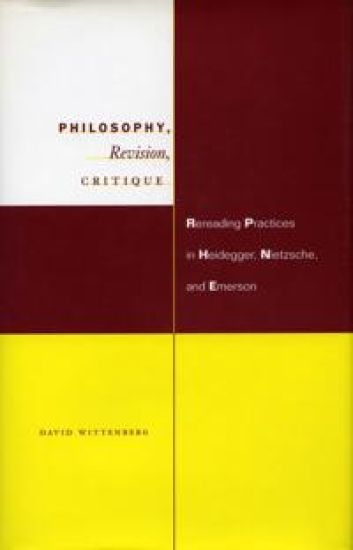
Philosophers have almost always relegated the topic of revision to the sidelines of their discipline, if they have thought about it at all. This book contends that acts of revision are central and indispensable to the project of philosophizing and that philosophy should be construed essentially as a practice of rereading and rewriting. The book focuses chiefly on Heidegger's highly influential interpretation of Nietzsche, conducted in lectures during the 1930s and 1940s and published in 1961. The author closely analyzes the rhetorical means by which Heidegger repositions Nietzsche's thinking within a broad history of metaphysics, even as Heidegger positions his own reinterpretation as that history's more "proper" reading. The author argues that Heidegger's revisionist project recasts the philosophical text as paralipsis, a special kind of ironic statement that when "properly" received by the philosophical rereader, expresses what the text did not and could not say. The study of such paraliptical revisionism within the philosophical canon offers a new way of understanding the basic historicity of the philosophical text, a text that is critically indistinguishable from its own future history of interpretations. Philosophy itself is revision, a deeply historicist rereading practice, a continuous reappropriation of its own improper textual past. In addition to being the first book-length published study of Heidegger's interpretation of Nietzsche, the book also examines the work of Hans-Robert Jauss, Harold Bloom, and other critics of revision. In particular, Ralph Waldo Emerson's early essays on history, read both with and against Heidegger's analysis of metaphysics, demonstrate why the historical intervention achieved by revisionist reading is not only a formal and thematic alteration of the past, but also a rhetorical coercion of future interpretive tendencies. No philosophical reader is simply a user or victim of revisionist methods: in rereading philosophical pasts, the reader is the very mechanism by which such interpretive tendencies are first formed into problems or thoughts within the philosophical canon.
Time Travel Short Stories

Time Travel Short Stories

David Wittenberg; Brian Trent

Flame Tree Publishing
2017
sidottu
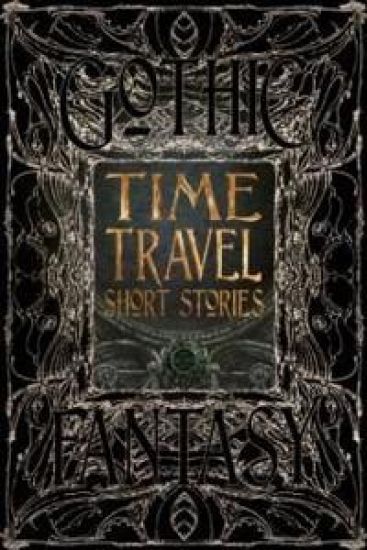
From H. G. Wells to Edward Page Mitchell, stories of travelling back and forth in time have brought us ancient and future civilisations, terrifying visions and cautionary tales. In the wake of our successful Gothic and Fantasy deluxe edition short story compilations, Ghosts, Horror, Science Fiction, Murder Mayhem and Crime & Mystery, we bring you a constellation of tales, new and old, in a dazzling mix of classic and brand new writing with authors from around the world. New, contemporary and notable writers featured are: Bo Balder, Kate Estabrooks, Adam Vine, Scott Merrow, Valerie Valdes, Tony Genova, Nino Cipri, Beth Goder, Chris Reynolds, Anton Rose, Kate Heartfield, Larry Hodges, Samantha Murray, Brian Trent, Dominick Cancilla, and K. L. Evangelista. These appear alongside classic stories by authors such as Edward Bellamy, John Buchan, Edward Page Mitchell, Mark Twain and H. G. Wells.