Kirjojen hintavertailu – 12 859 818 kirjaa ja 27 kauppaa

Kirjailija

David Wood

Kirjat ja teokset yhdessä paikassa: 161 kirjaa, julkaisuja vuosilta 1971–2027, suosituimpiin kuuluu Theatre for Children and Young People. Vertaile teosten hintoja ja tarkista saatavuus suomalaisista kirjakaupoista.

161 kirjaa

Kirjojen julkaisuvuodet: 1971–2027.

Formulaic Language and Second Language Speech Fluency

Formulaic Language and Second Language Speech Fluency

David Wood

CONTINUUM PUBLISHING CORPORATION
2010
sidottu
This volume presents a comprehensive look at the phenomenon of formulaic language (multi-word units believed to be mentally stored and retrieved as single units) and its role;in fluent speech production. Focusing on second language speech, the book provides an overview of research into the role of formulaic language in fluency, details a study which provides evidence of that role, and outlines teaching plans and strategies to foster it. This important area has not been examined in such depth and scope before, and this work has many implications for future research and language pedagogy. It will appeal to researchers in discourse analysis and second language acquisition.
Cinderella

Cinderella

David Wood; Shahab Shamshirsaz

Collins
2010
nidottu
Build your child’s reading confidence at home with books at the right level Cinderella is tired of a life of chores, but everything changes when her fairy godmother turns up. Just as she meets her perfect prince, though, the clock chimes twelve and she has to run. Will this hilarious retelling of the traditional fairytale, as a play by “the nation’s dramatist” David Wood, end happily ever after? White/Band 10 books have more complex sentences and figurative language. Text type: A playscriptA newspaper article of the palace ball on pages 30 and 31 helps children to recap the main events of the story. Curriculum links: Citizenship: Taking part – developing skills of communication and participation; Music: Play it again – exploring rhythmic patterns. This book has been quizzed for Accelerated Reader.
Into the Woods

Into the Woods

David S. Wood; David Wood

Gryphonwood Press
2009
nidottu
Set against the backdrop of colonial America, Into the Woods is the story of pioneer and patriot Jonathan Wood. Straining against the bonds of Tidewater society, and tempted by an ancient legend, Jonathan's sense of adventure leads him "Over the Mountains" of southwest Virginia. Perils abound for this brave pioneer, who must face threats from the native tribes, the British, and even more sinister enemies, while fighting for the woman he loves and the land that will not let go of his heart. Based on a true story, Into the Woods is a tale of adventure, danger, love, loss, and the triumph of the human spirit.
The Emerging European Union

The Emerging European Union

Yesilada Birol; David Wood

Longman Inc
2009
nidottu
Surveying the European Union's evolution from the Rome Treaty to the present, The Emerging European Union captures the full story of Europe's ongoing integration, its changing identity, and its increasing importance as a global actor in the 21st Century. This text's concise but comprehensive overview of the history, institutions, and policies of the European Union lays out the major elements of the European integration and explain how the European Union functions. Emphasizing competing intergovernmental and supranational forces, The Emerging European Union explains the origins and future of the European Union as well as its political uniqueness.
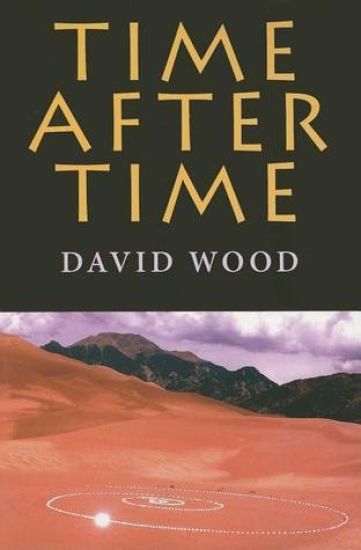
Time After Time

Time After Time

David Wood

Indiana University Press
2007
pokkari
In Time After Time, David Wood accepts, without pessimism, the broad postmodern idea of the end of time. Wood exposes the rich, stratified, and non-linear textures of temporal complexity that characterize our world. Time includes breakdowns, repetitions, memories, and narratives that confuse a clear and open understanding of what it means to occupy time and space. In these thoughtful and powerful essays, Wood engages Kierkegaard, Nietzsche, Heidegger, and Derrida to demonstrate how repetition can preserve sameness and how creativity can interrupt time. Wood's original thinking about time charts a course through the breakdown in our trust in history and progress and poses a daring and productive way of doing phenomenology and deconstruction.
The Step Back

The Step Back

David Wood

State University of New York Press
2006
pokkari
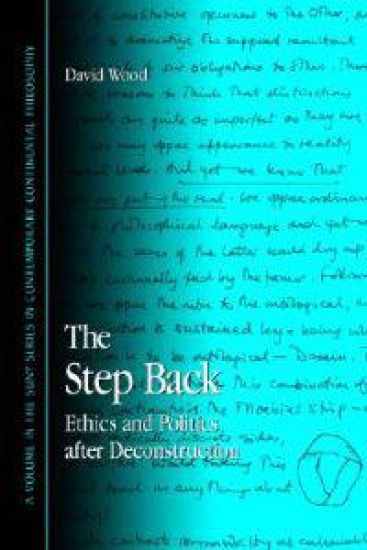
Explores the ethical and political possibilities of philosophy after deconstruction. This original contribution to the ethical and political significance of philosophy addresses a number of major themes-identity, violence, the erotic, freedom, responsibility, religious belief, globalization-and critically engages with the work of Kierkegaard, Wittgenstein, Heidegger, Derrida, and Levinas. It promotes a unique blend of deconstructive critique and a certain English skepticism, leading to the affirmation of a negative capability-a patience and vigilance in the face of both human folly and philosophy's own homegrown pathologies. The author argues for the extension of our sense of openness and responsibility to animal life, and indeed life in general, and not just to the human.
The Step Back

The Step Back

David Wood

State University of New York Press
2005
sidottu
Explores the ethical and political possibilities of philosophy after deconstruction. This original contribution to the ethical and political significance of philosophy addresses a number of major themes-identity, violence, the erotic, freedom, responsibility, religious belief, globalization-and critically engages with the work of Kierkegaard, Wittgenstein, Heidegger, Derrida, and Levinas. It promotes a unique blend of deconstructive critique and a certain English skepticism, leading to the affirmation of a negative capability-a patience and vigilance in the face of both human folly and philosophy's own homegrown pathologies. The author argues for the extension of our sense of openness and responsibility to animal life, and indeed life in general, and not just to the human.
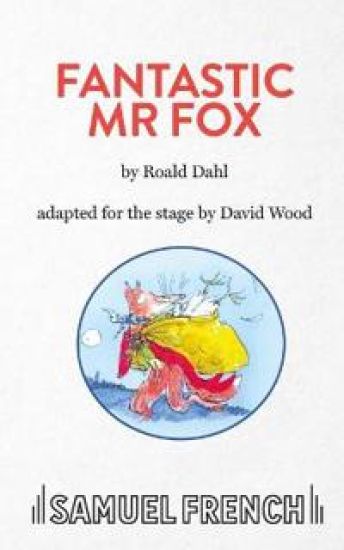
Fantastic Mr Fox

Fantastic Mr Fox

Roald Dahl; David Wood

Samuel French Ltd
2003
nidottu

Halvin toimitettuna 24,10 €

When Mr Fox steals one chicken too many from a local farm, the farmers' decide the only cure is to rid themselves of Mr Fox by any means possible. Outwitted at every turn, the farmers' ploys backfire, and all the animals celebrate a feast at their expense.
Thinking After Heidegger

Thinking After Heidegger

David Wood

JOHN WILEY AND SONS LTD
2002
nidottu
In this text David Wood takes up the challenge posed by Heidegger - that after the end of philosophy we need to learn to think, but what if we read Heidegger with the same respectful irreverence that he brought to reading the Greeks, Kant, Hegel, Husserl and the others?
Thinking After Heidegger

Thinking After Heidegger

David Wood

Polity Press
2002
sidottu
In Thinking After Heidegger, David Wood takes up the challenge posed by Heidegger - that after the end of philosophy we need to learn to think. But what if we read Heidegger with the same respectful irreverence that he brought to reading the Greeks, Kant, Hegel, Husserl and the others? For Wood, it is Derrida's engagements with Heidegger that set the standard here – enacting a repetition through transformation and displacement. But Wood is not content to crown the new king. Instead he sets up a many-sided conversation between Heidegger, Hegel, Adorno, Nietzsche, Blanchot, Kierkegaard, Derrida and others. Derrida and deconstruction are first critically addressed and then drawn into the fundamental project of philosophical renewal, or renewal as philosophy. The book begins by rewriting Heidegger's inaugural lecture, 'What is Metaphysics?' and ends with an extended analysis of the performativity of his extraordinary Beitrage. Thinking after Heidegger will be a valuable text for scholars and students of contemporary philosophy, literature and cultural studies.

Tom's Midnight Garden

Tom's Midnight Garden

David Wood; Philippa Pearce

Samuel French Ltd
2001
nidottu
Quarantined in his aunt and uncle's stuffy flat because his brother has measles, Tom is restless and bored. Intrigued by a grandfather clock, Tom is startled one night to hear it strike 13. Going to investigate, Tom discovers a Victorian garden of the 1880s where he meets unhappy orphan Hatty.
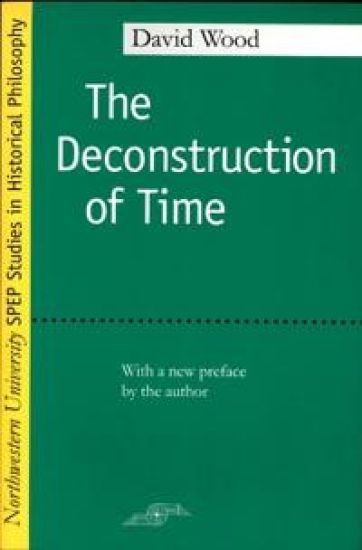
The Deconstruction of Time

The Deconstruction of Time

David Wood

Northwestern University Press
2001
nidottu
Originally published in 1989, The Deconstruction of Time was the first to examine what has become the fundamental, even defining, project in continental philosophy: double rethinking. Begun by Husserl, this area of inquiry partially seeks to rethink time in terms of our experience of it; a second aspect of the project, begun by Heidegger, is an attempt to rethink our selves (and philosophy itself) in terms of the results of that initial rethinking. Using Derrida as his point of reference, Wood undertakes a critical reformulation of the project through discussions of Nietzsche, Husserl, and Heidegger. The Deconstruction of Time is a critical history of the development of the topic, but also more: it includes important contributions to the phenomenology of time (as ""cosmic,"" ""dialectical,"" ""phenomenal,"" and so on) and a rereading of Derrida himself. In recent years considerations of Wood's themes have grown in import. The Deconstruction of Time is a groundbreaking study of a topic that has become vital in continental philosophy.
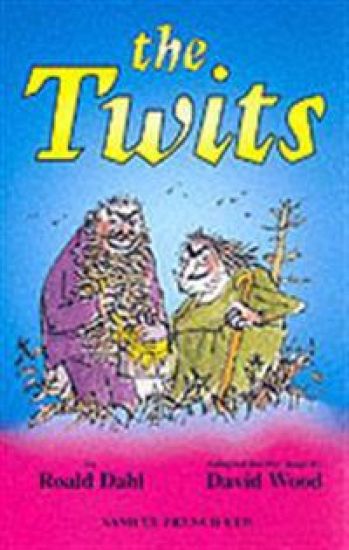
The Twits

The Twits

David Wood; Roald Dahl

Samuel French Ltd
2000
nidottu
Bored with playing school kiddish tricks on one another, the grotesque, satisfyingly revolting couple Mr and Mrs Twit turn their attentions to capturing and training a family of monkeys, the Muggle-Wumps, for a circus act. The monkey's cruel incarceration in a cage is avenged when the birds trick the Twits into believing the world has turned upside-down. The Twits join in, aided by the birds who drop glue on their hair, and the audience is encouraged to play their part in freeing the monkeys.