
Kirjailija
David Young
Kirjat ja teokset yhdessä paikassa: 120 kirjaa, julkaisuja vuosilta 1990–2026, suosituimpiin kuuluu Physics. Vertaile teosten hintoja ja tarkista saatavuus suomalaisista kirjakaupoista.
120 kirjaa
Kirjojen julkaisuvuodet: 1990–2026.
Although cardiac output is measured as the flow of blood from the left ventricle into the aorta, the system that controls cardiac output includes many other components besides the heart itself. The heart’s rate of output cannot exceed the rate of venous return to it, and therefore, the factors governing venous return are primarily responsible for control of output from the heart. Venous return is affected by its pressure gradient and resistance to flow throughout the vascular system. The pressure gradient for venous return is a function of several factors including the blood volume flowing through the system, the unstressed vascular volume of the circulatory system, its capacitance, mean systemic pressure, and right atrial pressure. Resistance to venous return is the sum of total vascular resistance from the aortic valve to the right atrium. The sympathetic nervous system and vasoactive circulating hormones affect short-term resistance, whereas local tissue blood flow autoregulatory mechanisms are the dominant determinants of long-term resistance to venous return. The strength of contraction of the heart responds to changes in atrial pressure driven by changes in venous return, with small changes in atrial pressure eliciting large changes in strength of contraction, as described by the Frank–Starling mechanism. In addition, the autonomic nervous system input to the heart alters myocardial pumping ability in response to cardiovascular challenges. The function of the cardiovascular system is strongly affected by the operation of the renal sodium excretion–body fluid volume–arterial pressure negative feedback system that maintains arterial blood pressure at a controlled value over long periods. The intent of this volume is to integrate the basic knowledge of these cardiovascular system components into an understanding of cardiac output regulation.
National improvements upon agriculture, in twenty-seven essays, by David Young, ...
David Young
Gale Ecco, Print Editions
2010
pokkari
The 18th century was a wealth of knowledge, exploration and rapidly growing technology and expanding record-keeping made possible by advances in the printing press. In its determination to preserve the century of revolution, Gale initiated a revolution of its own: digitization of epic proportions to preserve these invaluable works in the largest archive of its kind. Now for the first time these high-quality digital copies of original 18th century manuscripts are available in print, making them highly accessible to libraries, undergraduate students, and independent scholars. Medical theory and practice of the 1700s developed rapidly, as is evidenced by the extensive collection, which includes descriptions of diseases, their conditions, and treatments. Books on science and technology, agriculture, military technology, natural philosophy, even cookbooks, are all contained here.++++The below data was compiled from various identification fields in the bibliographic record of this title. This data is provided as an additional tool in helping to insure edition identification: ++++British LibraryT078088With a list of subscribers. Edinburgh: printed for, and sold by the author, and by John Bell, 1785. xx,412p., III plates; 8
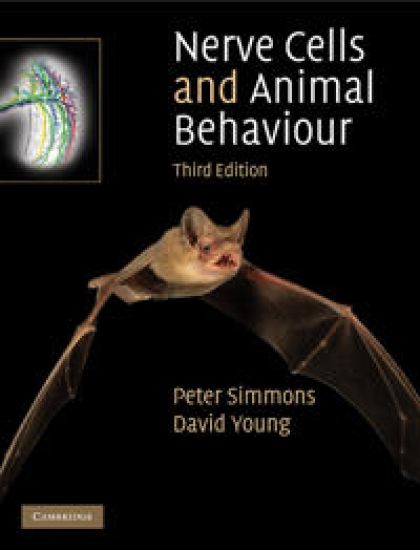
An extensively revised third edition of this introduction to neuroethology - the neuronal basis of animal behaviour - for zoology, biology and psychology undergraduate students. The book focuses on the roles of individual nerve cells in behaviour, from simple startle responses to complex behaviours such as route learning by rats and singing by crickets and birds. It begins by examining the relationship between brains and behaviour, and showing how study of specialised behaviours reveals neuronal mechanisms that control behaviour. Information processing by nerve cells is introduced using specific examples, and the establishing roles of neurons in behaviour is described for a predator-prey interaction, toads versus cockroaches. New material includes: vision by insects, which describes sensory filtering; hunting by owls and bats, which describes sensory maps; and rhythmical movements including swimming and flying, which describes how sequences of movements are generated. Includes stunning photographs which capture the detail of the behaviour.
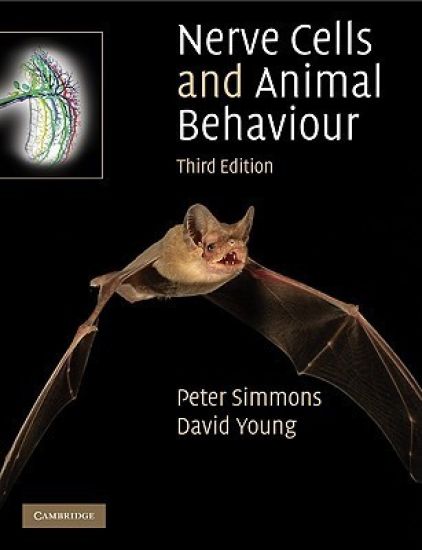
An extensively revised third edition of this introduction to neuroethology - the neuronal basis of animal behaviour - for zoology, biology and psychology undergraduate students. The book focuses on the roles of individual nerve cells in behaviour, from simple startle responses to complex behaviours such as route learning by rats and singing by crickets and birds. It begins by examining the relationship between brains and behaviour, and showing how study of specialised behaviours reveals neuronal mechanisms that control behaviour. Information processing by nerve cells is introduced using specific examples, and the establishing roles of neurons in behaviour is described for a predator-prey interaction, toads versus cockroaches. New material includes: vision by insects, which describes sensory filtering; hunting by owls and bats, which describes sensory maps; and rhythmical movements including swimming and flying, which describes how sequences of movements are generated. Includes stunning photographs which capture the detail of the behaviour.

The Claims Of The Times On Evangelical Dissenters, In Relation To The Inroads Of Popery (1852)
David Young
KESSINGER PUBLISHING, LLC
2010
sidottu





Memorials Of Alexander Moncrieff And James Fisher, Fathers Of The United Presbyterian Church (1849)
David Young; John Brown
KESSINGER PUBLISHING CO
2008
pokkari
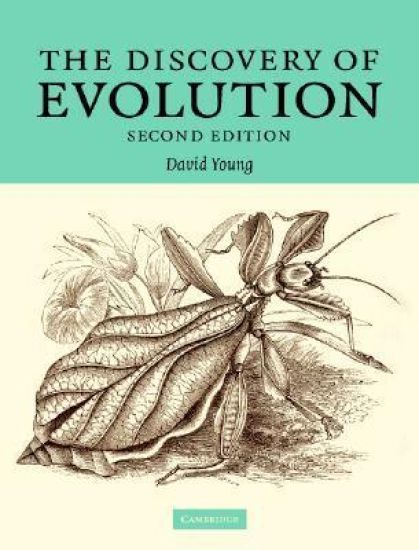
Originally published in 2007, The Discovery of Evolution explains what the theory of evolution is all about by providing a historical narrative of discovery. Some of the major puzzles that confront anyone studying living things are discussed and it details how these were solved from an evolutionary perspective. Beginning with the emergence of the early naturalists in the seventeenth century, the scientific discoveries that led up to and then flowed from Darwin and Wallace's theory of evolution by natural selection are then discussed, and finally the modern evolutionary studies at the close of the twentieth century are detailed. This new edition of The Discovery of Evolution is fully updated and contains a new chapter on the evolutionary studies of the twentieth century. By approaching the topic of evolution in this way, it is made accessible to the non-specialist and no previous study of biology is required in order to read and understand this book.
Cisco has done it. Motorola has done it. And now Hewlett-Packard is doing it. Company layoffs are growing as the economy weakens and companies are looking for ways to reduce costs and expand profits. Efforts to improve a company's bottom line can take one of two forms: increasing revenues or decreasing expenses. Increasing revenues is risky. Managers must make assumptions about a host of matters including purchasing patterns, competitors' moves, price resistance, product obsolescence, and manufacturing capabilities. Decreasing expenses, by contrast, is a sure thing. Once an employee is gone, so is his or her salary. This explains why almost all cost cutting efforts we read about involve employee layoffs. But cost cutting can be much more creative than that. A Manager's Guide to Creative Cost Cutting shows managers and business leaders that there are numerous ways to reduce costs without reducing staff. A Manager's Guide to Creative Cost Cutting presents the strategies and creative solutions for cutting both short-term and long-term costs to produce both immediate and continuous results. A practical, hands-on reference, this book shows business leaders and managers how to leverage all resources within their organization to improve profits, reduce costs, and create a better place to work. Filled with engaging examples and efficient techniques to reduce expenses and, thus, expand profits, A Manager's Guide to Creative Cost Cutting; - Presents creative solutions to cutting costs such as eliminating redundant activities - Highlights real-world cases, from Intel's unpaid leave to Goodyear's debt negotiation - Shows how to uncover hidden costs - Identifies the 21 cost-reduction prohibitors Each cost-cutting method covers a two-page spread, for quick and easy reading. The book is organized into two major divisions, and each division has several parts. Each part contains a variety of two-page cost-cutting methods. There is also a closing section on what not to cut. In this day of company layoffs and a weakening economy, managers and business leaders have the seemingly impossible objective of improving the bottom line and reducing costs - without killing morale. A Manager's Guide to Creative Cost Cutting makes this goal possible with the strategies and tools managers need to set the plans in motion.
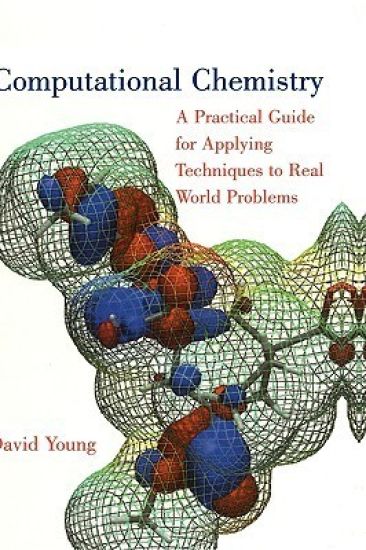
A practical, easily accessible guide for bench-top chemists, this book focuses on accurately applying computational chemistry techniques to everyday chemistry problems. Provides nonmathematical explanations of advanced topics in computational chemistry. * Focuses on when and how to apply different computational techniques. * Addresses computational chemistry connections to biochemical systems and polymers. * Provides a prioritized list of methods for attacking difficult computational chemistry problems, and compares advantages and disadvantages of various approximation techniques. * Describes how the choice of methods of software affects requirements for computer memory and processing time.
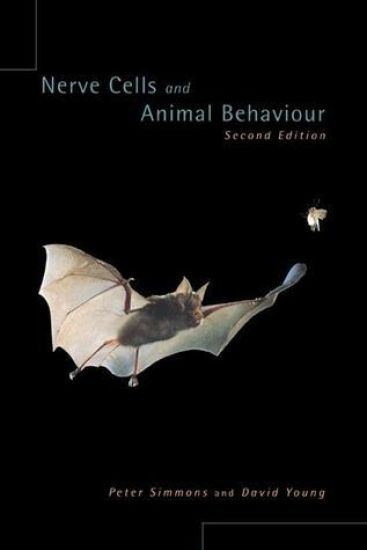
Nerve Cells and Animal Behaviour
Simmons Peter J.; David Young
Cambridge University Press
1999
sidottu
This new edition of Nerve Cells and Animal Behaviour has been updated and expanded by Peter Simmons and David Young in order to take into account more recent advances while still maintaining the accessibility of the book to university students. The book introduces the reader to the way in which nervous systems of animals control behaviour without assuming any prior knowledge of neurophysiology. Using a carefully selected series of behaviour patterns students are taken from an elementary-level introduction to a point where sufficient detail has been assimilated to allow a satisfying insight into current research on how nervous systems control and generate behaviour. Only examples where it has been possible to establish a clear link between the activity of particular nerve cells and a pattern of behaviour have been used. This book is essential reading for students of zoology, psychology and physiology and serves as a clear introduction to neuroethology.
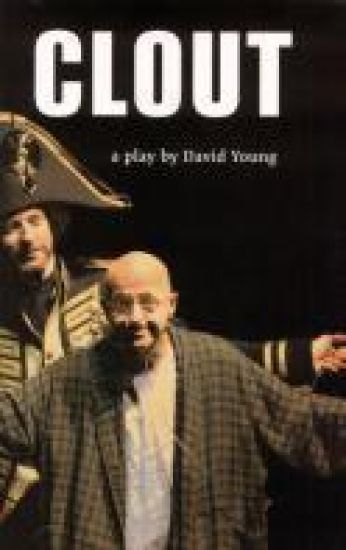
From the author of Glenn and Inexpressible Island comes this scathing satiric play about sex, power and the Canadian newspaper industry. Lionel K. Biggar, newspaper baron, aspiring English Lord and megalo-maniac, and Trent, a burnt-out liberal journalist formerly in Biggar's employ, are kidnapped from a shareholder's meeting by Eve, shape-shifting terrorist and nemesis. Chained back to back in a dungeon cell, the two men find themselves in a nebulous zone where ideological mind games are the order of the day. The stakes of these games? The future itself. Clout offers no easy resolutions, no back door out of the story, no final exit.
Covers production, auditions, casting, rehearsals, acting, pacing, previews, and curtain calls
Glenn Gould captured the imagination of a worldwide audience, becoming an instant celebrity with his eccentric performance style and his definitive renderings of Bach. David Young has used Gould's early and late recordings of The Goldberg Variations as a structural template for the acclaimed Glenn, his dramatic exploration of the music, ideas, and remarkable life of this iconoclastic and celebrated pianist, arguably the most important artist Canada has ever produced.
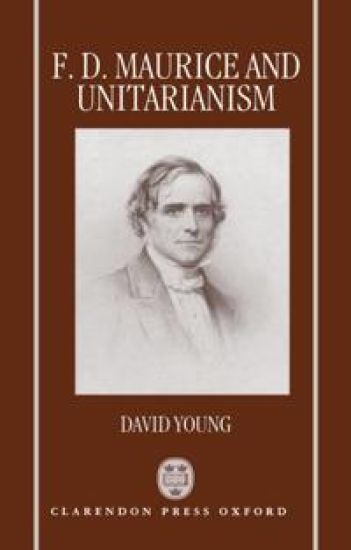
F. D. Maurice (1805-72) was one of Victorian Britain's most controversial thinkers. Although he came from a Unitarian family and counted leading Unitarians as his friends, their influence on his work has never been seriously examined. The purpose of this new book is to look at his life and teaching in the light of Unitarianism. Maurice's faith had a distinctly Christological emphasis, but he continued to value his Unitarian heritage. His concern with the Fatherhood of God and the dignity of the human race owes much to his family background. Dr Young's study opens with a compact history of Unitarianism during the lives of F. D. Maurice and his father, a Unitarian minister. A series of biographical sketches draws on hitherto unpublished material to set Maurice's work in its historical context. The final chapters compare the central themes of his theology with the teaching of his Unitarian contemporaries.

After a vision in which he beheld himself as a leader in the revitalization of native medicine and culture, medicine man Russell WIllier began to share his healing practices and world view with three anthropologists. In this volume they describe how WIllier treats chronic, stress-related condition and physiological dysfunctions with herbal remedies, sweat-lodge therapy, religious ceremony, and other techniques. Cry of the Eagle also discusses the process by which the anthropologists experienced the medicine man's work. That process required change in both Willier and his observers. One of the most powerful events in their three-year association occurred when David Young's wife suddenly became critically ill. In the hospital her condition quickly worsened, and doctors were unable to diagnose the problem. Young surreptitiously brought the medicine man to the hospital, where a combination of native remedies and Western medical techniques worked together to restore her health. Young, Ingram, and Swartz describe a process of shared vision and mutual change. They provide a rare insight into an aspect of native culture little known to the outside world.