Kirjojen hintavertailu – 12 903 725 kirjaa ja 27 kauppaa

Kirjailija

Davide Ponzini

Kirjat ja teokset yhdessä paikassa: 10 kirjaa, julkaisuja vuosilta 2010–2024, suosituimpiin kuuluu Spatial Planning and Urban Development. Vertaile teosten hintoja ja tarkista saatavuus suomalaisista kirjakaupoista.

10 kirjaa

Kirjojen julkaisuvuodet: 2010–2024.

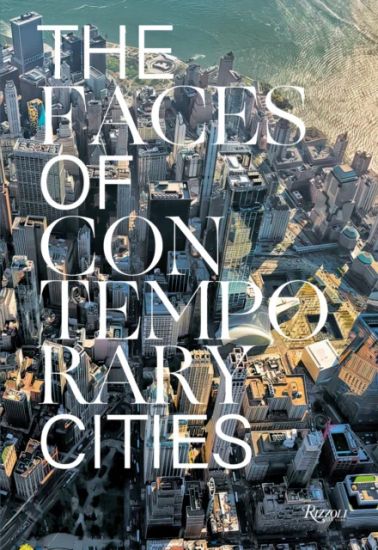
The Faces of Contemporary Cities

The Faces of Contemporary Cities

Davide Ponzini

MONDADORI ELECTA
2024
sidottu

Halvin toimitettuna 76,00 €

The story of Permasteelisa, an Italian company behind the facades of some of the most famous buildings in the world. The great global cities of the Western, Middle Eastern, and Asian world tend to resemble each other more and more. The new buildings of cities such as London, Hong Kong, New York, or Frankfurt are similar, and even the skylines increasingly seem to resemble one another. The fact that there are just a few great architects behind these constructions partly explains this phenomenon. This book reveals how the work of these architectural talents is also made possible by companies such as Permasteelisa, which offer technological solutions for constructing the most futuristic buildings. Permasteelisa produces continuous external cladding: the skin of skyscrapers, large airports, and current business centers. Drawing on its constant research into technology and materials, it collaborates with large architectural firms to transform an architect’s project into a building. This was the case for the Sydney Opera House, with its futuristic sails; for the Guggenheim in Bilbao and its curved facades conceived by Frank Gehry; and for the scintillating blades of Renzo Piano’s Shard in London. The book tells the story of Permasteelisa. With the texts by international urban planning scholars and data analysis and georeferencing methodologies developed at the Transnational Architecture and Urbanism Lab (TAU-Lab) of the Politecnico di Milano, it shows how this Italian company’s know-how has allowed it to shape the faces of many contemporary cities such as New York, Paris, London, Berlin, Frankfurt, Milan, Hong Kong, and Sydney.
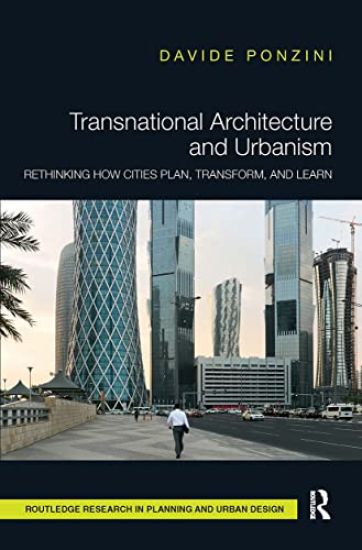
Transnational Architecture and Urbanism

Transnational Architecture and Urbanism

Davide Ponzini

TAYLOR FRANCIS LTD
2023
nidottu
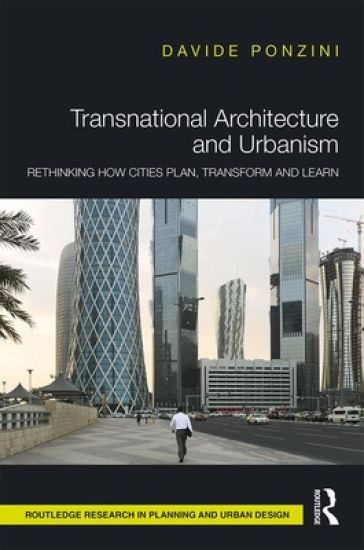
Transnational Architecture and Urbanism combines urban planning, design, policy, and geography studies to offer place-based and project-oriented insight into relevant case studies of urban transformation in Europe, North America, Asia, and the Middle East. Since the 1990s, increasingly multinational modes of design have arisen, especially concerning prominent buildings and places. Traditional planning and design disciplines have proven to have limited comprehension of, and little grip on, such transformations. Public and scholarly discussions argue that these projects and transformations derive from socioeconomic, political, cultural trends or conditions of globalization. The author suggests that general urban theories are relevant as background, but of limited efficacy when dealing with such context-bound projects and policies. This book critically investigates emerging problematic issues such as the spectacularization of the urban environment, the decontextualization of design practice, and the global circulation of plans and projects. The book portends new conceptualizations, evidence-based explanations, and practical understanding for architects, planners, and policy makers to critically learn from practice, to cope with these transnational issues, and to put better planning in place.
Transnational Architecture and Urbanism

Transnational Architecture and Urbanism

Davide Ponzini

Routledge
2020
sidottu

Halvin toimitettuna 240,40 €

Transnational Architecture and Urbanism combines urban planning, design, policy, and geography studies to offer place-based and project-oriented insight into relevant case studies of urban transformation in Europe, North America, Asia, and the Middle East. Since the 1990s, increasingly multinational modes of design have arisen, especially concerning prominent buildings and places. Traditional planning and design disciplines have proven to have limited comprehension of, and little grip on, such transformations. Public and scholarly discussions argue that these projects and transformations derive from socioeconomic, political, cultural trends or conditions of globalization. The author suggests that general urban theories are relevant as background, but of limited efficacy when dealing with such context-bound projects and policies. This book critically investigates emerging problematic issues such as the spectacularization of the urban environment, the decontextualization of design practice, and the global circulation of plans and projects. The book portends new conceptualizations, evidence-based explanations, and practical understanding for architects, planners, and policy makers to critically learn from practice, to cope with these transnational issues, and to put better planning in place.
Place-making and Urban Development

Place-making and Urban Development

Pier Carlo Palermo; Davide Ponzini

Routledge
2018
nidottu
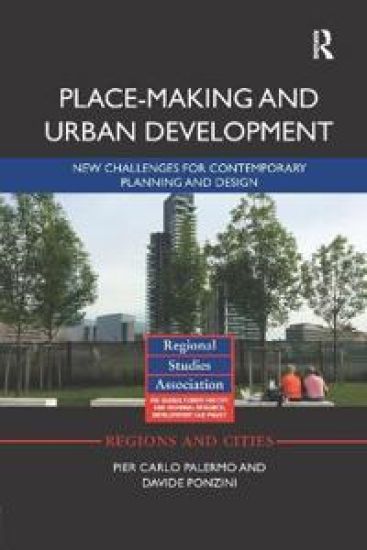
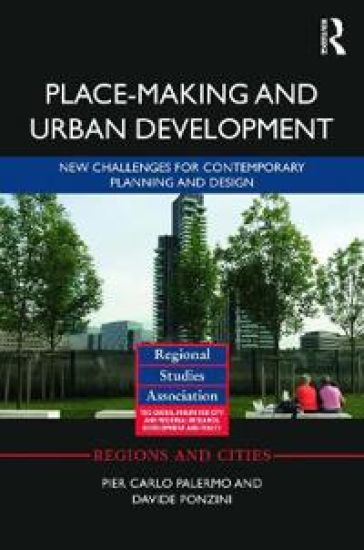
The regeneration of critical urban areas through the redesign of public space with the intense involvement of local communities seems to be the central focus of place-making according to some widespread practices in academic and professional circles. Recently, new expertise maintains that place-making could be an innovative and potentially autonomous field, competing with more traditional disciplines like urban planning, urban design, architecture and others. This book affirms that the question of 'making better places for people' should be understood in a broader sense, as a symptom of the non-contingent limitations of the urban and spatial disciplines. It maintains that research should not be oriented only towards new technical or merely formal solutions but rather towards the profound rethinking of disciplinary paradigms. In the fields of urban planning, urban design and policy-making, the challenge of place-making provides scholars and practitioners a great opportunity for a much-needed critical review. Only the substantial reappraisal of long-standing (technical, cultural, institutional and social) premises and perspectives can truly improve place-making practices. The pressing need for place-making implies trespassing undue disciplinary boundaries and experimenting a place-based approach that can innovate and integrate planning regulations, strategic spatial visioning and urban development projects. Moreover, the place-making challenge compels urban experts and policy-makers to critically reflect upon the physical and social contexts of their interventions. In this sense, facing place-making today is a way to renew the civic and social role of urban planning and urban design.
Starchitecture

Starchitecture

Davide Ponzini; Michele Nastasi

Monacelli Press
2016
sidottu
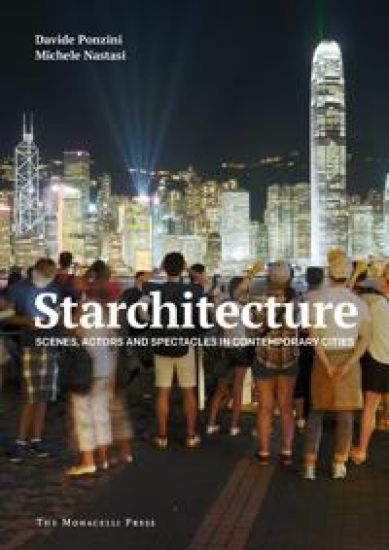
How and why do spectacular buildings get commissioned and procured? What are their visible urban effects? What can urban planners, architects, and policymakers learn in order to engage in more successful citymaking? In recent years, media and critical attention has been lavished on famous architects, and the contributions of their designs to the branding of cities. The post-“Bilbao effect” global landscape is one where cities compete for the highest-profile skyscrapers, cultural projects, and high-profile developments designed by star architects whom even casual readers know by first name: Frank Gehry, Bjarke Ingels, Jean Nouvel, Zaha Hadid, Norman Foster, Rem Koolhaas. Far less is known about the decision-making processes behind these projects and their subsequent urban effects. A unique combination of urban studies and photography, Starchitecture investigates projects designed by star architects in cities including Paris, New York, Abu Dhabi, Bilbao, and the architectural microcosm of the Vitra campus in Weil am Rhein, Germany. Author Davide Ponzini and photographer Michele Nastasi seek to explain and critique a growing global condition by revealing how starchitecture has been and continues to be deployed in cities around the world. The arguments they raise are vital to understanding the urban landscapes of today, and tomorrow.
Urbanismer : dagens stadsbyggande i retorik och praktik

Urbanismer : dagens stadsbyggande i retorik och praktik

Marcus Adolphson; Thorbjörn Andersson; Bosse Bergman; Vania Ceccato; Margaret Crawford; Tigran Haas; Steffen Lehmann; Daniel Nilsson; Krister Olsson; Davide Ponzini; Erik Stenberg; Anna Storm; Emily Talen; Moa Tunström

Nordic Academic Press
2016
nidottu
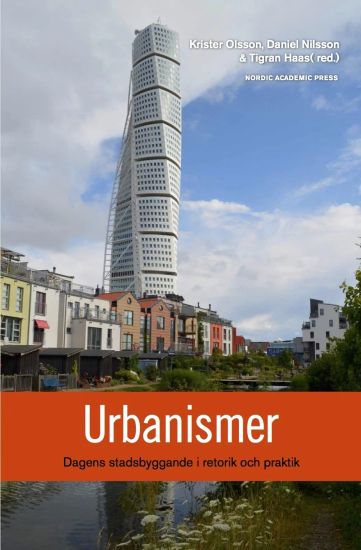
Städer präglas idag av starka krafter som globalisering, klimatförändringar, segregation och regionalisering. Över hela världen diskuteras hur dessa utmaningar ska mötas och lösningar formuleras i olika stadsbyggnadsideal – urbanismer. Dominerande i sådana diskussioner är ny-urbanism, post-urbanism, vardagsurbanism, grön urbanism och re-urbanism. I Urbanismer diskuterar etablerade svenska och internationella forskare, planerare och arkitekter vad som kännetecknar – eller bör känneteckna – dagens stadsbyggande. Hur ser önskvärda stadsmiljöer ut och hur bör beslutsfattande i stadsbyggandet organiseras? Vad innebär en hållbar utformning av framtidens städer? Genom att belysa drivkrafter och faktorer som påverkar stadsutvecklingen vill författarna peka på hur och varför staden utvecklas i en viss riktning. De ger också en överblick över trenderna och deras påverkan på svenskt stadsbyggande. Urbanismer vänder sig till alla som arbetar med stadsplanering och stadsutformning, politiskt eller professionellt. Även studerande vid universitet och högskolor och den intresserade allmänheten, stadsborna själva, har stor behållning av boken. Boken ingår i publikationsserien Curating the City som är knuten till Göteborgs universitet.
Place-making and Urban Development

Place-making and Urban Development

Pier Carlo Palermo; Davide Ponzini

Routledge
2014
sidottu
The regeneration of critical urban areas through the redesign of public space with the intense involvement of local communities seems to be the central focus of place-making according to some widespread practices in academic and professional circles. Recently, new expertise maintains that place-making could be an innovative and potentially autonomous field, competing with more traditional disciplines like urban planning, urban design, architecture and others. This book affirms that the question of 'making better places for people' should be understood in a broader sense, as a symptom of the non-contingent limitations of the urban and spatial disciplines. It maintains that research should not be oriented only towards new technical or merely formal solutions but rather towards the profound rethinking of disciplinary paradigms. In the fields of urban planning, urban design and policy-making, the challenge of place-making provides scholars and practitioners a great opportunity for a much-needed critical review. Only the substantial reappraisal of long-standing (technical, cultural, institutional and social) premises and perspectives can truly improve place-making practices. The pressing need for place-making implies trespassing undue disciplinary boundaries and experimenting a place-based approach that can innovate and integrate planning regulations, strategic spatial visioning and urban development projects. Moreover, the place-making challenge compels urban experts and policy-makers to critically reflect upon the physical and social contexts of their interventions. In this sense, facing place-making today is a way to renew the civic and social role of urban planning and urban design.
Spatial Planning and Urban Development

Spatial Planning and Urban Development

Pier Carlo Palermo; Davide Ponzini

Springer
2012
nidottu
Urban planning is a complex field of knowledge and practice. Through the decades, theoretical debate has formed an eclectic set of possible perspectives, without finding, in our opinion, a coherent paradigmatic framework which can adequately guide the interpretation and action in urban planning. The hypothesis of this book is that the attempts of founding an autonomous planning theory are inadequate if they do not explore two interconnected fields: architecture and public policies. The book critically reviews a selected set of current practices and theoretical founding works of modern and contemporary urban planning by highlighting the continuous search for the epistemic legitimization of a large variety of experiences. The distinctive contribution of this book is a documented critique to the eclecticism and abstraction of the main international trends in current planning theory. The dialogic relationship with the traditions of architecture and public policy is proposed here in order to critically review planning theory and practice. The outcome is the proposal of a paradigmatic framework that, in the authors’ opinion, can adequately guide reflections and actions. A pragmatic and interpretative heritage and the project-orientated approach are the basis of this new spatial planning paradigm.
Spatial Planning and Urban Development

Spatial Planning and Urban Development

Pier Carlo Palermo; Davide Ponzini

Springer
2010
sidottu
Urban planning is a complex field of knowledge and practice. Through the decades, theoretical debate has formed an eclectic set of possible perspectives, without finding, in our opinion, a coherent paradigmatic framework which can adequately guide the interpretation and action in urban planning. The hypothesis of this book is that the attempts of founding an autonomous planning theory are inadequate if they do not explore two interconnected fields: architecture and public policies. The book critically reviews a selected set of current practices and theoretical founding works of modern and contemporary urban planning by highlighting the continuous search for the epistemic legitimization of a large variety of experiences. The distinctive contribution of this book is a documented critique to the eclecticism and abstraction of the main international trends in current planning theory. The dialogic relationship with the traditions of architecture and public policy is proposed here in order to critically review planning theory and practice. The outcome is the proposal of a paradigmatic framework that, in the authors’ opinion, can adequately guide reflections and actions. A pragmatic and interpretative heritage and the project-orientated approach are the basis of this new spatial planning paradigm.