Kirjojen hintavertailu – 12 859 819 kirjaa ja 27 kauppaa

Kirjailija

Davis W. Houck

Kirjat ja teokset yhdessä paikassa: 7 kirjaa, julkaisuja vuosilta 1991–2022, suosituimpiin kuuluu Emmett Till and the Mississippi Press. Vertaile teosten hintoja ja tarkista saatavuus suomalaisista kirjakaupoista.

7 kirjaa

Kirjojen julkaisuvuodet: 1991–2022.

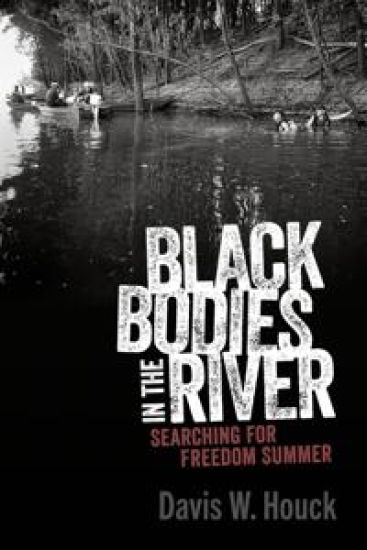
Black Bodies in the River

Black Bodies in the River

Davis W. Houck

UNIVERSITY PRESS OF MISSISSIPPI
2022
sidottu
Nearly sixty years after Freedom Summer, its events—especially the lynching of Andrew Goodman, James Chaney, and Mickey Schwerner—stand out as a critical episode of the civil rights movement. The infamous deaths of these activists dominate not just the history but also the public memory of the Mississippi Summer Project. Beginning in the late 1970s, however, movement veterans challenged this central narrative with the shocking claim that during the search for Goodman, Chaney, and Schwerner, the FBI and other law enforcement personnel discovered many unidentified Black bodies in Mississippi’s swamps, rivers, and bayous. This claim has evolved in subsequent years as activists, journalists, filmmakers, and scholars have continued to repeat it, and the number of supposed Black bodies—never identified—has grown from five to more than two dozen. In Black Bodies in the River: Searching for Freedom Summer, author Davis W. Houck sets out to answer two questions: Were Black bodies discovered that summer? And why has the shocking claim only grown in the past several decades—despite evidence to the contrary? In other words, what rhetorical work does the Black bodies claim do, and with what audiences? Houck’s story begins in the murky backwaters of the Mississippi River and the discovery of the bodies of Henry Dee and Charles Moore, murdered on May 2, 1964, by the Ku Klux Klan. He pivots next to the Council of Federated Organization’s voter registration efforts in Mississippi leading up to Freedom Summer. He considers the extent to which violence generally and expectations about interracial violence, in particular, serves as a critical context for the strategy and rhetoric of the Summer Project. Houck then interrogates the unnamed-Black-bodies claim from a historical and rhetorical perspective, illustrating that the historicity of the bodies in question is perhaps less the point than the critique of who we remember from that summer and how we remember them. Houck examines how different memory texts—filmic, landscape, presidential speech, and museums—function both to bolster and question the centrality of murdered white men in the legacy of Freedom Summer.
Black Bodies in the River

Black Bodies in the River

Davis W. Houck

UNIVERSITY PRESS OF MISSISSIPPI
2022
pokkari
Nearly sixty years after Freedom Summer, its events—especially the lynching of Andrew Goodman, James Chaney, and Mickey Schwerner—stand out as a critical episode of the civil rights movement. The infamous deaths of these activists dominate not just the history but also the public memory of the Mississippi Summer Project. Beginning in the late 1970s, however, movement veterans challenged this central narrative with the shocking claim that during the search for Goodman, Chaney, and Schwerner, the FBI and other law enforcement personnel discovered many unidentified Black bodies in Mississippi’s swamps, rivers, and bayous. This claim has evolved in subsequent years as activists, journalists, filmmakers, and scholars have continued to repeat it, and the number of supposed Black bodies—never identified—has grown from five to more than two dozen. In Black Bodies in the River: Searching for Freedom Summer, author Davis W. Houck sets out to answer two questions: Were Black bodies discovered that summer? And why has the shocking claim only grown in the past several decades—despite evidence to the contrary? In other words, what rhetorical work does the Black bodies claim do, and with what audiences? Houck’s story begins in the murky backwaters of the Mississippi River and the discovery of the bodies of Henry Dee and Charles Moore, murdered on May 2, 1964, by the Ku Klux Klan. He pivots next to the Council of Federated Organization’s voter registration efforts in Mississippi leading up to Freedom Summer. He considers the extent to which violence generally and expectations about interracial violence, in particular, serves as a critical context for the strategy and rhetoric of the Summer Project. Houck then interrogates the unnamed-Black-bodies claim from a historical and rhetorical perspective, illustrating that the historicity of the bodies in question is perhaps less the point than the critique of who we remember from that summer and how we remember them. Houck examines how different memory texts—filmic, landscape, presidential speech, and museums—function both to bolster and question the centrality of murdered white men in the legacy of Freedom Summer.
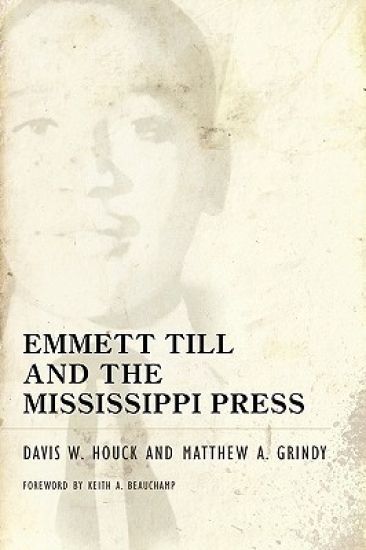
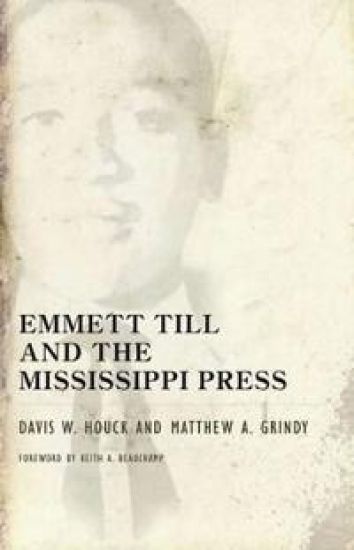
Emmett Till and the Mississippi Press

Emmett Till and the Mississippi Press

Davis W. Houck; Matthew A. Grindy; Keith A. Beauchamp

University Press of Mississippi
2010
nidottu
Employing never-before-used historical materials, the authors of Emmett Till and the Mississippi Press reveal how Mississippi journalists both expressed and shaped public opinion in the aftermath of the 1955 Emmett Till murder. Combing small-circulation weeklies as well as large-circulation dailies, Davis W. Houck and Matthew A. Grindy analyze the rhetoric at work as the state attempted to grapple with a brutal, small-town slaying. Initially coverage tended to be sympathetic to Till, but when the case became a clarion call for civil rights and racial justice in Mississippi, journalists reacted. Newspapers both reported on the Till investigation and editorialized on its protagonists. Within days, the Till case transcended the specifics of a murder in the Delta. Coverage wrestled with such complex cultural matters as the role of the press, class, gender, and geography in the determination of guilt and innocence. Emmett Till and the Mississippi Press provides a careful examination of the courtroom testimony given in Sumner, Mississippi, and the trial's conclusion as reported by the state's newspapers. The book closes with an analysis of how Mississippi has attempted to come to terms with its racially troubled past by, in part, memorializing Emmett Till in and around the Delta.
Emmett Till and the Mississippi Press

Emmett Till and the Mississippi Press

Davis W. Houck; Matthew A. Grindy; Keith A. Beauchamp

University Press of Mississippi
2008
sidottu
Employing never-before-used historical materials, the au-thors of Emmett Till and the Mississippi Press reveal how Mississippi journalists both expressed and shaped public opinion in the aftermath of the 1955 Emmett Till murder. Combing small-circulation weeklies as well as large-circulation dailies, Davis W. Houck and Matthew A. Grindy analyze the rhetoric at work as the state attempted to grapple with a brutal, small-town slaying. Initially coverage tended to be sympathetic to Till, but when the case became a clarion call for civil rights and racial justice in Mississippi, journa-lists reacted. Newspapers both reported on the Till investigation and editor-ialized on its protagonists. Within days the Till case transcended the specifics of a murder in the Delta. Coverage wrestled with such com-plex cultural matters as the role of the press, class, gender, and geography in the determination of guilt and innocence. Emmett Till and the Mississippi Press provides a careful examination of the courtroom testimony given in Sumner, Mississippi, and the trial\'s conclusion as reported by the state\'s newspapers. The book closes with an analysis of how Mississippi has attempted to come to terms with its racially troubled past by, in part, memorializing Emmett Till in and around the Delta.
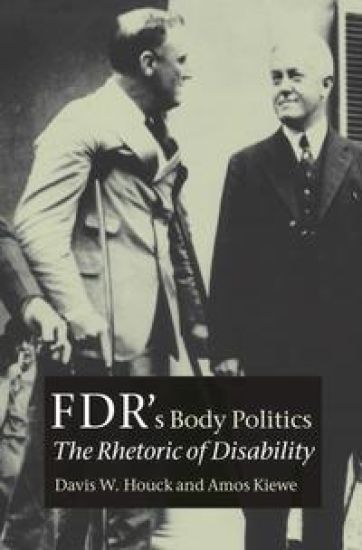
FDR's Body Politics

FDR's Body Politics

Davis W. Houck; Amos Kiewe

Texas A M University Press
2003
sidottu
Franklin Roosevelt instinctively understood that a politician of his era who was unable to control his own body would be perceived as unable to control the body politic. He therefore took great care to hide his polio-induced lameness both visually and verbally. In FDR's Body Politics. Davis W. Houck and Amos Kiewe draw on never-before-used primary sources to analyze the silences surrounding Roosevelt's disability, the words he chose to portray himself and his policies as powerful and health-giving, and the methods he used to maximize the appearance of physical strength. They examine his broad strategies, as well as the speeches Roosevelt delivered during his political comeback after polio struck, to understand how he overcame the whispering campaign against him in 1928 and 1932. Ultimately, this is a story of triumph and courage that reveals a master politician's understanding of the body politic in the most fundamental of ways.
Actor, Ideologue, Politician

Actor, Ideologue, Politician

Davis W. Houck; Amos Kiewe

Greenwood Press
1993
sidottu
This new anthology rounds out Ronald Reagan's rhetorical persona and fills a major gap in the literature about the man by offering an unbiased and a multi-dimensional picture of his public speeches during all phases of his political life. The 52 speech texts are arranged, with short introductions, into six topical chapters covering his Hollywood years, his eight years as governor of California, his presidential campaigns of 1976 and 1980, and his two terms as president. This compact reference will be handy for professionals and students at all levels who are looking for a well-rounded collection of both obscure and well-known speeches which offers Reagan's views on major issues at different times throughout his career. The short volume is suitable for college, university, professional, and public libraries. This representative collection shows Ronald Reagan speaking as an actor, an ideologue, and a pragmatic politician, illustrating his diverse communication styles. The anthology contains both good and bad speeches--some that are famous and others that are little-known--and includes patriotic messages, views on citizenship, politics, and governance and on important issues at different stages in his career. This handy reference is uncompromising in its impartial selection of speeches. A short bibliography points to major sources and important studies, and a full index makes the reference completely accessible.
A Shining City on a Hill

A Shining City on a Hill

Amos Kiewe; Davis W. Houck

Praeger Publishers Inc
1991
sidottu
This rhetorical criticism of spoken discourse examines Ronald Reagan's polished attempts to persuade the public on economic matters. Amos Kiewe and Davis Houck examine the substance, style, and developmental pattern of Reagan's rhetoric on economic matters and discuss how that rhetoric informed the president's views on other issues. This book demonstrates how rhetorical forces can play a significant role in shaping and selling economic policy. Kiewe and Houck employ a variety of theoretical perspectives for their longitudinal study of Ronald Reagan's economic discourse, beginning with the former actor/President's Hollywood years. Their analysis of close to a hundred speeches provides a chronological account of the character and development of Reagan's economic rhetoric (as opposed to a critique of its effectiveness). Synthesizing the strategies, self-contradictions, shifts, influences, and patterns in Reagan's economic discourse, Kiewe and Houck conclude that Reagan's economic discourse heavily influenced his views and rhetoric on foreign policy, national defense, the environment, and other issues--Reagan saw the world through economic lenses. This study is valuable to political scientists, economists, and scholars of rhetoric.