Kirjojen hintavertailu – 12 859 819 kirjaa ja 27 kauppaa
Kirjailija
Dean R. Hoge
Kirjat ja teokset yhdessä paikassa: 8 kirjaa, julkaisuja vuosilta 1994–2007, suosituimpiin kuuluu Young Adult Catholics. Vertaile teosten hintoja ja tarkista saatavuus suomalaisista kirjakaupoista.
Leaders of the American Catholic community want to and need to reach out to young adults. But effective ministry to young adults means that church leaders have to understand the attitudes and the needs of the current generation of Catholics in their 20s and 30s. This is why Dean Hoge, William Dinges, Mary Johnson, and Juan Gonzales began their study of young adult Catholics. How do both European-American and Latino Catholics actually live their Catholicism? Are they alienated from the Church? Are they cynical about the Church's moral teachings? Do they take the Pope's statements seriously? Do they attend Mass? Have significant numbers left for other churches? Do they want Catholic education for their children? Seeking answers to these and other questions, Dean Hoge and his colleagues conducted a national survey in 1997, supplemented by a telephone survey and then by personal interviews with over 800 men and women across the country. The interviews put a human face on the information provided, and they form a compelling part of this timely narrative. The authors underscore observations that include the strength and tenacity of Catholic identity in spite of many challenges, the high level of personal decision-making among those interviewed and surveyed, and the readiness of young Catholics for institutional reforms.
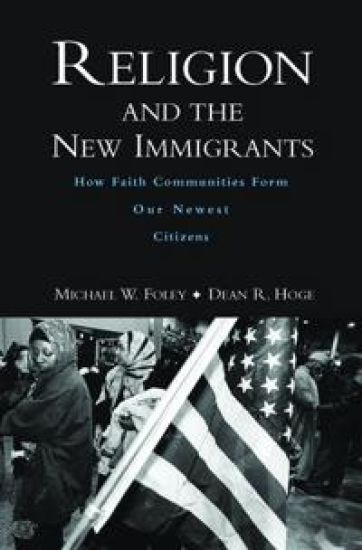
The explosive growth of the immigrant population since the 1960s has raised concerns about its impact on public life, but only recently have scholars begun to ask how religion affects the immigrant experience in our society. In Religion and the New Immigrants, Michael W. Foley and Dean R. Hoge assess the role of local worship communities in promoting civic engagement among recent immigrants to the United States. The product of a three-year study on immigrant worship communities in the Washington, DC area, the book explores the diverse ways in which such communities build social capital among their members, provide social services, develop the civic skills of members, and shape immigrants identities. It looks closely at civic and political involvement and the ways in which worship communities involve their members in the wider society. Evidence from a survey of 200 worship communities and in-depth studies of 20 of them across ethnic groups and religious traditions suggests that the stronger the ethnic or religious identity of the community and the more politicized the leadership, the more civically active the community. Local leadership, much more than ethnic origins or religious tradition, shapes the level and kind of civic engagement that immigrant worship communities foster. Catholic churches, Hindu temples, mosques, and Protestant congregations all vary in the degree to which they help promote greater integration into American life. But where religious and lay leaders are civically engaged, the authors find, ethnic and religious identity contribute most powerfully to participation in civic life and the larger society. Religion and the New Immigrants challenges existing theories and offers a nuanced view of how religious institutions contribute to the civic life of the nation. As one of the first studies to focus on the role of religion in immigrant civic engagement, this timely volume will interest scholars and students in a range of disciplines as well as anyone concerned about the future of our society.
Whether they leave out of preference for another ministry or due to serious conflict, pastors who relinquish parish ministry face misunderstanding and even hostility. Pastors in Transition brings clarity to this little-examined aspect of the pastorate by examining the main reasons why pastors in five Protestant denominations have left parish ministry. The fruit of careful sociological research, Pastors in Transition presents the findings of the largest-ever study of recently ended ministries. More than 900 ex-ministers, representing the Assemblies of God, the Evangelical Lutheran Church in America, the Lutheran Church-Missouri Synod, the Presbyterian Church (USA), and the United Methodist Church, were surveyed or interviewed. Besides gathering facts and figures, the book contains personal stories, forthright opinions, and concrete recommendations from former pastors for strengthening parish ministry in the future.
Catholic Press Association Award Winner! Reports indicate that many newly ordained men are feeling demoralized and some are resigning. The accounts raised many questions. How widespread is the problem? What difficulties are the recently ordained priests facing? Is the problem due to changes in lay attitudes or to changes in the ordained themselves? Is the situation different from what it was ten or twenty years ago? The First Five Years of the Priesthood is a collaborative work of the National Federation of Priests' Councils and the Life Cycle Institute of The Catholic University of America that considers this phenomenon. It explores the experience of early priesthood and is based on a pilot survey of two groups - recently ordained priests active in service and those who have resigned. The research team minimized interpretative work on the findings and engaged credible voices in American Catholic life to write commentaries on the implications of the findings. The First Five Years of the Priesthood includes both the research findings and commentaries. Chapters are The Setting of the Priesthood Today," "Attitudes of Newly Ordained Active and Resigned Priests," "What Makes for Satisfied Newly Ordained Priests?" "Four Types of Resigned Priests," "Life Experiences of Newly Ordained Active and Resigned Priests," and "Recommendations Made by the Priests." Dean R. Hoge is a professor in the department of sociology at The Catholic University of America in Washington, D. C. He has done sociological research serving American churches for 31 years and has authored several books and articles on American religion.
Money Matters presents the findings of the largest and most incisive study of factors influencing church giving in America. The authors conducted an exhaustive study of church giving in five representative denominations: Assemblies of God, Southern Baptist, Roman Catholic, ELCA, and Presbyterian. With detailed information from 625 churches, this book offers surprising conclusions about member contributions.
The authors summarize existing data on Catholic laity's views toward the Church itself, as measured using nationwide polls. Based on a 1993 national survey, Laity: American and Catholic reports important trends in the attitudes of Catholic laity regarding church teachings, their participation in church ministry, and the Church's overall role in their lives.
This in-depth survey provides a vivid overview of the religious world of the Baby Boomers. The authors worked with a national sample of persons confirmed in the Presbyterian Church, examining the religious faith of Baby Boomers and exploring the reasons they gave for leaving or staying in the church. The authors identify eight types of young adults--half of them churched and the other half unchurched. Their findings provide some unexpected results.