
Kirjojen hintavertailu – 12 859 827 kirjaa ja 27 kauppaa

Kirjailija

Debbie Pinfold

Kirjat ja teokset yhdessä paikassa: 2 kirjaa, julkaisuja vuosilta 2001–2005, suosituimpiin kuuluu The Child's View of the Third Reich in German Literature. Vertaile teosten hintoja ja tarkista saatavuus suomalaisista kirjakaupoista.

2 kirjaa

Kirjojen julkaisuvuodet: 2001–2005.

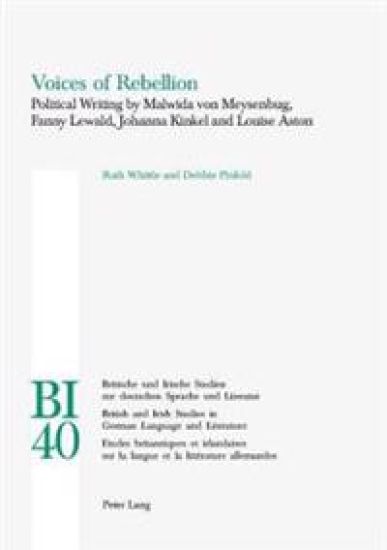
Voices of Rebellion

Voices of Rebellion

Ruth Whittle; Debbie Pinfold

Verlag Peter Lang
2005
nidottu
The German Revolution of 1848-49 offered a significant literary opportunity for all those interested in politics in general and the progress of women in society in particular. This book explores the work of a number of women who took up the challenge of breaking into the decidedly male preserve of political writing in this period. The focus is on women with very different concerns: Malwida von Meysenbug, the aristocrat who supported the democratic cause, the assimilated Jew Fanny Lewald; the housewife, musician, composer and teacher Johanna Kinkel; and the radical feminist Louise Aston. The work examines the strategies these women employed to negotiate potentially explosive issues such as the politics of the day, class, religion and gender, as well as the way traditional images like the father-child relationship are exploited to express new thoughts. Using a combination of close textual reading and thematically based analysis the book illuminates the authors' individual works and explores underlying issues that are common to all.
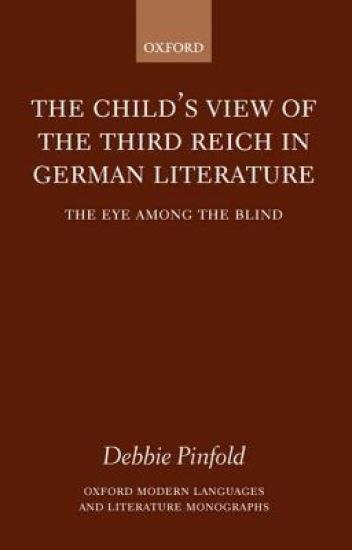
The Child's View of the Third Reich in German Literature
This book examines the ways in which German authors have used the child's perspective to present the Third Reich. It considers how children at this time were brought up and educated to accept unquestioningly National Socialist ideology, and thus questions the possibility of a traditional naive perspective on these events. Authors as diverse as Günter Grass, Siegfried Lenz, and Christa Wolf, together with many less well-known writers, have all used this perspective, and this raises the question as to why it is such a popular means of confronting the enormity of the Third Reich. This study asks whether this perspective is an evasive strategy, a means of gaining new insights into the period, or a means of discovering a new language which had not been tainted by Nazism. This raises and addresses issues central to a post-war aesthetic in German writing.