Kirjojen hintavertailu – 12 903 725 kirjaa ja 27 kauppaa

Kirjailija

Debora L. Spar

Kirjat ja teokset yhdessä paikassa: 6 kirjaa, julkaisuja vuosilta 1991–2006, suosituimpiin kuuluu Managing International Trade And Investment: Casebook. Vertaile teosten hintoja ja tarkista saatavuus suomalaisista kirjakaupoista.

Nimi esiintyy myös muodoissa: Debora L Spar

6 kirjaa

Kirjojen julkaisuvuodet: 1991–2006.

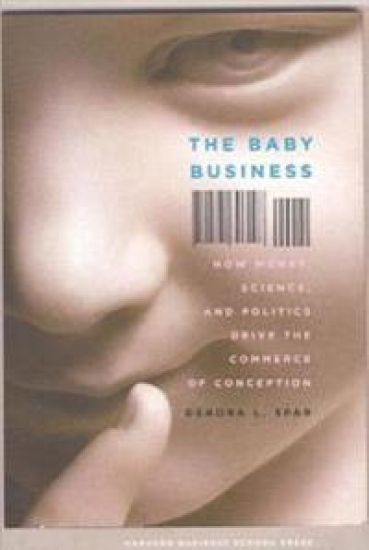
The Baby Business

The Baby Business

Debora L. Spar

Harvard Business Review Press
2006
sidottu
Despite legislation that claims to prohibit it, there is a thriving market for babies spreading across the globe. Fueled by rapid advances in reproductive medicine and the desperate desires of millions of would-be parents, the acquisition of children--whether through donated eggs, rented wombs, or cross-border adoption--has become a multibillion dollar industry that has left science, law, ethics, and commerce deeply at odds. In The Baby Business, Debora Spar argues that it is time to acknowledge the commercial truth about reproduction and to establish a standard that governs its transactions. In this fascinating behind-the-scenes account, she combines pioneering research and interviews with the industry's top reproductive scientists and trailblazers to provide a first glimpse at how the industry works: who the baby-makers are, who makes money, how prices are set, and what defines the clientele. Fascinating stories illustrate the inner workings of market segments--including stem cell research, surrogacy, egg swapping, "designer babies," adoption, and human cloning--as Spar explores the moral and legal challenges that industry players must address. The first purely commercial look at an industry that deals in humanity's most intimate issues, this book challenges us to consider the financial promise and ethical perils we'll face as the baby business moves inevitably forward.
Managing International Trade And Investment: Casebook

Managing International Trade And Investment: Casebook

Debora L Spar

Imperial College Press
2003
nidottu
Despite the ease with which it is often conducted, doing business across borders is not the same as doing it at home. Rather, it entails a whole new set of managerial challenges: re-assessing competitive advantage; evaluating diverse political environments and legal structures; considering the impact of currency fluctuations and trading regimes; and understanding widely disparate cultures and business norms. Using the cases presented in this book, instructors can help their students build a framework of analysis that will enable them to understand the challenges of international trade and investment and master the opportunities these represent.
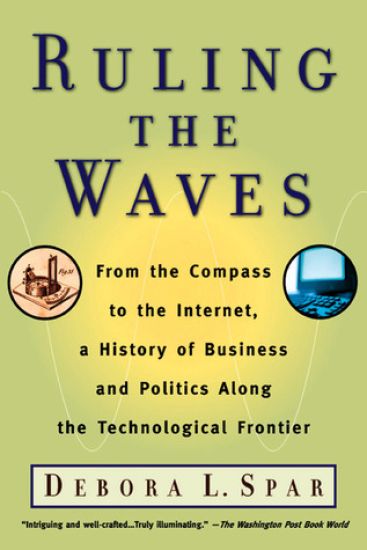
Ruling the Waves: Cycles of Discovery, Chaos, and Wealth from the Compass to the Internet
Beginning with the development of the compass, Ruling the Waves examines a series of technological revolutions that promised, in their time, to transform the world's politics and business. With Debora Spar's gifted storytelling, each chapter reads like an adventure tale as she recounts the histories of the printing press and maps; of the telegraph, radio, and satellite television; of software, encryption, and the advent of digital music. At each of these junctures Spar suggests that invention led to both a wave of commerce and of chaos. Entrepreneurs such as Samuel Morse and Rupert Murdoch carved new markets from the emerging technology and proclaimed that the old rules no longer applied. And for a while, they were right. But eventually--and inevitably--even cowboys need rules: rules of property, rules of coordination, rules of competition. The erstwhile pioneers thus turn to government, lobbying for order and setting the stage for the next wave of discovery. A fascinating history of business, Ruling the Waves is also an original, thought-provoking analysis of the parallels between past innovations and inventions and our own tumultuous times.
Attracting High Technology Investment

Attracting High Technology Investment

Debora L. Spar

World Bank Publications
1998
nidottu
This paper examines Intel Corporation's $300 million semiconductor assembly and testing plant in Costa Rica. It discusses various ways in which countries can gradually improve their climate for foreign investment and the design of their investment promotion strategies.
Iron Triangles and Revolving Doors

Iron Triangles and Revolving Doors

Debora L. Spar; Glenn Tobin; Raymond Vernon

Praeger Publishers Inc
1991
nidottu
In a rapidly shrinking world, governments everywhere find themselves increasingly obliged to deal with international economic issues. When dealing with such issues, their processes of decisionmaking prove strikingly different from those employed in the handling of political or strategic problems. This unique volume by Raymond Vernon, Debora L. Spar, and Glenn Tobin provides a close-up view of the decisionmaking process within the U. S. establishment as it has wrestled with a series of greatly publicized economic issues in recent years. The book synthesizes a literature that has been accumulating over three decades, deriving from this literature a model of the processes of decisionmaking in the field of U. S. foreign economic policy. Five detailed case studies are presented, each covering a major economic plan or agreement that raised significant controversy. Since the process by which economic decisions are reached involves institutions and characteristics quite different from those encountered in political decisionmaking, Iron Triangles and Revolving Doors emphasizes the persistent regularities to be found in the United States when it comes to economic decisionmaking. The opening chapter offers a model of the characteristics of the foreign economic policymaking process. The next five chapters examine the U. S.-Canada Free Trade Agreement; the battle over the codevelopment of the FSX fighter plane with Japan; the problem of international debt and the creation of the Brady plan; and U. S. trade policy and security export controls in light of the Toshiba-Kongsberg affair. Each of these cases is linked to the overall model of U. S. economic policy presented by the authors. This volume will be an excellent text for university or graduate courses in foreign economic policy, U. S. foreign policy, and international political economy. It will also be of interest to political scientists, economists, government officials, policy analysts, and others looking for insights into economic decisionmaking.
Iron Triangles and Revolving Doors

Iron Triangles and Revolving Doors

Debora L. Spar; Glenn Tobin; Raymond Vernon

Praeger Publishers Inc
1991
sidottu
In a rapidly shrinking world, governments everywhere find themselves increasingly obliged to deal with international economic issues. When dealing with such issues, their processes of decisionmaking prove strikingly different from those employed in the handling of political or strategic problems. This unique volume by Raymond Vernon, Debora L. Spar, and Glenn Tobin provides a close-up view of the decisionmaking process within the U. S. establishment as it has wrestled with a series of greatly publicized economic issues in recent years. The book synthesizes a literature that has been accumulating over three decades, deriving from this literature a model of the processes of decisionmaking in the field of U. S. foreign economic policy. Five detailed case studies are presented, each covering a major economic plan or agreement that raised significant controversy. Since the process by which economic decisions are reached involves institutions and characteristics quite different from those encountered in political decisionmaking, Iron Triangles and Revolving Doors emphasizes the persistent regularities to be found in the United States when it comes to economic decisionmaking. The opening chapter offers a model of the characteristics of the foreign economic policymaking process. The next five chapters examine the U. S.-Canada Free Trade Agreement; the battle over the codevelopment of the FSX fighter plane with Japan; the problem of international debt and the creation of the Brady plan; and U. S. trade policy and security export controls in light of the Toshiba-Kongsberg affair. Each of these cases is linked to the overall model of U. S. economic policy presented by the authors. This volume will be an excellent text for university or graduate courses in foreign economic policy, U. S. foreign policy, and international political economy. It will also be of interest to political scientists, economists, government officials, policy analysts, and others looking for insights into economic decisionmaking.