Kirjailija
Deborah Levy
Kirjat ja teokset yhdessä paikassa: 77 kirjaa, julkaisuja vuosilta 2000–2026, suosituimpiin kuuluu August Blue. Vertaile teosten hintoja ja tarkista saatavuus suomalaisista kirjakaupoista.
77 kirjaa
Kirjojen julkaisuvuodet: 2000–2026.
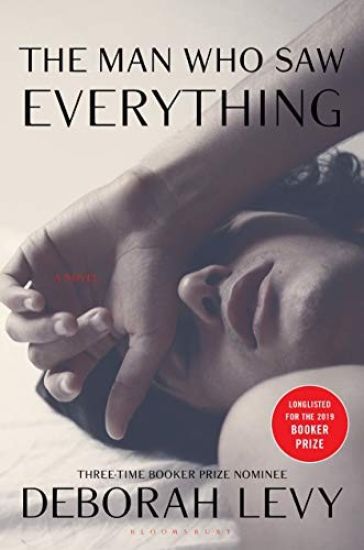
Ny, fengslende roman av den kritikerroste og prisbelønte britiske forfatteren Deborah Levy! Levy er mange ganger Man Booker-nominert, og Mannen som så alt ble langlistet allerede før utgivelsen. Romanen kom ut i England i 2019, til fantastisk gode kritikker fra britisk presse. Daily Telegraph skrev blant annet at romanen var «En fullstendig forførende feberdrøm av en roman... Bare det rent tekniske nivået plasserer den høyt over omtrent alt annet på langlisten[Man Booker]». I romanen møter vi historikeren Saul Adler, som blir offer for en påkjørsel i det han skal krysse Abbey Road i London september 1988. Heldigvis for ham, får han kun overfladiske skader, og kan reise seg og gå videre. Ikke lenge etter reiser Saul til Øst-Berlin for å gjøre forskning. Dette er to måneder før murens fall. Mystisk nok vet Saul allerede at muren kommer til å falle. Det er kontinuerlig noe som lurer under overflaten i fortellingen, og etter hvert begynner man å ane at historien har flere lag enn først antatt. Andre halvdel av boken er satt til 2016, hvor Saul også blir påkjørt, på samme sted, men med et mye mer dramatisk utfall. «Mannen som så alt» er en spenningsdrevet historie om vår evne til å se oss selv, og til å overse oss selv.

El Coste de Vivir: Autobiografía En Construcción / The Cost of Living: A Working Autobiography
Deborah Levy
Literatura Random House
2019
nidottu
Qu quiere decir ser libre como mujer o como artista? Y cu l es el precio de esta libertad? El coste de vivir es la segunda parte de la poderosa «autobiograf a en construcci n de Deborah Levy. Deborah Levy empieza a escribir este libro cuando, con cincuenta a os, se ve forzada a reinventarse: su matrimonio ha terminado, sus ingresos escasean, su madre se est muriendo y sus hijas empiezan a abandonar el nido. En un momento en que la vida tendr a que volverse pl cida e imperturbable, Levy decide abrazar el caos y la inestabilidad a cambio de recuperar, oculto bajo capas y capas de resignaci n, un nombre propio. A trav s de un di logo con intelectuales como Marguerite Duras o Simone de Beauvoir, y mediante recuerdos que evoca con elocuencia, sensibilidad y un delicioso sentido del humor, Levy se pregunta cu l es ese papel ficticio escrito por hombres e interpretado por mujeres al que llamamos «feminidad . Cualquiera que haya luchado por ser libre y por construir una vida propia sabe que es precisamente eso: una lucha constante en la que se paga un coste por vivir. ENGLISH DESCRIPTION The bestselling modern manifesto on the politics of womanhood from Deborah Levy, author of the Booker Prize finalists Hot Milk and Swimming Home. A New York Times Notable Book A New York Public Library Best Nonfiction Book of 2018 What does it cost a woman to unsettle old boundaries and collapse the social hierarchies that make her a minor character in a world not arranged to her advantage? This vibrant memoir, a portrait of contemporary womanhood in flux, is an urgent quest to find an unwritten major female character who can exist more easily in the world. Levy considers what it means to live with meaning, value, and pleasure, to seize the ultimate freedom of writing our own lives, and reflects on the work of such artists and thinkers as Simone de Beauvoir, James Baldwin, Elena Ferrante, Marguerite Duras, David Lynch, and Emily Dickinson. The Cost of Living, longlisted for the Andrew Carnegie Medal in Nonfiction, is crucial testimony, as distinctive, witty, complex, and original as Levy's acclaimed novels.
Longlisted for the Booker Prize A New York Times Editor's Choice Named a Best Book of the Year By: The New York Times Book Review (Notable Books of the Year) * The New York Public Library * The Washington Post * Time.com * The New York Times Critics' (Parul Seghal's Top Books of the Year) * St. Louis Post Dispatch * Apple * A Publisher's Weekly's Top Ten Books of the Year An electrifying novel about beauty, envy, and carelessness from Deborah Levy, author of the Booker Prize finalists Hot Milk and Swimming Home. It is 1988 and Saul Adler, a narcissistic young historian, has been invited to Communist East Berlin to do research; in exchange, he must publish a favorable essay about the German Democratic Republic. As a gift for his translator's sister, a Beatles fanatic who will be his host, Saul's girlfriend will shoot a photograph of him standing in the crosswalk on Abbey Road, an homage to the famous album cover. As he waits for her to arrive, he is grazed by an oncoming car, which changes the trajectory of his life. The Man Who Saw Everything is about the difficulty of seeing ourselves and others clearly. It greets the specters that come back to haunt old and new love, previous and current incarnations of Europe, conscious and unconscious transgressions, and real and imagined betrayals, while investigating the cyclic nature of history and its reinvention by people in power. Here, Levy traverses the vast reaches of the human imagination while artfully blurring sexual and political binaries-feminine and masculine, East and West, past and present--to reveal the full spectrum of our world.
The Cost of Living: A Working Autobiography
Deborah Levy
BLOOMSBURY PUBLISHING
2019
nidottu
Halvin toimitettuna 19,70 €
The bestselling exploration of the dimensions of love, marriage, mourning, and kinship from two-time Booker Prize finalist Deborah Levy. A New York Times Notable BookA New York Public Library Best Nonfiction Book of 2018What does it cost a woman to unsettle old boundaries and collapse the social hierarchies that make her a minor character in a world not arranged to her advantage? This vibrant memoir, a portrait of contemporary womanhood in flux, is an urgent quest to find an unwritten major female character who can exist more easily in the world. Levy considers what it means to live with meaning, value, and pleasure, to seize the ultimate freedom of writing our own lives, and reflects on the work of such artists and thinkers as Simone de Beauvoir, James Baldwin, Elena Ferrante, Marguerite Duras, David Lynch, and Emily Dickinson. The Cost of Living, longlisted for the Andrew Carnegie Medal in Nonfiction, is crucial testimony, as distinctive, witty, complex, and original as Levy's acclaimed novels.
«Å elske med Kitty Finch hadde vært en fryd, en smerte, et sjokk, et eksperiment, men først og fremst hadde det vært en tabbe. Han ba henne enda en gang om å kjøre ham trygt hjem til kona og datteren, vær så snill, vær så snill. 'Ja', sa hun. 'Livet er bare verdt å leve fordi vi håper at det skal bli bedre, og at vi alle sammen kommer trygt hjem.'» Den anerkjente og deprimerte poeten Joe Jacobs og journalistkonen Isabel reiser på ferie til Frankrike med tenåringsdatteren Nina og et vennepar. Når de ankommer feriehuset finner de en naken, ung kvinne svømmende i bassenget. Kvinnen er Kitty Finch - selverklært botaniker med grønnmalte negler og besatt av Joe Jacobs og poesien hans. Isabel tilbyr den ukjente kvinnen et rom i huset - til tross for at Kittys fascinasjon og tiltrekning til Joe er åpenlys. Deborah Levys særegne, hypnotiske fortellerstil fører oss listig inn i gjenkjennelige kulisser fra en middelklassefamilies feriested, men med et persongalleri som helt fra begynnelsen av ulmer av dysfunksjonalitet, og med en solid dose mørk humor og flere urovekkende og bisarre vendinger, er det umulig å forutsi hvilken retning historien er på vei.
Things I Don't Want to Know: On Writing
Deborah Levy
BLOOMSBURY PUBLISHING
2018
nidottu
Halvin toimitettuna 19,70 €
To be published simultaneously with Black Vodka, the Man Booker Prize-shortlisted writer's new collection of short stories, a shimmering jewel of a book about writing. Blending personal history, gender politics, philosophy, and literary theory into a luminescent treatise on writing, love, and loss, Things I Don't Want to Know is Deborah Levy's witty response to George Orwell's influential essay "Why I Write." Orwell identified four reasons he was driven to hammer at his typewriter-political purpose, historical impulse, sheer egoism, and aesthetic enthusiasm-and Levy's newest work riffs on these same commitments from a female writer's perspective. As she struggles to balance womanhood, motherhood, and her writing career, Levy identifies some of the real-life experiences that have shaped her novels, including her family's emigration from South Africa in the era of apartheid; her teenage years in the UK where she played at being a writer in the company of builders and bus drivers in cheap diners; and her theater-writing days touring Poland in the midst of Eastern Europe's economic crisis, where she observed how a soldier tenderly kissed the women in his life goodbye. Spanning continents (Africa and Europe) and decades (we meet the author at seven, fifteen, and fifty), Things I Don't Want to Know brings the reader into a writer's heart.
Sofia og moren hennes, Rose, reiser til Almería for å få hjelp. Rose er et offer for en biologisk konspirasjon: beina hennes har sluttet å fungere og ingen kan fortelle henne hvorfor. I desperasjon etter å få vite sannheten, oppsøker de den alternative klinikken til den omstridte dr. Gómez og hans glamorøse datter, søster Solskinn - men det som venter dem på den spanske solkysten er flere spørsmål enn svar. Behandlingsmetodene til dr. Gómez består av de merkeligste påfunn, og symptomene til Rose utvikler seg på helt uventet vis. Samtidig dras Sofia inn i et forførerisk spill med sine nye bekjentskaper fra strendene i Almería. Varm melk er en hypnotisk og særdeles velkomponert fortelling om kvinnelig raseri og seksualitet, om myter og tidløse monstre - og som et bakteppe til det skjøre forholdet mellom mor og datter, ligger et like sårbart Europa som fortsatt strever med å finne en vei opp av ruinene etter finanskrisen.
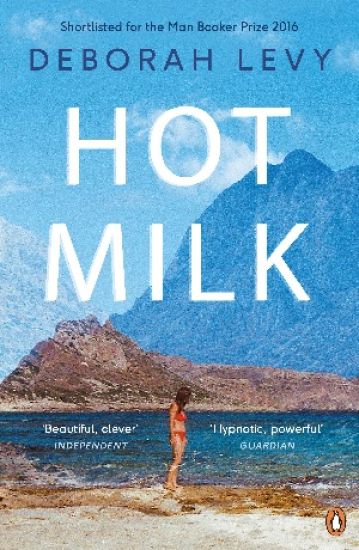
Kortlistet til Man Booker-prisen 2016 Sofia og moren hennes, Rose, reiser til Almería for å få hjelp. Rose er et offer for en biologisk konspirasjon: beina hennes har sluttet å fungere og ingen kan fortelle henne hvorfor. I desperasjon etter å få vite sannheten, oppsøker de den alternative klinikken til den omstridte dr. Gómez og hans glamorøse datter, søster Solskinn - men det som venter dem på den spanske solkysten er flere spørsmål enn svar. Behandlingsmetodene til dr. Gómez består av de merkeligste påfunn, og symptomene til Rose utvikler seg på helt uventet vis. Samtidig dras Sofia inn i et forførerisk spill med sine nye bekjentskaper fra strendene i Almería. Varm melk er en hypnotisk og særdeles velkomponert fortelling om kvinnelig raseri og seksualitet, om myter og tidløse monstre - og som et bakteppe til det skjøre forholdet mellom mor og datter, ligger et like sårbart Europa som fortsatt strever med å finne en vei opp av ruinene etter finanskrisen.
A New York Times Notable Book of the Year and Man Booker Prize finalist, Hot Milk moves "gracefully among pathos, danger, and humor" (The New York Times), now a major motion picture starring Fiona Shaw, Emma Mackey, and Vicky Krieps. I have been sleuthing my mother's symptoms for as long as I can remember. If I see myself as an unwilling detective with a desire for justice, is her illness an unsolved crime? If so, who is the villain and who is the victim? Sofia, a young anthropologist, has spent much of her life trying to solve the mystery of her mother's unexplainable illness. She is frustrated with Rose and her constant complaints, but utterly relieved to be called to abandon her own disappointing fledgling adult life. She and her mother travel to the searing, arid coast of southern Spain to see a famous consultant--their very last chance--in the hope that he might cure her unpredictable limb paralysis. But Dr. Gomez has strange methods that seem to have little to do with physical medicine, and as the treatment progresses, Sofia's mother's illness becomes increasingly baffling. Sofia's role as detective--tracking her mother's symptoms in an attempt to find the secret motivation for her pain--deepens as she discovers her own desires in this transient desert community. Hot Milk is a profound exploration of the sting of sexuality, of unspoken female rage, of myth and modernity, the lure of hypochondria and big pharma, and, above all, the value of experimenting with life; of being curious, bewildered, and vitally alive to the world.
Selected for the 2012 Man Booker Prize shortlist. As he arrives with his family at the villa in the hills above Nice, Joe sees a body in the swimming pool. But the girl is very much alive. She is Kitty Finch: a self-proclaimed botanist with green-painted fingernails, walking naked out of the water and into the heart of their holiday. Why is she there? What does she want from them all? And why does Joe's enigmatic wife allow her to remain? Profound and thrilling, Swimming Home reveals how the most devastating secrets are the ones we keep from ourselves.
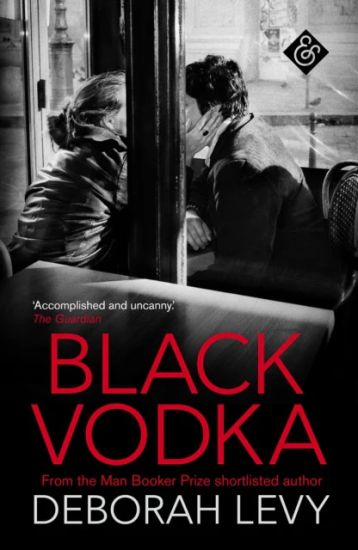
'Elisa said Yes and I said Yes. We said Yes in all the European languages. Yes. We said yes we said yes, yes to vague but powerful things, we said yes to hope which has to be vague, we said yes to love which is always blind, we smiled and said yes without blinking.' ('A Better Way to Live') ----------- How does love change us? And how do we change ourselves for love - or for lack of it? Ten stories by acclaimed author Deborah Levy explore these delicate, impossible questions. In Vienna, an icy woman seduces a broken man; in London, a bird mimics an old-fashioned telephone; in adland, a sleek copywriter becomes a kind of shaman. These are twenty-first century lives dissected with razor-sharp humour and curiosity, stories about what it means to live and love, together and alone.
For the high-flying, heavy-drinking advertising boss Tom Banbury, the art of persuasion relies on an infiltration of the consumer’s mind. In the case of his colleague and confidante Nikos Gazidis, the overdeveloped sense of empathy that makes him so well suited to the business has resulted in a strange psychiatric condition. Nick has unwittingly crashed into the consciousness of his boss. ? While Tom drinks to forget the troubles of his earthly life, Nick is forced to confront a past that is not his own: a childhood scarred by the small wars waged by an abusive father—and by the events that brought these battles to a close. When Nick enters the panicked silence of the Abbey, a fortress for the rich and unstable, his sister guards him from the visiting Tom Banbury. But can this peculiar bond be broken? Or has Nikos Gazidis taken an empathetic leap too far?
A New York Times Notable Book of the Year and Man Booker Prize finalist, Hot Milk moves "gracefully among pathos, danger, and humor" (The New York Times), now a major motion picture starring Fiona Shaw, Emma Mackey, and Vicky Krieps. I have been sleuthing my mother's symptoms for as long as I can remember. If I see myself as an unwilling detective with a desire for justice, is her illness an unsolved crime? If so, who is the villain and who is the victim? Sofia, a young anthropologist, has spent much of her life trying to solve the mystery of her mother's unexplainable illness. She is frustrated with Rose and her constant complaints, but utterly relieved to be called to abandon her own disappointing fledgling adult life. She and her mother travel to the searing, arid coast of southern Spain to see a famous consultant--their very last chance--in the hope that he might cure her unpredictable limb paralysis. But Dr. Gomez has strange methods that seem to have little to do with physical medicine, and as the treatment progresses, Sofia's mother's illness becomes increasingly baffling. Sofia's role as detective--tracking her mother's symptoms in an attempt to find the secret motivation for her pain--deepens as she discovers her own desires in this transient desert community. Hot Milk is a profound exploration of the sting of sexuality, of unspoken female rage, of myth and modernity, the lure of hypochondria and big pharma, and, above all, the value of experimenting with life; of being curious, bewildered, and vitally alive to the world.
Kuuluisan englantilaisrunoilijan perheloma Ranskassa keskeytyy, kun huvilan uima-altaassa eräänä päivänä kelluu punatukkainen tyttö. Kukaan ei ymmärrä, miksi runoilijan vaimo kutsuu tytön perheen vieraaksi. Linnunluinen vieras änkyttää tarkkoja huomioita lomailijoista, eikä salaisuuksia voi pitää enää edes itseltään. Unenomaisessa pienoisromaanissa liikutaan Nizzan kuumalla rantabulevardilla ja kiemurtelevilla vuoristoteillä. Ikkunaluukut suljetaan myrskyn tieltä, mutta surua eivät mitkään luukut pidä loitolla.
Things I Don't Want to Know: A Response to George Orwell's Why I Write
Deborah Levy
Notting Hill Editions
2013
sidottu
'Perhaps when Orwell described sheer egoism as a necessary quality for a writer, he was not thinking about the sheer egoism of a female writer. Even the most arrogant female writer has to work over time to build an ego that is robust enough to get her through January, never mind all the way to December.' Deborah Levy