Kirjojen hintavertailu – 12 859 829 kirjaa ja 27 kauppaa

Kirjailija

Debra Satz

Kirjat ja teokset yhdessä paikassa: 4 kirjaa, julkaisuja vuosilta 2010–2016, suosituimpiin kuuluu Economic Analysis, Moral Philosophy, and Public Policy. Vertaile teosten hintoja ja tarkista saatavuus suomalaisista kirjakaupoista.

4 kirjaa

Kirjojen julkaisuvuodet: 2010–2016.

Economic Analysis, Moral Philosophy, and Public Policy

Economic Analysis, Moral Philosophy, and Public Policy

Daniel Hausman; Michael McPherson; Debra Satz

Cambridge University Press
2016
sidottu
This book shows through argument and numerous policy-related examples how understanding moral philosophy can improve economic analysis, how moral philosophy can benefit from economists' analytical tools, and how economic analysis and moral philosophy together can inform public policy. Part I explores the idea of rationality and its connections to ethics, arguing that when they defend their formal model of rationality, most economists implicitly espouse contestable moral principles. Part II addresses the nature and measurement of welfare, utilitarianism and cost-benefit analysis. Part III discusses freedom, rights, equality, and justice - moral notions that are relevant to evaluating policies, but which have played little if any role in conventional welfare economics. Finally, Part IV explores work in social choice theory and game theory that is relevant to moral decision making. Each chapter includes recommended reading and discussion questions.

Economic Analysis, Moral Philosophy, and Public Policy

Economic Analysis, Moral Philosophy, and Public Policy

Daniel Hausman; Michael McPherson; Debra Satz

Cambridge University Press
2016
pokkari

Halvin toimitettuna 57,30 €

This book shows through argument and numerous policy-related examples how understanding moral philosophy can improve economic analysis, how moral philosophy can benefit from economists' analytical tools, and how economic analysis and moral philosophy together can inform public policy. Part I explores the idea of rationality and its connections to ethics, arguing that when they defend their formal model of rationality, most economists implicitly espouse contestable moral principles. Part II addresses the nature and measurement of welfare, utilitarianism and cost-benefit analysis. Part III discusses freedom, rights, equality, and justice - moral notions that are relevant to evaluating policies, but which have played little if any role in conventional welfare economics. Finally, Part IV explores work in social choice theory and game theory that is relevant to moral decision making. Each chapter includes recommended reading and discussion questions.

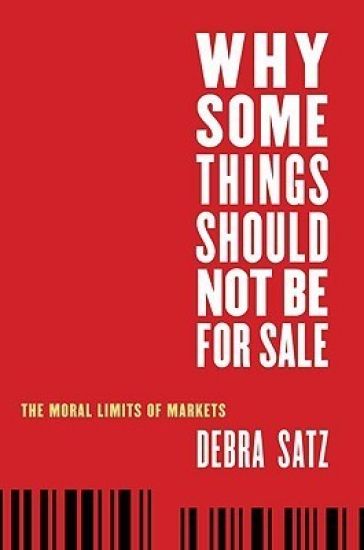
Why Some Things Should Not Be for Sale

Why Some Things Should Not Be for Sale

Debra Satz

Oxford University Press Inc
2012
nidottu
For many, markets are the most efficient way in general to organize production and distribution in a complex economy. But what about those markets we might label noxious--markets in addictive drugs, say, or in sex? In Why Some Things Should Not Be for Sale, philosopher Debra Satz takes a penetrating look at those commodity exchanges that strike most of us as problematic. What considerations, she asks, ought to guide the debates about such markets? Satz contends that categories previously used by philosophers and economists are of limited use in addressing such markets because they are assumed to be homogenous. Accordingly, she offers a broader and more nuanced view of markets--one that goes beyond the usual discussions of efficiency and distributional equality--to show how markets shape our culture, foster or thwart human development, and create and support structures of power. Nobel Laureate Kenneth J. Arrow calls this book "a work that will have to be studied and taken account of by all those concerned by the role of the market as compared with other social mechanisms."
Why Some Things Should Not Be for Sale

Why Some Things Should Not Be for Sale

Debra Satz

Oxford University Press Inc
2010
sidottu
What's wrong with markets in everything? Markets today are widely recognized as the most efficient way in general to organize production and distribution in a complex economy. And with the collapse of communism and rise of globalization, it's no surprise that markets and the political theories supporting them have seen a considerable resurgence. For many, markets are an all-purpose remedy for the deadening effects of bureaucracy and state control. But what about those markets we might label noxious-markets in addictive drugs, say, or in sex, weapons, child labor, or human organs? Such markets arouse widespread discomfort and often revulsion. In Why Some Things Should Not Be for Sale, philosopher Debra Satz takes a penetrating look at those commodity exchanges that strike most of us as problematic. What considerations, she asks, ought to guide the debates about such markets? What is it about a market involving prostitution or the sale of kidneys that makes it morally objectionable? How is a market in weapons or pollution different than a market in soybeans or automobiles? Are laws and social policies banning the more noxious markets necessarily the best responses to them? Satz contends that categories previously used by philosophers and economists are of limited utility in addressing such questions because they have assumed markets to be homogenous. Accordingly, she offers a broader and more nuanced view of markets-one that goes beyond the usual discussions of efficiency and distributional equality--to show how markets shape our culture, foster or thwart human development, and create and support structures of power. An accessibly written work that will engage not only philosophers but also political scientists, economists, legal scholars, and public policy experts, this book is a significant contribution to ongoing discussions about the place of markets in a democratic society.