Kirjojen hintavertailu – 12 859 828 kirjaa ja 27 kauppaa

Kirjailija

Dennis E. Mithaug

Kirjat ja teokset yhdessä paikassa: 6 kirjaa, julkaisuja vuosilta 1996–2007, suosituimpiin kuuluu Promoting Self-Determination in Students with Developmental Disabilities. Vertaile teosten hintoja ja tarkista saatavuus suomalaisista kirjakaupoista.

6 kirjaa

Kirjojen julkaisuvuodet: 1996–2007.

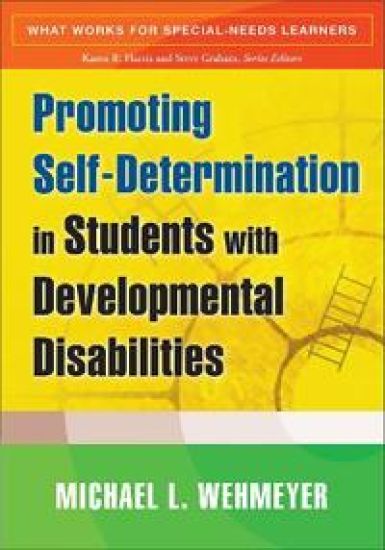
Promoting Self-Determination in Students with Developmental Disabilities

Promoting Self-Determination in Students with Developmental Disabilities

Michael L. Wehmeyer; Martin Agran; Carolyn Hughes; James E. Martin; Dennis E. Mithaug

Guilford Publications
2007
sidottu
Growing evidence suggests that self-determination is a significant factor in improving educational and transition outcomes in students with intellectual and developmental disabilities. This volume reviews the breadth of available methods for teaching components of self-determination--including choice making, problem solving, decision making, goal setting, self-advocacy, and self-regulated learning--and provides best-practice recommendations that teachers can put to immediate use in the classroom. Grounded in theory and research, the strategies presented here have been shown to enhance students' involvement in educational planning and support them in meeting their goals in school, the workplace, and the community.
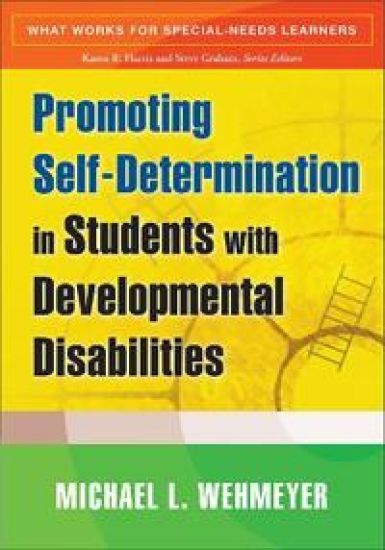
Promoting Self-Determination in Students with Developmental Disabilities

Promoting Self-Determination in Students with Developmental Disabilities

Michael L. Wehmeyer; Martin Agran; Carolyn Hughes; James E. Martin; Dennis E. Mithaug

Guilford Publications
2007
nidottu
Growing evidence suggests that self-determination is a significant factor in improving educational and transition outcomes in students with intellectual and developmental disabilities. This volume reviews the breadth of available methods for teaching components of self-determination--including choice making, problem solving, decision making, goal setting, self-advocacy, and self-regulated learning--and provides best-practice recommendations that teachers can put to immediate use in the classroom. Grounded in theory and research, the strategies presented here have been shown to enhance students' involvement in educational planning and support them in meeting their goals in school, the workplace, and the community. Special features include reproducible worksheets and forms.
Learning to Theorize

Learning to Theorize

Dennis E. Mithaug

SAGE Publications Inc
2000
nidottu
This book describes a constructive theorizing strategy that graduate students and applied searchers can use to improve their beliefs about contemporary social problems. Throughout the use of compelling questions and examples, Mithaug shows readers how to implement this (four-step) strategy to construct explanations for uncertainties about how things work, how they ought to work and what should be done about them. He begins the book with an explanation of the practical features of constructive theorizing and shows how it mirrors general problem solving, practical reasoning, and self-regulated learning. He then demonstrates how to separate the facts, values, and actions of a situation in order to clarify and understand their relationship as well as how a thinking strategy assists in learning to theorize better. This book will enable readers to separate questions of fact, value, and action; explain their differences and similarities; and summarize their explanations in a theory that reconstructs those facts, values, and actions in a more credible and valuable way.
Learning to Theorize

Learning to Theorize

Dennis E. Mithaug

SAGE Publications Inc
2000
sidottu
This book describes a constructive theorizing strategy that graduate students and applied searchers can use to improve their beliefs about contemporary social problems. Throughout the use of compelling questions and examples, Mithaug shows readers how to implement this (four-step) strategy to construct explanations for uncertainties about how things work, how they ought to work and what should be done about them. He begins the book with an explanation of the practical features of constructive theorizing and shows how it mirrors general problem solving, practical reasoning, and self-regulated learning. He then demonstrates how to separate the facts, values, and actions of a situation in order to clarify and understand their relationship as well as how a thinking strategy assists in learning to theorize better. This book will enable readers to separate questions of fact, value, and action; explain their differences and similarities; and summarize their explanations in a theory that reconstructs those facts, values, and actions in a more credible and valuable way.
Equal Opportunity Theory

Equal Opportunity Theory

Dennis E. Mithaug

SAGE Publications Inc
1996
sidottu
Equal Opportunity Theory is a clear and comprehensive examination of the idea of self determination: both the right to self-determination as well as its expression in our society. Author Dennis E. Mithaug examines society's collective responsibility for assuring fair prospects of self-determination for all people. This inclusive volume also describes how social policies derived from the theory of equal opportunity actually impact those with the least likely prospects for self-determination throughout their lives--the poor, the disabled, and people of color. Author Dennis E. Mithaug first presents the logical, philosophical, and psychological basis for equal opportunity theory and then presents its social and judicial background. From this foundation he shows how the optimal prospects principle derived from the theory decreases the discrepancy between the right and the experience of self-determination for children and adults with significant physical, mental, social, and economic disadvantages. Although the main thrust is theoretical, evidence in support of the theory is based upon a combination of empirical, historical, and logical sources. Addressing one of the hottest current topics in American society and public policy today, Equal Opportunity Theory's timeliness will make it of great interest to students and professionals in the fields of sociology, psychology, and political science. "In Equal Opportunity Theory, Dennis E. Mithaug writes about the discrepancy between the right to self-determination and the expression of that right, a problem that is salient to most Americans with disabilities and others who are less well situated in our society. This discrepancy manifests itself in what may be the most 'handicapping' aspect of having a disability, being poor, or being a member of a minority group that experiences frequent discrimination--the lack of control over one's life. Equal Opportunity Theory provides a thoughtful, interdisciplinary treatment of the complex issues related to this problem. The book provides an important differentiation of the impact of individual capacity and opportunity theory as a means to resolve the discrepancy between the right to and experience of self-determination for individuals whose personal, social, and economic circumstances are beyond their control. It also provides a valuable contribution to the debate concerning how best to empower and enable all individuals to live self-determined lives." --Michael L. Wehmeyer, The Arc National Headquarters

Equal Opportunity Theory

Equal Opportunity Theory

Dennis E. Mithaug

SAGE Publications Inc
1996
nidottu
Equal Opportunity Theory is a clear and comprehensive examination of the idea of self determination: both the right to self-determination as well as its expression in our society. Author Dennis E. Mithaug examines society's collective responsibility for assuring fair prospects of self-determination for all people. This inclusive volume also describes how social policies derived from the theory of equal opportunity actually impact those with the least likely prospects for self-determination throughout their lives--the poor, the disabled, and people of color. Author Dennis E. Mithaug first presents the logical, philosophical, and psychological basis for equal opportunity theory and then presents its social and judicial background. From this foundation he shows how the optimal prospects principle derived from the theory decreases the discrepancy between the right and the experience of self-determination for children and adults with significant physical, mental, social, and economic disadvantages. Although the main thrust is theoretical, evidence in support of the theory is based upon a combination of empirical, historical, and logical sources. Addressing one of the hottest current topics in American society and public policy today, Equal Opportunity Theory's timeliness will make it of great interest to students and professionals in the fields of sociology, psychology, and political science. "In Equal Opportunity Theory, Dennis E. Mithaug writes about the discrepancy between the right to self-determination and the expression of that right, a problem that is salient to most Americans with disabilities and others who are less well situated in our society. This discrepancy manifests itself in what may be the most 'handicapping' aspect of having a disability, being poor, or being a member of a minority group that experiences frequent discrimination--the lack of control over one's life. Equal Opportunity Theory provides a thoughtful, interdisciplinary treatment of the complex issues related to this problem. The book provides an important differentiation of the impact of individual capacity and opportunity theory as a means to resolve the discrepancy between the right to and experience of self-determination for individuals whose personal, social, and economic circumstances are beyond their control. It also provides a valuable contribution to the debate concerning how best to empower and enable all individuals to live self-determined lives." --Michael L. Wehmeyer, The Arc National Headquarters