Kirjojen hintavertailu – 12 859 818 kirjaa ja 27 kauppaa
Kirjailija
Dennis Gyllensporre
Kirjat ja teokset yhdessä paikassa: 7 kirjaa, julkaisuja vuosilta 2014–2024, suosituimpiin kuuluu Military Peacekeeping Mediation: A First-Hand Account from Mali. Vertaile teosten hintoja ja tarkista saatavuus suomalaisista kirjakaupoista.
Salihu Zaway Uba; Shailesh Tinaikar; Carlos Alberto Dos Santos Cruz; Cheryl Ann Pearce; Patrick Nyamvumba; Mohamed Taisir Masadeh; Ian Gordon; Babacar Gaye; Elias R. Martins Filho; Dennis Gyllensporre; Håkan Edström; Birame Diop
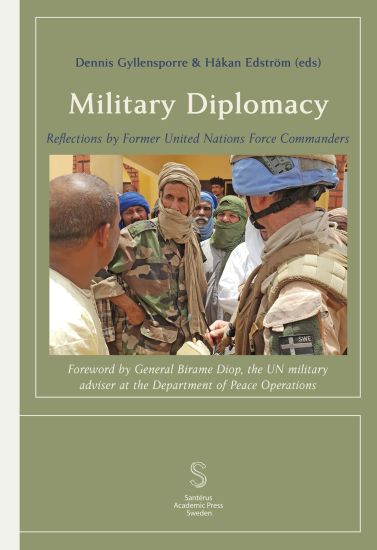
In today s dynamic geopolitical landscape, Force Commanders in United Nations peacekeeping operations play a pivotal role in the politico-diplomatic process for the accomplishment of the Mission s mandate. Charged with the daunting task of leading multinational forces in some of the world s most complex and often volatile environments, they are the torchbearer of the noble mission of safeguarding peace, protecting civilians, and contributing to the peacemaking and preventive diplomacy process. Lieutenant General Dennis Gyllensporre, drawing from his extensive experience as the Former Force Commander of the United Nations Multidimensional Integrated Stabilization Mission in Mali (MINUSMA), along with the scholarly expertise of Professor Håkan Edström, provides a comprehensive exploration of the multifaceted responsibilities and leadership challenges faced by Force Commanders. The themes covered in this book are not merely academic exercises, but reflections of real-world complexities encountered in peacekeeping operations. From the art of managing nonviolent military measures to the intricacies of military diplomacy and peacekeeping mediation, the book offers a compelling journey into the realm of peacekeeping leadership, drawing upon the rich experiences of former Force Commanders who have served on the frontlines of some of the most challenging peacekeeping missions.
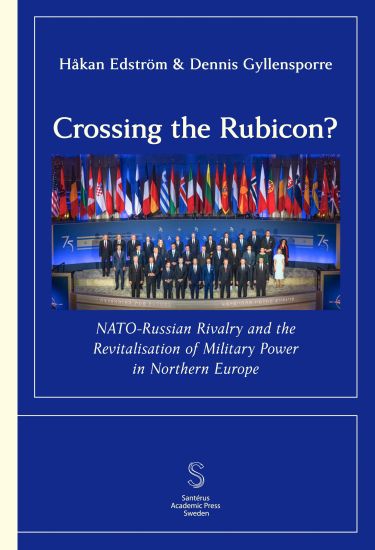
This book studies why and how Northern Europe needs to further strengthen its deterrence and defence posture, nationally and collectively, against a consistently aggressive Russia. The authors compare developments in nine countries through the lens of physical, conceptual and moral factors, identifies asymmetries and advantages in military power with historical and intellectual context, and relates regional security to developments in NATO and the EU.
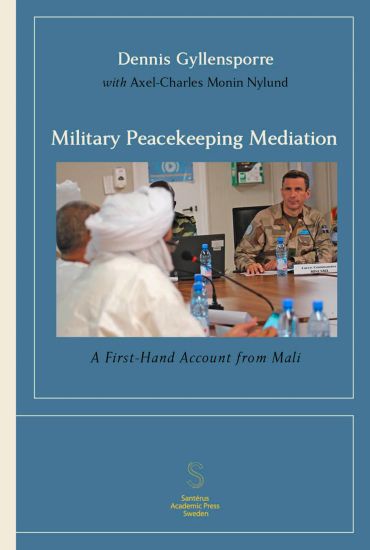
While political setbacks, terrorist attacks, and discord between the Malian authorities and external actors occupy the bulk of the limited bandwidth provided by international reporting, the story told in this book offers a complementary testimonial of how concerted actions by the Malian parties to the conflict and the international community managed to deliver results. It is a story about the use of negotiation, cooperation, and mediation at the practical level of peace agreement implementation to overcome seemingly intractable incompatibilities. Indeed, whenever time-sensitive and externally imposed political priorities were confronted with decades-long historical grievances and competing ideologies, these coalesced to form complex challenges often unfit for solely political measures. To add depth and insight to this book s account, aspects of mediation theory permeate its narrative. Lieutenant General (ret.) Dr Dennis Gyllensporre is an Associate Professor in Security Policy and Strategy at the Swedish Defence University, currently at Oxford University as a Visiting Fellow. The co-author, Axel-Charles Monin Nylund, is a former military interpreter with the Swedish Armed Forces and political advisor to the United Nations Force Commander in Mali.
The book explores how small states adjust their military strategies in response to external shocks. Using primary sources from four Nordic countries, (Denmark, Finland, Norway, and Sweden), this volume explores how small states have adjusted their military strategies in response to external shocks of the 21st century. The 9/11 terrorist attacks, the Russian interventions in Georgia and Ukraine, and the rise of the Islamic State have all forced the Nordic states to adopt new strategies. While the responses have not been uniform, their differing relations to the EU and NATO have not prevented these countries from behaving similarly in military affairs. Limitations in military capacity has led all four countries to pursue strategies that include cooperation with more resourceful partners. It is necessary for them to cooperate with others to protect and promote their national interests. Moreover, the Nordic cosmopolitan outlook expresses milieu-shaping ambitions that we generally would not expect small states to pursue against a potential great power aggressor. This book will be of much interest to students of military strategy, defense studies, security studies, and international relations.
Att utforma en försvarsdoktrin betyder att inom en given ekonomisk ram balansera förmågan att hantera hot och risker som ligger nära i tiden med behovet av att skapa långsiktig handlingsfrihet genom att utveckla kapacitet mot möjliga framtida hot och risker. Trots att flera argumenterat för vikten av balans finns få exempel på hur detta realiseras. Denna bok förklarar utvecklingen av svensk försvarsdoktrin sedan kalla krigets slut, och stödjer sig främst på officiella tryck från de politiska beslutsprocesserna. Håkan Edström är docent i statsvetenskap och universitetslektor i krigsvetenskap vid Strategiavdelningen vid Försvarshögskolan. Dennis Gyllensporre är fil. dr och gästforskare vid Försvarshögskolan och Uppsala universitet. Han är yrkesofficer och tjänstgör vid Försvarsmaktens högkvarter.
Despite their different experiences during the Second World War Denmark, Finland, Norway and Sweden are often regarded as, in many ways, similar welfare states. However, their approach to the EU and Nato in matters of security and defence politics, differs and this indicates that they might not be that similar after all. But they have all been active contributors to the efforts of conflict management by the international community. Providing military units to peace support operations all over the globe is consequently yet another similarity. In this book the strategic decision making procedures of the four states are explored and compared.