Kirjojen hintavertailu – 12 903 725 kirjaa ja 27 kauppaa

Kirjailija

Dennis Sharp

Kirjat ja teokset yhdessä paikassa: 3 kirjaa, julkaisuja vuosilta 2002–2019, suosituimpiin kuuluu Kisho Kurokawa, Oita Stadium, Oita, Japan. Vertaile teosten hintoja ja tarkista saatavuus suomalaisista kirjakaupoista.

3 kirjaa

Kirjojen julkaisuvuodet: 2002–2019.

Taiji Qigong: The Energetic Foundation of Taijiquan

Taiji Qigong: The Energetic Foundation of Taijiquan

Dennis Sharp

Independently Published
2019
nidottu
For Taijiquan to be a complete system, learning and practicing Taiji Qigong on a regular basis is essential for the proper development of the energy of the body, mind, and spirit. Taiji Qigong the Energetic Foundation of Taijiquan features detailed guidelines on how to take your Taijiquan practice to the next level. This book covers the early development of Taijiquan, Qigong theory, and the fundamentals of a successful Qigong practice. Included are: Preparation and closing exercises to ensure a safe effective practice. Detailed illustrated instructions for basic standing meditation (Holding the Post/ Zhao Zhuang) and Intermediate Standing Meditation (10 posture Wei Dan Gong). Teaches rooting, mental concentration (Yi), and relaxing within the structure of a posture (Fa Sung). Four simple Qigong movement exercises for enhancing the body's guardian energy (Wei-Qi) and Peng Jin the 'mother' energy of Taijjquan.

Sharp Words

Sharp Words

Dennis Sharp; Paul Finch

Architectural Association Publications
2012
pokkari
Sharp Words brings together a variety of essays that touch upon each of his architectural fascinations - among them, glass architecture, picture palaces, masters of concrete and English modernism. Punctuating these texts are a number of editorials from his days as editor of Architectural Association Quarterly (AAQ), which graphically as much as intellectually offer emblems of his time at the AA.
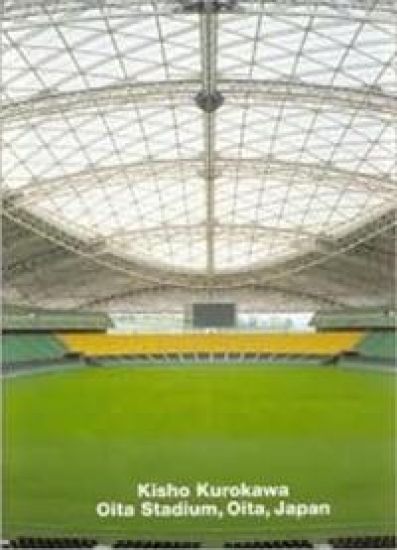
Kisho Kurokawa, Oita Stadium, Oita, Japan

Kisho Kurokawa, Oita Stadium, Oita, Japan

Dennis Sharp

Edition Axel Menges
2002
sidottu
Known as the 'Big Eye' the Oita Stadium is one of the chosen venues for the next World Cup in 2002. It will be reused for the second stage of the Japan Inter-Prefectural Athletic Competition in 2008 after the World Cup, continuing to grow in the future to become a large-scale all-purpose sports park for Oita. The whole site covers an area of 225 ha and has several facilities outside the main football stadium. These include general fitness, training and lodging centres, a botanical pool, two multipurpose athletic fields, two rugby and soccer practise pitches, a softball field, tennis courts and other game areas. The main stadium features an open track for athletic events as well as the football pitch. It can also be used year-round for public events aided by its retractable roof. For soccer matches, spectator seats are placed right up to the edge of the pitch to bring them close to the action. To change over for track events a retractable seating system was developed. The stadium sits elegantly on its site, enhanced by the gentle curves of its spherical design. The choice of the sphere, Kurokawa says, is 'an expression of abstract symbolism'. This spherical shape also enables the retractable portion to move along its curved surface. The use of Teflon membrane panels with 25 percent light permeability obviates the need for artificial lighting during daylight hours. In order for the pitch to get proper exposure to sunlight the elliptical roof opening runs along the north-south axis. A main arch with perpendicular horizontal sub-members follows the elliptical shape of the roof opening. Between the roof and the spectator seating below the surrounding mountains can be seen from a slender ventilation clearstorey set just below the roof line. This slit of space is designed to create a feeling of openness inside the stadium. Since the original design, an idea emerged for a moving camera to be located on the main beam to deliver special dynamic images for television audiences around the world.