Kirjojen hintavertailu – 12 903 724 kirjaa ja 27 kauppaa
Kirjailija
Department of the Navy
Kirjat ja teokset yhdessä paikassa: 326 kirjaa, julkaisuja vuosilta 1977–2019, suosituimpiin kuuluu Nixon's Trident: Naval Power in Southeast Asia, 1968-1972. Vertaile teosten hintoja ja tarkista saatavuus suomalaisista kirjakaupoista.
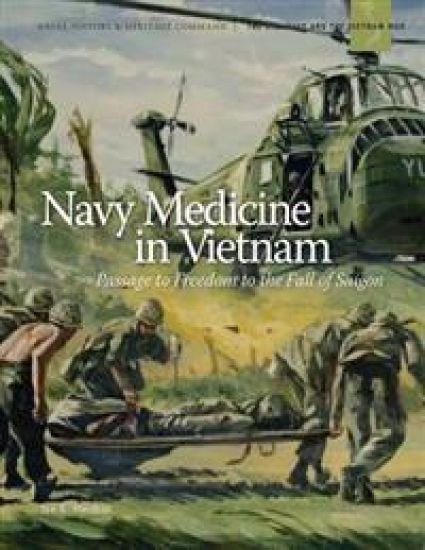
In July 1953, U. S. and North Korean military officials signed an armistice at Panmunjom ending hostilities-but without a permanent peace on the Korean peninsula. Demobilization of the armed forces began almost immediately, following much the same pattern shortly after World War II. This military decrease was across the board and keenly felt by the Navy Medical Department. The authorized ratio of medical officers to active duty troop strength was cut in half. Between 1953 And 1954, the Navy lost more than 1,000 physicians-an astonishing 25 percent reduction. For the fleet, reductions meant that battleships went from two medical officers to one; aircraft carriers, from three medical officers to two; and LST (landing ship tank) squadrons, from two physicians to one. Besides personnel cuts, peacetime also meant disestablishing many naval hospitals or, at the very least, downgrading them from hospitals to infirmaries. Despite this retrograde movement in Navy medical personnel and facilities, the Cold War continued. Indochina replaced Korea as the number one hot spot. When French colonial rule in Indochina came to a chaotic end in 1954, following the climactic defeat at Dien Bien Phu, the U. S. Navy helped evacuate 721 French troops and transport them back to their homes in France and North Africa. These pitiful soldiers suffered not only from wounds but also from a variety of jungle diseases and malnutrition. The hospital ship Haven (AH 12), which had already seen action in World War II and four tours during the Korean War, was again pressed into service for the trip. When one of the Legionnaires died en route, "they off -loaded the body in a casket with the French flag draped over it," Navy nurse Anna Corcoran recalled. "That was very, very emotional to watch. Of course, at that time, we didn't know how many of our own would be going home that way from Vietnam. We couldn't have imagined back in 1954 that 10 years later we would be involved just like the French were."
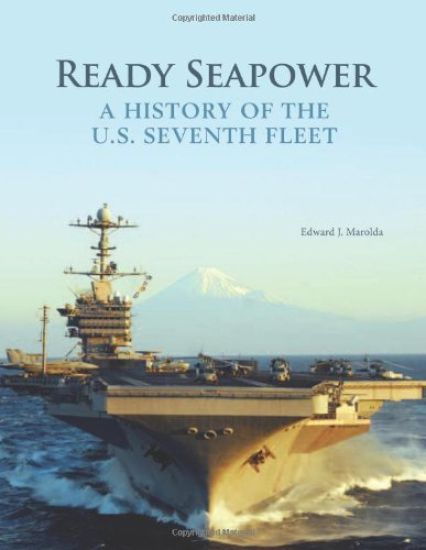
U. S. interest in the Far East dates from the earliest years of the republic, when American merchant ships sailed across the vast Pacific to ply their trade in the ports of China, the Philippines, Indochina, and the East Indies. Warships of the U. S. Navy followed soon afterward to protect those commercial carriers and to promote American diplomatic interests in Asia. The U. S. Seventh Fleet, successor to the Asiatic Squadron and Asiatic Fleet of the 19th andearly 20th centuries, began making its own naval history in the early days of World War II. Uniqueamong the nation's naval forces, the fleet has taken part in all the major conflicts and most of the crises and confrontations of the last six decades. It has defended U. S. interests and worked with America's Asian alliances to deter aggressors and maintain peace and stability in the region. The fleet's Sailors have provided humanitarian assistance and disaster relief to numerous countries devastated by natural and man made disasters. The fleet's area of responsibility in the 21st century encompasses 48 million square miles ofthe Pacific and Indian oceans, an area holding half of the world's population, 35 nations, and manyof its most prosperous economies. Much of the world's energy resources and oceangoing tradepasses through waters guarded by the warships, aircraft, and men and women of the U. S. SeventhFleet, whose motto is appropriately-Ready Power for Peace.
U. S. interest in the Far East dates from the earliest years of the republic, when American merchant ships sailed across the vast Pacific to ply their trade in the ports of China, the Philippines, Indochina, and the East Indies. Warships of the U. S. Navy followed soon afterward to protect those commercial carriers and to promote American diplomatic interests in Asia. The U. S. Seventh Fleet, successor to the Asiatic Squadron and Asiatic Fleet of the 19th andearly 20th centuries, began making its own naval history in the early days of World War II. Uniqueamong the nation's naval forces, the fleet has taken part in all the major conflicts and most of the crises and confrontations of the last six decades. It has defended U. S. interests and worked with America's Asian alliances to deter aggressors and maintain peace and stability in the region. The fleet's Sailors have provided humanitarian assistance and disaster relief to numerous countries devastated by natural and manmade disasters. The fleet's area of responsibility in the 21st century encompasses 48 million square miles ofthe Pacific and Indian oceans, an area holding half of the world's population, 35 nations, and manyof its most prosperous economies. Much of the world's energy resources and oceangoing tradepasses through waters guarded by the warships, aircraft, and men and women of the U. S. SeventhFleet, whose motto is appropriately-Ready Power for Peace.
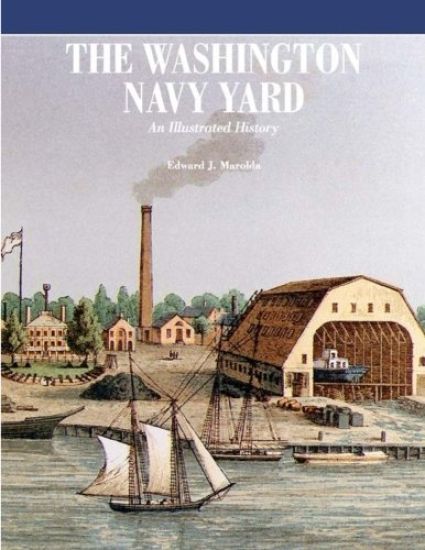
During much of the 19th and 20th centuries, the Washington Navy Yard was the most recognizable symbol of the United States Navy in the nation's capital. The shipyard built a number of the Navy's first warships and repaired, refitted, and provisioned most of the frigates, sloops, and other combatants of the fledgling naval service. The masts and rigging of USS Constitution were a common site on the banks of the AnacostiaRiver. Booming cannon became a routine sound insoutheast Washington during the mid-19th century as Commander John A. Dahlgren, "father of American naval ordnance," test-fired new guns for the fleet. The Naval Gun Factory's fire and smoke-belching blast furnaces, foundries, and mills gave birth to many of the fleet's weapons, from small boat howitzers to the enormous14-inch and 16-inch rifles that armed the navalrailway batteries in World War I and the Iowa-classbattleships in World War II and the Cold War. RearAdmiral David W. Taylor inaugurated a new era in ship development when he used scientific measurements in his Experimental Model Basin to test the properties of prototype hulls. Before and after World War I, the pioneers of naval aviation experimented in the Anacostia and navy yard facilities with various seaplane types, shipboard catapults, and other equipment that wouldsoon revolutionize warfare at sea.
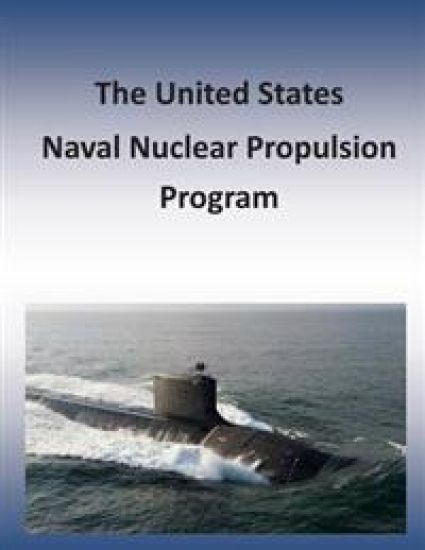
A strong Navy is crucial to the security of the United States, a nation with worldwide interests which conducts the vast majority of its trade via transoceanic shipment. Navy warships are deployed around the world every hour of every day to provide a credible "forward presence," ready to respond on the scene wherever America's interests are threatened. Nuclear propulsion plays an essential role in this, providing the mobility, flexibility, and endurance that today's smaller Navy requires to meet a growing number of missions. About 45 percent of the Navy's major combatants are nuclear-powered: 11 aircraft carriers, 53 attack submarines, and 18 strategic submarines (the Nation's most survivable deterrent) - 4 of which were removed from strategic service and converted to a covert, high-volume, precision strike platform designated as SSGN. The mission of the Naval Nuclear Propulsion Program, also known as Naval Reactors, is to provide militarily effective nuclear propulsion plants and ensure their safe, reliable, and long-lived operation. This mission requires the combination of fully trained U. S. Navy men and women with ships that excel in endurance, stealth, speed, and independence from logistics supply chains. Presidential Executive Order 12344 and Public Laws 98-525 and 106-65 set forth the total responsibility of Naval Reactors for all aspects of the Navy's nuclear propulsion, including research, design, construction, testing, operation, maintenance, and ultimate disposition of naval nuclear propulsion plants. The Program's responsibility includes all related facilities, radiological controls, environmental safety, and health matters, as well as selection, training, and assignment of personnel. All of this work is accomplished by a lean network of dedicated research laboratories, nuclear-capable shipyards, equipment contractors and suppliers, and training facilities that are centrally controlled by a small headquarters staff. The Director, Naval Reactors, is Admiral Kirkland H. Donald; who also serves as a Deputy Administrator in the National Nuclear Security Administration. Naval Reactors maintains an outstanding record of over 145 million miles safely steamed on nuclear power. The Program currently operates 103 reactors and has accumulated over 6,300 reactor-years of operation. A leader in environmental protection, the Program has published annual environmental reports since the 1960s, showing that the Program has not had an adverse effect on human health or on the quality of the environment. Because of the Program's demonstrated reliability, U. S. nuclear-powered warships are welcomed in more than 150 ports of call in over 50 foreign countries and dependencies. Since USS NAUTILUS (SSN 571) first signaled "UNDERWAY ON NUCLEAR POWER" over 50 years ago in 1955, our nuclear-powered ships have demonstrated their superiority in defending the country-from the Cold War, to today's unconventional threats, to advances that will ensure the dominance of American seapower well into the future.
This report is submitted in accordance with Section 1014 of Public Law 112-81, National Defense Authorization Act (NDAA) for Fiscal Year 2012, dated 31 December 2011, which directs the Secretary of Defense to submit a report on "policies and practices of the Navy for naming vessels of the Navy." As stipulated by the NDAA, the key elements of the report must include: A description of the current policies and practices of the Navy for naming vessels of the Navy. A description of the extent to which the policies and practices described under paragraph (1) vary from historical policies and practices of the Navy for naming vessels of the Navy, and an explanation for such variances (if any). An assessment of the feasibility and advisability of establishing fixed policies for the naming of one or more classes of vessels of the Navy, and a statement of the policies recommended to apply to each class of vessels recommended to be covered by such fixed policies if the establishment of such fixed policies is considered feasible and advisable. Any other matters relating to the policies and practices of the Navy for naming vessels of the Navy that the Secretary of Defense considers appropriate. The report was prepared by the Department of the Navy staff, under the direction of Undersecretary of the Navy Robert O. Work. The historical information and background was developed by Sarandis "Randy" Papadopoulos, Ph. D., Secretariat Historian; Mr. Cecil "Kevin" Hurst, historian and ship name and sponsor specialist at the Naval History and Heritage Command (NHHC); NHHC historian Robert J. Cressman, ship name and sponsor specialist from 1981-1991; and Captain Henry "Jerry" Hendrix, USN, recently named as the new Director of the NHHC. To keep an already long report from being longer, the only footnotes are those used to clarify or amplify ideas covered in the written sections.
This book will look at the capability development of USAF BP/BPC units using current programs such as the 6th Special Operations Squadron, and detailed case studies of Farm Gate and the current Mobility Support Advisory Squadron. The focus is on both success and where the USAF falls short when developing BP/BPC capability. This work follows the planning process and initial assumptions of both Farm Gate and the MSAS with a breakdown of the two major planning oversights. First, the study will examine the lack of funding authority as a problem that needs correction at a Headquarters Air Force and legislative level by creating a globally applicable authority for building partnership. Second, the study will focus on problems with Command Authorities, specifically the unwillingness of AMC to transfer authority to the GCC. Finally, potential solutions and recommendations on all levels are proposed, from the unit to national-level policy. The book reveals shortfalls in the planning process, but it also shows the extraordinary efforts of the Airmen involved in the squadrons. From Farm Gate to the MSAS, the ultimate success of these efforts has come on the backs of professionals who stand-up the squadrons.